On This Page
Description
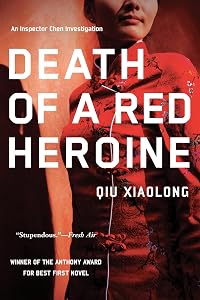
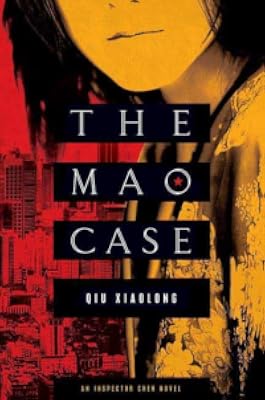
Qiu Xiaolong's Anthony Award-winning debut introduces Inspector Chen of the Shanghai Police. A young "national model worker," renowned for her adherence to the principles of the Communist Party, turns up dead in a Shanghai canal. As Inspector Chen Cao of the Shanghai Special Cases Bureau struggles to trace the hidden threads of her past, he finds himself challenging the very political forces that have guided his life since birth. Chen must tiptoe around his superiors if he wants to get to show more the bottom of this crime, and risk his career-perhaps even his life-to see justice done. show lessTags
Recommendations
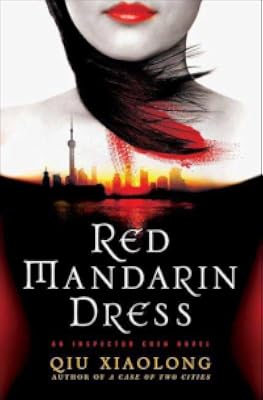










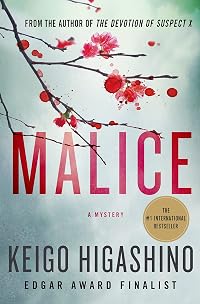
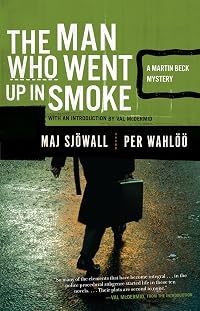
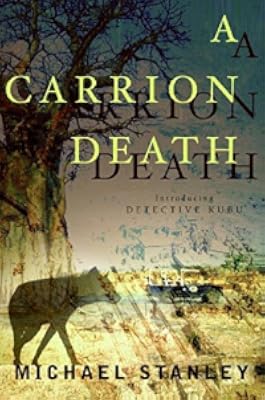
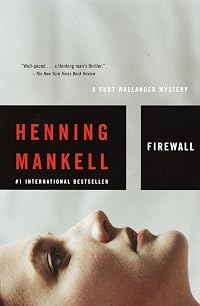
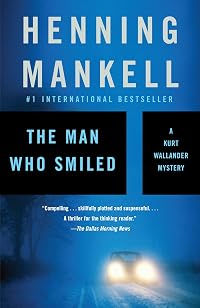
Member Recommendations
JuliaMaria Klassiker der chinesischen Literatur. Wird gerne in den Romanen von Qiu Xiaolong zitiert. Ist das Lieblingsbuch der Frau des Assistenten von Inspector Chen. Unbedingt lesenswert - beide!
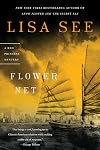
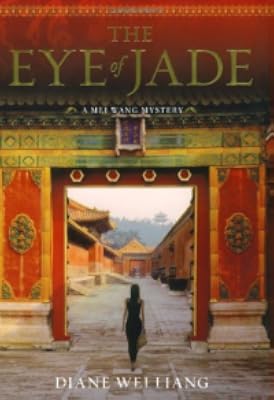
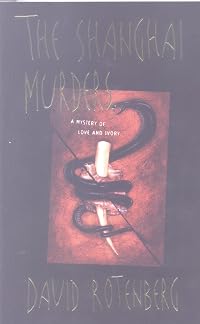
cbl_tn These books have a similar setting and time period and will probably appeal to the same readers.
Member Reviews
Death of a Red Heroine is serviceable as a police procedural and brilliant as a look a people’s lives during a period of enormous social upheaval. The main character, Chief Inspector Chen Cao, is head of the special case squad in the Homicide Division of the Shanghai Police Bureau in 1990. When the book opens, Chairman Mao has been dead for more than a decade, only a few years have passed since China’s new leader Deng Xiaoping proclaimed “to get rich is glorious,” and the 1989 massacre in Tiananmen Square is still painfully fresh.
Chen must investigate the murder of a young woman named Guan Hongying who was a “model worker,” a selfless citizen dedicated only to embodying the ideals of the Communist Party. As the investigation show more progresses, it becomes clear that Guan was leading a double life – model worker by day and transgressive mistress to a vicious and dangerous married man by night.
The strength of the novel lies not in uncovering the identity of the murderer (which is clear from early in the story), but in the fascinating portrait of China during the time it was beginning to open to the rest of the world, and was on the road to becoming a global super power. Chen and his generation are disillusioned by the corruption of the Communist regime, the horrors of the Cultural Revolution, and the repression of the Tiananmen incident, but uneasy about the rapid and massive economic and social changes that make their daily lives like a trip through Alice’s Looking Glass.
Death of a Red Heroine is filled with intriguing details, how you shop for dinner both at the state-run market (where prices are fixed to make delicacies available for everyone -- but you can't actually find those delicacies for sale), and the newly legitimized free market (where everything you can imagine is on the shelves, if you have the money buy it.) Men and women can dance together in public for the first time in decades. “Ordinary” people can get tickets to movies that only Party Members are supposed to see. The idea that the law applies equally to all people is gaining ground, but the State still has enormous power over what career you can follow and who you can and can’t marry.
Those who enjoy mysteries will find things to like in Death of a Red Heroine, but most of all I recommend this book to anyone who is interested in the country that the US owes $850 billion (yes, billion with a “b”) and what is was like for the people of China to shift from an inflexible Communist system to the economically bounteous--but still repressive--system of today. show less
Chen must investigate the murder of a young woman named Guan Hongying who was a “model worker,” a selfless citizen dedicated only to embodying the ideals of the Communist Party. As the investigation show more progresses, it becomes clear that Guan was leading a double life – model worker by day and transgressive mistress to a vicious and dangerous married man by night.
The strength of the novel lies not in uncovering the identity of the murderer (which is clear from early in the story), but in the fascinating portrait of China during the time it was beginning to open to the rest of the world, and was on the road to becoming a global super power. Chen and his generation are disillusioned by the corruption of the Communist regime, the horrors of the Cultural Revolution, and the repression of the Tiananmen incident, but uneasy about the rapid and massive economic and social changes that make their daily lives like a trip through Alice’s Looking Glass.
Death of a Red Heroine is filled with intriguing details, how you shop for dinner both at the state-run market (where prices are fixed to make delicacies available for everyone -- but you can't actually find those delicacies for sale), and the newly legitimized free market (where everything you can imagine is on the shelves, if you have the money buy it.) Men and women can dance together in public for the first time in decades. “Ordinary” people can get tickets to movies that only Party Members are supposed to see. The idea that the law applies equally to all people is gaining ground, but the State still has enormous power over what career you can follow and who you can and can’t marry.
Those who enjoy mysteries will find things to like in Death of a Red Heroine, but most of all I recommend this book to anyone who is interested in the country that the US owes $850 billion (yes, billion with a “b”) and what is was like for the people of China to shift from an inflexible Communist system to the economically bounteous--but still repressive--system of today. show less
This is the first book in a long time that's drawn me immediately into a mystery series and every way, where I've enjoyed nearly every moment and had a hard time putting the book down. Xiaolong's balance of atmosphere, character, and plotting was masterful, and I can't wait to read the next book in the series. I will say that there were moments where the quoting was a bit on the heavy side (and this, coming from a reader who loves poetry), but on the whole, it didn't at all interfere with how much I enjoyed the book since the quotes were generally only snippets of two or three lines. And, for this being the author's first novel, I really can't complain.
All told, there's no question that I'll be reading the next book in the series sooner show more than later. Whether looked at as a mystery or simply as a good read, there's a lot to love here, and I'd absolutely recommend it. show less
All told, there's no question that I'll be reading the next book in the series sooner show more than later. Whether looked at as a mystery or simply as a good read, there's a lot to love here, and I'd absolutely recommend it. show less
The idea of reading a mystery novel over 400 pages long is not inherently appealing. I find that mysteries are usually brain candy -- the best for me reveal something about the local ecology or politics (hence I really like the "Florida weird" mystery writers -- Carl Hiassen, Randy Wayne White, Tim Dorsey). When I travel to a new destination, it's fun to pick up the local mystery writer to catch a flavor of the place.
Now and then, a long mystery, like Eliot Patterson's Skull Mantra about contemporary Tibet, has drawn me into the cultural milieu and society -- eclipsing the murder that is being investigated.
Death of a Red Heroine is such a novel. While the discovery of a female corpse in a remote canal in Shanghai is the catalyst for the show more tale, the book is much more a portrait of life in China in the early 1990s, shortly after Tianamen. The murdered woman was a "national role-model worker," and hence the investigation takes on political overtones, especially when it is discovered she has ties to a prominent HCC -- High Cadre Child -- a photographer whose father was one of the founders of the Chinese Republic.
Chief Detective Chen, head of Special Investigations, is in charge of the case. A poet, scholar of classical and contemporary literature, and a foodie connoisseur, he is an engaging protagonist.
But the aspect of the novel that I found most interesting was the incredibly detailed life of ordinary people crowded into the booming metropolis of Shanghai. Aspects of life, like local voluntary "spy patrols" that I found quite chilling, are regarded as ordinary and actually, beneficial, to the maintenance of social order.
The mystery unfolds in a believable and interesting fashion, but it is the cultural portrait of this book that I found really intriguing. show less
Now and then, a long mystery, like Eliot Patterson's Skull Mantra about contemporary Tibet, has drawn me into the cultural milieu and society -- eclipsing the murder that is being investigated.
Death of a Red Heroine is such a novel. While the discovery of a female corpse in a remote canal in Shanghai is the catalyst for the show more tale, the book is much more a portrait of life in China in the early 1990s, shortly after Tianamen. The murdered woman was a "national role-model worker," and hence the investigation takes on political overtones, especially when it is discovered she has ties to a prominent HCC -- High Cadre Child -- a photographer whose father was one of the founders of the Chinese Republic.
Chief Detective Chen, head of Special Investigations, is in charge of the case. A poet, scholar of classical and contemporary literature, and a foodie connoisseur, he is an engaging protagonist.
But the aspect of the novel that I found most interesting was the incredibly detailed life of ordinary people crowded into the booming metropolis of Shanghai. Aspects of life, like local voluntary "spy patrols" that I found quite chilling, are regarded as ordinary and actually, beneficial, to the maintenance of social order.
The mystery unfolds in a believable and interesting fashion, but it is the cultural portrait of this book that I found really intriguing. show less
The naked body of a young woman is found in a remote canal. Chief Inspector Chen Cao of the Special Case Squad, Homicide Division, Shanghai Police Bureau and his deputy, Detective Yu Guangming, discover that she is Guan Hongying, a national model worker. How could a young woman with such a responsible position have come to this end? Who might have killed her? Her coworkers and neighbors all swear that she had no boyfriend, that she lived a quiet, exemplary life, devoted to the Party and her work. Chen’s supervisors, Party Secretary Li and Commisar Zhang, insist this is a political case, but the detectives feel it must have been a personal crime.
What a fascinating look at China in the nineties – a country moving into the future, show more affected by modern technology and Western influence, but with a cadre of political leaders who hold tight to the ideals of Communism. Or at least who give voice to those ideals. For, in reality, who you know is much more important than what you know. The children and friends of high-ranking officials get the plum positions, best apartments (or mansions), sleek cars and high-end consumer goods, while the masses struggle to raise their families on less-than-subsistence wages, queuing in ever-longer lines at state outlets or paying a premium to buy at “free” markets. Regardless, everyone must watch what s/he says and does, for anyone is subject to being charged with that most serious and nebulous of infractions: crime and corruption under Western bourgeois influence.
I really liked how Qiu wrote these characters. The evolving relationship between Detective Yu and Chief Inspector Chen was particularly interesting. Working independently for much of the book, they still manage to come together as a team and to truly support one another. I loved how inventive they were in communicating sensitive information to one another without drawing further attention to their continued efforts.
Some of the minor characters were a complete delight. Old Hunter, a retired police officer and Yu’s father, is now a volunteer neighborhood patroller, checking to make sure that private peddlers adhere to the socialist ideals in conducting their commercial transactions. Overseas Chinese Lu, Chen’s long-time friend, is an entrepreneur with a successful restaurant, Moscow Suburb. Little Zhao, a bureau driver, keeps his ear to the ground and passes along helpful gossip (or warnings) to Chen. Yu’s wife, Peiqin, is a valuable sounding board and go-between. Wang Feng, a reporter with the Wenhui Daily (one of China’s most influential papers), is a good friend, a valuable source of information, and a formidable ally.
But it is Chief Inspector Chen who truly shines. Chen is a contrast: a man educated in literature, a published poet, and frequent translator of mysteries, but who is also a methodical investigator concerned only with bringing the perpetrator to justice. The reader gains increased insight into the complicated workings of the Chinese Party system as Chen is forced to consider politics and to find a way to work within and around the system. I loved the poetry he quoted and how seamlessly Qiu wove these couplets into the story, showing how a remembered passage might give Chen an idea for which direction to next take his investigation.
The city of Shanghai is practically a character, the scenes are so vivid. Qiu describes the bustle of a major metropolitan area, the squalor of tenement living, the luxurious surroundings of a major hotel or old family mansion, and the quiet pleasure of a park. And the food – crab, dumplings, rice balls, perfectly ripe fruit, hot soups, fresh fish, succulent duck, and many delicacies unfamiliar to Westerners. I think even if I had never been to Shanghai I would have a clear picture in my head of the surroundings based on Qiu’s descriptive passages.
The suspect / perpetrator is pretty clearly identified early on, but that’s not a problem here. It is not the kind of suspense/thriller/mystery that relies on secrets, violent altercations and dangerous situations. Rather, the joy of this novel is watching how Chen builds his case. I’ll definitely read more of this series. show less
What a fascinating look at China in the nineties – a country moving into the future, show more affected by modern technology and Western influence, but with a cadre of political leaders who hold tight to the ideals of Communism. Or at least who give voice to those ideals. For, in reality, who you know is much more important than what you know. The children and friends of high-ranking officials get the plum positions, best apartments (or mansions), sleek cars and high-end consumer goods, while the masses struggle to raise their families on less-than-subsistence wages, queuing in ever-longer lines at state outlets or paying a premium to buy at “free” markets. Regardless, everyone must watch what s/he says and does, for anyone is subject to being charged with that most serious and nebulous of infractions: crime and corruption under Western bourgeois influence.
I really liked how Qiu wrote these characters. The evolving relationship between Detective Yu and Chief Inspector Chen was particularly interesting. Working independently for much of the book, they still manage to come together as a team and to truly support one another. I loved how inventive they were in communicating sensitive information to one another without drawing further attention to their continued efforts.
Some of the minor characters were a complete delight. Old Hunter, a retired police officer and Yu’s father, is now a volunteer neighborhood patroller, checking to make sure that private peddlers adhere to the socialist ideals in conducting their commercial transactions. Overseas Chinese Lu, Chen’s long-time friend, is an entrepreneur with a successful restaurant, Moscow Suburb. Little Zhao, a bureau driver, keeps his ear to the ground and passes along helpful gossip (or warnings) to Chen. Yu’s wife, Peiqin, is a valuable sounding board and go-between. Wang Feng, a reporter with the Wenhui Daily (one of China’s most influential papers), is a good friend, a valuable source of information, and a formidable ally.
But it is Chief Inspector Chen who truly shines. Chen is a contrast: a man educated in literature, a published poet, and frequent translator of mysteries, but who is also a methodical investigator concerned only with bringing the perpetrator to justice. The reader gains increased insight into the complicated workings of the Chinese Party system as Chen is forced to consider politics and to find a way to work within and around the system. I loved the poetry he quoted and how seamlessly Qiu wove these couplets into the story, showing how a remembered passage might give Chen an idea for which direction to next take his investigation.
The city of Shanghai is practically a character, the scenes are so vivid. Qiu describes the bustle of a major metropolitan area, the squalor of tenement living, the luxurious surroundings of a major hotel or old family mansion, and the quiet pleasure of a park. And the food – crab, dumplings, rice balls, perfectly ripe fruit, hot soups, fresh fish, succulent duck, and many delicacies unfamiliar to Westerners. I think even if I had never been to Shanghai I would have a clear picture in my head of the surroundings based on Qiu’s descriptive passages.
The suspect / perpetrator is pretty clearly identified early on, but that’s not a problem here. It is not the kind of suspense/thriller/mystery that relies on secrets, violent altercations and dangerous situations. Rather, the joy of this novel is watching how Chen builds his case. I’ll definitely read more of this series. show less
I thought this book was okay, but not great in any way. It took me about a quarter of the book, 125 pages or so to get into it at all. It was certainly well written and in a unique writing style, but I have never been to China so the countless lines of descriptions like... Chengdu Road was between street such and such and lane so and so etc was tiresome. Ultimately I never really got into any of the characters with the possible exception of Overseas Chinese Lu... although Old Hunter turned out to be pretty cool. But all the central figures, Chen, Yu, Wang Feng, Ling, they were all over the place, going in different directions the entire book. On a few occasions I felt that there was a surprising depth to the book or a character, and I show more should bump up my review a star, but then the narrative would instantly fall back into the same drawn-out scenes.
Long review short, this book is more about the politics of being Chinese in China rather than crime fiction. Interesting in that respect, but that’s not what I was expecting when I picked it up to read. show less
Long review short, this book is more about the politics of being Chinese in China rather than crime fiction. Interesting in that respect, but that’s not what I was expecting when I picked it up to read. show less
This book, ostensibly a murder mystery, deals with a surprising array of existential and societal issues. A police procedural mostly set in Shanghai, it also explores characters torn between their own priorities and those imposed on them by their government. We are also given a glimpse of how Western influences are starting to impact Chinese society. With a huge, culturally diverse cast of characters (nota bene: keep a list), we are provided a fascinating insight into the lives of people from a wide range of levels within the Communist Party. The Party is almost a character of its own as it pervades the story and impacts the characters’ decisions. Compelling and gritty.
Detective Inspector Chen investigates the murder of a young woman who was a famous model citizen and slowly discovers that she may have been devoting her daytime life to the good of the Party but spent her evenings in other pursuits. Set in Shanghai in the early 90s, this first novel in a series creates a nice balance between the actual police procedural plot and an interesting social commentary on the tricky political atmosphere in China at the time. There aren't a lot of fancy twists to the mystery itself, but the characters are very nicely drawn - I particularly like Chen as an unassuming yet tenacious detective - and the details about life in China in the 1990s were fascinating.
Members
- Recently Added By
Lists

Favorite Series
238 works; 94 members

Best Fiction Set in China
43 works; 27 members

A Rainbow of Books: Colors in the Title
570 works; 24 members

Global Mysteries
90 works; 6 members

Books with Colourful Titles
171 works; 8 members

Translingualism
191 works; 4 members

Paul French's Ultimate China Bookshelf
31 works; 1 member

Books Read in 2025
4,128 works; 98 members
Author Information

43+ Works 5,386 Members
Qiu Xiaolong teaches Chinese Literature at Washington University.
Some Editions
Awards and Honors
Awards
Series

Belongs to Publisher Series
Work Relationships
Common Knowledge
- Canonical title*
- Tod einer roten Heldin
- Original title
- Death of a red heroine
- Alternate titles
- Punaisen sankarittaren kuolema; Mort d'une héroïne rouge; Tod einer roten Heldin; Dood van een rode heldin
- Original publication date
- 2000
- People/Characters
- Chen Cao (Chief Inspector); Yu Guangming (Detective); Li Guohoa (Party Secretary); Wang Feng; Lu Tonghao; Peiqin (show all 10); Qinqin; Zhang Zhiqiang (Commissar); Wu Xiaoming; Xie Rong
- Important places
- Shanghai, China; Guangzhou, Guangdong, China
- Dedication*
- Für Lijun
- First words
- The body was found at 4:40 P.M., on May 11, 1990, in Baili Canal, an out-of-the-way canal, about twenty miles to the west of Shanghai.
- Last words*
- (Click to show. Warning: May contain spoilers.)Und bis dahin würde er sich überlegen, wie er ihr die Sache mit Ling beibrachte.
- Blurbers
- Corrigan, Maureen; Nolan, Tom; Adler, Dick; Marshall, William; Hegel, Robert E.; Van Duyn, Mona
- Original language
- English
*Some information comes from Common Knowledge in other languages. Click "Edit" for more information.
Classifications
Statistics
- Members
- 1,412
- Popularity
- 16,826
- Reviews
- 73
- Rating
- (3.76)
- Languages
- 12 — Danish, Dutch, English, Finnish, French, German, Hungarian, Italian, Norwegian (Bokmål), Polish, Spanish, Swedish
- Media
- Paper, Audiobook, Ebook
- ISBNs
- 42
- ASINs
- 20