On This Page
Description
Fiction. Literature. Mystery. Historical Fiction. The medicus Ruso and his wife, Tilla, are back in the borderlands of Britannia, this time helping to tend the builders of Hadrian's Great Wall. Having been forced to move off their land, the Britons are distinctly on edge. Then Ruso's recently arrived clerk, Candidus, goes missing. A native boy thinks he sees a body being hidden inside the wall's half-finished stonework, and a worrying rumor begins to spread. When soldiers ransack the nearby show more farms looking for Candidus, Tilla's tentative friendship with a local family turns to anger and disappointment. Tensions only increase when Branan, the family's youngest son, also vanishes. As Ruso and Tilla try to solve the mystery of the two disappearances-while at the same time struggling to keep the peace between the Britons and the Romans-an intricate scheme involving slavery, changed identities, and fur trappers emerges, and it becomes imperative that Ruso find Branan before it's too late. show lessTags
Recommendations







Member Reviews
The author has really outdone herself!! This novel really shines in all respects; it's one of her best to date and highly recommended.
Medicus Ruso is with a vexillation from the XX Legion, based temporarily at a small fort involved in building Hadrian's Wall. Tilla, his wife is with him. First, Ruso's secretary disappears; has he gone AWOL or has something really nefarious happened to him? Then, a youngster, Branan, from a British family is kidnapped. Both the Britons and the Army are horrified and get involved in the investigations. Ruso and Tilla both investigate separate leads, dangerous to Ruso. We meet some old friends from the earlier volumes in the series; I was so glad to see them again: Valens, Ruso's close friend; Albanus, show more Ruso's former clerk; Susanna, who still runs the snack bar in Coria; even Valens's father-in-law, the gruff and no-nonsense Second Spear, now promoted to Prefect of the little fort. The British family plans a wedding blessing ceremony for the couple; will this come off? Downie's gently wry humor sparkled through the book, as well as a great story and denouement.
The book opens with a description of British autumn weather that put me right in the scene and made me smile at the turns of phrase:
'''It was easy to believe that the rain threw itself at you personally; hard not to feel persecuted and aggrieved when it found its way into your boots, no matter how much grease you slathered on them. It blew in veils across the sides of the hills; whipped along the crests; and cascaded in streams down the valleys. The river had burst its banks; and the meadows beside it mirrored the gray sky. Turf squelched underfoot and supply carts sank into the mud, so that whole gangs who should have been building spent the short daylight hours sloshing about, clearing drains and filling potholes....
after another long night in chilly beds, serenaded by a ragged chorus of coughing and snoring, the builders woke to an innocent morning full of birdsong.'''
I love Ruso and Tilla as a married couple--personality of each complementing the other. Yes, there are the occasional cultural misunderstandings, but you can see the couple love and accept each other as is. Ruso, although still analytical and serious, has become more content with life, since his meeting Tilla. She is still the impulsive, perennial optimist. I could hardly wait till this book came out and it was such a pageturner. I read it voraciously. Downie has really hit her stride with this novel.
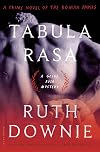
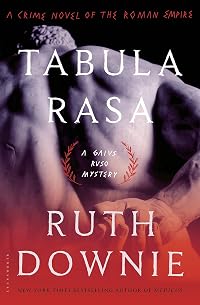
The only sour note was the GHASTLY cover: back view of statue of Hercules holding the Golden Apples of the Hesperides. That had only a tenuous link with the novel: in one place a character mentions something about the Golden Apples. Title was clever: Tabula Rasa [Clean Slate] I interpreted to mean the two disappearances. show less
Medicus Ruso is with a vexillation from the XX Legion, based temporarily at a small fort involved in building Hadrian's Wall. Tilla, his wife is with him. First, Ruso's secretary disappears; has he gone AWOL or has something really nefarious happened to him? Then, a youngster, Branan, from a British family is kidnapped. Both the Britons and the Army are horrified and get involved in the investigations. Ruso and Tilla both investigate separate leads, dangerous to Ruso. We meet some old friends from the earlier volumes in the series; I was so glad to see them again: Valens, Ruso's close friend; Albanus, show more Ruso's former clerk; Susanna, who still runs the snack bar in Coria; even Valens's father-in-law, the gruff and no-nonsense Second Spear, now promoted to Prefect of the little fort. The British family plans a wedding blessing ceremony for the couple; will this come off? Downie's gently wry humor sparkled through the book, as well as a great story and denouement.
The book opens with a description of British autumn weather that put me right in the scene and made me smile at the turns of phrase:
'''It was easy to believe that the rain threw itself at you personally; hard not to feel persecuted and aggrieved when it found its way into your boots, no matter how much grease you slathered on them. It blew in veils across the sides of the hills; whipped along the crests; and cascaded in streams down the valleys. The river had burst its banks; and the meadows beside it mirrored the gray sky. Turf squelched underfoot and supply carts sank into the mud, so that whole gangs who should have been building spent the short daylight hours sloshing about, clearing drains and filling potholes....
after another long night in chilly beds, serenaded by a ragged chorus of coughing and snoring, the builders woke to an innocent morning full of birdsong.'''
I love Ruso and Tilla as a married couple--personality of each complementing the other. Yes, there are the occasional cultural misunderstandings, but you can see the couple love and accept each other as is. Ruso, although still analytical and serious, has become more content with life, since his meeting Tilla. She is still the impulsive, perennial optimist. I could hardly wait till this book came out and it was such a pageturner. I read it voraciously. Downie has really hit her stride with this novel.
The only sour note was the GHASTLY cover: back view of statue of Hercules holding the Golden Apples of the Hesperides. That had only a tenuous link with the novel: in one place a character mentions something about the Golden Apples. Title was clever: Tabula Rasa [Clean Slate] I interpreted to mean the two disappearances. show less
This is the sixth installment of an entertaining historical crime fiction series set in the Ancient Roman Empire.
It is A.D. 122 and Roman Army medic Gaius Petreius Ruso is now back with the Twentieth Legion after sojourns in Gaul and Britannia. He is currently stationed in Parva at a temporary fort erected to facilitate the construction of Hadrian’s Wall.
Ruso’s clerk, who happens to be the nephew of his former clerk Albanus, goes missing, and Ruso feels an obligation to locate him since he promised Albanus he would look after him. Meanwhile, a local boy claims he saw someone late at night hide a body inside the wall. Then the boy who is suspected of starting the rumor goes missing, and the natives are up in arms.
Ruso feels he must show more find his clerk and find the missing boy Branan, who is related to Ruso’s wife Tilla. Once again the lives of Ruso and Tilla are at risk as they take separate paths to investigate what is going on. The stakes are high: if a Roman soldier is found to blame for the kidnapping of a local child, the fragile peace between the two groups will be shattered.
Meanwhile, in the background, Tilla is now a trainee medicus, and she and Ruso are also taking care of Virana, a pregnant girl cast out by her family. Virana, perhaps better known to the men on the base than Tilla and Ruso would like, also helps with the investigation.
Evaluation: This book tackles the interesting question of what searching for a missing child might encompass in times before technology could aid in the process. Ruso and Tilla’s relationship continues to evolve, with Tilla clearly in charge in spite of Ruso’s exasperation over that fact. They still have trouble communicating with one another, but the process is aided by knowing each other better, and being able to make assumptions in the absence of clear understanding. Altogether an enjoyable series. show less
It is A.D. 122 and Roman Army medic Gaius Petreius Ruso is now back with the Twentieth Legion after sojourns in Gaul and Britannia. He is currently stationed in Parva at a temporary fort erected to facilitate the construction of Hadrian’s Wall.
Ruso’s clerk, who happens to be the nephew of his former clerk Albanus, goes missing, and Ruso feels an obligation to locate him since he promised Albanus he would look after him. Meanwhile, a local boy claims he saw someone late at night hide a body inside the wall. Then the boy who is suspected of starting the rumor goes missing, and the natives are up in arms.
Ruso feels he must show more find his clerk and find the missing boy Branan, who is related to Ruso’s wife Tilla. Once again the lives of Ruso and Tilla are at risk as they take separate paths to investigate what is going on. The stakes are high: if a Roman soldier is found to blame for the kidnapping of a local child, the fragile peace between the two groups will be shattered.
Meanwhile, in the background, Tilla is now a trainee medicus, and she and Ruso are also taking care of Virana, a pregnant girl cast out by her family. Virana, perhaps better known to the men on the base than Tilla and Ruso would like, also helps with the investigation.
Evaluation: This book tackles the interesting question of what searching for a missing child might encompass in times before technology could aid in the process. Ruso and Tilla’s relationship continues to evolve, with Tilla clearly in charge in spite of Ruso’s exasperation over that fact. They still have trouble communicating with one another, but the process is aided by knowing each other better, and being able to make assumptions in the absence of clear understanding. Altogether an enjoyable series. show less
Satisfying. Pertinax makes a good terrible patient. Tilla continues to find that her identity is located neither in the community she came from nor with the Romans but in both. Loved all the family developments in every direction. I was wondering what would happen once Virana had her baby...
Another excellent entry in this series -- I am starting to look forward to each new entry more than the last. Ruso, a medicus with the Roman army, is back in Britain with his British wife Tilla. First his new clerk disappears. Then a local boy also goes missing and it all acts to ratchet up the tensions between the Roman occupiers and the native Britons, some of whom have been kicked off their land for the construction of Hadrian's Wall. Downie is particularly good at providing the details of a period from so long ago, while still making the characters understandable.
Ruso, the Roman medicus, and Tilla, his British wife who is a midwife, are practising at the giant building site which will be Hadrian's Wall. Ruso's medical clerk has been missing for three days and the native British dispossessed of their land where the Wall is being built are restless.
From a heart-stopping beginning with a quarry accident the excitement never lets up as the chapters fly by. The best so far in this series.
From a heart-stopping beginning with a quarry accident the excitement never lets up as the chapters fly by. The best so far in this series.
Time for confession: I was disappointed by the second book in this series, Terra Incognita. So I've skipped two books and have now read "Tabula Rasa". All in all, it's an entertaining read, but the author doesn't play quite fair with the reader, with clues strung out so parsimoniously that even when the killer is revealed, it's difficult to make the parts fit together.
On the other hand, Ruth Downie does an excellent job of re-imagining Roman-British relations along Hadrian's Wall in the second century AD. The pictures of British life, the resentments of the tribes, their uneasy social relations with the Roman legions are brilliantly limned in this mystery. And the sardonic voice of the medicus, Gaius Ruso, adds a bit of comic flair to show more this enjoyable mystery novel. show less
On the other hand, Ruth Downie does an excellent job of re-imagining Roman-British relations along Hadrian's Wall in the second century AD. The pictures of British life, the resentments of the tribes, their uneasy social relations with the Roman legions are brilliantly limned in this mystery. And the sardonic voice of the medicus, Gaius Ruso, adds a bit of comic flair to show more this enjoyable mystery novel. show less
3.5 stars
This installment of the Roman Medicus series takes places near Hadrian's wall in northern Britain. Ruso's clerk disappears, and then a local boy disappears and there's tension with the natives in the form of demonstrations and the burning of houses.
There were some fun characters in this one, like the hypochondriac centurion Fabius and the pregnant, gossipy Viranna who's always on the lookout for potential husbands.
The novel does disappoint a little with its ridiculously quick and urgent labour and delivery near the end, but I guess the author just wanted to wrap things up. An exact time isn't given, but it doesn't seem like it could have been more than a couple hours.
Anyway, overall the book doesn't disappoint and I'll happily show more read the next one in the series. show less
This installment of the Roman Medicus series takes places near Hadrian's wall in northern Britain. Ruso's clerk disappears, and then a local boy disappears and there's tension with the natives in the form of demonstrations and the burning of houses.
There were some fun characters in this one, like the hypochondriac centurion Fabius and the pregnant, gossipy Viranna who's always on the lookout for potential husbands.
The novel does disappoint a little with its ridiculously quick and urgent labour and delivery near the end, but I guess the author just wanted to wrap things up. An exact time isn't given, but it doesn't seem like it could have been more than a couple hours.
Anyway, overall the book doesn't disappoint and I'll happily show more read the next one in the series. show less
Members
- Recently Added By
Published Reviews
ThingScore 83
"The author's awareness of historic time and place comes through very clearly. Her knowledge and understanding of the period really enhances the book."
added by bookfitz
"But Downie’s attention to detail – both historical detail and human detail – makes this series a joy to read for the mystery lover, the classics fan, or anyone seeking more character-driven genre fiction."
added by bookfitz
"Like the other titles in the series, Downie's latest mixes an engaging story line, provocative characters, and a satisfying evocation of time and place."
added by bookfitz
Author Information

14+ Works 3,844 Members
Some Editions
Series

Common Knowledge
- Canonical title
- Tabula Rasa
- Original title
- Tabula Rasa
- Alternate titles
- Tabula Rasa: A Gaius Ruso Mystery
- Original publication date
- 2014-08-05
- People/Characters
- Gaius Petreius Ruso; Tilla; Candidus; Valens; Albanus
- Important places
- Britannia, Roman Empire; England, UK
- Important events
- Reign of Hadrian (117 to 138 AD/CE)
- Epigraph
- Necis quid vesper vehat
You do not know what the evening will bring.
--Macrobius, Saturnalia, Book II, 8.2 - Dedication
- To those who wait, not knowing whether news will ever come.
With respect. - First words
- It was easy to believe that the rain threw itself at you personally; hard not to feel persecuted and aggrieved when it found its way into your boots no matter how much grease you slathered on them.
- Last words
- (Click to show. Warning: May contain spoilers.)“Well . . . only sometimes.”
- Blurbers
- Scott, M. C.; Gregory, Susanna; Jecks, Michael; Tyler, L. C.
- Original language
- English, UK
Classifications
Statistics
- Members
- 186
- Popularity
- 176,739
- Reviews
- 10
- Rating
- (3.88)
- Languages
- English
- Media
- Paper, Audiobook, Ebook
- ISBNs
- 7
- ASINs
- 4