
Mary Reed (1)
Author of One for Sorrow
For other authors named Mary Reed, see the disambiguation page.
Mary Reed (1) has been aliased into M. E. Mayer.
Series
Works by Mary Reed
Works have been aliased into M. E. Mayer.
Leap of Faith [short story] 1 copy
Fortune's Other Steward 1 copy
Associated Works
Works have been aliased into M. E. Mayer.
The Mammoth Book of Perfect Crimes & Impossible Mysteries (2006) — Contributor — 160 copies, 4 reviews
Tagged
Common Knowledge
- Other names
- Mayer, M. E. (shared pen name)
- Gender
- female
- Relationships
- Mayer, Eric (husband)
- Nationality
- UK
- Places of residence
- USA
- Map Location
- United Kingdom
Members
Reviews
Rating: 3.25* of five
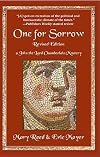
The Book Description: Byzantium, capitol of the 6th century Roman Empire, simmers a rich stew of creeds, cultures, and citizens with a sprinkling of cutthroats and crimes. John, Emperor Justinian’s Lord Chamberlain, supervises a Christian court while himself observing the rites of Mithra. Thomas, a knight from Britain; Ahasuerus, a soothsayer; and two ladies from Crete stir up events and old memories for John, who must discover how the visitors link to the death of a show more treasury official.
My Review: First Mystery Novel Syndrome: Introduce characters, drop them for north of two chapters, come back and explain why they're game-changers, drop them for north of two chapters, and then shuffle them off-stage unceremoniously.
Then kill people the main character doesn't much care about, and make them part of the final solution.
Describe dead bodies in such a way that the savvy mysterian will be wondering why the sleuth doesn't spot something immediately; explain this away with Backstory Stress Disorder.
Set your story in a transitional time in history, which allows you to do interesting things with characters' beliefs and ideas. Skate along the surface of this possibility. Offer simultaneously a little too much and nowhere near enough of the tensions this would naturally create between the characters, instead of within them.
But in the end, after getting past the utterly urpsome description of a man being gelded, this first mystery in an ongoing series is just on the knife-edge of good enough to keep me going. show less
The Book Description: Byzantium, capitol of the 6th century Roman Empire, simmers a rich stew of creeds, cultures, and citizens with a sprinkling of cutthroats and crimes. John, Emperor Justinian’s Lord Chamberlain, supervises a Christian court while himself observing the rites of Mithra. Thomas, a knight from Britain; Ahasuerus, a soothsayer; and two ladies from Crete stir up events and old memories for John, who must discover how the visitors link to the death of a show more treasury official.
My Review: First Mystery Novel Syndrome: Introduce characters, drop them for north of two chapters, come back and explain why they're game-changers, drop them for north of two chapters, and then shuffle them off-stage unceremoniously.
Then kill people the main character doesn't much care about, and make them part of the final solution.
Describe dead bodies in such a way that the savvy mysterian will be wondering why the sleuth doesn't spot something immediately; explain this away with Backstory Stress Disorder.
Set your story in a transitional time in history, which allows you to do interesting things with characters' beliefs and ideas. Skate along the surface of this possibility. Offer simultaneously a little too much and nowhere near enough of the tensions this would naturally create between the characters, instead of within them.
But in the end, after getting past the utterly urpsome description of a man being gelded, this first mystery in an ongoing series is just on the knife-edge of good enough to keep me going. show less
Rating: 3* of five
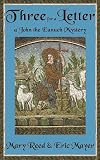
The Book Description: High jinx in the imperial court mixes with lowlife in Constantinople's mean streets...
"If the perfect historical mystery is one that uses the past to let us see the present from a new angle, then this is darned close to being the perfect historical mystery."--Booklist (starred review for Two for Joy)
It is 539 AD and as the reconquest of Italy draws toward its close, a pair of eight-year old twins descended from the last Ostrogothic king have become show more valuable pawns in Emperor Justinian's plans to restore the glory of Rome. Unfortunately, during the performance of a play at a banquet honoring the two young diplomatic hostages, death makes an entrance and claims one brother.
Then Empress Theodora's favorite mime vanishes and John, Lord Chamberlain to Justinian, is ordered to find both the missing mime and the murderer.
In this third John the Eunuch novel, his investigations are hampered by squabbling courtiers, servants harboring social ambitions, an eccentric host, and an egotistic inventor, not to mention the complications posed by a herd of prophesying goats and a protective whale. His friends the Mithran Anatolius and the excubitor captain Felix only add to John's worries when they fall under the spell of two ambitious women. Can the trio avoid Theodora's wrath as they work to protect a child and stop a heartless killer? It is uncertain whether the solution lies within the villa where all have assembled or back in Constantinople--or in some other world altogether.
My Review: I was robbed! Hours and hours of my life, robbed from me as John and Anatolius careen from pillar to post and do very little of any interest! I was subjected to the drear and dull prattlings of an eight-year-old with an overactive imagination, a poor sense of self-preservation, and a somewhat appalling callousness! I want those eyeblinks back!
Characters are summoned forth, do next to nothing, and vertiginously disappear. Some amazing coincidences are mooted, and then dismissed, and then lo and behold come back again as faits accomplis. Oh the humanity, he said, as the Constantinopolitan Hindenburg burns.
So Theodora, Imperial Wench of the First Water, is getting no image burnishment here, and one wonders why the authors don't do more with her. At the moment, she's a cardboard cut-out of a mean girl. My long-term interest in a mystery series is bound up in the characters the author(s) develop for me to invest in and follow with interest. John the Eunuch is interesting, but the other players are becoming tiresome. Reduced by a vastly overcomplicated plot with more coincidences than even Shakespeare would feel comfortable perpetrating on his miserable, long-suffering audiences to broad-strokes walk-ons, Felix (the equivalent of the police lieutenant all detectives know) and Anatolius (well-placed and wealthy young sidekick) come off as boring one-note lech-boys; Hypatia (salvaged serving girl) as a cipher; and Peter (wise old fool/servant to John) as a foolish old man. The suspects, too numerous to enumerate, don't take shape at all. Theodora, see above. Eeeaaarrrgh!
So why three stars, with this litany of whinges and bitches? For this line:
Fifteen hundred years on is a looong finally, but permaybehaps it's coming to be. I live in hope that it is true, that my shining City on a Hill of Jesuslessness is at last in sight.
In the meantime, the series bought itself one more shot. One. And it had better count. show less
The Book Description: High jinx in the imperial court mixes with lowlife in Constantinople's mean streets...
"If the perfect historical mystery is one that uses the past to let us see the present from a new angle, then this is darned close to being the perfect historical mystery."--Booklist (starred review for Two for Joy)
It is 539 AD and as the reconquest of Italy draws toward its close, a pair of eight-year old twins descended from the last Ostrogothic king have become show more valuable pawns in Emperor Justinian's plans to restore the glory of Rome. Unfortunately, during the performance of a play at a banquet honoring the two young diplomatic hostages, death makes an entrance and claims one brother.
Then Empress Theodora's favorite mime vanishes and John, Lord Chamberlain to Justinian, is ordered to find both the missing mime and the murderer.
In this third John the Eunuch novel, his investigations are hampered by squabbling courtiers, servants harboring social ambitions, an eccentric host, and an egotistic inventor, not to mention the complications posed by a herd of prophesying goats and a protective whale. His friends the Mithran Anatolius and the excubitor captain Felix only add to John's worries when they fall under the spell of two ambitious women. Can the trio avoid Theodora's wrath as they work to protect a child and stop a heartless killer? It is uncertain whether the solution lies within the villa where all have assembled or back in Constantinople--or in some other world altogether.
My Review: I was robbed! Hours and hours of my life, robbed from me as John and Anatolius careen from pillar to post and do very little of any interest! I was subjected to the drear and dull prattlings of an eight-year-old with an overactive imagination, a poor sense of self-preservation, and a somewhat appalling callousness! I want those eyeblinks back!
Characters are summoned forth, do next to nothing, and vertiginously disappear. Some amazing coincidences are mooted, and then dismissed, and then lo and behold come back again as faits accomplis. Oh the humanity, he said, as the Constantinopolitan Hindenburg burns.
So Theodora, Imperial Wench of the First Water, is getting no image burnishment here, and one wonders why the authors don't do more with her. At the moment, she's a cardboard cut-out of a mean girl. My long-term interest in a mystery series is bound up in the characters the author(s) develop for me to invest in and follow with interest. John the Eunuch is interesting, but the other players are becoming tiresome. Reduced by a vastly overcomplicated plot with more coincidences than even Shakespeare would feel comfortable perpetrating on his miserable, long-suffering audiences to broad-strokes walk-ons, Felix (the equivalent of the police lieutenant all detectives know) and Anatolius (well-placed and wealthy young sidekick) come off as boring one-note lech-boys; Hypatia (salvaged serving girl) as a cipher; and Peter (wise old fool/servant to John) as a foolish old man. The suspects, too numerous to enumerate, don't take shape at all. Theodora, see above. Eeeaaarrrgh!
So why three stars, with this litany of whinges and bitches? For this line:
John did not press {the suspect} further. It had struck to him on more than one occasion that the Christians' rigid insistence on their god's exclusive sway, so at odds with human nature, would finally prove to be their undoing.(p317, hardcover edition)
Fifteen hundred years on is a looong finally, but permaybehaps it's coming to be. I live in hope that it is true, that my shining City on a Hill of Jesuslessness is at last in sight.
In the meantime, the series bought itself one more shot. One. And it had better count. show less
Seven For a Secret: A John, the Lord Chamberlain Mystery (John, the Lord Chamberlain Series Book 7) by Mary Reed
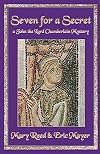
Another John the Eunuch mystery set in Justinian's Constantinople. Not as good as some others in this series; much was contrived, as you'd expect based on Procopius, the old gossip and rumormonger. This mystery brought together a woman who claims to be the model for the mosaic girl in John's study and who is murdered then thrown down a cistern and dyed red as an attempt to conceal her identity and to obliterate a tattoo on her wrist. John feels he must investigate the death as in a way it show more touches him personally. There are several more bodies as the story progresses. The novel brings together a stylite, several eccentric shopkeepers [sundial maker, antiquities seller, dyer], the putative illegitimate son of Theodora, and a cabal planning a coup against the royal couple.
John's a fascinating character; the others felt as though they were merely foils who played off of him. The author's done her research, but the style was a bit arid and events were often implausible. You do get a good feel for Constantinopolitan life. The author is nothing if not original. show less
John's a fascinating character; the others felt as though they were merely foils who played off of him. The author's done her research, but the style was a bit arid and events were often implausible. You do get a good feel for Constantinopolitan life. The author is nothing if not original. show less
Rating: 3.75* of five
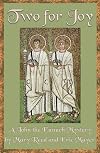
The Book Description: Reed and Mayer combine the scholarship of Steven Saylor with the humor of Lindsey Davis. Starred review in Booklist December 2000.It is now two years after One For Sorrow, and John the Eunuch, Lord Chamberlain to the Emperor Justinian, is faced with a new and byzantine problem: why are Constantinople's holy stylites bursting into flames as they stand atop their pillars? His investigations are hampered by a pagan philosophy tutor from his youth and show more a heretical Christian prophet whose ultimatums threaten to topple the Empire.
Then murder strikes close to home and John has only days to find a solution before he, his friends, his Emperor, and the city itself are destroyed. The sumptuous halls of the Great Palace and the riot-torn streets are filled with the same danger and deception. A colorful cast of characters that includes a runaway wife, servants and soldiers, madams and mendicants, a venomous court page and a wealthy landowner or two -- not to mention John's bete noire, the Empress Theodora -- adds texture to this rich, exotic tale of sixth century life and mysterious death.
My Review: A whole half star above the first book! Added because the series has a footing now, and the conflict leading to the murder is not as far-fetched, and the identity of the murderer and motives of same are a lot more surprising to me than in the first book.
Clearly there is no way I can claim to know that the authors have evoked exactly the atmosphere of sixth-century Constantinople, but they have managed to create an intense and lively picture of it in my mind, and that will serve me admirably.
The eunuch chamberlain, John, has some wonderfully imagined character traits. I like that he's not a Christian, but his servant is, and therefore the servant is allowed to be open in his faith where his Mithraist master must skulk and hide. I like that John the Eunuch is repulsed by other eunuchs, feeling the responses of the man he was before his maiming even yet. I like that John is a wise counselor to many, a good friend to a few, and a serious political animal of the (forgive, please) byzantine court of Justinian and Theodora.
All of those traits play into John's solution to this complex and interrelated series of deaths, bringing them all back to the machinations of...and here's the reason for under four stars...previously unseen agency. The cause of the crimes is believable, the source of the actions taken is simply not a factor well enough developed for my mystery-reader's sense of fair play. Often in a murder or series of murders, the brains and the hands are located within separate bodies, and I feel it's only fair to make that possible for the attentive reader to deduce.
Still and all, I felt the nature of the story and the degree of narrative development between books one and two made this an enticement to move on to book three and hope for even more. show less
The Book Description: Reed and Mayer combine the scholarship of Steven Saylor with the humor of Lindsey Davis. Starred review in Booklist December 2000.It is now two years after One For Sorrow, and John the Eunuch, Lord Chamberlain to the Emperor Justinian, is faced with a new and byzantine problem: why are Constantinople's holy stylites bursting into flames as they stand atop their pillars? His investigations are hampered by a pagan philosophy tutor from his youth and show more a heretical Christian prophet whose ultimatums threaten to topple the Empire.
Then murder strikes close to home and John has only days to find a solution before he, his friends, his Emperor, and the city itself are destroyed. The sumptuous halls of the Great Palace and the riot-torn streets are filled with the same danger and deception. A colorful cast of characters that includes a runaway wife, servants and soldiers, madams and mendicants, a venomous court page and a wealthy landowner or two -- not to mention John's bete noire, the Empress Theodora -- adds texture to this rich, exotic tale of sixth century life and mysterious death.
My Review: A whole half star above the first book! Added because the series has a footing now, and the conflict leading to the murder is not as far-fetched, and the identity of the murderer and motives of same are a lot more surprising to me than in the first book.
Clearly there is no way I can claim to know that the authors have evoked exactly the atmosphere of sixth-century Constantinople, but they have managed to create an intense and lively picture of it in my mind, and that will serve me admirably.
The eunuch chamberlain, John, has some wonderfully imagined character traits. I like that he's not a Christian, but his servant is, and therefore the servant is allowed to be open in his faith where his Mithraist master must skulk and hide. I like that John the Eunuch is repulsed by other eunuchs, feeling the responses of the man he was before his maiming even yet. I like that John is a wise counselor to many, a good friend to a few, and a serious political animal of the (forgive, please) byzantine court of Justinian and Theodora.
All of those traits play into John's solution to this complex and interrelated series of deaths, bringing them all back to the machinations of...and here's the reason for under four stars...previously unseen agency. The cause of the crimes is believable, the source of the actions taken is simply not a factor well enough developed for my mystery-reader's sense of fair play. Often in a murder or series of murders, the brains and the hands are located within separate bodies, and I feel it's only fair to make that possible for the attentive reader to deduce.
Still and all, I felt the nature of the story and the degree of narrative development between books one and two made this an enticement to move on to book three and hope for even more. show less
Lists
Awards


You May Also Like
Associated Authors
Statistics
- Works
- 23
- Also by
- 13
- Members
- 696
- Popularity
- #36,356
- Rating
- 3.6
- Reviews
- 33
- ISBNs
- 109
- Languages
- 2
- Favorited
- 1