Hawkwood: Diabolical Englishman
by Frances Stonor Saunders
On This Page
Description
"The Devil's Broker is more than a riveting account of fortunes gained and lost by treachery and the sword: it is a lavish portrait of the fourteenth century, which Barbara Tuchman called "calamitous"; the Black Plague that struck down the mighty and the abject with equal ferocity; the violent schism in the Catholic Church that sent the Pope scurrying to Avignon for safety; the religious mania offset by a gargantuan appetite for spectacle, luxury, and self-indulgence. Among the other titans show more moving through Frances Slonor Saunders's magnificent narrative are the anorexic and power hungry St. Catherine of Siena, an ill-tempered and comfort-loving Petrarch, and a curious and amused diplomat-spy named Geoffrey Chaucer, who would draw on Hawkwood's career for his own "Knight's Tale."" "The meticulous archiving and record-keeping of medieval Italian notaries means that this history has come to us in the intimate words of its most vital actors; Frances Stonor Saunders has combed tirelessly through original documents to produce a history seemingly as immediate and relevant as events of yesterday."--BOOK JACKET. show lessTags
Recommendations













Member Reviews
One thing is for sure: war is about money. Always has been and always will be. John Hawkwood was merely an excellent and unashamed practitioner of war as a revenue-generating activity. 1360, a treaty is signed and the Hundred Years War pauses, but people keep fighting, mostly English soldiers who stay in France to kill and burn and pillage because it beats going home and doing an honest day's work or dying of the plague. The soldiers coalesce into large companies who style themselves mercenaries, though instead of being paid to fight, they mostly just fight until they're paid to go away. Amongst the hordes laying waste to much of France is unassuming Essex man, John Hawkwood. They range far and wide until they finally threaten the pope, show more living in luxurious exile in Avignon. In sheer self-defence, the pope hires Hawkwood and tells him to go to Italy, and that's where Hawkwood goes, bringing an exciting new era of death and destruction with him.
Northern Italy is full of strong, prosperous city states like Milan, Florence and Siena, all of whom hate each other, a situation which Hawkwood coolly and calmly and ruthlessly exploits. Soon he and his men are killing peasants, raping women, burning crops, ransoming nobles and even defeating the odd army here and there, collecting vast sums from various signoria to go away and bother the other guy. Then the pope returns to Rome and tries to take charge and more people die and Hawkwood keeps raking it in.
Hawkwood, oddly enough, remains a cipher. We only know him through his actions, his clever maneuverings, his carefully controlled slaughtering and kidnapping and, oh yeah, that one really big massacre at Cesena. He left no writings behind to provide any sort of insight into his character or personality, and mostly he just kept soldiering and ransoming and robbing and threatening and killing because that's what he was good at. Instead we have walk-on parts by the likes of Chaucer, Boccaccio, Petrarch and Catherine of Siena to bring the age to life and illuminate the minds and souls of the players and the landscape they moved through: wealth, poverty, famine, plague, war, not to mention the obscene iniquity of holy mother church, outdoing all others in the atrocity stakes as it gropes for secular power, while its cardinals and prelates are ardent practitioners of the seven deadly sins.
This is a deeply interesting book, written with a cool, clear detachment that occasionally turns acerbic. It is an edifying and sobering piece of history, and if Hawkwood remains an enigma, it may be because we don't yet understand how much of history is carved out by cool, ruthless bastards doing whatever the hell they wanted. show less
Northern Italy is full of strong, prosperous city states like Milan, Florence and Siena, all of whom hate each other, a situation which Hawkwood coolly and calmly and ruthlessly exploits. Soon he and his men are killing peasants, raping women, burning crops, ransoming nobles and even defeating the odd army here and there, collecting vast sums from various signoria to go away and bother the other guy. Then the pope returns to Rome and tries to take charge and more people die and Hawkwood keeps raking it in.
Hawkwood, oddly enough, remains a cipher. We only know him through his actions, his clever maneuverings, his carefully controlled slaughtering and kidnapping and, oh yeah, that one really big massacre at Cesena. He left no writings behind to provide any sort of insight into his character or personality, and mostly he just kept soldiering and ransoming and robbing and threatening and killing because that's what he was good at. Instead we have walk-on parts by the likes of Chaucer, Boccaccio, Petrarch and Catherine of Siena to bring the age to life and illuminate the minds and souls of the players and the landscape they moved through: wealth, poverty, famine, plague, war, not to mention the obscene iniquity of holy mother church, outdoing all others in the atrocity stakes as it gropes for secular power, while its cardinals and prelates are ardent practitioners of the seven deadly sins.
This is a deeply interesting book, written with a cool, clear detachment that occasionally turns acerbic. It is an edifying and sobering piece of history, and if Hawkwood remains an enigma, it may be because we don't yet understand how much of history is carved out by cool, ruthless bastards doing whatever the hell they wanted. show less
The Devil's Broker is a fascinating popular account of the life of infamous knight and mercenary commander John Hawkwood. One of the minor English warriors who participated in the 100 Years War under Edward III, after a truce he quit formal service and joined a mercenary company. The difference between royal service and mercenary work was rather theoretical. The English chevauchee was pure economic warfare, wide-ranging looting of the countryside that paid for itself. Mercenary work was much the same.
Hawkwood's company, the White Company, crossed into Italy, and there Hawkwood found his calling. His career was complex, to say the least, with Hawkwood fighting for Milan, Florence, and the Papacy at various points, although contrary to show more popular beliefs about mercenaries, Hawkwood did not suddenly switch sides on the eve of battle, or avoid battle entirely. Along with sacks and sudden assaults by storm and stealth, he was a master of the feigned retreat, luring his foes into vulnerable positions for a counter-charge. He participated in the brutal Massacre at Cesena while working for the papacy, and then switched to secular service.
Saunders makes the case for Hawkwood as an influential figure of the age. Aside from someone who executed the bloody intrigues of Italian politics, he also served as model for the protagonist of Chaucer's "The Knight's Tale" (the two met several times), and advanced English foreign policy in Italy, a vital market for English wool, and a strategic theater for apply leverage against the French from a second front.
Despite his long career and evident success in battle, Hawkwood died essentially broke, leaving his wife and children to make their own way in the world rather than establishing a major line. Dying in bed at the age of 71 or 72 is more than a lot of his contemporaries could say.
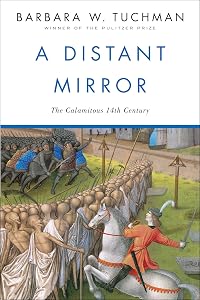
A Distant Mirror, this book, Mercenaries and Their Masters and
The Artist, the Philosopher, and the Warrior would make a solid survey of the era. show less
Hawkwood's company, the White Company, crossed into Italy, and there Hawkwood found his calling. His career was complex, to say the least, with Hawkwood fighting for Milan, Florence, and the Papacy at various points, although contrary to show more popular beliefs about mercenaries, Hawkwood did not suddenly switch sides on the eve of battle, or avoid battle entirely. Along with sacks and sudden assaults by storm and stealth, he was a master of the feigned retreat, luring his foes into vulnerable positions for a counter-charge. He participated in the brutal Massacre at Cesena while working for the papacy, and then switched to secular service.
Saunders makes the case for Hawkwood as an influential figure of the age. Aside from someone who executed the bloody intrigues of Italian politics, he also served as model for the protagonist of Chaucer's "The Knight's Tale" (the two met several times), and advanced English foreign policy in Italy, a vital market for English wool, and a strategic theater for apply leverage against the French from a second front.
Despite his long career and evident success in battle, Hawkwood died essentially broke, leaving his wife and children to make their own way in the world rather than establishing a major line. Dying in bed at the age of 71 or 72 is more than a lot of his contemporaries could say.
A Distant Mirror, this book, Mercenaries and Their Masters and
The Artist, the Philosopher, and the Warrior would make a solid survey of the era. show less
This book takes a different approach to the "calamitous 14th century" from Tuchman, in that Saunders is as much interested in the positive social and intellectual forces that the Black Plague unleashed as she is in what was lost, and uses the English mercenary captain John Hawkwood as the lens through which to observe the changes. That Saunders is able to do so while maintaining a certain dry sense of humor, while not white-washing the brutality of it all, is another point in her favour.
Before picking up this book, the reader must remember that through an overwhelming majority of its history, Italy was not a united nation. 14th c. Italy, especially, was made up of warring city-states. Florence, Siena, Naples, Milan, Pisa, etc - and Venice was a merchant Republic all on its own. This is the kind of world that the English freebooters - first introduced by Edward III - encountered when they marched from the French countryside into southern Europe. Without war, these men were unable to sustain themselves. Combat was their vocation and "pillage was inevitable." But what began as an opportunistic plundering, soon became an entanglement of inter-familial politics, papal endorsement (the anti-Visconti campaign), and a quest to show more bring the city-states to heel. For the freebooters, loyalty remained with the English crown and whoever had the fattest wallet.
You may have noticed that I haven't mentioned John Hawkwood in my summary. That's because he is merely a backdrop in his own biography. I couldn't give this one a terrible score, because I did learn a ton about English mercenaries. Just...not about Sir Hawkwood specifically. Saunders tracks his movements in battle and his political affiliations, but he disappears behind greater men. His victories are noted but not expanded upon. Out of 316 pages, his name is mentioned only a little over 100x.
About midway, Saunders takes a sharp turn into the life of St. Catherine of Siena, since she and Hawkwood "met" briefly and indirectly. Saunders then makes several, unsuccessful attempts to form a metaphor around Catherine's holy self-starvation and a weakened Italy. Instead, Saunders could've discussed the White Company's armor, weaponry, banners and integration with the peasantry more closely. Still, it's a turbulent and unrefined part of history that at the very least keeps your attention. show less
You may have noticed that I haven't mentioned John Hawkwood in my summary. That's because he is merely a backdrop in his own biography. I couldn't give this one a terrible score, because I did learn a ton about English mercenaries. Just...not about Sir Hawkwood specifically. Saunders tracks his movements in battle and his political affiliations, but he disappears behind greater men. His victories are noted but not expanded upon. Out of 316 pages, his name is mentioned only a little over 100x.
About midway, Saunders takes a sharp turn into the life of St. Catherine of Siena, since she and Hawkwood "met" briefly and indirectly. Saunders then makes several, unsuccessful attempts to form a metaphor around Catherine's holy self-starvation and a weakened Italy. Instead, Saunders could've discussed the White Company's armor, weaponry, banners and integration with the peasantry more closely. Still, it's a turbulent and unrefined part of history that at the very least keeps your attention. show less
This book will please all readers who love Barbara Tuchman's Distant Mirror. Following Tuchman's lead (and often citing her), Saunders uses the English soldier of fortune to present vignettes from the 14th century, a time of plague, famine, war which rivaled the first half of the 20th century in human suffering - but the rich and beautiful were merry still. This book isn't a conventional biography. Hawkwood's life ties together a wide range of factoids from a list of unholy sexual positions to banquet inventories. Various other persons (such as St. Catherine from Siena) are given extensive guest roles, probably because the source material about Hawkwood proper is limited. I wish the author had expanded the treatment of the military show more aspects and situated Hawkwood among his peers.
Hawkwood learned his trade in the dreadful chevauchées, the systematic plundering and rape of France during the Hundred Years War. When England and France were to exhausted to fight on, Hawkwood led his band of marauders to Italy where rivaling cities, locked in perpetual conflict, were limited by the costliness of standing armies. Hawkwood and many other foreigners (Saunders gives Hawkwood an undue historical prominence) saw the business opportunity in leasing their soldiers to the highest bidders while living off the land - torturing, plundering and raping the population, essentially as a sort of land-borne pirates. It is noteworthy that Hawkwood was already in his Forties when he came to Italy and continued to campaign up to old age. In a twist of irony, the humble Essex boy died honored by Florence, a city he tormented earlier, and bankrupt - despite the millions he earned and plundered. In contrast to the later Landsknechte, the (mounted) lances were terribly expensive in upkeep (warhorse, arms and armour).
Like a pirate, he had a good time at the expense of others. Like pirates, Hawkwood's image remains curiously untainted by all the mayhem he caused, especially the massacre of Cesena. Recommended as an introduction to the medieval world. show less
Hawkwood learned his trade in the dreadful chevauchées, the systematic plundering and rape of France during the Hundred Years War. When England and France were to exhausted to fight on, Hawkwood led his band of marauders to Italy where rivaling cities, locked in perpetual conflict, were limited by the costliness of standing armies. Hawkwood and many other foreigners (Saunders gives Hawkwood an undue historical prominence) saw the business opportunity in leasing their soldiers to the highest bidders while living off the land - torturing, plundering and raping the population, essentially as a sort of land-borne pirates. It is noteworthy that Hawkwood was already in his Forties when he came to Italy and continued to campaign up to old age. In a twist of irony, the humble Essex boy died honored by Florence, a city he tormented earlier, and bankrupt - despite the millions he earned and plundered. In contrast to the later Landsknechte, the (mounted) lances were terribly expensive in upkeep (warhorse, arms and armour).
Like a pirate, he had a good time at the expense of others. Like pirates, Hawkwood's image remains curiously untainted by all the mayhem he caused, especially the massacre of Cesena. Recommended as an introduction to the medieval world. show less
Writing a biography of a medieval mercenary soldier (1323-1394) is always going to be difficult because of the lack of hard information on the chosen subject. Some biographers might resort to surmising on what could have happened or even inventing stuff from best guesses; Francis Stonor Saunders, does a little of this but on the whole she has chosen to provide the reader with a lively account of events on the continent in which Hawkwood may or may not have been involved.
After the battle of Poitiers 1356, where the French army was routed and the English Nobility returned home with their prize of the King of France, there was a lull in the fighting. Suddenly a large number of soldiers found themselves at a loose end, with no pay and no show more one to fight for. They had been campaigning for some months and many were loathe to return to rural England. The prize of more booty kept them under arms and they soon formed themselves into mercenary companies for hire. France without it’s king became a particularly lawless country and there was profits to be had, especially as the catholic church was in schism with one of the two Popes based at Avignon. Rich opportunities presented themselves and Hawkwood emerged as one of the leaders of the so called Companies. In 1361 Hawkwood and the White Company crossed into Italy where the warring Italian city states presented the mercenaries with plenty of opportunity.
The Companies were organised on military lines and were for hire by the highest bidder. No national loyalties meant that they could cross and double cross their employers as they saw fit. They became so powerful that the only method of securing a cities safety was to either buy them off or hire another company to fight them off. Hawkwood like the leaders of other companies was ruthless in the extreme. His mercenaries lived off the land, murder, rape, and ransom was the order of the day and many villages and towns were laid to waste. Crops and houses were burned and castles and strongholds were besieged. Historical records of contracts made and ransoms paid enable historians to follow the progress of men like Hawkwood, but details of their characters and motives (apart from their need for money) remain elusive and much of what we know about them comes from their reputations.
Francis Stonor Saunders wisely does far more than present just an historical record of Hawkwood’s exploits, she attempts to place the Companies themselves within the context of life in Italy and France during that time. In an excellent introductory chapter titled the fourteenth century she paints a lively picture of life and death in that turbulent time. Drawing on the work of historians Barbara Tuchman and Johan Huizinga she tells of the horrors of war and rapine that were a fact of life for many people, but she balances this out with the opportunities that were there for people to forge for themselves a better life. Visitations of the Plague had thinned the population, presenting opportunities for the survivors, medieval service to the Lords of the manor were breaking down, city states were emerging where trade and enterprise spoke louder than fealty, or the power of the clergy. In some respects a figure such as Hawkwood may appear as a murderous mercenary leader or as a Knight (but not quite in shinning armour).
It is a difficult task for an author to extract a narrative from the chaos of the Italian city states in the latter part of the fourteenth century, especially when her subject is a man who profited so much from the chaos that he helped to create, but by concentrating on the difficulties of the schismatic Popes and the powerful Visconti family of Milan and the city state of Florence she does present a story that holds together. The closest she gets to her hero is the Hawkwood in later life when he became the captain of the Florentine mercenary army. His marriage to a daughter of the Visconti family allows her to describe: from historical records, the life of a wealthy young wife, whose older warrior husband was busily still trying to maintain his lifestyle through warring.
The book contains much of what might interest the more general reader. There are of course vivid accounts of atrocities, with all their barbarity, of battles, of bravery and cowardice as well as Hawkwood’s abilities to keep himself alive and on top of his game, but this is offset by a more rounded portrayal of 14th century life. Geoffrey Chaucer’s Canterbury Tales has all of this life in abundance and surely it is not a coincidence that in his role as soldier diplomat in his younger years he would have negotiated with Sir John Hawkwood. Francis Stonor Saunders points out that some critics believe that Chaucer’s Knight ( one of the characters on the Pilgrimage to Canterbury) is partly based on Hawkwood.
I have read widely of the history and literature from the fourteenth century, but I am still pleased to have read Francis Stonor Saunder’s Hawkwood. It paints a vivid and lively picture of many aspects of that time and while it does not really serve as an introduction to the period it enhances much of what has been written and would hold the interest of the more general reader. There are source notes a bibliography and an index and for me it was four star read. show less
After the battle of Poitiers 1356, where the French army was routed and the English Nobility returned home with their prize of the King of France, there was a lull in the fighting. Suddenly a large number of soldiers found themselves at a loose end, with no pay and no show more one to fight for. They had been campaigning for some months and many were loathe to return to rural England. The prize of more booty kept them under arms and they soon formed themselves into mercenary companies for hire. France without it’s king became a particularly lawless country and there was profits to be had, especially as the catholic church was in schism with one of the two Popes based at Avignon. Rich opportunities presented themselves and Hawkwood emerged as one of the leaders of the so called Companies. In 1361 Hawkwood and the White Company crossed into Italy where the warring Italian city states presented the mercenaries with plenty of opportunity.
The Companies were organised on military lines and were for hire by the highest bidder. No national loyalties meant that they could cross and double cross their employers as they saw fit. They became so powerful that the only method of securing a cities safety was to either buy them off or hire another company to fight them off. Hawkwood like the leaders of other companies was ruthless in the extreme. His mercenaries lived off the land, murder, rape, and ransom was the order of the day and many villages and towns were laid to waste. Crops and houses were burned and castles and strongholds were besieged. Historical records of contracts made and ransoms paid enable historians to follow the progress of men like Hawkwood, but details of their characters and motives (apart from their need for money) remain elusive and much of what we know about them comes from their reputations.
Francis Stonor Saunders wisely does far more than present just an historical record of Hawkwood’s exploits, she attempts to place the Companies themselves within the context of life in Italy and France during that time. In an excellent introductory chapter titled the fourteenth century she paints a lively picture of life and death in that turbulent time. Drawing on the work of historians Barbara Tuchman and Johan Huizinga she tells of the horrors of war and rapine that were a fact of life for many people, but she balances this out with the opportunities that were there for people to forge for themselves a better life. Visitations of the Plague had thinned the population, presenting opportunities for the survivors, medieval service to the Lords of the manor were breaking down, city states were emerging where trade and enterprise spoke louder than fealty, or the power of the clergy. In some respects a figure such as Hawkwood may appear as a murderous mercenary leader or as a Knight (but not quite in shinning armour).
It is a difficult task for an author to extract a narrative from the chaos of the Italian city states in the latter part of the fourteenth century, especially when her subject is a man who profited so much from the chaos that he helped to create, but by concentrating on the difficulties of the schismatic Popes and the powerful Visconti family of Milan and the city state of Florence she does present a story that holds together. The closest she gets to her hero is the Hawkwood in later life when he became the captain of the Florentine mercenary army. His marriage to a daughter of the Visconti family allows her to describe: from historical records, the life of a wealthy young wife, whose older warrior husband was busily still trying to maintain his lifestyle through warring.
The book contains much of what might interest the more general reader. There are of course vivid accounts of atrocities, with all their barbarity, of battles, of bravery and cowardice as well as Hawkwood’s abilities to keep himself alive and on top of his game, but this is offset by a more rounded portrayal of 14th century life. Geoffrey Chaucer’s Canterbury Tales has all of this life in abundance and surely it is not a coincidence that in his role as soldier diplomat in his younger years he would have negotiated with Sir John Hawkwood. Francis Stonor Saunders points out that some critics believe that Chaucer’s Knight ( one of the characters on the Pilgrimage to Canterbury) is partly based on Hawkwood.
I have read widely of the history and literature from the fourteenth century, but I am still pleased to have read Francis Stonor Saunder’s Hawkwood. It paints a vivid and lively picture of many aspects of that time and while it does not really serve as an introduction to the period it enhances much of what has been written and would hold the interest of the more general reader. There are source notes a bibliography and an index and for me it was four star read. show less
Hawkwood was an English soldier on leave in the continent during a caesura in the Hundred Years War. While suffering from peace, he plied his trade in Italy, which was good business all around. The city states employed mercenary companies to fight each other, and Hawkwood benefited from their constant turmoil. He would contract with Pisa to fight Milan, then Milan to fight Pisa, then against Milan again, then against the Pope, then he worked for the Pope, then he worked against the Pope again. He got money, land, and titles from every side; the ablest mercenary -- and, more importantly, businessman -- in a mercenary age.
Saunders as much as acknowledges that the first half of the book won't be interesting, because there's little known show more about the early part of Hawkwood's life. I suppose she didn't need to spend time telling us that part, but after all, I can't fault her when the second half is so extraordinary. show less
Saunders as much as acknowledges that the first half of the book won't be interesting, because there's little known show more about the early part of Hawkwood's life. I suppose she didn't need to spend time telling us that part, but after all, I can't fault her when the second half is so extraordinary. show less
Members
- Recently Added By
Published Reviews
ThingScore 100
Frances Stonor Saunders bok är ett förträffligt stycke populärhistoria. Den som läser skriften lär sig åtskilligt om inte bara Hawkwood utan även om senmedeltidens krig, politik, kultur och vardagsliv.
added by andejons
Den djävulske engelsmannen är en otäck, färgstark och välskriven skildring av ett senmedeltida århundrade fyllt inte bara av infernaliska händelser utan också exempel på kommersiell och konstnärlig vitalitet.
added by andejons
Lists

Recommend the 20 best books you've read in the last five years
2,168 works; 606 members

TLL Reading List
9 works; 1 member
Author Information

13+ Works 1,079 Members
Some Editions
Awards and Honors
Notable Lists
Common Knowledge
- Alternate titles
- The Devil's Broker (U.S. ed.) (U.S. ed.)
- Original publication date
- 2004
- People/Characters
- John Hawkwood; Bernabò Visconti; Gian Galeazzo; Richard II, King of England; Catherine of Siena; Joan I, Queen of Naples
- Important places
- Siena, Tuscany, Italy; Milan, Lombardy, Italy; Florence, Tuscany, Italy; Padua, Veneto, Italy; Rome, Italy; Avignon, Vaucluse, Provence-Alpes-Côte d'Azur, France (show all 8); Venice, Veneto, Italy; Pisa, Tuscany, Italy
- Important events
- Battle of Castagnaro (1387-03-11)
- First words
- In the third bay of the north aisle of the Duomo of Florence is Paolo Uccello's fresco portrait of John Hawkwood.
- Original language
- English
- Disambiguation notice
- UK ed.: Hawkwood: Diabolical Englishman
US ed.: The Devil's Broker
Classifications
- Genres
- History, Nonfiction, General Nonfiction, Biography & Memoir
- DDC/MDS
- 945.05 — History & geography History of Europe Italy Italy Renaissance 1300-1494
- LCC
- DG536 .H4 .S28 — History of Europe, Asia, Africa and Oceania City History of Italy Medieval and modern Italy, 476- History By period Medieval, 476-1492 1268-1492 Renaissance
- BISAC
Statistics
- Members
- 482
- Popularity
- 63,112
- Reviews
- 11
- Rating
- (3.77)
- Languages
- Dutch, English, Swedish
- Media
- Paper
- ISBNs
- 9
- ASINs
- 5