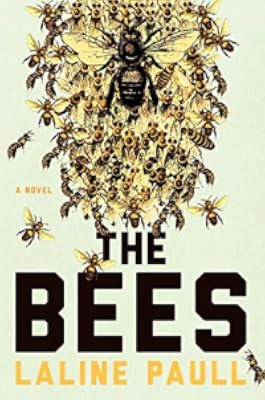
The Bees
by Laline Paull
On This Page
Description
Flora 717 is a sanitation worker, a member of the lowest caste in her orchard hive, where work and sacrifice are the highest virtues and worship of the beloved Queen the only religion. But Flora is not like other bees. With circumstances threatening the hive's survival, her curiosity is regarded as a dangerous flaw, but her courage and strength are assets. She is allowed to feed the newborns in the royal nursery and then to become a forager, flying alone and free to collect nectar and show more pollen. A feat of bravery grants her access to the Queen's inner sanctum, where she discovers mysteries about the hive that are both profound and ominous. But when Flora breaks the most sacred law of all'daring to challenge the Queen's preeminence'enemies abound, from the fearsome fertility police who enforce the hive's strict social hierarchy to the high priestesses jealously wedded to power. Her deepest instincts to serve and sacrifice are now overshadowed by a greater power: a fierce maternal love that will bring her into conflict with her conscience, her heart, and her society'and lead her to perform unthinkable deeds. Thrilling, suspenseful, and spectacularly imaginative, The Bees and its dazzling young heroine will forever change the way you look at the world outside your window. show lessTags
Recommendations

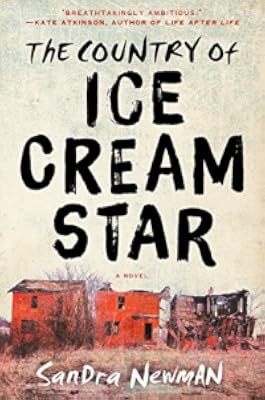
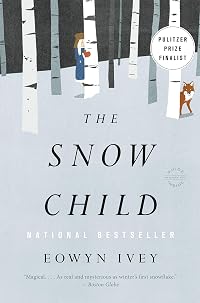
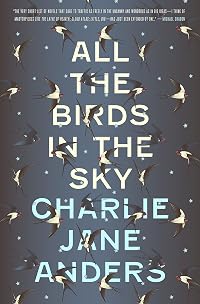
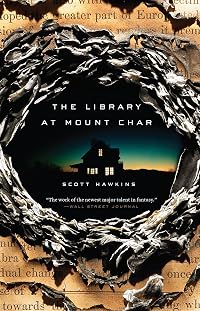



Member Recommendations


Member Reviews
From the moment she emerges out of her cell Flora 717 is not like the other bees. She has been born a sanitation bee, meant to clean and to take orders from all other orders of bees. But unlike her sisters she can talk. And soon she learns that she can be more. She can nurse and forage. She can become more than what she was born into.
But the bees of her hive live according to order and caste. The Sage sisters, the priestesses of the hive seem to have plans of their own, and in this time of shortage and uncertainty are they damaging the good of the hive? Or is the actions of Flora 717 that are so terrible?
I’m sure the very premise of this book is off-putting to some. How could someone write an entire book about the fictionalised life show more of a bee? And een if they did, why would anyone read it?
Well, that second one is an easy one to answer, because it isn’t every day that a novel has a bee as its hero. The unusual often grabs people’s attention. Yes, some may be put off by it, but I’m sure that most of those who read the book will enjoy it. I know I did.
The first thing you learn when reading The Bees is that Flora is a bee. She isn’t a human dressed up as a bee. She behaves according to instinct and chemical prompting. Her reactions and actions are not what a person might or might not do, although of course they are actions created by a human mind. Still, in many ways her world is utterly alien to the human world.
Which makes the book all the more entertaining if you ask me.
There is a rigid caste system1 which means that you can read this book as a commentary on human society and tyrannical power systems. There are hints of racism and prejudice everywhere. Every insect but bees are unclean and looked down on by the bees. And the different castes within the hive look down and compete with one another for power, if high ranking enough.
There is intrigue and action. Some of it very bloody and graphic, but that is nature in operation.
I originally decided to read this book because the author, Paull, is the British daughter of first-generation Indian immigrants and so it fitted into my Diverse Universe reading. Unfortunately I didn’t get it finished in time but I’m still really glad to have read it. It is a book that delights in being different from the usual human-centered stories. And it also highlights some of the plights of the honeybee today; pesticides, single crop farming, lack of native plants etc. show less
But the bees of her hive live according to order and caste. The Sage sisters, the priestesses of the hive seem to have plans of their own, and in this time of shortage and uncertainty are they damaging the good of the hive? Or is the actions of Flora 717 that are so terrible?
I’m sure the very premise of this book is off-putting to some. How could someone write an entire book about the fictionalised life show more of a bee? And een if they did, why would anyone read it?
Well, that second one is an easy one to answer, because it isn’t every day that a novel has a bee as its hero. The unusual often grabs people’s attention. Yes, some may be put off by it, but I’m sure that most of those who read the book will enjoy it. I know I did.
The first thing you learn when reading The Bees is that Flora is a bee. She isn’t a human dressed up as a bee. She behaves according to instinct and chemical prompting. Her reactions and actions are not what a person might or might not do, although of course they are actions created by a human mind. Still, in many ways her world is utterly alien to the human world.
Which makes the book all the more entertaining if you ask me.
There is a rigid caste system1 which means that you can read this book as a commentary on human society and tyrannical power systems. There are hints of racism and prejudice everywhere. Every insect but bees are unclean and looked down on by the bees. And the different castes within the hive look down and compete with one another for power, if high ranking enough.
There is intrigue and action. Some of it very bloody and graphic, but that is nature in operation.
I originally decided to read this book because the author, Paull, is the British daughter of first-generation Indian immigrants and so it fitted into my Diverse Universe reading. Unfortunately I didn’t get it finished in time but I’m still really glad to have read it. It is a book that delights in being different from the usual human-centered stories. And it also highlights some of the plights of the honeybee today; pesticides, single crop farming, lack of native plants etc. show less
The Bees by Laline Paull is an unusual and intriguing fantasy about the life cycle of bees. Following one character, the author shows how the hive mentality works to have all bees live a productive life, with all the benefits being for the group instead of individual achievement. The bees are kept in line by both the threat of violence and the loving pheromones released by their benevolent Queen.
Flora 717 is born to the hive and destined to be a sanitation worker, but this bee is very different from the rest, she is too big, too dark and too forthright. Although in danger of being killed for being a deviant, she is given a change to try different occupations. She works in the nursery and loves caring for the infants but jealousy from show more the others has her moved along. She is encouraged to care for the drones but their loud ways and boasting disgust her. When the hive is invaded by wasps, Flora is the one who steps forward and defeats the lead wasp. She is invited to meet with the Queen whom all the bees worship and care for, and this meeting gives Flora an opportunity to visit the sacred library and to read the panels that detail the history of the hive. The job most suited to her abilities seems to be foraging. Due to her large size she is able to bring back twice as much nectar and pollen as the other bees. She also spends time working in sanitation, mostly cleaning up after the raucous drones or removing the dead. Her difference also causes her to lay eggs which is expressly forbidden. Unable to protect her first two eggs, she vows to keep the third one safe. Hiding her egg away from the Priestesses and the Fertility Police, Flora eventually comes to realize her purpose and destiny.
Although I have seen this book often compared to Watership Down, I found this dystopian political thriller with it’s lifetime caste system, rigid rules that include who can and cannot give birth, and the vividly described ceremonial slaughter reminded me much more of Margaret Atwood’s The Handmaid Tale. The Bees is a story of courage and conflict and the author is to applauded for her research and creativity. This would have been a 5 star read for me, but I found the center part of the book dragged a little. show less
Flora 717 is born to the hive and destined to be a sanitation worker, but this bee is very different from the rest, she is too big, too dark and too forthright. Although in danger of being killed for being a deviant, she is given a change to try different occupations. She works in the nursery and loves caring for the infants but jealousy from show more the others has her moved along. She is encouraged to care for the drones but their loud ways and boasting disgust her. When the hive is invaded by wasps, Flora is the one who steps forward and defeats the lead wasp. She is invited to meet with the Queen whom all the bees worship and care for, and this meeting gives Flora an opportunity to visit the sacred library and to read the panels that detail the history of the hive. The job most suited to her abilities seems to be foraging. Due to her large size she is able to bring back twice as much nectar and pollen as the other bees. She also spends time working in sanitation, mostly cleaning up after the raucous drones or removing the dead. Her difference also causes her to lay eggs which is expressly forbidden. Unable to protect her first two eggs, she vows to keep the third one safe. Hiding her egg away from the Priestesses and the Fertility Police, Flora eventually comes to realize her purpose and destiny.
Although I have seen this book often compared to Watership Down, I found this dystopian political thriller with it’s lifetime caste system, rigid rules that include who can and cannot give birth, and the vividly described ceremonial slaughter reminded me much more of Margaret Atwood’s The Handmaid Tale. The Bees is a story of courage and conflict and the author is to applauded for her research and creativity. This would have been a 5 star read for me, but I found the center part of the book dragged a little. show less
This is a fabulous book. When I finished it I had to read it again.
Through the eyes, or more often through the antennae, of one worker bee, Flora 717, The Bees tells the story of a hive of bees and of Flora's own adventures within the hive - and outside it.
The book's most remarkable success is the way it pulls the reader into the sheer alien-ness of the bees' world, into the way the bee perceives its world. The sense of what it is to be a bee, to be your own bee and also part of a hive-mind, is vividly and compellingly present on every page. Wasps, Spiders, Cold, Rain are all terrifyingly to scale. Just being a bee is a precarious and dangerous existence. Danger is at the heart of any thriller and this is a thriller - an absolute show more page-turner.
There are vivid characters but character is built out of the function (or lack of it) of particular bees within the hive rather than merely being imposed.
There is a totalitarian society, mind control, duty, mania, schism. All these things have their parallels in human societies and you can draw those parallels if you want to but, essentially, all Laline Paull's bees are just doing the things bees do. But in doing so they provide one of the most exciting novels I've read in a long time.
There are 9,000 sisters too. The word 'sister' will never feel quite the same again. show less
Through the eyes, or more often through the antennae, of one worker bee, Flora 717, The Bees tells the story of a hive of bees and of Flora's own adventures within the hive - and outside it.
The book's most remarkable success is the way it pulls the reader into the sheer alien-ness of the bees' world, into the way the bee perceives its world. The sense of what it is to be a bee, to be your own bee and also part of a hive-mind, is vividly and compellingly present on every page. Wasps, Spiders, Cold, Rain are all terrifyingly to scale. Just being a bee is a precarious and dangerous existence. Danger is at the heart of any thriller and this is a thriller - an absolute show more page-turner.
There are vivid characters but character is built out of the function (or lack of it) of particular bees within the hive rather than merely being imposed.
There is a totalitarian society, mind control, duty, mania, schism. All these things have their parallels in human societies and you can draw those parallels if you want to but, essentially, all Laline Paull's bees are just doing the things bees do. But in doing so they provide one of the most exciting novels I've read in a long time.
There are 9,000 sisters too. The word 'sister' will never feel quite the same again. show less
What is it like to be a bee? Paull’s book comes about as close as you can get to an answer.
It is the story of Flora, a bee who is born into the lowest caste but has abilities beyond her kin. At a time when the hive is in crisis, her skills are needed but by stepping out of the hive hierarchy she is able to observe and question what she sees.
Flora’s life is elemental. She faces death from predators and fights fiercely. She struggles to survive the elements. She experiences the joy of foraging and flight. She is devoted to the hive without always knowing where her loyalty should be placed.
The thing that makes the book convincing for me is that the bees do not have complex inner lives, they do not, as human characters would, have show more thoughts shaped by their past and imagined futures. Flora’s and the other characters’ lives are the product of their senses – pheromones, electrical impulses, the food they’re given, the desire to dance, the need to shelter.
While I chose to read it as a book about bees rather than an allegory of the human condition, it does raise the question, how far is our consciousness the same? show less
It is the story of Flora, a bee who is born into the lowest caste but has abilities beyond her kin. At a time when the hive is in crisis, her skills are needed but by stepping out of the hive hierarchy she is able to observe and question what she sees.
Flora’s life is elemental. She faces death from predators and fights fiercely. She struggles to survive the elements. She experiences the joy of foraging and flight. She is devoted to the hive without always knowing where her loyalty should be placed.
The thing that makes the book convincing for me is that the bees do not have complex inner lives, they do not, as human characters would, have show more thoughts shaped by their past and imagined futures. Flora’s and the other characters’ lives are the product of their senses – pheromones, electrical impulses, the food they’re given, the desire to dance, the need to shelter.
While I chose to read it as a book about bees rather than an allegory of the human condition, it does raise the question, how far is our consciousness the same? show less
Such a good novel. Really hallucinogenic. Set in a hive where the walls are frescoed with scent. Scent is a solid, veiling faces, blocking paths, imparting information and controlling minds. The bees are anthropomorphised just enough that you can understand what’s going on and care. The book is really about us.
The bees live in a monarchical theocracy. Paull has a lot to say on the subject. It put me in mind of a mix of Nineteen Eighty-Four and The Handmaid’s Tail (but with bees). She has a lot to say about human behaviour regardless of the political system, particularly about crime and sin and how we deal with it. From the descriptions I take it that the hive is infected with the Deformed Wing Virus. They take the symptoms to be a show more result of crime and perform scapegoating rituals to keep the blame contained. They take thelytokous parthenogenesis to be a sin and perform human (I mean bee) sacrifices to remove the sin from society. This raises a number of disturbing questions in my mind. Questions about human agency, questions about where blame lies and how it can be moved around, preferably away from us.
Unfortunately there’s no time to answers as the pace of this book is break-neck. I read 250 pages in a single sitting. show less
The bees live in a monarchical theocracy. Paull has a lot to say on the subject. It put me in mind of a mix of Nineteen Eighty-Four and The Handmaid’s Tail (but with bees). She has a lot to say about human behaviour regardless of the political system, particularly about crime and sin and how we deal with it. From the descriptions I take it that the hive is infected with the Deformed Wing Virus. They take the symptoms to be a show more result of crime and perform scapegoating rituals to keep the blame contained. They take thelytokous parthenogenesis to be a sin and perform human (I mean bee) sacrifices to remove the sin from society. This raises a number of disturbing questions in my mind. Questions about human agency, questions about where blame lies and how it can be moved around, preferably away from us.
Unfortunately there’s no time to answers as the pace of this book is break-neck. I read 250 pages in a single sitting. show less
The novel follows one plucky little bee, Flora 717, from the moment she first breaks out of her wax cell and begins life in the hive. The hive itself is reimagined almost like a palace in a fantasy novel, where the beautiful and benevolent Queen sits in her chambers exuding love to her subjects, her priestesses keep order with merciless efficiency, the spoilt drone princes carouse and preen - and at the very bottom of the heap the Flora bees, or sanitation workers, clean up quietly and without fuss. This Flora, however, is an anomaly in the hive, and her unusually wide-ranging capabilities take her from the nursery to the gardens of the city and back again.
What Paull has woven against the backdrop of an ordinary orchard beehive is show more ingenious. She has created a deep lore encompassing everything from the hive mind to a beekeeper's visits, and manages to make an event as apparently trivial as a marauding wasp into a genuinely nail-biting scene. I absolutely loved it; I was gripped from start to finish, my heart was pounding at several points, I cried more than once, and I think little Flora 717 might turn out to be one of my favourite and most memorable characters of recent years. show less
What Paull has woven against the backdrop of an ordinary orchard beehive is show more ingenious. She has created a deep lore encompassing everything from the hive mind to a beekeeper's visits, and manages to make an event as apparently trivial as a marauding wasp into a genuinely nail-biting scene. I absolutely loved it; I was gripped from start to finish, my heart was pounding at several points, I cried more than once, and I think little Flora 717 might turn out to be one of my favourite and most memorable characters of recent years. show less
I love bees. It's hard not to. They're crucial to the environment and the pollination of many flowers, fruits and vegetables. They produce honey and beeswax and if I didn't live in the city, I fancy I'd like to own and tend my own beehive.
The Bees by Laline Paull is the tale of one bee's life in her hive and I was chuffed to receive it as a Christmas gift in 2018. Flora 717 is born a sanitation bee, but she doesn't quite fit in due to her bigger body and ugly features. She has other skills though and learns to be a productive member of the hive.
You might imagine a bee's life is dull, but we follow Flora 717 around all of the departments of her hive and learn the tasks each of her fellow hive members undertakes. Each bee knows their duty show more and they're united by the hive mind and their love for the Queen or Mother bee. Scent plays a key role in Flora's life and in the book, with scent and smells appearing on almost every page as it forms a critical part of Flora's communication with other bees and the environment around her.
It's not a spoiler to disclose that Flora 717 also talks. While I generally don't like novels with talking animals, this one falls into the same category of books as Watership Down which manage to successfully bridge this divide. However, if you have a problem with bees exhibiting other human like behaviour - curtseying, praying and using their 'hands' - then this might not be for you.
It was a joy to follow Flora 717 as she fulfilled her various duties, tried to understand her place and make a valuable contribution to the hive. I enjoyed learning about the waggle dance, the making of honey, the laying of eggs and all manner of bee activities through Flora's eyes and longed to know more about bees in general.
Much happens throughout the book as the bees move from crisis to crisis and the action never stops. This book can also be read on a deeper level, with ample references to an overarching hierarchy and religion governing the bees. Themes of purpose, leadership, devotion, duty, sacrifice, deformity, class, age and gender are all explored through the activities within the hive and this made for an interesting and unique read. show less
The Bees by Laline Paull is the tale of one bee's life in her hive and I was chuffed to receive it as a Christmas gift in 2018. Flora 717 is born a sanitation bee, but she doesn't quite fit in due to her bigger body and ugly features. She has other skills though and learns to be a productive member of the hive.
You might imagine a bee's life is dull, but we follow Flora 717 around all of the departments of her hive and learn the tasks each of her fellow hive members undertakes. Each bee knows their duty show more and they're united by the hive mind and their love for the Queen or Mother bee. Scent plays a key role in Flora's life and in the book, with scent and smells appearing on almost every page as it forms a critical part of Flora's communication with other bees and the environment around her.
It's not a spoiler to disclose that Flora 717 also talks. While I generally don't like novels with talking animals, this one falls into the same category of books as Watership Down which manage to successfully bridge this divide. However, if you have a problem with bees exhibiting other human like behaviour - curtseying, praying and using their 'hands' - then this might not be for you.
It was a joy to follow Flora 717 as she fulfilled her various duties, tried to understand her place and make a valuable contribution to the hive. I enjoyed learning about the waggle dance, the making of honey, the laying of eggs and all manner of bee activities through Flora's eyes and longed to know more about bees in general.
Much happens throughout the book as the bees move from crisis to crisis and the action never stops. This book can also be read on a deeper level, with ample references to an overarching hierarchy and religion governing the bees. Themes of purpose, leadership, devotion, duty, sacrifice, deformity, class, age and gender are all explored through the activities within the hive and this made for an interesting and unique read. show less
Members
- Recently Added By
Lists

Your favorite books from the 2015 Baileys Women's Prize for Fiction
20 works; 13 members

Recommend the 20 best books you've read in the last five years
2,168 works; 606 members

Favorite Animal Fiction
359 works; 156 members

Baileys Women's Prize for Fiction Winners and Shortlisted Books
61 works; 11 members

Top Five Books of 2019
387 works; 111 members

Top Five Books of 2014
1,064 works; 398 members

Top Five Books of 2015
811 works; 241 members

Summer Reads 2014
207 works; 70 members

Dublin Literary Award Longlist 2016
148 works; 4 members

Animals in the Title
498 works; 11 members
Overdue Podcast
806 works; 9 members
First Novels
373 works; 17 members
Want to Read — open list
55 works; 2 members

BingoDOG - Animals in Adult Fiction
78 works; 20 members
io9 Book Club
70 works; 4 members

Books Read in 2019
4,052 works; 110 members

Adult Stories Involving Animals
76 works; 6 members
Author Information

3 Works 2,212 Members
Laline Paull was born in England. Her parents were first-generation Indian immigrants. She studied English at Oxford, screenwriting in Los Angeles, and theatre in London, where she has had two plays performed at the Royal National Theatre. She is a member of BAFTA and the Writers' Guild of America. She lives in England by the sea with her husband, show more the photographer Adrian Peacock, and their three children. 'The Bees' is her first novel. It received wide critical acclaim and was chosen as an Amazon Rising Star. This title also made the Baileys Women¿s Prize for Fiction 2015 shortlist. (Bowker Author Biography) show less
Some Editions
Awards and Honors
Awards
Distinctions
Notable Lists
Common Knowledge
- Canonical title
- The Bees
- Original publication date
- 2014
- People/Characters
- Flora; Sir Linden; Lily 500; Madam Dogwood; Sir Poplar; Sister Sage (show all 7); Sister Teasel
- Important places
- The Beehive; England, UK
- Epigraph
- The bee's life is like a magic well: the more you draw from it, the more it fills with water.
— Karl von Frisch - Dedication
- For Adrian
- First words
- The old orchard stood besieged. To one side spread a vast, arable plain, a dullard's patchwork of corn and soy reaching to the dark tree line on the hills. To the other, a light-industrial development stretched toward the tow... (show all)n. -Prologue
The cell squeezed her, and the air was hot and fetid. All the joints of her body burned from her frantic twisting against the walls. Her head was pressed into her chest and her legs shot with cramps, but her struggles had wor... (show all)ked - one wall felt weaker. She kicked out with all her strength and felt something crack and break. She forced and tore and bit until there was a jagged hole into fresher air beyond. -Chapter One - Quotations
- Accept. Obey. Serve.
- Last words
- (Click to show. Warning: May contain spoilers.)The family looked up into the bright and empty sky.
- Blurbers
- Atwood, Margaret; Donoghue, Emma; Miller, Madeline; Chevalier, Tracy
- Original language
- English
- Canonical DDC/MDS
- 823.92
- Canonical LCC
- PR6116.A87
Classifications
Statistics
- Members
- 1,960
- Popularity
- 10,830
- Reviews
- 137
- Rating
- (3.75)
- Languages
- 8 — Dutch, English, German, Italian, Norwegian, Polish, Spanish, Turkish
- Media
- Paper, Audiobook, Ebook
- ISBNs
- 36
- UPCs
- 1
- ASINs
- 15