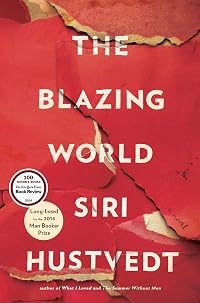
The Blazing World
by Siri Hustvedt
On This Page
Description
"When Professor Hess stumbles across an unusual letter to the editor in an art journal, he is surprised to have known so little about the brilliant and mysterious artist it describes, the late Harriet Burden. Intrigued by her story, and by the explosive scandal surrounding her legacy, he begins to interview those who knew her, hoping to separate fact from fiction, only to find himself tumbling down a rabbit's hole of personal and psychological intrigue. Before she died, Harriet had claimed show more credit for three shows of contemporary art that had been the biggest sensations of the previous decade, sending the critics into a tailspin, since no one had even thought to connect the three shows before. The sculptures and paintings, while all of unquestionable quality, would seem to have nothing in common, and of the three young male artists who presented the work, one has fled the country, another isn't talking to anyone, and the third appears to have committed suicide--though not before denouncing Harriet to the world. So was Harriet Burden one of the greatest artists--male or female--in recent memory, having masterminded a puppet show of grand proportions, or was she a washed-up has-been looking for glory on others' coattails? As Hess seeks to solve the puzzle, he soon finds everyone has a different story to tell, and that nothing, and no one, is as it seems. With a playfully intricate narrative structure, flawless prose, and fierce emotional insight, award-winning novelist Siri Hustvedt takes us into the heart of human nature, exposing our prejudices and preconceptions about ambition, feminism, and the complex psychology of love"-- show lessTags
Recommendations
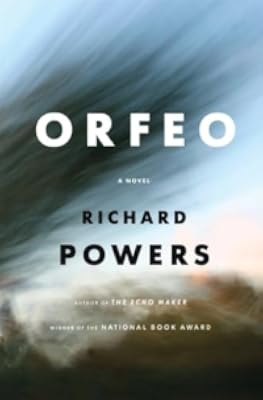
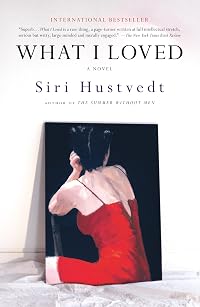
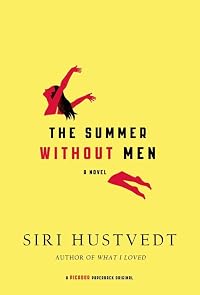









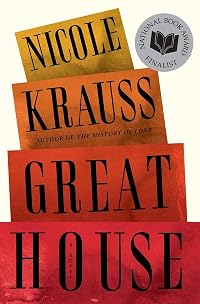
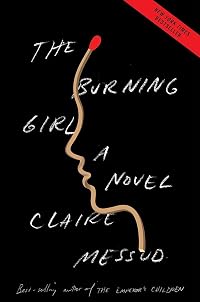
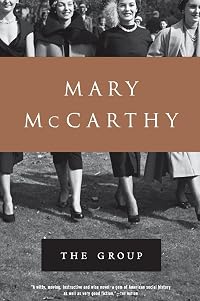
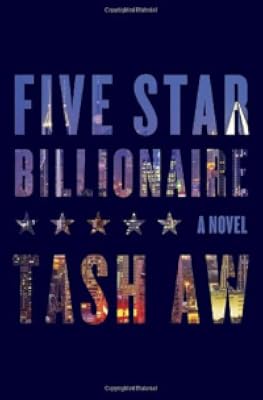
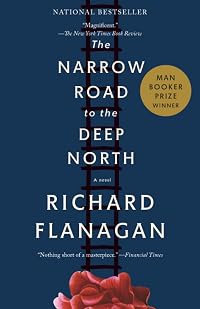
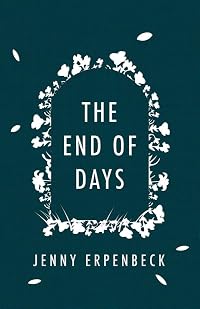
Member Recommendations
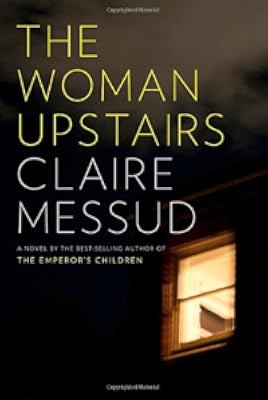
shaunie Messud's book reminded me very much of Hustvedt when I read it last year, and in turn The Blazing World reminds me of The Woman Upstairs - both about women being betrayed and both have detailed descriptions of their artwork.
30

JuliaMaria Frauen und Kunst: Ehefrau, Muse oder Künstlerin - Gesellschaftskritik
Member Reviews
This is a very smart novel about a very smart artist-protagonist by a very smart author. First off, I thoroughly enjoyed it and was engrossed by the journey of artist Harriet Burden, the recent widow of an famous art dealer, who decides to test and tease the NYC art world. The novel may be too clever by half for many readers who are impatient with stylistic devices and games, but I found Hustvedt's writing amusing and entertaining.
The novel is told from multiple perspectives, opening with an Editor's Introduction, which explains that the text is composed of a series of journals kept by Burden as well as as other commentary on and criticism of her work and testimony of significant people and family members in her life.
After her husband show more has died, Burden decides to present her installation works under a series of male pseudonyms -- she calls her work "Maskings." Each of the three installations garners increasing critical attention, until the third culminates in a crisis of identity and ownership. The relationships that Burden has with the three artists she hires or co-opts as fronts mirror certain aspects of her personality.
The Blazing World is probably not a novel for everyone, but if you're interested in the art world, feminism or literary experimentation, I highly recommend it. show less
The novel is told from multiple perspectives, opening with an Editor's Introduction, which explains that the text is composed of a series of journals kept by Burden as well as as other commentary on and criticism of her work and testimony of significant people and family members in her life.
After her husband show more has died, Burden decides to present her installation works under a series of male pseudonyms -- she calls her work "Maskings." Each of the three installations garners increasing critical attention, until the third culminates in a crisis of identity and ownership. The relationships that Burden has with the three artists she hires or co-opts as fronts mirror certain aspects of her personality.
The Blazing World is probably not a novel for everyone, but if you're interested in the art world, feminism or literary experimentation, I highly recommend it. show less
I saw that Siri Hustvedt wrote a collection of essays about perception and identity, and I think there must be a great deal of her thinking expressed by the protagonist of this novel, Harriet “Harry” Burden. Harry is an artist in New York, who also had the possible misfortune of being married to a well-known art dealer. Her husband, Felix, has refused to show her work, and consequently the New York art world knows her as the hostess of Felix’s dinner parties rather than as an artist in her own right. Both Felix and Harry are dead at the start of the novel, which is told through Harry’s journals, academic and critical writing about her, and interviews with people who knew her.
After Felix’s death, Harry undertakes a project to show more create and show her art using “masks”—three male artists who will show the art as if it were their own. Not only are these shows far better received than Harry’s art was when shown under her own name, vindicating her belief that she has been disregarded as an artist because she is a woman, but it gives Harry (and us) insight into how what we think and believe affects how we perceive and, perhaps even more interestingly, how her “masks” affect the art she creates.
It’s clear from the onset of the novel that the art market has difficulty believing that Harry was really the creator of the projects shown under the names of her male “masks.” Rune, the final of her “masks” who was already an established artist in his own right, refuses after all to reveal that Harry was the artist behind the work. Her relationship with him is the most complex and thought-provoking in the book, though her relationships with every character shed light on the philosophical and psychological concerns about art, perception, sex, and identity that infuse the novel.
This is very much an intellectual novel of ideas. There’s a touch of “Rashomon,” in that we see Harry’s life and work from a variety of perspectives, though strictly speaking not many of the same individual incidents from different points of view. We see the broader picture of Harry as housewife, mother, virago, mentally disturbed obsessive, lover, and ultimately brilliant artist.
The title comes from the writing of Margaret Cavendish, Duchess of Newcastle, a 17th-century philosopher and writer, and an icon to Harry. The title became particularly resonant at the very end of the novel, when we see Harry’s magnum opus through the eyes of the distinctly unintellectual Sweet Autumn, a New Age crystal healer. This final scene made the perfect frame, and there’s nothing I appreciate more than the perfect ending to a novel of ideas. show less
After Felix’s death, Harry undertakes a project to show more create and show her art using “masks”—three male artists who will show the art as if it were their own. Not only are these shows far better received than Harry’s art was when shown under her own name, vindicating her belief that she has been disregarded as an artist because she is a woman, but it gives Harry (and us) insight into how what we think and believe affects how we perceive and, perhaps even more interestingly, how her “masks” affect the art she creates.
It’s clear from the onset of the novel that the art market has difficulty believing that Harry was really the creator of the projects shown under the names of her male “masks.” Rune, the final of her “masks” who was already an established artist in his own right, refuses after all to reveal that Harry was the artist behind the work. Her relationship with him is the most complex and thought-provoking in the book, though her relationships with every character shed light on the philosophical and psychological concerns about art, perception, sex, and identity that infuse the novel.
This is very much an intellectual novel of ideas. There’s a touch of “Rashomon,” in that we see Harry’s life and work from a variety of perspectives, though strictly speaking not many of the same individual incidents from different points of view. We see the broader picture of Harry as housewife, mother, virago, mentally disturbed obsessive, lover, and ultimately brilliant artist.
The title comes from the writing of Margaret Cavendish, Duchess of Newcastle, a 17th-century philosopher and writer, and an icon to Harry. The title became particularly resonant at the very end of the novel, when we see Harry’s magnum opus through the eyes of the distinctly unintellectual Sweet Autumn, a New Age crystal healer. This final scene made the perfect frame, and there’s nothing I appreciate more than the perfect ending to a novel of ideas. show less
It was easy. It's still easy. You simply refuse to answer a woman. You don't engage in a dialogue. You let her words or her pictures die.
Harriet Burden is a talented artist who can't get any traction in the art world. Even her beloved husband, an important gallery owner, doesn't notice her art. So she comes up with a plan; she creates three stellar shows and has a different male artist take the credit for each one. Her plan is to then reveal herself and prove to the art world how sexist it is, but it doesn't work out as planned.
This is not a gentle or tactful novel. It is an angry, vibrant portrait about living as an artist in New York, about pushing against boundaries, about mental illness and genius. Were Hustvedt to have wanted to show more simply preach, she would not have created Harriet Burden. Harry is wonderful; chaotic, impulsive, angry and immensely talented. Her life blazes across the pages of the novel, which is told in the form of interviews, articles, diary entries and other biographical notes. It's an effective way to tell the story, with Harry's friends and family, as well as her detractors and other artists able to give their view of the events. Harry is as controversial and colorful as Francis Bacon or any other modern artist.
I was impressed by Hustvedt's writing and the depth of her knowledge. I'll certainly be reading more by this author. show less
Harriet Burden is a talented artist who can't get any traction in the art world. Even her beloved husband, an important gallery owner, doesn't notice her art. So she comes up with a plan; she creates three stellar shows and has a different male artist take the credit for each one. Her plan is to then reveal herself and prove to the art world how sexist it is, but it doesn't work out as planned.
This is not a gentle or tactful novel. It is an angry, vibrant portrait about living as an artist in New York, about pushing against boundaries, about mental illness and genius. Were Hustvedt to have wanted to show more simply preach, she would not have created Harriet Burden. Harry is wonderful; chaotic, impulsive, angry and immensely talented. Her life blazes across the pages of the novel, which is told in the form of interviews, articles, diary entries and other biographical notes. It's an effective way to tell the story, with Harry's friends and family, as well as her detractors and other artists able to give their view of the events. Harry is as controversial and colorful as Francis Bacon or any other modern artist.
I was impressed by Hustvedt's writing and the depth of her knowledge. I'll certainly be reading more by this author. show less
The Blazing World is one of the 2014 Booker prize nominees that jumped out at me as something I would like to read. The premise is that a woman artist, Harriet "Harry" Burden, in her 60s who feels that her artwork has been under-appreciated because of her gender, creates 3 works of art and finds a different man to claim each of the exhibits as his own. After all three are exhibited and critiqued she plans to reveal herself as the artist behind them. Unfortunately, the last artist she chooses betrays her and refuses to admit that the work was hers. Many people believe him and the whole project is ruined for her.
The book is put together with different voices in Harriet's life trying to tell her story after her death. We get points of view show more from both of Harry's adult children, her second husband, her best friend, art critics, and others. This is very effective as a major theme of the book is perception. You see from the various points of view all of the ways the events are perceived. Also, Harriet leaves behind extensive journals where she discusses her life, her artwork, and her reading - she is esoteric, conceited, and vulnerable all at once. She reads philosophy and quotes it extensively. Luckily, the fictional editor of the book provides footnotes for the references Harriet makes.
You would assume from the description that a major theme of this book is going to be sexism in the art world. This is part of the book, certainly, but it is approached more as Harriet's perception of sexism. I would say that the theme is closer to exploring how the artist is part of the work of art. As such, gender, sexual orientation, race, and personality of the artist all factor in to a work of art. Part of Harriet's experiment with her art work was to demonstrate this, though I'm not sure if she intended that from the start. This theme really got me thinking about how much the name attached to a work of art influences my experience of the art itself. I think it's a great degree, personally.
Hustvedt does a great job of humanizing these philosophical themes, though. In fact, in some ways, when I finished this book I felt it was more about aging, death, and relationships with the art world as a back drop. As often happens with books with multiple narrators, there were some that I liked more than others and times where I felt the book got a bit bogged down and lost its focus. Overall, though, I thought this was a smart book with some important themes that manages to keep a human touch. That's not an easy balance to manage and why I think this was a worthy Booker nomination. show less
The book is put together with different voices in Harriet's life trying to tell her story after her death. We get points of view show more from both of Harry's adult children, her second husband, her best friend, art critics, and others. This is very effective as a major theme of the book is perception. You see from the various points of view all of the ways the events are perceived. Also, Harriet leaves behind extensive journals where she discusses her life, her artwork, and her reading - she is esoteric, conceited, and vulnerable all at once. She reads philosophy and quotes it extensively. Luckily, the fictional editor of the book provides footnotes for the references Harriet makes.
You would assume from the description that a major theme of this book is going to be sexism in the art world. This is part of the book, certainly, but it is approached more as Harriet's perception of sexism. I would say that the theme is closer to exploring how the artist is part of the work of art. As such, gender, sexual orientation, race, and personality of the artist all factor in to a work of art. Part of Harriet's experiment with her art work was to demonstrate this, though I'm not sure if she intended that from the start. This theme really got me thinking about how much the name attached to a work of art influences my experience of the art itself. I think it's a great degree, personally.
Hustvedt does a great job of humanizing these philosophical themes, though. In fact, in some ways, when I finished this book I felt it was more about aging, death, and relationships with the art world as a back drop. As often happens with books with multiple narrators, there were some that I liked more than others and times where I felt the book got a bit bogged down and lost its focus. Overall, though, I thought this was a smart book with some important themes that manages to keep a human touch. That's not an easy balance to manage and why I think this was a worthy Booker nomination. show less
As several other reviewers have commented, the premise of this book — female artist adopts male personae in order to overcome art-world gender-bias — leads us to expect a good old-fashioned piece of reductionist feminist martyrology. But what we actually get is something a good deal more subtle than that. Hustvedt has fun provoking us to think about how the viewer's — and the artist's — perception of the artwork reflects the identity of the artist (and vice-versa), how factors like social status, age, gender, and money enter into the equation (on both sides), and how preconceptions about "intellectualism" and "madness" can also complicate the whole issue.
Of course, all this is happening not only within the story of Harriet show more Burden but also in the formal structure of the text, where we have a string of different narrators with different levels of status and authority (and some of whom are actually Harriet in disguise), and it's also implicitly happening in the interaction between the reader, the author and the text, since we know that Siri Hustvedt is a formidably intellectual middle-aged woman novelist writing in the character of a dim pedantic male professor who is supposed to be editing a collection of texts about a formidably intellectual (but possibly mad) middle-aged woman artist...
Fortunately, the whole thing is handled with a great deal of charm and humour. Hustvedt in the persona of Harriet enjoys blasting us out of the water with chunks of Kierkegaard, Husserl, and Lady Margaret Cavendish, but it's carefully set up so that any reader who has at least a vague general idea who Kierkegaard was should be able to keep up. (In one of her other personae, though, she undermines our self-confidence by drawing our attention to this journalistic trick and how it is done.) We don't necessarily understand Harriet and the artistic game she's been playing by the time we get to the end of the book, but we have definitely been made to think, and possibly shown just how much more complicated the real world can be than our nice theories would have it.
I know next to nothing about contemporary art, but I got the impression that at least some of the satire here must have been aimed at real targets that would be recognisable to anyone who knew the New York art world of the late nineties/early 2000s. Not exactly a roman à clef, perhaps, but certainly some in-jokes.
I've somehow managed to overlook Hustvedt up to now (obviously one of my many American blind spots), but she's someone I would certainly like to read more of. show less
Of course, all this is happening not only within the story of Harriet show more Burden but also in the formal structure of the text, where we have a string of different narrators with different levels of status and authority (and some of whom are actually Harriet in disguise), and it's also implicitly happening in the interaction between the reader, the author and the text, since we know that Siri Hustvedt is a formidably intellectual middle-aged woman novelist writing in the character of a dim pedantic male professor who is supposed to be editing a collection of texts about a formidably intellectual (but possibly mad) middle-aged woman artist...
Fortunately, the whole thing is handled with a great deal of charm and humour. Hustvedt in the persona of Harriet enjoys blasting us out of the water with chunks of Kierkegaard, Husserl, and Lady Margaret Cavendish, but it's carefully set up so that any reader who has at least a vague general idea who Kierkegaard was should be able to keep up. (In one of her other personae, though, she undermines our self-confidence by drawing our attention to this journalistic trick and how it is done.) We don't necessarily understand Harriet and the artistic game she's been playing by the time we get to the end of the book, but we have definitely been made to think, and possibly shown just how much more complicated the real world can be than our nice theories would have it.
I know next to nothing about contemporary art, but I got the impression that at least some of the satire here must have been aimed at real targets that would be recognisable to anyone who knew the New York art world of the late nineties/early 2000s. Not exactly a roman à clef, perhaps, but certainly some in-jokes.
I've somehow managed to overlook Hustvedt up to now (obviously one of my many American blind spots), but she's someone I would certainly like to read more of. show less
Damn. Harriet Burden is angry. She's angry at her father who never showed any affection, her unfaithful art-dealer husband who refused to promote her work because he didn't want to be accused of nepotism. Since both of them are dead, she turns her anger on the art world as a whole for having undervalued her for being female, for being large and unfeminine, and now for being old. She hatches an elaborate plan to prove that she is a good artist and that she has been discriminated against for these reasons. She will exhibit her work under three young, male identities (using actual people) and then reveal the hoax, humiliating the art critics, agents, buyers, gallery owners, etc.
This novel is written under the premise that Harriet had show more died, having been unsuccessful in proving that the hoax really was a hoax in all but one of the cases. An editor has assembled excerpts of Harriet's prolific writing, as well as writing and interviews from her adult children, friends, critics, and various other players in the story. Of the three men who she says exhibited her work as their own, one has disappeared, one freely admits that it was Harriet's work, and the last has possibly commited suicide after publicly denying that his work was Harriet's. It's left to the reader to piece together who is telling the truth.
I don't usually read a lot of "angry woman lit," (Is that a genre? If so, does [b:Where'd You Go, Bernadette|13526165|Where'd You Go, Bernadette|Maria Semple|https://d.gr-assets.com/books/1338822317s/13526165.jpg|17626728] also qualify?) but I also recently read [b:The Woman Upstairs|15701217|The Woman Upstairs|Claire Messud|https://d.gr-assets.com/books/1345666863s/15701217.jpg|18450578]. There are certain parallels between the two novels, and while Harriet and Nora Eldridge are very different on the outside, I think these two work as interesting companion pieces. Both women have been unsuccessful in the art world and feel betrayed by people they've trusted. Both books deal with installation art with a lot of quirky little details.
The Blazing World has a much wider scope, with the many perspectives and a dazzling array of sources Harriet quotes from her extensive reading. Harriet is publicly angry, considered by more than a few to be mentally unstable. The Woman Upstairs is a quieter, more intimate novel, just as as Nora lives a life of quiet desperation. show less
This novel is written under the premise that Harriet had show more died, having been unsuccessful in proving that the hoax really was a hoax in all but one of the cases. An editor has assembled excerpts of Harriet's prolific writing, as well as writing and interviews from her adult children, friends, critics, and various other players in the story. Of the three men who she says exhibited her work as their own, one has disappeared, one freely admits that it was Harriet's work, and the last has possibly commited suicide after publicly denying that his work was Harriet's. It's left to the reader to piece together who is telling the truth.
I don't usually read a lot of "angry woman lit," (Is that a genre? If so, does [b:Where'd You Go, Bernadette|13526165|Where'd You Go, Bernadette|Maria Semple|https://d.gr-assets.com/books/1338822317s/13526165.jpg|17626728] also qualify?) but I also recently read [b:The Woman Upstairs|15701217|The Woman Upstairs|Claire Messud|https://d.gr-assets.com/books/1345666863s/15701217.jpg|18450578]. There are certain parallels between the two novels, and while Harriet and Nora Eldridge are very different on the outside, I think these two work as interesting companion pieces. Both women have been unsuccessful in the art world and feel betrayed by people they've trusted. Both books deal with installation art with a lot of quirky little details.
The Blazing World has a much wider scope, with the many perspectives and a dazzling array of sources Harriet quotes from her extensive reading. Harriet is publicly angry, considered by more than a few to be mentally unstable. The Woman Upstairs is a quieter, more intimate novel, just as as Nora lives a life of quiet desperation. show less
Brilliant, brilliant, brilliant. I am heartbroken and in love with this book. It is raw and deeply emotional on the one hand and urbane and intellectual on the other. I want more books like this. I read it slowly just so that I could savor it a little longer. Hustvedt blends PhD-level theoretical analysis with an engrossing tale populated by wonderfully and grotesquely human characters. I identified with Harriet, with her lumpy old lady body, churning emotions, her constant grasping for more, and a brain too canny for her own good. I loved to hate that insufferable moron Oswald Case. I adored Rachel Briefman and Phineas Q. Eldridge and Bruno. I came to appreciate the central importance of the characters who seemed simple and marginal show more but who were really essential to the lived reality of the main characters all along - the Kirstens and Sweet Autumns of the world, and the Maisies suspended indefinitely between the ordinary and the artistic. Most of the book had an eerie, ominous vibe as the novel meandered towards Rune's artistic death - but then the story veered suddenly into the gnawing brutality of Harriet's all-too-recognizable end. I sobbed through the final chapters. Earlier, I laughed. I raged. I analyzed. I was moved, emotionally and intellectually. This book and its characters will stay with me for a very long time. I believe it is the best book I have ever read. It is perfect. show less
Members
- Recently Added By
Published Reviews
ThingScore 50
[This snippet is actually from the letter exchange, Terry Castle responds to a reader, condensing the viewpoint to a nutshell]:
[. . .] I would not describe The Blazing World as a first-rate novel. But I have to say I concur with the rest of his opening salvo: I did find myself hankering for things the novel failed to provide. Among them: true wit and intellectual depth (as opposed to the show more author’s relentless grad school preening), a minimally plausible story line and believable characters, some appreciable emotional resonance, and—how exactly to put it?—whatever it is that makes a good novel all of a piece: delightful and risky and alive and worth caring about.
It’s no defense of Hustvedt to say that the problems I mention arise because I’m too rigid to see that she is “ambivalent” about her tedious heroine and “knows better than to invest uncritically” in Harriet/Harry’s cartoonish anti-male views. Authorial ambivalence—about anything—has nothing to do with a book’s readability. And unlike Nabokov or Woolf, two of the great masters of literary multivocality, Hustvedt often just seems confused—unable (technically or emotionally) to manage all The Blazing World’s moving parts. By the end the whole lumbering, lurching juggernaut goes quite spectacularly off the rails.
Faced with what I suspect is a basic weakness in the conception of the work, the novelist’s recourse is to confound matters further by heaping on gratuitous literary and philosophical references—the more recherché the better. Margaret Cavendish, Harriet’s revered “Blazing World Mother,” is one of a cast of thousands. Witness this passage in which Harriet’s daughter describes her peculiar parent:
I don’t think anybody really knows when she first started thinking about pseudonyms. She published one dense art review under the name Roger Raison in a magazine in the eighties, dumping on the Baudrillard craze, demolishing his simulacra argument, but few people paid attention. I remember when I was fifteen, our family was in Lisbon, and she went over and kissed the statue of Pessoa. My mother told me to read him, and, of course, he was famous for his heteronyms. She was also deeply influenced by Kierkegaard.
It’s not because I don’t “get” the references ostentatiously piling up here—Baudrillard on Disneyland, Kierkegaard’s aliases, Pessoa and his heteronyms, or, indeed, the whole Mommy’s-kissing-a-statue saudade of it all—that I find Hustvedt’s name-dropping way of characterizing her heroine coy and insufferable. A Little Wikipedia Is a Dangerous Thing. The fact is, the book is pretentious and contrived to the point of readerly burnout. It is also (dare one say) often dead-in-the-water boring. show less
[. . .] I would not describe The Blazing World as a first-rate novel. But I have to say I concur with the rest of his opening salvo: I did find myself hankering for things the novel failed to provide. Among them: true wit and intellectual depth (as opposed to the show more author’s relentless grad school preening), a minimally plausible story line and believable characters, some appreciable emotional resonance, and—how exactly to put it?—whatever it is that makes a good novel all of a piece: delightful and risky and alive and worth caring about.
It’s no defense of Hustvedt to say that the problems I mention arise because I’m too rigid to see that she is “ambivalent” about her tedious heroine and “knows better than to invest uncritically” in Harriet/Harry’s cartoonish anti-male views. Authorial ambivalence—about anything—has nothing to do with a book’s readability. And unlike Nabokov or Woolf, two of the great masters of literary multivocality, Hustvedt often just seems confused—unable (technically or emotionally) to manage all The Blazing World’s moving parts. By the end the whole lumbering, lurching juggernaut goes quite spectacularly off the rails.
Faced with what I suspect is a basic weakness in the conception of the work, the novelist’s recourse is to confound matters further by heaping on gratuitous literary and philosophical references—the more recherché the better. Margaret Cavendish, Harriet’s revered “Blazing World Mother,” is one of a cast of thousands. Witness this passage in which Harriet’s daughter describes her peculiar parent:
I don’t think anybody really knows when she first started thinking about pseudonyms. She published one dense art review under the name Roger Raison in a magazine in the eighties, dumping on the Baudrillard craze, demolishing his simulacra argument, but few people paid attention. I remember when I was fifteen, our family was in Lisbon, and she went over and kissed the statue of Pessoa. My mother told me to read him, and, of course, he was famous for his heteronyms. She was also deeply influenced by Kierkegaard.
It’s not because I don’t “get” the references ostentatiously piling up here—Baudrillard on Disneyland, Kierkegaard’s aliases, Pessoa and his heteronyms, or, indeed, the whole Mommy’s-kissing-a-statue saudade of it all—that I find Hustvedt’s name-dropping way of characterizing her heroine coy and insufferable. A Little Wikipedia Is a Dangerous Thing. The fact is, the book is pretentious and contrived to the point of readerly burnout. It is also (dare one say) often dead-in-the-water boring. show less
added by aileverte
Siri Hustvedt is far too subtle and multifaceted a raconteur to present us with a simple tale of institutional misogyny. “The path to the truth,” in her heroine’s words, “is doubled, masked, ironic.” Harry Burden, as revealed through both her own testimony and that of others, is a self-sabotaging bundle of confusion. “Loud, lecturing, unpleasant,” prone to haranguing or snapping show more at people who might be useful to her, alternating between gawky silence and explosive rage, the 6-foot-2-inch-tall Harry looks “like a cartoon character, big bust and hips, . . . a galumphing jump-shot-sized broad with long, muscular arms and giant hands, an unhappy combination of Mae West and Lennie in ‘Of Mice and Men.’ ” In one of the novel’s most heartbreaking passages, Burden’s childhood friend, now a psychoanalyst, tells us that the literary character with whom the teenage Harry most identified was Frankenstein’s monster. “The terrible being Frankenstein makes is so lonely and misunderstood that his very existence is cursed. . . . His awful isolation is transformed into vengeance.” show less
added by aileverte
Hustvedt has constructed the novel as a kind of artefact, out of numerous kinds of testimony: it purports to be the work of an academic researching Harriet Burden's claims of authorship years after her death, and is a collection of interviews, essays, articles and letters demonstrating the spectrum of responses to the would-be scandal. . . .
. . .
Hustvedt has a lot of very entertaining show more satirical fun in The Blazing World, but that particular note of tragedy, though she tries to sound it, remains lost. show less
. . .
Hustvedt has a lot of very entertaining show more satirical fun in The Blazing World, but that particular note of tragedy, though she tries to sound it, remains lost. show less
added by aileverte
Lists

Best Contemporary Literary Fiction (Around the Last 30 Years)
388 works; 124 members

Man Booker Prize Longlist 2014
13 works; 9 members

Top Five Books of 2014
1,064 works; 398 members

Best 21st Century Books (So Far)
670 works; 85 members

Fiction Featuring Cranky, Eccentric Old Folks
80 works; 35 members
Booker Prize
491 works; 62 members

Female Protagonist
1,056 works; 57 members

Top Five Books of 2021
604 works; 181 members

Powell's Indiespensable
79 works; 6 members

Books Read in 2014
2,343 works; 89 members

Five star books
1,757 works; 108 members

Dublin Literary Award Longlist 2016
148 works; 4 members

Books Read in 2015
3,299 works; 129 members
Books Read in 2016
4,666 works; 197 members

1001 libros que leer antes de morir
10 works; 1 member

Llibres que he llegit el 2020
50 works; 1 member

Powell's Indiespensable
15 works; 1 member
Rebel Women Reading List
25 works; 2 members

Kirkus Reviews Best Fiction of 2014
100 works; 7 members

Best Audiobooks
240 works; 114 members

Top Five Books of 2025
954 works; 303 members
Talk Discussions
Past Discussions
2014 Booker Prize longlist: The Blazing World in Booker Prize (September 2014)
Author Information

35+ Works 9,691 Members
Siri Hustvedt is the author of seven novels, four collections of essays, and two works of nonfiction. She has a PhD from Columbia University in English literature and is a lecturer in psychiatry at Weill Cornell Medical College. She is the recipient of numerous awards, including the International Gabbaron Prize for Thought and Humanities (2012). show more Her novel The Blazing World was nominated for the Booker Prize and won the Los Angeles Times Book Prize for Fiction (2014). In 2019, she received an American Academy of Arts and Letters Award for Literature; the European Essay Prize for "The Delusions of Certainty," a work on the mind-body problem; and the Princess of Asturias Award for Literature. Her work has been translated into more than thirty languages. She lives in Brooklyn, New York. show less
Some Editions
Awards and Honors
Awards
Distinctions
Notable Lists
Series
Belongs to Publisher Series
Llibres Anagrama (7)
Otavan kirjasto (248)
Common Knowledge
- Canonical title
- The Blazing World
- Original title
- The blazing world
- Original publication date
- 2014
- Important places
- New York, New York, USA
- First words
- "All intellectual and artistic endeavors, even jokes, ironies, and parodies, fare better in the mind of the crowd when the crowd knows that somewhere behind the great work or the great spoof it can locate a cock and balls."
- Last words
- (Click to show. Warning: May contain spoilers.)For a second there, I could almost hear them breathing.
- Original language
- English
Classifications
Statistics
- Members
- 1,057
- Popularity
- 24,314
- Reviews
- 36
- Rating
- (3.72)
- Languages
- 13 — Catalan, Danish, Dutch, English, Estonian, Finnish, French, German, Italian, Norwegian (Bokmål), Portuguese, Spanish, Swedish
- Media
- Paper, Audiobook, Ebook
- ISBNs
- 51
- ASINs
- 13