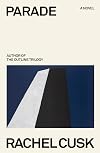
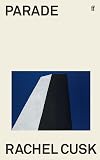
Parade
by Rachel Cusk
On This Page
Description
"Midway through his life, the artist G begins to paint upside down. Eventually, he paints his wife upside down. He also makes her ugly. The paintings are a great success. In Paris, a woman is attacked by a stranger in the street. Her attacker flees, but not before turning around to contemplate her victim, like an artist stepping back from a canvas. At the age of twenty-two, the painter G leaves home for a new life in another country, far from the disapproval of her parents. Her paintings show more attract the disapproval of the man she later marries. When a mother dies, her children confront her legacy: the stories she told, the roles she assigned to them, the ways she withheld her love. Her death is a kind of freedom."-- show lessTags
Recommendations






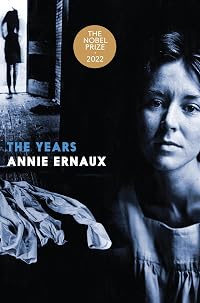
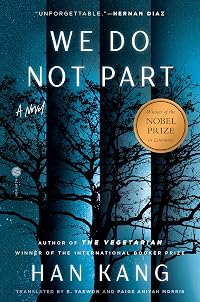
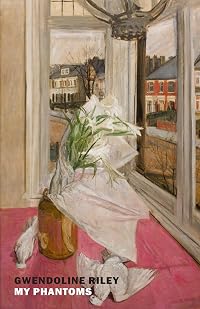

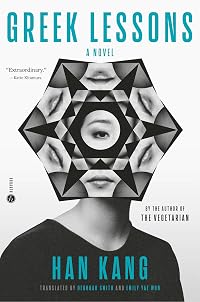
Member Recommendations
JuliaMaria Frauen und Kunst: Ehefrau, Muse oder Künstlerin - Gesellschaftskritik
Member Reviews
I keep going back and forth on this roman à clef. It's hard to really do justice to it in a brief blurb but, within its 200 pages or so, there are some engaging questions and reflections as well as bits of insight...but other parts are sort of flat. Oh did, I mention there's scantly any dialogue or plot. A set of 4 interlocked short...um, fictionally enhanced essays based on real artists (unnamed in the book) but not hard to figure out.
I immediately recognized the last section being based (in some small part) on Eric Rohmer, that made me work backwards and determine the other real-life characters which Cusk riffs on to make her points.
I think some of the conclusions she derives are reductionist and by no means truisms. It seems she show more really wanted to push her writing into a new territory by stripping away expectations. It reminded me of French writers like Annie Ernaux who also have this questioning voice expressed through autofiction examining guilt, parents, love, expectations etc.
Some will hate this as it does seem to thwart the most common writing 101's ("Show don't tell"). This is all tell, but the lack of specificity is very intentional, keeping things at a remote distance to encourage analysis.
It's a book full of violence and death and contains characters who are unpleasant and unenlightened. I can't say I enjoyed it that much and it wasn't filled with original insights but I do appreciate that she isn't just churning out the exact same book each year. show less
I immediately recognized the last section being based (in some small part) on Eric Rohmer, that made me work backwards and determine the other real-life characters which Cusk riffs on to make her points.
I think some of the conclusions she derives are reductionist and by no means truisms. It seems she show more really wanted to push her writing into a new territory by stripping away expectations. It reminded me of French writers like Annie Ernaux who also have this questioning voice expressed through autofiction examining guilt, parents, love, expectations etc.
Some will hate this as it does seem to thwart the most common writing 101's ("Show don't tell"). This is all tell, but the lack of specificity is very intentional, keeping things at a remote distance to encourage analysis.
It's a book full of violence and death and contains characters who are unpleasant and unenlightened. I can't say I enjoyed it that much and it wasn't filled with original insights but I do appreciate that she isn't just churning out the exact same book each year. show less
I tried to find a quote that I recalled, about the surprise and shock we receive when fiction reveals the harsh realities that lie beneath the surface. I did find something that veers very close to the narrative mode of this book, and it’s from Tim O’Brien: “That’s what fiction is for. It’s for getting at the truth when the truth isn’t sufficient for the truth.” There’s nothing oblique about the truth in Rachel Cusk’s Parade; she simply doesn’t use conventional scenes, actions or dialogue to exhibit it. The truths in the book do not flow from what John Gardner calls “a continuous dream” for the reader, but in deep, sometimes esoteric philosophical and aesthetic pronouncements.
The opening section (I don’t show more consider them chapters, because that denotes a continuous narrative sequence, and that does not exist for this novel in a conventional sense), called The Stuntman, an artist identified only as G begins to paint all of his work upside down.
People first thought the works were being hung wrong, but no. G’s wife immediately concludes he has “inadvertently expressed something disturbing about the female condition.” While I wouldn’t call this thought a “leap” in everyday thought, it occurs halfway through the very first paragraph of the novel, without foundation, or even a hint that it might be coming. And here is a passage that pops up on the second page, after a bit of history about how the artist G cannot forgive the critics who “brutally criticised” his early work:
“His was the type of strength not to withstand attempts to poison and destroy him, but rather to absorb them, to swallow the poison and be altered by it, so that his survival was not a story of mere resilience, but was instead a slow kind of crucifixion that eventually compelled the world to chastise itself for what it had done to him.”
This is the sort of no-holds-barred statement that fills Parade. Cusk presents the action obliquely, while placing the psychological, philosophical, and aesthetic issues in the foreground usually, but not always, putting them in characters’ thoughts or words. There are bare plots to the four roughly equal sections into which the book is divided, but at times the action reads like a bare synopsis, or even a police report.
Reading Parade forces us non-athletes onto skis and down a steep slalom course with gates at unequal intervals and on unpredictable sides. Its chronological order is very difficult to parse out, and perhaps not all that important anyway. While there are several plots, it’s not usually clear whether they’re related. I will attempt to give you the timbre and substance of the book:
This is a novel about art, sexual politics, modern society and multi-generational family dynamics. The action, what of it there is, lurches forward through a thicket of erudite, sometimes startling, pronouncements, in which apparently the human action and interplay play only a secondary role, almost as if they’re included to provide examples. Highly literate and learned characters make these observations in erudite and well-framed statements, the author first and foremost among them. At times it felt like a book-length philosophical treatise. This book has definite attractions, especially if you like abstruse discussions of recondite psychology and aesthetics, and care, as we all should, about sexual oppression and bigotry. In this challenging piece of fiction, Cusk has wrestled the novel form, and pinned it absolutely to the mat.
It’s obvious from my review that I want to give this book more study. But this review is not the place for that, so I think I’ll end here.
https://bassoprofundo1.blogspot.com/2024/11/parade-by-rachel-cusk.html show less
The opening section (I don’t show more consider them chapters, because that denotes a continuous narrative sequence, and that does not exist for this novel in a conventional sense), called The Stuntman, an artist identified only as G begins to paint all of his work upside down.
People first thought the works were being hung wrong, but no. G’s wife immediately concludes he has “inadvertently expressed something disturbing about the female condition.” While I wouldn’t call this thought a “leap” in everyday thought, it occurs halfway through the very first paragraph of the novel, without foundation, or even a hint that it might be coming. And here is a passage that pops up on the second page, after a bit of history about how the artist G cannot forgive the critics who “brutally criticised” his early work:
“His was the type of strength not to withstand attempts to poison and destroy him, but rather to absorb them, to swallow the poison and be altered by it, so that his survival was not a story of mere resilience, but was instead a slow kind of crucifixion that eventually compelled the world to chastise itself for what it had done to him.”
This is the sort of no-holds-barred statement that fills Parade. Cusk presents the action obliquely, while placing the psychological, philosophical, and aesthetic issues in the foreground usually, but not always, putting them in characters’ thoughts or words. There are bare plots to the four roughly equal sections into which the book is divided, but at times the action reads like a bare synopsis, or even a police report.
Reading Parade forces us non-athletes onto skis and down a steep slalom course with gates at unequal intervals and on unpredictable sides. Its chronological order is very difficult to parse out, and perhaps not all that important anyway. While there are several plots, it’s not usually clear whether they’re related. I will attempt to give you the timbre and substance of the book:
This is a novel about art, sexual politics, modern society and multi-generational family dynamics. The action, what of it there is, lurches forward through a thicket of erudite, sometimes startling, pronouncements, in which apparently the human action and interplay play only a secondary role, almost as if they’re included to provide examples. Highly literate and learned characters make these observations in erudite and well-framed statements, the author first and foremost among them. At times it felt like a book-length philosophical treatise. This book has definite attractions, especially if you like abstruse discussions of recondite psychology and aesthetics, and care, as we all should, about sexual oppression and bigotry. In this challenging piece of fiction, Cusk has wrestled the novel form, and pinned it absolutely to the mat.
It’s obvious from my review that I want to give this book more study. But this review is not the place for that, so I think I’ll end here.
https://bassoprofundo1.blogspot.com/2024/11/parade-by-rachel-cusk.html show less
With Rachel Cusk, you know you have to persevere, that it takes a while before you see what she's doing. With the Outline trilogy, this went relatively well, though it gradually became more difficult, especially with the third book. Her next novel, The Second Place, was a bit more unruly, but at least it still had a story and therefore narrative coherence. That's missing here in Parade. Cusk presents us with four separate parts that seem unrelated, yet share several things in common: there's always an artist G, though that constantly changes identity, there's quite a bit of chatter about art, and about things others have called "the female experience." That last part sounds familiar: Cusks previous books also addressed reflections on show more pregnancy, motherhood, and physicality. But there's no real storyline in Parade, or at least, I couldn't find one. In some of the parts, Cusk completely lost me. And apparently, I'm not the only one who found the third part the most familiar, reminding of Outline. It's clear that I don't really think this book is a success, although Cusk succeeds in giving the impression that, if you dig deep enough, there might still be meaning to be found. If the intention was to evoke the ephemeral and opaque nature of reality (my apologies for the expensive words), then yes, she certainly achieved her goal. But for me, Cusk has pushed her experimental drive a bit too far here. show less
Simply put, this book was not my cup of tea, however, it may be yours. In a genre-defying novel (can it even be called a novel?), the listener is constantly disoriented. The POV switches frequently from first to third person, and it's never entirely sure who is telling the story—if it can be called a story. The audiobook narrator, it should be said, get's the mood just right - weirdly calm, introspective and
Most of the book's principal characters are simply named "G." Are they related? Is there a connection? It's difficult to tell. At times, I was deep into the musings of the narrator - agreeing here, disagreeing there, but much of the time, I was simply confused. Is this G, the writer, or is it G, the painter, the male G, the female show more G?
If you are interested in the minds and musings of very talented artists, and the toll that their craft takes on friends and family, this may be of interest to you. Just don't expect a tidy conclusion - or even a messy one. You won't get it. show less
Most of the book's principal characters are simply named "G." Are they related? Is there a connection? It's difficult to tell. At times, I was deep into the musings of the narrator - agreeing here, disagreeing there, but much of the time, I was simply confused. Is this G, the writer, or is it G, the painter, the male G, the female show more G?
If you are interested in the minds and musings of very talented artists, and the toll that their craft takes on friends and family, this may be of interest to you. Just don't expect a tidy conclusion - or even a messy one. You won't get it. show less
The four sections into which Rachel Cusk’s book is divided appear to stand alone. In some there are two narratives interweaving. But in each narrative of each of the sections there is a character identified as G. G is typically an artist of some sort. He or she may be a writer or painter or film maker. G might be the central point of view in the narrative or a more distant character against which the central character reacts. In each narrative or perhaps “narrative”, abstruse themes concerning art, representation, subjugation, identity, and more are considered. At times this blocks any narrative thrust, distancing the reader from both the characters and their situations. But at other times the “philosophical” discussions feel show more more integrated. And this may coincide with the waxing and waning interest the reader might experience.
Cusk is a celebrated writer who challenges narrative form in many of her works. Parade is squarely in that lineage. Whether or not it can hold your interest, or warrants doing so, is an open question. I think if you take up this book with an appropriate degree of willingness to engage in its more esoteric considerations, then you might find it well worth reading. However, I think this will be a small cohort of Cusk’s potential readership. show less
Cusk is a celebrated writer who challenges narrative form in many of her works. Parade is squarely in that lineage. Whether or not it can hold your interest, or warrants doing so, is an open question. I think if you take up this book with an appropriate degree of willingness to engage in its more esoteric considerations, then you might find it well worth reading. However, I think this will be a small cohort of Cusk’s potential readership. show less
This was a really strange read, especially at first. I'm not very familiar with post-modernist writing styles so Parade and it's lack of a conventional plot or characters was strange to me. It's split up into four sections, three of which continuously switch between two points of view. Each section generally has to do with reflections on womanhood, art, reality, and perception. The writing style and structure were restrained and reminded me of a one act play, where less is more and the plot and characters are honed down to their barest of forms to allow a deep dive into a subject. I'll definitely need to give this another read in a year or two.
Although looking forward to [b:Parade|195790675|Parade|Rachel Cusk|https://i.gr-assets.com/images/S/compressed.photo.goodreads.com/books/1702209032l/195790675._SY75_.jpg|197724509] having enjoyed the author's previous fiction, I did not finish it. Appreciated the restaurant scene, and the peculiar farm stays abroad of G and her husband, or was it G and his wife, interested in fraught relationships, but for much of the book, I was longing for more name specificity than G. Somewhere I read that they signified different famous artists but had forgotten who was who except for Louise Bourgeois. Ah ha, "In an earlier version of ”The Stuntman“ published in the New Yorker in 2023, the artist Louise Bourgeois, writer Norman Lewis and painter show more Paula Moderson-Becker appeared by name. In an interview, Cusk named painter Georg Baselitz as a model for one of the figures in this book. In her recent Northcliffe Lecture at University College London, she named film director Éric Rohmer as another." As Scarlett Baron's review in The Conversation mentioned, https://theconversation.com/parade-by-rachel-cusk-review-a-daring-work-of-experi..., it is a demanding read with multiple perspectives. I was not up to the task, even though as Thomas Chatterton Williams says in The Atlantic, Cusk’s is "a literature of immaculately crafted observations, as aesthetically exhilarating as it is philosophically devastating... by one of the most innovative and formidable writers anywhere." Perhaps I will try again. show less
Members
- Recently Added By
Author Information

30+ Works 9,077 Members
Rachel Cusk was born on Feb 8, 1967 in Canada. She spent much of her childhood in Los Angeles and finished her education at St Mary's Convent, Cambridge. her education at St Mary's Convent, Cambridge. In 2003, Rachel Cusk was nominated by Granta magazine as one of 20 'Best of Young British Novelists'. That year she published The Lucky Ones (2003), show more her fourth novel, which was shortlisted for the Whitbread Novel Award. Since then she has published four more novels; her latest is Outline (2014). She has also written several non-fiction books. A Life's Work: On Becoming a Mother (2001) is a personal exploration of motherhood. The Last Supper: A Summer in Italy (2009) is a memoir about time in southern Italy. In 2015 she made the Baileys Women's Prize for Fiction shortlist with her title Outline. (Bowker Author Biography) show less
Some Editions
Awards and Honors
Awards
Distinctions
The Guardian Book of the Day (2024-06-05)
Common Knowledge
- Canonical title
- Parade
- Original title
- Parade
- Original publication date
- 2024-06-06
Classifications
Statistics
- Members
- 292
- Popularity
- 110,176
- Reviews
- 9
- Rating
- (3.50)
- Languages
- 5 — Dutch, English, French, German, Swedish
- Media
- Paper, Audiobook, Ebook
- ISBNs
- 16
- ASINs
- 5