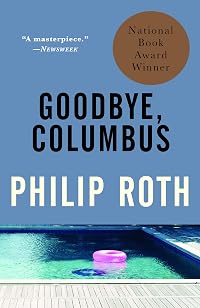
Goodbye, Columbus and Five Short Stories
by Philip Roth
On This Page
Description
National Book Award WinnerPhilip Roth's brilliant career was launched when the unknown twenty-five-year-old writer won the Houghton Mifflin Literary Fellowship for a collection that was to be called Goodbye, Columbus, and which, in turn, captured the 1960 National Book Award. In the famous title story, perhaps the best college love story ever written, Radcliffe-bound Brenda Patimkin initiates Neil Klugman of Newark into a new and unsettling society of sex, leisure, and loss. Over the years, show more most of the other stories have become classics as well.
. show less
Tags
Recommendations








Member Reviews
Neil Klugman is a 23 year old man living with his self martyred aunt and uncle in Newark, New Jersey while his asthmatic parents convalesce in Arizona. "Goodbye, Columbus" is told from his point of view and could be seen as a Jewish American coming-of-age story about Neil's summer romance with wealthy, snobbish Brenda Patimkins. It is closer to the truth to say "Goodbye, Columbus" is a commentary on class. Neil and Brenda's socioeconomic differences create subtle tensions between the couple until they discover their relationship is built on lust rather than love. This is most apparent when Neil says, "Actually we did not have the feelings we said we had until we spoke them - at least I didn't, to phrase them was to invent them and own show more them" (p 19). show less
The earliest Roth I've read, and both similar to and different from the rest of his books. While the prose here is breathtakingly good, manages, as it does, to combine subtlety and waste-not-one-word economy in a way that doesn't embarrass the word "genius," can't really be called all that surprising. Philip Roth has the standing he does in American letters for a reason, after all. What surprised me most about this collection of stories was their sheer physicality. The story that gives the book its name is, I suppose, about the class tensions that develop in a relationship between a Newark Jewish boy of low economic standing and a girl whose family has done considerably better. But the story's also about hot summer weather, the chill of show more exclusive swimming pools, suburban luxury, and the thrill of one's first, intense romantic relationship. Having gotten to know Roth in his contemplative, if extremely fruitful, late period, the emphasis he places on bodily pleasure makes it seem that "Goodbye, Columbus" is the sort of story that only a young man could have written. Roth's portrayal of the wealth and ease of the suburbs is, in some places, highly ironic, but it's not without an appreciation for the things that money can buy, either. I also rather enjoyed his portrayal of Nathan and Brenda's relationship. Their love is as any other, but Roth makes it abundantly clear that that doesn't mean that they're always nice to each other: slightly cruel honesty also seems to have a place near the center of their relationship. It's a Yankee courtship, in its way, and also a very honest description of how people can treat each other in intimate emotional spaces.
It's perhaps unsurprising, then, that a talent for efficient cruelty also seems to have been a talent of the younger Roth himself. The last scenes of "Goodbye, Columbus" are devastating, but the last lines of some of the other stories, particularly "You Can't Tell A Man by the Song He Sings" and "Defender of the Faith" take just a sentence to cut right to the quick. Not that there aren't some stories here than hang a little looser: the tone throughout "Epstein" is comically tragic, or tragically comic, and then there's "Eli, the Fanatic." A bit of a departure for a writer that I mostly think of, for all of his marvelous writing, as a realist, this story is both more fantastical and, at the same time, to be a more obvious literary construction than most of Roth's work. Roth makes this story of a Jewish yeshiva populated with Holocaust survivors at odds with its modern, suburban Jewish neighbors seem believable without making it necessarily realistic, which is perhaps about as high a compliment as you can pay a writer. But it also seems to prefigure a lot of the contradictions about Jewish life in the United States that Roth would write about during the next fifty or so years. In some ways, that might be said of this entire book: in the same way that "Dubliners" sketched out the themes that Joyce would chase down for the rest of his writing life, Roth seems to be offering a map of the territory that was to explore in this short, early work. Characters walk difficult lines between assimilation and identity, and between identity and individuality, and in "Eli, the Fanatic," these hard choices are presented as unmistakably literal. Something tells me that Nathan Englander, whose work deals with the same themes using something like the same approach, once fell in love with it. If that's true, he can hardly be blamed. In an age when lots of story collections feel sort of padded, everything here feels essential and is, from this reader's perspective, just top-notch. A classic. show less
It's perhaps unsurprising, then, that a talent for efficient cruelty also seems to have been a talent of the younger Roth himself. The last scenes of "Goodbye, Columbus" are devastating, but the last lines of some of the other stories, particularly "You Can't Tell A Man by the Song He Sings" and "Defender of the Faith" take just a sentence to cut right to the quick. Not that there aren't some stories here than hang a little looser: the tone throughout "Epstein" is comically tragic, or tragically comic, and then there's "Eli, the Fanatic." A bit of a departure for a writer that I mostly think of, for all of his marvelous writing, as a realist, this story is both more fantastical and, at the same time, to be a more obvious literary construction than most of Roth's work. Roth makes this story of a Jewish yeshiva populated with Holocaust survivors at odds with its modern, suburban Jewish neighbors seem believable without making it necessarily realistic, which is perhaps about as high a compliment as you can pay a writer. But it also seems to prefigure a lot of the contradictions about Jewish life in the United States that Roth would write about during the next fifty or so years. In some ways, that might be said of this entire book: in the same way that "Dubliners" sketched out the themes that Joyce would chase down for the rest of his writing life, Roth seems to be offering a map of the territory that was to explore in this short, early work. Characters walk difficult lines between assimilation and identity, and between identity and individuality, and in "Eli, the Fanatic," these hard choices are presented as unmistakably literal. Something tells me that Nathan Englander, whose work deals with the same themes using something like the same approach, once fell in love with it. If that's true, he can hardly be blamed. In an age when lots of story collections feel sort of padded, everything here feels essential and is, from this reader's perspective, just top-notch. A classic. show less
Incredibly flawed but still great. Roth’s view of the American Diaspora through his characters is both tragic and a bit pathetic. After reading him you may feel, or at least I did, that American Jewry is fundamentally out of place. And, extrapolating this, that Jews amongst each other, are almost habitually divisive. Religious or Secular, arch conservative or liberal, it doesn’t seem to matter to Roth as our collective psyche as Jews is cracked. From reading Roth it falls to the individual to wander, at least to me, and to attempt to reconcile ourselves to our basically fragmented identities.Phillip Roth is a tremendously skilled writer. He paints details and describes characters in a way both attractive and maddening.
The title story of the collection, Goodbye, Columbus, is the most memorable. Neil Klugman is a low-paid librarian living with his aunt in New Jersey. He falls in love with Brenda, also a Jew, a vain girl from a more affluent family. The story charts a class conflict as Neil struggles to gain acceptance in a family more assimilated in American culture. It describes Neil's mundane working life; his coming-of-age love for Brenda; his experience at the wedding of his girlfriend's brother Ron; and finally the end of his relationship caused by the disapproval of Brenda's parents. I found this story the most enjoyable of the collection, possibly because it was one of the least forceful in promoting Roth's anti-religious stance. It reminds me show more of (in my opinion, underrated) On Chesil Beach by Ian McEwan, another poignant treatment of young love and its pitfalls.
I found two other stories highly readable: Defender of the Faith, where Roth portrays Jews as self-seeking, lying and manipulative; and Eli, the Fanatic, where a lawyer is hired by an assimilated Jewish community to confront the director of a newly established Orthodox yeshiva (Jewish religious institution).
Goodbye, Columbus - 5/5
The Conversion of the Jews - 1/5
Defender of the Faith - 4/5
Epstein - 2/5
You Can’t Tell a Man by the Song He Sings - 1/5
Eli, the Fanatic - 4/5 show less
I found two other stories highly readable: Defender of the Faith, where Roth portrays Jews as self-seeking, lying and manipulative; and Eli, the Fanatic, where a lawyer is hired by an assimilated Jewish community to confront the director of a newly established Orthodox yeshiva (Jewish religious institution).
Goodbye, Columbus - 5/5
The Conversion of the Jews - 1/5
Defender of the Faith - 4/5
Epstein - 2/5
You Can’t Tell a Man by the Song He Sings - 1/5
Eli, the Fanatic - 4/5 show less
http://andalittlewine.blogspot.com/2012/05/review-of-goodbye-columbus-by-philip....
I took my tattered paperback copy of Goodbye, Columbus by Philip Roth on a recent bus trip because I knew it was small enough to fit in my back pocket as I walked around Washington, DC. I was late and I wanted something to read, and Goodbye was close at hand.
This is why I keep a needlessly large library on hand; these emergencies arise from time to time, and if I only kept the most literate books or my favorite books or the prettiest books, then in moments like this I'd be S.O.L.
I've never read Roth's first work before, though I've confessed how much I enjoy his prose. A novella and four short stories, Goodbye Columbus has all the hallmarks of the Roth I show more know: caustic, irreverent protagonists who do far too little to care for the people around them (especially the women); "well adjusted" assimilated families quietly falling apart under the strain; Newark, NJ as a backdrop.
The thing I enjoyed most about Goodbye was the nakedness of the power struggle between the characters. When Neil pushes his girlfriend to buy a diaphragm so they won't have to use condoms, and when she responds by leaving it where her parents are sure to find it, both characters know what they've done and why. They ask each other the precise question we're asking as readers- why and they don't have meaningful answers. I think life is like that, especially when we're young and still testing the limits of mistakes, forgiveness and consequences.
There are no happy endings here, but for each of the protagonists life goes on. For each of them it is broken in some permanent way by defensiveness and feelings of inadequacy, by the exposure of parental authority's weakness, by the conniving and intolerance of people who should know better. show less
I took my tattered paperback copy of Goodbye, Columbus by Philip Roth on a recent bus trip because I knew it was small enough to fit in my back pocket as I walked around Washington, DC. I was late and I wanted something to read, and Goodbye was close at hand.
This is why I keep a needlessly large library on hand; these emergencies arise from time to time, and if I only kept the most literate books or my favorite books or the prettiest books, then in moments like this I'd be S.O.L.
I've never read Roth's first work before, though I've confessed how much I enjoy his prose. A novella and four short stories, Goodbye Columbus has all the hallmarks of the Roth I show more know: caustic, irreverent protagonists who do far too little to care for the people around them (especially the women); "well adjusted" assimilated families quietly falling apart under the strain; Newark, NJ as a backdrop.
The thing I enjoyed most about Goodbye was the nakedness of the power struggle between the characters. When Neil pushes his girlfriend to buy a diaphragm so they won't have to use condoms, and when she responds by leaving it where her parents are sure to find it, both characters know what they've done and why. They ask each other the precise question we're asking as readers- why and they don't have meaningful answers. I think life is like that, especially when we're young and still testing the limits of mistakes, forgiveness and consequences.
There are no happy endings here, but for each of the protagonists life goes on. For each of them it is broken in some permanent way by defensiveness and feelings of inadequacy, by the exposure of parental authority's weakness, by the conniving and intolerance of people who should know better. show less
This was the first time I sat down and read a book by Roth in earnest. Many times I'd flipped through and skimmed some of his novels. I'm glad I started with his first novel. It was straightforward but the writing had a mesmeric quality. The stories I'd encountered in Esquire anthologies and been impressed with. Generally he seemed like a writer who could carry the reader along at a brisk pace while engaging his or her intellectual sensitivity. There are sentences you have to think about, which is not to say you don't want to think about them.
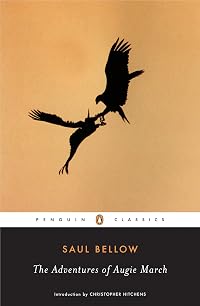
Perhaps one of my favorite touches was the dialogue of the narrator's Aunt from Goodbye, Columbus. You'll see what I mean when you get to it. These small, creative touches mark Roth apart for show more subtlety. He might have just been another Saul Bellow, but the difference is on the sentence level. There's a finer edge to Roth.
I would recommend starting with the included short stories. Once the rhythm of his writing sinks in his longer work is more easily digestible.
The only reason this one did not receive 5 stars is because certain passages in Goodbye, Columbus seemed slightly inconsequential. They all flowed together well, everything contributed in small ways to the character development, but there were times when the characters made a big deal out of a small thing, and commented on it profusely, and then did it again. I had the sense that the story line was blown a little out of proportion, or Romanticized. The last page was breathtaking, but some of the conflict appeared stilted to me. Still, it was an easy, thought-provoking read.
I think this volume is a great one to start with and I am fully confident that if I continue exploring his oeuvre there will be a five star rating to come, if not multiple. show less
Perhaps one of my favorite touches was the dialogue of the narrator's Aunt from Goodbye, Columbus. You'll see what I mean when you get to it. These small, creative touches mark Roth apart for show more subtlety. He might have just been another Saul Bellow, but the difference is on the sentence level. There's a finer edge to Roth.
I would recommend starting with the included short stories. Once the rhythm of his writing sinks in his longer work is more easily digestible.
The only reason this one did not receive 5 stars is because certain passages in Goodbye, Columbus seemed slightly inconsequential. They all flowed together well, everything contributed in small ways to the character development, but there were times when the characters made a big deal out of a small thing, and commented on it profusely, and then did it again. I had the sense that the story line was blown a little out of proportion, or Romanticized. The last page was breathtaking, but some of the conflict appeared stilted to me. Still, it was an easy, thought-provoking read.
I think this volume is a great one to start with and I am fully confident that if I continue exploring his oeuvre there will be a five star rating to come, if not multiple. show less
Easy listening; however, the novel that makes up most of this collection is so dated, with its main crisis concerning use of a diaphram (!) that despite how easy it all slides by, it ends up disappointing. Equally with the diaphram, the fault lies with the male protagonist, who acts idiotically and introduces unnecessary complications into the romantic relationship that drive the plot in a very artificial way. The 5 short stories (which aren't so short) are also easy to digest, but except for one or two, they also disappoint. Roth can write long conversations--such as the one in Goodbye Columbus with the traveling lightbulb salesman--that go on and on and are somewhat interesting in themselves, but end up just seeming like padding. I show more guess he's trying to be funny and show insight into human nature, and sometimes he does, but any rewards are offset by the triviality of much of this and all the wasted words. Even when he has an interesting subject, such as the intrusion of fundamentalist Judaism into a New York town where Jews and Gentiles have become modern and mostly reconciled, the story is marred by just going on and on. And on and on. And on and on. I assume Roth, who is obviously regarded as a great writer, must have written better stuff than this! show less
Members
- Recently Added By
Published Reviews
ThingScore 100
I am always struck by the perfection of Goodbye, Columbus, however many times I read and teach it.
added by Shortride
Lists

Read the book and saw the movie
1,170 works; 193 members

National Book Award - Fiction
78 works; 10 members

1950s
340 works; 22 members

Books Set in New Jersey
22 works; 4 members

Books worth rereading
21 works; 1 member

A Novel Cure
742 works; 23 members

Blue Pyramid 1,276 Best Books of All Time
1,248 works; 32 members

National Book Award winners
65 works; 11 members

Books Read in 2025
4,091 works; 97 members
Talk Discussions
Past Discussions
Romantic Novel set in New England between Librarian and Socialite girl in Name that Book (March 2013)
Author Information

116+ Works 74,701 Members
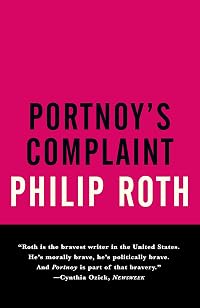
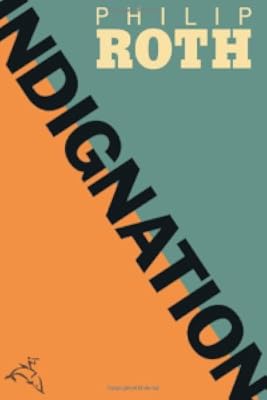
Philip Milton Roth was born in Newark, New Jersey on March 19, 1933. He attended Rutgers University for one year before transferring to Bucknell University where he completed a B.A. in English with highest honors in 1954. He received an M.A. from the University of Chicago in 1955. His first book, Goodbye, Columbus, received the National Book Award show more in 1960. His other books include Letting Go, When She Was Good, Portnoy's Complaint, My Life as a Man, The Ghostwriter, Zuckerman Unbound, I Married a Communist, The Plot Against America, The Facts, The Anatomy Lesson, Exit Ghost, Deception, Nemesis, Everyman, Indignation, and The Humbling. He won the National Book Critic Circle Awards in 1987 for his novel The Counterlife and in 1992 for his memoir Patrimony: A True Story. He won the PEN/Faulkner Award for Fiction in 1993 for Operation Shylock: A Confession and in 2001 for The Human Stain, the National Book Award in 1995 for Sabbath's Theater, and the Pulitzer Prize in 1998 for American Pastoral. He stopped writing in 2010. He died from congestive heart failure on May 22, 2018 at the age of 85. (Bowker Author Biography) show less
Some Editions
Awards and Honors
Awards
Series
Belongs to Publisher Series
Work Relationships
Common Knowledge
- Canonical title
- Goodbye, Columbus and Five Short Stories
- Original title
- Goodbye, Columbus and five short stories
- Alternate titles
- Goodbye, Columbus
- Original publication date
- 1959
- People/Characters*
- Neil Klugman; Brenda Patimkin; Ron Patimkin (Brendas Bruder)
- Important places
- Newark, New Jersey, USA
- Related movies
- Goodbye, Columbus (1969 | IMDb)
- Dedication
- To my mother and my father
- First words
- The first time I saw Brenda she asked me to hold her glasses.
- Last words
- (Click to show. Warning: May contain spoilers.)The drug calmed his soul, but did not touch it down where the blackness had reached.
- Original language
- English
*Some information comes from Common Knowledge in other languages. Click "Edit" for more information.
Classifications
Statistics
- Members
- 3,417
- Popularity
- 4,896
- Reviews
- 57
- Rating
- (3.74)
- Languages
- 14 — Danish, Dutch, English, Finnish, French, German, Greek, Hebrew, Italian, Korean, Portuguese, Russian, Spanish, Turkish
- Media
- Paper, Audiobook, Ebook
- ISBNs
- 69
- UPCs
- 1
- ASINs
- 64