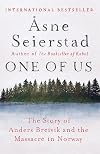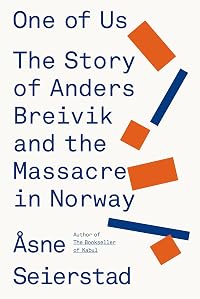
One of Us: The Story of Anders Breivik and the Massacre in Norway
by Åsne Seierstad
On This Page
Description
"On July 22, 2011, Anders Behring Breivik detonated a bomb outside the Norwegian prime minister's office in central Oslo, killing eight people. He then proceeded to a youth camp on the wooded island of Utøya, where he killed sixty-nine more, most of them teenage members of the country's governing Labour Party. In [this book], the journalist Åsne Seierstad tells the story of this terrible day and its reverberations. How did Breivik, a gifted child from an affluent neighborhood in Oslo, show more become Europe's most reviled terrorist? How did he accomplish an astonishing one-man murder spree? And how did a famously peaceful and prosperous country cope with the slaughter of so many of its young?"--Dust jacket flap. show lessTags
Recommendations




















Member Reviews
Unfortunately, mass murders have become so commonplace in the world today that we are becoming inured to their horror. Using an almost microscopic and clear-eyed investigative approach, Asne Seierstad chronicles the killing of 77 people, predominantly teenagers, in Norway by Anders Behring Breivik. In “One of Us”, she succeeds in compelling the reader to confront the horror. Her lucid and extremely detailed writing not only evokes the terror of the events themselves, but also raises pertinent questions about other aspects of this crime and may provide insights into understanding other forms of mass murder. Instead of drawing conclusions for the reader, she lets the facts speak for themselves. What role did Breivik’s background and show more mental state play in his motivations? Does Breivik’s meticulous and lengthy planning, largely in the open, and the incompetent responses by authorities suggest the possibility that this mass murder and others like it may be prevented or at least mitigated? The profiles she includes of several of the young victims emphasize the intense feelings that these tragedies can evoke.
Anders Breivik is a strange and unlikeable character, who had a grandiose and largely unrealistic view of himself. His mother was mentally ill and his father was absent from his life. He was an outsider who seemed clueless about his own strange behavior and the repeated rejections by his peers: by childhood friends, by Oslo’s teenage graffiti artists, by Norway’s right-wing anti-immigrant Progress Party, by a potential Ukrainian mail-order mate, and by the failure of an online business selling fake diplomas. Instead he was meticulous about his appearance—he wore makeup, weight trained, and had plastic surgery to change the shape of his nose. He had few close relationships and eventually withdrew to a room in his mother’s home engaging intensely with online gaming, which provided him with some validation. Unfortunately, this morphed into a habit of visiting right wing and white nationalist websites, where Breivik adopted intensely negative views of Norway’s evolution into a less isolated and more inclusive society. This culminated in a 1,500-page manifesto wherein he describes how he would lead Norway in a violent revolution to purge it of undesirables, especially Muslims.
The central question posed by the book, and indeed in his trial, was whether Breivik was a political terrorist or mentally ill. Seierstad provides ample evidence for both conclusions but little guidance in reaching a conclusion. Clearly, Breivik wanted the world to see him as a political activist, but much of the book’s content suggests otherwise. Seierstad’s analysis, however, does suggest that homicidal terrorists arise from us in some twisted way, as the title implies, and may walk a dangerous line between fanaticism and insanity. show less
Anders Breivik is a strange and unlikeable character, who had a grandiose and largely unrealistic view of himself. His mother was mentally ill and his father was absent from his life. He was an outsider who seemed clueless about his own strange behavior and the repeated rejections by his peers: by childhood friends, by Oslo’s teenage graffiti artists, by Norway’s right-wing anti-immigrant Progress Party, by a potential Ukrainian mail-order mate, and by the failure of an online business selling fake diplomas. Instead he was meticulous about his appearance—he wore makeup, weight trained, and had plastic surgery to change the shape of his nose. He had few close relationships and eventually withdrew to a room in his mother’s home engaging intensely with online gaming, which provided him with some validation. Unfortunately, this morphed into a habit of visiting right wing and white nationalist websites, where Breivik adopted intensely negative views of Norway’s evolution into a less isolated and more inclusive society. This culminated in a 1,500-page manifesto wherein he describes how he would lead Norway in a violent revolution to purge it of undesirables, especially Muslims.
The central question posed by the book, and indeed in his trial, was whether Breivik was a political terrorist or mentally ill. Seierstad provides ample evidence for both conclusions but little guidance in reaching a conclusion. Clearly, Breivik wanted the world to see him as a political activist, but much of the book’s content suggests otherwise. Seierstad’s analysis, however, does suggest that homicidal terrorists arise from us in some twisted way, as the title implies, and may walk a dangerous line between fanaticism and insanity. show less
Review score: 4.5 stars
One of Us is a 21st century horror story that chronicles a tragic event from actual history. It’s a book about Anders Behring Breivik and the terrifying acts he carried out on 22 July 2011, which saw 77 Norwegians die and many more injured. This is a detailed and horrific true crime story about a searing, cold-blooded massacre.
This non-fiction work is by Norwegian journalist and writer, Åsne Seierstad. This is the fifth book by a writer who is no stranger to chronicling people’s lives in extreme circumstances as her previous works were about individuals living in Kabul and Chechnya. This volume is actually written like a novel and has been painstakingly researched and assembled from witness accounts, show more interviews, testimonies and other written works.
One of Us paints a portrait of Anders Breivik including his abusive and dysfunctional childhood and his adolescence where he was a graffiti tagger and hip-hop music lover. He had an obsession with belonging and being in charge or “at the top of a group”. But often he was rejected or ridiculed for having an over-inflated sense of his own self-worth and narcissistic personality.
As an adult Breivik became a high-school dropout and entrepreneur who was determined to get rich quick. He had a business where he sold fake diplomas and later became a recluse and computer game addict. The latter turned into a full-blown internet addiction and he’d eventually become radicalised by right wing ideas. This culminated in his dreaming up and carrying out violent and extreme acts, including making a bomb to use on a government building (this killed eight people) and murdering 77 individuals with guns (many of these victims were teenagers) at a young labour conference on the island of Utoya.
Seierstad also tells the stories of some of Breivik’s victims. In this way she humanises these inspiring young people and ensures that they’re remembered for more than just being a number in a long list of fatalities. These stories will haunt and stay with you, particularly the ones about the young and clever, natural-born leader, Simon Saebo and the strong and opinionated, Bano Rashid (the latter had escaped Iraqi Kurdistan with her parents and younger sister and was determined to become part of Norwegian society).
One of Us is a powerful and explosive book where Seierstad has done an excellent job of painting a vivid portrait of the events leading up to the monumental day as well as the actual event, the trial and the aftermath. She offers lots of background information and context to the story and this makes for an immersive and suspense-filled book that is simultaneously uncomfortable to read and hard to put down. This thorough, intense and unsettling work strikes at the very heart of the gut-wrenching tragedy. It’s positively horrific, extremely well-written and a very important story that had to be told. show less
One of Us is a 21st century horror story that chronicles a tragic event from actual history. It’s a book about Anders Behring Breivik and the terrifying acts he carried out on 22 July 2011, which saw 77 Norwegians die and many more injured. This is a detailed and horrific true crime story about a searing, cold-blooded massacre.
This non-fiction work is by Norwegian journalist and writer, Åsne Seierstad. This is the fifth book by a writer who is no stranger to chronicling people’s lives in extreme circumstances as her previous works were about individuals living in Kabul and Chechnya. This volume is actually written like a novel and has been painstakingly researched and assembled from witness accounts, show more interviews, testimonies and other written works.
One of Us paints a portrait of Anders Breivik including his abusive and dysfunctional childhood and his adolescence where he was a graffiti tagger and hip-hop music lover. He had an obsession with belonging and being in charge or “at the top of a group”. But often he was rejected or ridiculed for having an over-inflated sense of his own self-worth and narcissistic personality.
As an adult Breivik became a high-school dropout and entrepreneur who was determined to get rich quick. He had a business where he sold fake diplomas and later became a recluse and computer game addict. The latter turned into a full-blown internet addiction and he’d eventually become radicalised by right wing ideas. This culminated in his dreaming up and carrying out violent and extreme acts, including making a bomb to use on a government building (this killed eight people) and murdering 77 individuals with guns (many of these victims were teenagers) at a young labour conference on the island of Utoya.
Seierstad also tells the stories of some of Breivik’s victims. In this way she humanises these inspiring young people and ensures that they’re remembered for more than just being a number in a long list of fatalities. These stories will haunt and stay with you, particularly the ones about the young and clever, natural-born leader, Simon Saebo and the strong and opinionated, Bano Rashid (the latter had escaped Iraqi Kurdistan with her parents and younger sister and was determined to become part of Norwegian society).
One of Us is a powerful and explosive book where Seierstad has done an excellent job of painting a vivid portrait of the events leading up to the monumental day as well as the actual event, the trial and the aftermath. She offers lots of background information and context to the story and this makes for an immersive and suspense-filled book that is simultaneously uncomfortable to read and hard to put down. This thorough, intense and unsettling work strikes at the very heart of the gut-wrenching tragedy. It’s positively horrific, extremely well-written and a very important story that had to be told. show less
On July 22, 2011, Anders Breivik set off a bomb, outside of a government building, in Oslo killing eight people. He then drove on to a youth camp on the island of Utøya, and methodically killed sixty-nine more, most of them teenage members of Norway’s governing Labour Party.
This was not an easy book, to read, but is an incredibly well-crafted. The author, an acclaimed journalist, does an uncanny job getting into the head of Breivik, (a very, very, scary place) mining his childhood and young adulthood, to try and understand the makings of a monster. She also shines a light on several of the victims, and how the shootings effected them and how Norway, as a country dealt with this tragic event.
Like many places in Europe, America is show more also seeing a startling rise of “hate groups”, encouraged by certain political figures and fueled by social media. This has all ready led to bursts of horrific violence. How many Breiviks are developing right here in the states? A shuddering thought...
If you can stomach the subject matter, I highly recommend this near true crime classic. show less
This was not an easy book, to read, but is an incredibly well-crafted. The author, an acclaimed journalist, does an uncanny job getting into the head of Breivik, (a very, very, scary place) mining his childhood and young adulthood, to try and understand the makings of a monster. She also shines a light on several of the victims, and how the shootings effected them and how Norway, as a country dealt with this tragic event.
Like many places in Europe, America is show more also seeing a startling rise of “hate groups”, encouraged by certain political figures and fueled by social media. This has all ready led to bursts of horrific violence. How many Breiviks are developing right here in the states? A shuddering thought...
If you can stomach the subject matter, I highly recommend this near true crime classic. show less
Åsne Seierstad has managed to interview a lot of people: survivors from Utöya, people who are family and friends and enemies of both survivors and the perpetrator, Anders Behring Brejvik.
What I like best about this book is, first, the space and pace at with the book feels around and grows; there's little room for drama-making, alotted by Seierstad. Breivik's thoughts plod as he's dreamt them up. Naturally, his retelling of events is flawed and quite possibly lied-up, due to his narcissistic traits, the flaws inherent to human memory, et cetera.
This is a beautifully told and recounted human tale, which swerves somewhat from Breivik's youth to just after the court case was finished.
Of his youth:
It's the perennial thing about many a serial killer - although Breivik was not a serial killer, but a mass murderer - and it's also found here.
It's interesting to see that Breivik fraternised freely with people from different backgrounds in a slew of ways, before turning into a self-proclaimed hater of "multiculturalism". He tried to be successful in the graffiti world, but disobeyed their illegal laws, tagging over other artists' works and also screwed up at home:
There is a long history of trying and failing miserably in Breivik's past; where other people learned from it, he often felt the faults were with society, not with him.
As with most xenophobes, xenophobia provides an unparalleled, unabated way for him to expunge himself of self-hate:
Breivik's manifesto, a mixture of plagiarism and craziness, goes against feminism quite some, for some reason:
His relationship with his parents, his father having left for France, is interesting. Some words on his relations with his mother, about the time that Anders Breivik discovered World Of Warcraft and isolated himself from the real world even more, that is, also physically speaking:
There are glimpses of crude humor in all of this:
At this time, Anders Breivik buys a farm and starts making a bomb. A big bomb, with instructions from the Internet. He paused by watching "The Shield" and also "Rome", "Dexter" and "True Blood":
Some of the descriptions of the actual murder-spree at Utöya will stay in my mind:
Reading from what happened, at the trial:
The day after the mass murder:
Ending statement via two psychiatrists at the trial:
All in all, this is a laudable piece of journalism, in a tidy book; Seierstad is the only person who has been granted interview time with Breivik, who actually commented on her "good looks" while e-mailing her, sneaking in a ";-)" all the while.
He'll most probably never be released from jail. From what I know, his latest tantrum is thrown over not being allowed an expansion pack for a PlayStation game. The irony here, being that last sentence is quite the analogy for his entire life. show less
What I like best about this book is, first, the space and pace at with the book feels around and grows; there's little room for drama-making, alotted by Seierstad. Breivik's thoughts plod as he's dreamt them up. Naturally, his retelling of events is flawed and quite possibly lied-up, due to his narcissistic traits, the flaws inherent to human memory, et cetera.
This is a beautifully told and recounted human tale, which swerves somewhat from Breivik's youth to just after the court case was finished.
Of his youth:
He was so intense, and he was cruel toshow more
animals. For a while he had some rats in a cage and would poke them with pens and pencils. Eva said she thought he was hurting them, but he took no notice. Anders caught bumblebees, dropped them in water and then brought them up to the surface in a sieve so he could watch them drown. Pet owners at Silkestrå made it clear to their children that Anders was not to come anywhere near their cats or dogs. Anders was often the only one not invited to come and stroke other children’s new puppies or kittens.
It's the perennial thing about many a serial killer - although Breivik was not a serial killer, but a mass murderer - and it's also found here.
It's interesting to see that Breivik fraternised freely with people from different backgrounds in a slew of ways, before turning into a self-proclaimed hater of "multiculturalism". He tried to be successful in the graffiti world, but disobeyed their illegal laws, tagging over other artists' works and also screwed up at home:
Is there anything worse than being rejected by your friends? Yes, perhaps there is. Being disowned by your father. After his third arrest, Jens Breivik made it clear to Anders that he wanted nothing more to do with him. His son had broken his promise to give up tagging. The decision was final. Anders was fifteen. He would never see his father again.
There is a long history of trying and failing miserably in Breivik's past; where other people learned from it, he often felt the faults were with society, not with him.
He was rejected by those who mattered. He did not fit in. He was patient and persistent, but he never made it to the top of World of Warcraft. He was never among the Top 500 on the servers that mattered, and thus was never ranked. He acted like a king, when he was only a toy.
Everything else was going to the dogs. When the 2006 accounts for E-Commerce Group were due with the auditor in 2007, board chairman Breivik was not contactable and the auditor resigned. The year after that, E-Commerce Group was compulsorily wound up. According to the bankruptcy report, the company had broken tax laws, share-trading laws and accounting laws. Outside his room, life was unravelling. But inside, the game went on. Because the game had no end. One night after a raid he stayed chatting to a player in his guild who was considering whether to pull out. He needed to get to grips with real life again, he said. Anders admitted he had thought the same. He was going to stop soon, he said. But he didn’t. He stayed in his room. It’s only temporary, he had said. But he stayed in there for five years.
As with most xenophobes, xenophobia provides an unparalleled, unabated way for him to expunge himself of self-hate:
Criticism was reserved for others: the state, feminists, Islamists, socialists and politically correct Western leaders. It was the injustices inflicted on Europeans in the past, it was the mass immigration in the present; it was beheadings and castrated knights, mass rape, the destruction of the white race. The massacre of the European people had to be stopped! He had found his niche. Again.
Breivik's manifesto, a mixture of plagiarism and craziness, goes against feminism quite some, for some reason:
One of the prominent features of cultural Marxism is feminism, wrote Berwick. It is ubiquitous and all-consuming [...] He went on: ‘The man of today is expected to be a touchy-feely subspecies who bows to the radical feminist agenda.’ It was great to sit there cutting and pasting. Lots of the stuff he had been brooding about, but had not put into concrete form, was all thought out for him. ‘Who dares, wins,’ he wrote at the end of the introduction.
His relationship with his parents, his father having left for France, is interesting. Some words on his relations with his mother, about the time that Anders Breivik discovered World Of Warcraft and isolated himself from the real world even more, that is, also physically speaking:
Some days she dreaded going home. Her son had started suffering from wild mood swings and he sometimes reacted so violently to little things, or he would be distant, abrupt and surly. He accused her of talking to too many people who could ‘infect us’. When he was like that he did not want to eat in the kitchen but asked her to bring his meals to his room, putting the empty plate outside his door afterwards. He put his hands over his face when he needed to leave his room to go to the toilet. At times he even wore a facemask. But then he would kiss her cheek all of a sudden. Or he would sit down so close to her on the sofa that she found it hard to breathe. At times like that she felt he was suffocating her, like when he was a child, when he was so clingy and could never leave her in peace. It was as if he was never really sure where to sit on the sofa and was sometimes too close, sometimes too far away. Wenche was now single again. She had thrown out the retired captain. When Anders found out it was over, he bought her a vibrator. ‘That’s taking consideration a bit far,’ she said, and told him her sex life was behind her now. But Anders kept on asking her if she had tried out the gift. Wenche often wondered if he was going to move out soon, but she never said anything. She put up with him. He put up with her.
There are glimpses of crude humor in all of this:
‘I just love Eurovision,’ he noted in the log on Saturday 14 May, awarding himself a night off to watch the final of the song contest. He had watched all the semi-finals. ‘My country has a crap, politically correct contribution as always. An asylum seeker from Kenya, performing a bongo song, very representative of Europe and my country … In any case, I hope Germany wins.’ Azerbaijan won.
At this time, Anders Breivik buys a farm and starts making a bomb. A big bomb, with instructions from the Internet. He paused by watching "The Shield" and also "Rome", "Dexter" and "True Blood":
Saturday 4 June. Six bags. Sunday 5 June. Four bags. Two more blenders fell apart. Monday 6 June. Bought two new blenders. That afternoon, he reached the end of the third sack. He had now crushed 1600 kilos of fertiliser pellets and soaked them in diesel. There was fertiliser dust everywhere. His green workwear had turned grey. ‘Surely I am going to die from cancer within twelve months as I must have gotten a lot of this crap into my lungs even though I used a 3M mask…’ he wrote in the log, adding: ‘Watching The Shield, a couple of episodes a day on average. I downloaded all seven seasons at the beginning of May.’
Some of the descriptions of the actual murder-spree at Utöya will stay in my mind:
Elisabeth ran along by the wall; she was calling her father again. Freddy Lie answered, and heard nothing but screams. His sixteen-year-old daughter was huddled down against the wall, crying into her phone, when Breivik came into the room. Freddy, who only a few minutes earlier had offered to come and get Elisabeth and her older sister, was in his car. He couldn’t do anything but listen. What was happening? Was she being attacked? Was she being raped? The line went dead. When he rang his daughter back, he got a message to say the phone was switched off or had no signal. The bullet had hit Elisabeth’s ear canal, seared through her cranium and gone right into her brain and out the other ear. Only when it got to the pink phone cover did the bullet stop. The girl fell sideways and Breivik shot her twice more. She lay there, no longer moving. Her long, wet blonde hair turned red with blood. Her grey jogging bottoms, her white T-shirt, everything was stained red. Soon her fingers would stiffen in their grip on the pink phone against her head.
Andrine felt sudden pressure against her chest. Her neck, her throat, her mouth were filling with blood. A bullet had entered her breast and stopped a few millimetres short of her spine; her lung was punctured. She lay in the shallow water, unable to breathe. She was drowning in blood. Her eyes were wide open. If I close them I shall die, she thought, fighting for air. She saw the man shoot everyone who had stayed by the pumping station. He went over to every single one of them and held his pistol a few centimetres from their heads. And fired and fired and fired. Then the killer stopped. He looked round. Surveyed the prone bodies, turned and went up the slope. Then suddenly he swung back round. He stopped, smiled and raised his weapon again. He aimed at her. He looked right at her. The shot went through her wellington boot and her foot. Bullets splashed into the water and ricocheted off the rocks all about her, sending chips of stone flying into her face. He took aim at her again. Now I’m going to die, she thought. It’s over. Breivik pressed the trigger.
A boy leapt up. Andrine thought she was dead when she saw the boy jump forward. He took one bullet – two bullets – three bullets that were meant for her. The first hit him in the hip. The next went into his back and out through his chest. The third crushed his head. He slumped down; he was dead. He was Henrik Rasmussen from Hadsel in Nordland. Andrine did not know him. But he had been crouched on the slope, hiding, and had seen her hit repeatedly. So he jumped out in front of her. Henrik had turned eighteen that February. The last thing he did before setting off to Utøya was to lead an anti-racism event in his home district. ‘Hoho!’ cheered Breivik. Then he went. Andrine looked round her. They were all dead. Some were lying face down in the water, others curled into the foetal position. One skull had been cleft in two. The brain lay exposed. Andrine waited to die. She waited for all the blood to run out of her. She wanted a white casket at her funeral, completely white. But how could she let people know? She could not die. If she did, the sacrifice of the boy she did not know would have been in vain.
Reading from what happened, at the trial:
It brought no relief. Amputations. Projectiles in the body. Injuries to internal organs. Damage to the optic nerve. Extensive tissue damage. Cerebral haemorrhage. Open fractured skull. Removal of the colon. Removal of a kidney. Projectile fragments in the chest wall. Skin transplant. Fractured eye socket. Permanent nerve damage. Shrapnel embedded in the face. Stomach, liver, left lung and heart damaged. Removal of fragments from the face. Arm amputated at the elbow. Amputation of arm and leg on the same side.
The day after the mass murder:
[It] sucks to take human life,’ Breivik said suddenly. ‘But it sucks even more not to act. Now that the Labour Party has betrayed its country and its people so categorically over many years, there’s a price to pay for that kind of treachery, and they paid that price yesterday.
Ending statement via two psychiatrists at the trial:
This pair of psychiatrists concluded that Breivik suffered from dissocial personality disorder with narcissistic traits. He had a ‘grandiose perception of his own importance’ and saw himself as ‘unique’. He had a vast appetite for ‘praise, success and power’ and was totally lacking in ‘emotional empathy, remorse or affective expression’ vis-à-vis those touched by the acts he had committed.
All in all, this is a laudable piece of journalism, in a tidy book; Seierstad is the only person who has been granted interview time with Breivik, who actually commented on her "good looks" while e-mailing her, sneaking in a ";-)" all the while.
He'll most probably never be released from jail. From what I know, his latest tantrum is thrown over not being allowed an expansion pack for a PlayStation game. The irony here, being that last sentence is quite the analogy for his entire life. show less
To say that the story of an horrific mass murder is a read I couldn't put down sounds superficial in the extreme, conflating tragedy with crime fiction. But that's exactly what Asne Seierstad does in this powerful book. She examines the 2011 killing of 77 people in three phases: the backstory (of both the killer and of some of his victims), the killings, and the aftermath. In so doing she raises important questions for our post 9/11 world. Is there any way of insuring safety from terrorists? Can terrorists be sane? How should society treat the perpetrators of terrorism? But the power of this book doesn't lie in the questions it raises, as important as they are. It lies in the author's ability to bring the reader into the story by show more bringing her characters to life -- the murderous Breivik, but also some of his victims. That makes what could be simply horrifying into something heartbreaking. The writing is brilliant, clear and compelling, and the research appears to be both highly professional and highly sensitive to the feelings of the survivors. A remarkable book. show less
Mögnuð saga þar sem Seierstad rekur ævisögu Breiviks og nokkurra fórnarlamba hans, illvirki hans, réttarhöldin og sorg aðstandanda myrtra og slasaðra. Hún byggir bókina á ítarlegum rannsóknum sem lagðar voru fram við réttarhöldin yfir Breivik, vitnisburði hans, samtölum við aðstandendur og tekur fram að þeir lásu yfir próförk bókarinnar og gáfu samþykki sitt. Sem er í sjálfu sér sláandi þar sem lýsingarnar af morðum hans eru sláandi. Lætur engan ósnortin.
This book is a fascinating look at Anders Breivik, who in 2011 committed the biggest terrorist act in Europe since World War II. After becoming concerned that Muslims were taking over Norway he decided to attack the ruling party in government who he felt was promoting multiculturalism agenda. He detonated a bomb outside a government building and attacked a youth camp on the island of Utoya. The results of his rampage were devastating. By the time he was done 77 people lost their lives and hundreds more were injured.
The author describes in meticulous detail Anders troubled upbringing in a dysfunctional family. We also get to know some of the kids who were his victims. Bano was one of the Muslim refugees from Iraq that Anders despised. show more All she wanted to be was "One of Us", a true Norwegian. By the time Bano and Anders cross paths on Utoya I was emotionally wrecked. This book is so brilliantly written and researched. It's long but I wouldn't change a word. By the end I was crying like a baby. Everything was covered from Anders thought process, the way the police dropped the ball on stopping the massacre, and even the shabby way the parents were treated after the massacre by the AUF who ran the camp which their kids attended before they were murdered.
This book is so emotionally poignant and it stands as a tribute to all who lost their lives. The conclusion for both Anders and his mother was perfect. Karma gets you in the end. In the last 5 pages of the book the author goes into her research process and how she was able to relate what people were thinking at a given time. Normally I would find this boring but it is here you see how dedicated she was to the project and how empathetic she was to the victims. This was my favorite nonfiction book of 2015 slipping into 2016 and it is not to be missed. show less
The author describes in meticulous detail Anders troubled upbringing in a dysfunctional family. We also get to know some of the kids who were his victims. Bano was one of the Muslim refugees from Iraq that Anders despised. show more All she wanted to be was "One of Us", a true Norwegian. By the time Bano and Anders cross paths on Utoya I was emotionally wrecked. This book is so brilliantly written and researched. It's long but I wouldn't change a word. By the end I was crying like a baby. Everything was covered from Anders thought process, the way the police dropped the ball on stopping the massacre, and even the shabby way the parents were treated after the massacre by the AUF who ran the camp which their kids attended before they were murdered.
This book is so emotionally poignant and it stands as a tribute to all who lost their lives. The conclusion for both Anders and his mother was perfect. Karma gets you in the end. In the last 5 pages of the book the author goes into her research process and how she was able to relate what people were thinking at a given time. Normally I would find this boring but it is here you see how dedicated she was to the project and how empathetic she was to the victims. This was my favorite nonfiction book of 2015 slipping into 2016 and it is not to be missed. show less
Members
- Recently Added By
Published Reviews
ThingScore 100
On the whole, Seierstad has written a remarkable book, full of sorrow and compassion. After spending years away from home as a foreign correspondent in Afghanistan, Chechnya and Iraq, bearing witness to the crimes of other nations, she has confronted Norway’s greatest trauma since the Nazi occupation, without flinching and without simplifying. The complicity of Norwegian society is unspoken.
added by ozzer
Lists

Top Five Books of 2015
811 works; 241 members

Books Read in 2015
3,299 works; 126 members

Most Disturbing Books
124 works; 27 members

Allie's List of Books I Want To Read
93 works; 1 member

Club Read's Recommended Nonfiction Written by Women
618 works; 30 members

Books recommended by Calgary Public Library staff
1,588 works; 4 members
Author Information

12 Works 8,371 Members
Asne Seierstad has received numerous awards for her journalism and has reported from such war-torn regions as Chechnya, the Balkans, Afghanistan, and Iraq. She is fluent in five languages and lives in Norway
All Editions
Some Editions
Awards and Honors
Awards
Distinctions
Notable Lists
Common Knowledge
- Canonical title
- One of Us: The Story of Anders Breivik and the Massacre in Norway
- Original title
- En av oss
- Original publication date
- 2013
- People/Characters
- Anders Breivik; Bano Rashid; Simon Sæbø; Anders Behring Breivik
- Important places
- Oslo, Norway; Utøya Island, Norway
- Important events
- July 22, 2011 Utøya massacre
- First words*
- Hon sprang.
- Last words*
- (Click to show. Warning: May contain spoilers.)Och de vita väggarna.
- Original language
- Norwegian
- Canonical DDC/MDS
- 363.325
- Canonical LCC
- HV6433.N6
*Some information comes from Common Knowledge in other languages. Click "Edit" for more information.
Classifications
- Genres
- General Nonfiction, Nonfiction, History, Biography & Memoir
- DDC/MDS
- 363.325 — Society, government, & culture Social problems and social services Public Safety - Police, Crime Investigation Terrorism, Disasters, Civil Defense Social conflict Terrorism
- LCC
- HV6433 .N6 — Social sciences Social pathology. Social and public welfare. Criminology Social pathology. Social and public welfare. Criminology Crimes and offenses
- BISAC
Statistics
- Members
- 740
- Popularity
- 38,112
- Reviews
- 27
- Rating
- (4.22)
- Languages
- 12 — Danish, Dutch, English, Finnish, German, Icelandic, Italian, Norwegian (Bokmål), Norwegian, Polish, Portuguese, Swedish
- Media
- Paper, Audiobook, Ebook
- ISBNs
- 35
- UPCs
- 1
- ASINs
- 9