
On This Page
Description
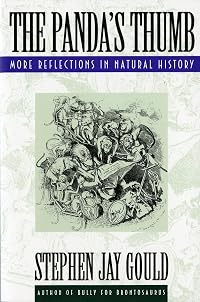
History. Science. Nonfiction. Over a century after Darwin published the Origin of Species, Darwinian theory is in a "vibrantly healthy state," writes Stephen Jay Gould, its most engaging and illuminating exponent. Exploring the "peculiar and mysterious particulars of nature," Gould introduces the listener to some of the many and wonderful manifestations of evolutionary biology.Tags
Recommendations










Member Reviews
Witty and well-informed as ever. One of the best is on how pioneers of statistics got it all wrong about immigration, moulding their criteria to fit their racist prejudices. Several excursions into Darwin, how wide-ranging he was, what a master of detail as well as grand theory. Strong on, or rather against, creationists - no such thing as "scientific creationism". Seems to be a particularly American delusion, a precursor to our present "post-truth" culture.
A collection of essays, almost all of them originally published in Natural History Magazine, covering various topics in evolutionary biology and related fields. These are from the early 1980s, so some of them are a bit dated, but they're still very much worth reading. Gould is a lucid, thoughtful writer, and his subject matter is always intriguing, at least for those of a scientific mindset. He isn't simply popularizing scientific concepts or offering up interesting scientific factoids for his readers, either. There's a lot of original thought, analysis, and argument here, whether Gould is attempting to dispel over-simplistic myths about important people in the history of science, contesting the popular notion that extinct species are show more necessarily failed or "inferior" species, or -- a favorite theme -- pointing out the ways that biologists often fail to sufficiently take into account the role that chance and contingency play in evolution. Fascinating stuff. show less
Volume 3 of the collected essays of this author was a mix as usual of rather dry ones I found hard to get into, and more interesting topics such as whether all varieties of zebra (there are three, each with distinctive stripe patterns) are actually related and whether the capacity for stripes is inherent in horses as a whole (it is). Another essay deals with the development of the horse leg and how two toes fused to another bone but in some throw backs appear as large toes branching off the leg too high up to actually function as toes.
I was puzzled by the section on the Piltdown Man hoax since the previous volume included a similar article on the subject - it seems that after the one in the present volume was originally published a show more furore resulted with defenders of Teilhard de Chardin launching vicious attacks upon Gould. In this volume, a second article appears where he refuted the arguments of a few more prominent attacks (while drawing a veil over nastier comments which, reading between the lines, might have been anti-Semitic, the author being Jewish). I don't know why they reacted thus after this second essay when seemingly the first very similar one passed unremarked.
One essay discusses the possibility of an asteroid being responsible for the extinction of the dinosaurs - this is so well accepted today that it's interesting to see the early stages of the introduction of this idea.
On the whole this balances out as 3 stars. show less
I was puzzled by the section on the Piltdown Man hoax since the previous volume included a similar article on the subject - it seems that after the one in the present volume was originally published a show more furore resulted with defenders of Teilhard de Chardin launching vicious attacks upon Gould. In this volume, a second article appears where he refuted the arguments of a few more prominent attacks (while drawing a veil over nastier comments which, reading between the lines, might have been anti-Semitic, the author being Jewish). I don't know why they reacted thus after this second essay when seemingly the first very similar one passed unremarked.
One essay discusses the possibility of an asteroid being responsible for the extinction of the dinosaurs - this is so well accepted today that it's interesting to see the early stages of the introduction of this idea.
On the whole this balances out as 3 stars. show less
Another set of Gould's essays, mostly focused on the theme of evolution in one form or another. Like many of these volumes, some of the essays have dated a bit more than others, but there remain some interesting bits.
A collection of essays on evolutionary biology by provocative and original thinker Stephen Jay Gould, a paleontologist at Harvard University. A good bit of debunking and setting the record straight on matters pertaining to evolution and evolutionary theory.
I’m going to make an embarrassing confession: when I was a teenager, I attempted to read one of Stephen Jay Gould’s essay collections and didn’t quite make it through. I think it was the baseball; something about it turned me off. Now, twelve years later, I lament not having tried another of his books while younger. I recently read The Mismeasure of Man and thought it was brilliant. Now I have read an actual book of his shorter works, and I have thoroughly enjoyed the experience.
Full review: http://libwen.wordpress.com/2010/08/26/hens-teeth-and-horses-toes-by-stephen-jay...
Full review: http://libwen.wordpress.com/2010/08/26/hens-teeth-and-horses-toes-by-stephen-jay...
Hen's Teeth and Horse's Toes: Hen's Teeth and Horse's Toes written by Stephen Jay Gould introduces the reader to the many and wonderful manifestations of evolutionary biology in this book of essays. Gould wrote many essays for "Natural History" and this book covers thirty of those essays as he takes us on an evolution ride of a tour de force magnitude.Gould is unparalled when it comes to taking complicated theory and having the ability to evoke enlightenment to the general mass public as he brings a passion to his explanations and an understanding par excellence. Reading Gould's rather convesational tone in this book brings a wealth of information to the reader in a painless fashion.
Gould is truly a natural philosopher when it comes to show more spinning a story as he brings to the table a wealth of information as you read and the conclusion comes to you in a rather lively and fascinating manor. Gould has hit his stride with these essays.
This book was a joy to read and educational, bringing the reader witty learned sense making you follow till you see his conclusion. The prose flows well and you will feel that you are in capable hands as you are guided throughout the book. show less
Members
- Recently Added By
Lists

al.vick-parents books
301 works; 1 member
Author Information

116+ Works 30,196 Members
Born in New York City in 1941, Stephen Jay Gould received his B.A. from Antioch College in New York in 1963 and a Ph.D. in paleontology from Columbia University in 1967. Gould spent most of his career as a professor at Harvard University and curator of invertebrate paleontology at Harvard's Museum of Comparative Zoology. His research was mainly in show more the evolution and speciation of land snails. Gould was a leading proponent of the theory of punctuated equilibrium. This theory holds that few evolutionary changes occur among organisms over long periods of time, and then a brief period of rapid changes occurs before another long, stable period of equilibrium sets in. Gould also made significant contributions to the field of evolutionary developmental biology, most notably in his work, Ontogeny and Phylogeny. An outspoken advocate of the scientific outlook, Gould had been a vigorous defender of evolution against its creation-science opponents in popular magazines focusing on science. He wrote a column for Natural History and has produced a remarkable series of books that display the excitement of science for the layperson. Among his many awards and honors, Gould won the National Book Award and the National Book Critics Circle Award. His titles include; Ever Since Darwin, The Panda's Thumb, Hen's Teeth and Horse's Toes, Time's Arrow, Time's Cycle, Wonderful Life: The Burgess Shale and the Nature of History, The Structure of Evolutionary Theory and Full House: The Spread of Excellence from Plato to Darwin. Stephen Jay Gould died on May 20, 2002, following his second bout with cancer. (Bowker Author Biography) show less
Awards and Honors
Awards
Series

Belongs to Publisher Series
Common Knowledge
- Canonical title*
- Wie das Zebra zu seinen Streifen kommt : Essays zur Naturgeschichte
- Original title
- Hen's Teeth and Horse's Toes: Further Reflections in Natural History
- Original publication date
- 1980
- Dedication
- For my Mother: Brave woman, Wise owl
- First words
- Alfred, Lord Tennyson, never known for egalitarian perspectives, had this to say about the relative merit of the sexes:
Woman is the lesser man, and all
thy passions, matched with mine,
Are as moonlight unto sunligh... (show all)t, and
as water unto wine. - Quotations
- Facts are the world's data. Theories are structures of ideas that explain and interpret facts. Facts do not go away when scientists debate rival theories to explain them. Einstein's theory of gravitation replaced Newton's, bu... (show all)t apples did not suspend themselves in mid-air, pending the outcome. And humans evolved from apelike ancestors whether they did so by Darwin's proposed mechanism or by some other yet to be discovered.
— "Evolution as Fact and Theory," Hen's Teeth and Horse's Toes, New York: W. W. Norton, 1994, p. 254. - Last words
- (Click to show. Warning: May contain spoilers.)If I end with measured optimism, however, I do so in urging that we focus upon the second phrase of what may be Darwin's most famous statement (from the Descent of Man): "False facts are highly injurious to the progress of science, for they often endure long; but false views, if supported by some evidence, do little harm, for every one takes delight in proving their falseness."
- Original language
- English
*Some information comes from Common Knowledge in other languages. Click "Edit" for more information.
Classifications
Statistics
- Members
- 1,442
- Popularity
- 16,358
- Reviews
- 13
- Rating
- (3.93)
- Languages
- 8 — English, French, German, Italian, Norwegian (Bokmål), Norwegian, Portuguese, Spanish
- Media
- Paper, Audiobook, Ebook
- ISBNs
- 29
- ASINs
- 11