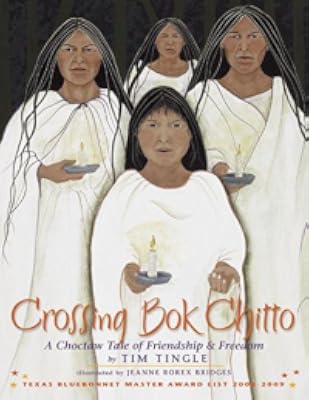
Crossing Bok Chitto: A Choctaw Tale of Friendship and Freedom
by Tim Tingle
On This Page
Description
In the 1800s, a Choctaw girl becomes friends with a slave boy from a plantation across the great river, and when she learns that his family is in trouble, she helps them cross to freedom.Tags
Recommendations
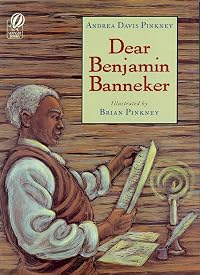
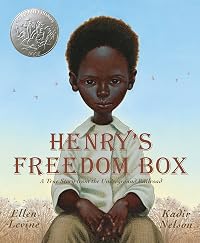
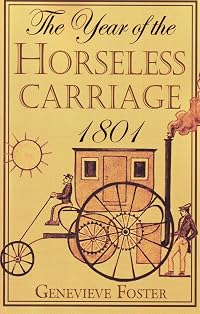
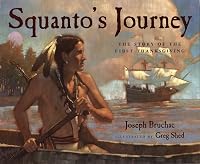
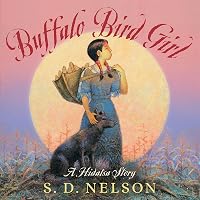
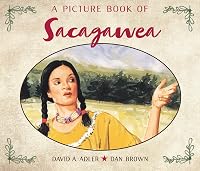
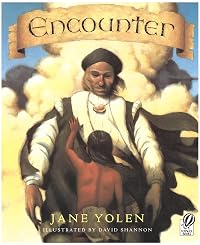
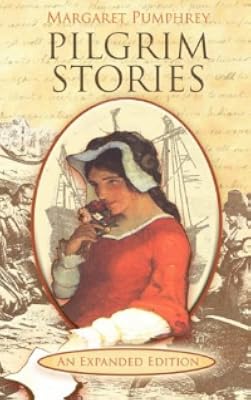
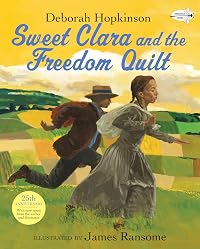

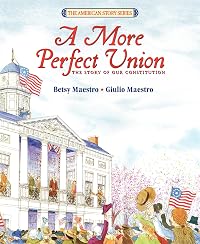
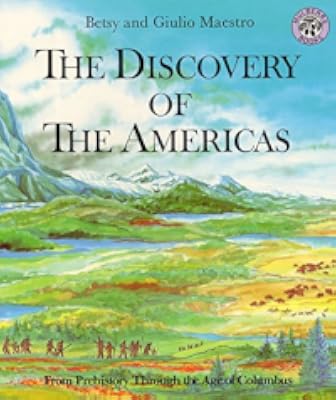

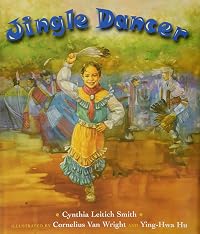


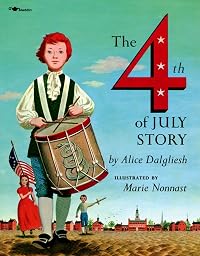

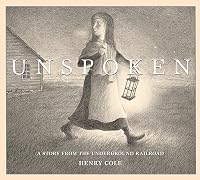
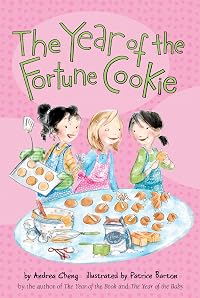
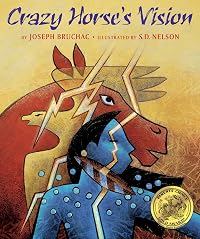
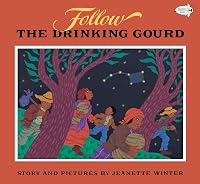
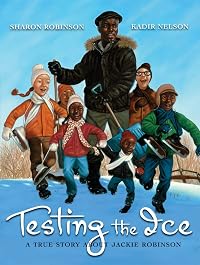
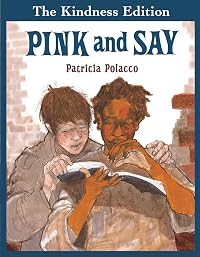
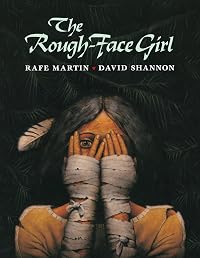


Member Recommendations
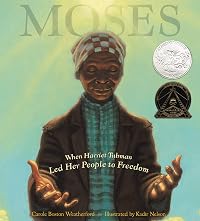
eo206 An expanded story of Crossing Bok Chitto
Member Reviews
Beautifully illustrated and powerfully told, Crossing Bok Chitto is a moving tale of friendship - a friendship that traverses, not just the geographical boundary of the Bok Chitto River (also spelled "Bogue Chitto"), but the boundaries of culture and race as well. When Martha Tom, a young Chocktaw girl living in the Mississippi of the early 1800s - before the time of the Trail of Tears, or the coming of the Civil War - wanders across the forbidden Bok Chitto while searching for some blueberries, she is befriended by the members of an underground slave church, and guided back to the river by Little Mo, an African-American boy her own age. A friendship develops as the two children go back and forth across Bok Chitto, and when Little Mo's show more family is faced with a brutal separation, after his mother is sold away, he turns to Martha Tom and her community for help...
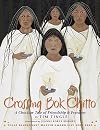
This story of a Chocktaw community that aids a runaway slave family in antebellum Mississippi is inspirational, and, according to Tim Tingle's afterword, has been passed down through the generations, in the oral tradition of that community. The illustrations by Cherokee artist Jeanne Rorex Bridges are lovely, with a distinctive folk sensibility that reminded me, at times, of a quilt. Many of the scenes are dominated by somber browns and muted lavenders, but the effect is intense, rather than drab, and makes the appearance of lighter shades - as when the white-garbed Chocktaw women guide Little Mo's family across the river - all the more striking. All in all, Crossing Bok Chitto is an outstanding book, one with strong narrative and aesthetic appeal, and one which explores an important aspect of American history - the interaction between Native American and African-American communities in the South.
That said, while I understand that Tingle is telling a particular story - one in which runaway slaves are sheltered by the Chocktaw - I found myself wondering how all of this this squares, historically speaking, with the fact that some Chocktaw people owned African slaves themselves. The narrative clearly states that, once slaves crossed the Bok Chitto, they were free. Should the reader assume that this only applied to slaves owned by whites? Or perhaps that this particular Chocktaw community didn't include any slave-owners? It's disappointing to see that Tingle's informative afterword, while it does discuss the subsequent Trail of Tears, doesn't mention the more complicated historical record of Chocktaw slave-owning (or the Chocktaw alliance with the Confederacy). It's not that I expect those aspects of the history to take center stage - that isn't the story being told here, after all - but the fact that they were entirely left out of an afterword meant to give historical and cultural background makes me uncomfortable. I don't know that the absence of this more complicated history "ruins" the book (I still gave it four stars, after all!), but it's something I think readers should be aware of... show less
This story of a Chocktaw community that aids a runaway slave family in antebellum Mississippi is inspirational, and, according to Tim Tingle's afterword, has been passed down through the generations, in the oral tradition of that community. The illustrations by Cherokee artist Jeanne Rorex Bridges are lovely, with a distinctive folk sensibility that reminded me, at times, of a quilt. Many of the scenes are dominated by somber browns and muted lavenders, but the effect is intense, rather than drab, and makes the appearance of lighter shades - as when the white-garbed Chocktaw women guide Little Mo's family across the river - all the more striking. All in all, Crossing Bok Chitto is an outstanding book, one with strong narrative and aesthetic appeal, and one which explores an important aspect of American history - the interaction between Native American and African-American communities in the South.
That said, while I understand that Tingle is telling a particular story - one in which runaway slaves are sheltered by the Chocktaw - I found myself wondering how all of this this squares, historically speaking, with the fact that some Chocktaw people owned African slaves themselves. The narrative clearly states that, once slaves crossed the Bok Chitto, they were free. Should the reader assume that this only applied to slaves owned by whites? Or perhaps that this particular Chocktaw community didn't include any slave-owners? It's disappointing to see that Tingle's informative afterword, while it does discuss the subsequent Trail of Tears, doesn't mention the more complicated historical record of Chocktaw slave-owning (or the Chocktaw alliance with the Confederacy). It's not that I expect those aspects of the history to take center stage - that isn't the story being told here, after all - but the fact that they were entirely left out of an afterword meant to give historical and cultural background makes me uncomfortable. I don't know that the absence of this more complicated history "ruins" the book (I still gave it four stars, after all!), but it's something I think readers should be aware of... show less
Tells a story that is not well known, about how Choctaw members helped slaves escape, and blended their communities. Beautiful picture book, powerful story.
On one side of the Bok Chitto river lived the Choctaw Indians, and on the other side of the river lived the slaves and their owners. The river was freedom for the slaves. If the slaves were able to escape and make it across the river, they were free from slavery. Martha Tom, one of the Choctaw Indians living by the river and little Mo, one of the slave boys, become great friends. With the help from Martha Tom, little Mo and his family are able to cross the river.
I thought this book was wonderful. The pictures in this book were captivating. They drew you into the story. I loved the sweet story of how the two culturally different children became life long friends. This story also kept you on pins and needles to see if they make it to show more freedom.
I think it would be great to have the students chose one of the characters of Martha Tom or little Mo, and have them write about what they thought about them. They could write what made them special, their great character and qualities and why they would want to be like them. Then you could have them pair up as the duo and go out side to play games where they would have to help each other get to a finish line. show less
I thought this book was wonderful. The pictures in this book were captivating. They drew you into the story. I loved the sweet story of how the two culturally different children became life long friends. This story also kept you on pins and needles to see if they make it to show more freedom.
I think it would be great to have the students chose one of the characters of Martha Tom or little Mo, and have them write about what they thought about them. They could write what made them special, their great character and qualities and why they would want to be like them. Then you could have them pair up as the duo and go out side to play games where they would have to help each other get to a finish line. show less
Crossing Bok Chitto, A Choctaw Tale of Friendship and freedom is a book written before the War Between the States. This story is about Choctaw Indians who live on one side of the river, and slaves and plantation owners who live on the other side. If the Slaves can cross the river onto the Choctaw side then they will be free. You will see in this story how a little Choctaw girl befriends and slave boy, and how with the help of the Choctaw girl and the slave boy, they help bring the slaves to freedom.
The little slave boy is called “little mo” and we learn that his real name is Moses. Like in the Bible, Moses guides followers through water. In this story, you will see that “little mo” helps guide his family though the river with show more the help of Martha Tom, the Choctaw girl.
I enjoyed this book because it tells of friendship and freedom. Martha Tom and Little Mo didn’t care that they were different from each other. They grew to become great fiends, and in the end, Martha Tom helped save her friend and his family’s life.
I would use this book to teach my students about the hardships that took place during the slavery time period and how their were people out there that wanted to help. Friendship and kindness is another thing I would be able to show my students. Just because someone looks different then you, that doesn't mean you can treat them any different. show less
The little slave boy is called “little mo” and we learn that his real name is Moses. Like in the Bible, Moses guides followers through water. In this story, you will see that “little mo” helps guide his family though the river with show more the help of Martha Tom, the Choctaw girl.
I enjoyed this book because it tells of friendship and freedom. Martha Tom and Little Mo didn’t care that they were different from each other. They grew to become great fiends, and in the end, Martha Tom helped save her friend and his family’s life.
I would use this book to teach my students about the hardships that took place during the slavery time period and how their were people out there that wanted to help. Friendship and kindness is another thing I would be able to show my students. Just because someone looks different then you, that doesn't mean you can treat them any different. show less
I really enjoyed this book. It was ironic because moments before we read this book, it was discussed in class that many times, particular pieces of history such as slavery and Native Americans are underrepresented in children’s literature. I liked the point of view. A lot of historical fiction is told from the view of the “white man” but this book took a different approach. It was told from the sides of Martha Tom, a young Choctaw girl, and a slave boy she befriended. This gave readers a glimpse into what life was like for them and how people of their culture felt at the time. I like this book because it had two believable main characters. In the part of the story where the boy’s mother was sold and the family had to flee over show more the river, the readers felt the pain of the family. The book took the readers back in time because it did such a great job developing the characters in such a believable way. Martha Tom and the boy had a friendship that could be relevant during any time period, but the hardships and events they encountered kept it highly relevant to the historical aspect. The main idea was to share the Choctaw Tales of slaves crossing the Bok Chitto River to freedom. It took an actual event that occurred and made its own story from it. A very enjoyable read. show less
For intermediate to advanced readers. It is a longer book. It is about a Native American forming a friendship with a slave on a plantation. His mother gets sold and her tribe helps them escape. The pictures are beautiful, the clothing, ceremonies, and pictures of nature represent Native American culture in a beautiful light.
This is the story of a young Choctow girl, Martha Tom, who secretly learns how to cross the Bok Chitto River by stepping on a series of submerged stones. She befriends a slave boy who lives on a plantation on the other side of the river. When the boy's mother is sold and about to be sent away forever, the two children bravely band together and courageously save the family and help them escape to freedom. The writing is beautiful, with the poetry and cadences of a superb storyteller. The illustrations gracefully support and develop the story with startling portraits in moody landscapes. The collaboration of the Choctow storyteller and Cherokee artist is a complete success.
Members
- Recently Added By
Published Reviews
These issues notwithstanding, Crossing Bok Chitto is an awesome story of survival, generosity, courage, kindness and love; enhanced by Jeanne Rorex Bridges’ luminous acrylic on watercolor board paintings on a subdued palette of mostly browns and greens.
added by private library
Lists

Top 100 books by Indigenous Masters
134 works; 7 members

Native American / Indigenous Literature
172 works; 100 members

Beautiful Feet Books
304 works; 7 members

Native Picture Books by Native Authors
47 works; 1 member

Children's Picture Books
188 works; 1 member
Author Information

30+ Works 2,584 Members
All Editions
Awards and Honors
Awards
Distinctions
Notable Lists
Common Knowledge
- Canonical title
- Crossing Bok Chitto: A Choctaw Tale of Friendship and Freedom
Classifications
- Genre
- Children's Books
- DDC/MDS
- 398.209789 — Society, government, & culture Customs, etiquette & folklore Folklore & Folktales Folk literature History, geographic treatment, biography North American folktales Western U.S. New Mexico
- LCC
- PZ7 .T489 .C — Language and Literature Fiction and juvenile belles lettres Fiction and juvenile belles lettres Juvenile belles lettres
- BISAC
Statistics
- Members
- 925
- Popularity
- 28,905
- Reviews
- 73
- Rating
- (4.37)
- Languages
- English
- Media
- Paper
- ISBNs
- 7
- UPCs
- 1
- ASINs
- 8