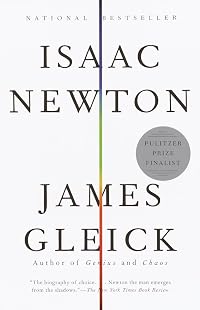
Isaac Newton
by James Gleick
On This Page
Description
James Gleick has long been fascinated by the making of science -- how ideas order visible appearances, how equations can give meaning to molecular and stellar phenomena, how theories can transform what we see. In Chaos, he chronicled the emergence of a new way of looking at dynamic systems; in Genius, he portrayed the wondrous dimensions of Richard Feymnan's mind. Now, in Isaac Newton, he gives us the story of the scientist who, above all others, embodied humanity's quest to unveil the show more hidden forces that constitute the physical world. In this original, sweeping, and intimate biography, Gleick moves between a comprehensive historical portrait and a dramatic focus on Newton's significant letters and unpublished notebooks to illuminate the real importance of his work in physics, in optics, and in calculus. He makes us see the old intuitive, alchemical universe out of which Newton's mathematics first arose and shows us how Newton's ideas have altered all forms of understanding from history to philosophy. And he gives us a moving account of the conflicting impulses that pulled at this man's heart: his quiet longings, his rage, his secrecy, the extraordinary subtleties of a personality that were mirrored in the invisible forces he first identified as the building blocks of science. More than biography, more than history, more than science, Isaac Newton tells us how, through the mind of one man, we have come to know our place in the cosmos. Read by Allan Couruner. show lessTags
Recommendations
Member Reviews
Sir Isaac Newton ranks among history's greatest geniuses. For inventing modern physics. For overturning Aristotle's hegemony upon thought. For co-inventing calculus (as an introduction to physics). For being more into theology and alchemy than physics.
His treasure-trove of personal writings - kept hidden until near the middle of the twentieth century - show this man to be, like Luther before him, the last of the great medievalists who birthed the movement of modernity. With Newton came the Industrial Revolution and a rigid system that Einsteinianism had to loosen. He obsessed over thought after thought, most based on alchemy and Arian/Gnostic theology (not orthodox Trinitarianism), until modern physics was birthed, and with it a show more deductive mechanism from first "principles."
He was born the son of an illiterate father whom he never knew. He seemed destined to become a farmer, but instead, privately reckoned physics into being at Cambridge. He never married. He was haunted by lust. He became rich by overseeing the conversion of Britain's Mint. He left no will, was close to none, was a recluse, and wrote brilliantly.
He was a magician, an alchemist, and a heretical theologian. He dabbled in unreason to give birth to reason. He later became an authoritarian over scientific thought. He feuded with Leibnitz, a feud which in some senses persists to this day. (They both are right in their claims, and humanity is the big loser of the argument. They should be seen as independent co-founders of calculus.)
His Principia removed Aristotle's impulsivity and set gravity as the central cause of all of motion. He derived calculus to explain its movement in a universal language. He made mathematics the foundational language of humanity.
It wasn't until Einstein that science returned to solving problems as its fundamental method. Even Darwin proposed a universal system, not a solution. With Einstein, relativity (which was the popular version of the physical laws Einstein proposed, much as mechanism was the popular import of Newtonianism) became in imbibed by Western consciousness. Now, scientists see things through a team spirit relative to one's position in work. Few claim to be systemic masters any longer, as if there were a system to master in the first place.
The rigid system of Newtonianism stays with us on the outskirts. Every time someone exerts a will to claim overarching knowledge (which is, in Newton's world, power), they claim Newton's authoritarian dark side. Trump, old-school Calvinism, old-school capitalism, moralism. There is right and wrong for Newton. Again, it took an Einstein to relativize everything.
I think the real Isaac Newton would have liked to know that sage of Princeton Albert Einstein. It's unfortunate that I also dream that Newton would have found much reason to argue with him, much as Newton privately argued with Leibnitz in his own day and Einstein argued with Quantum Mechanics for the second-half of his life. At least Newton was private in his argumentation. He preferred not to argue publicly. That's a character trait we can all learn from, especially in a post-Newtonian, post-Einsteinian world. show less
His treasure-trove of personal writings - kept hidden until near the middle of the twentieth century - show this man to be, like Luther before him, the last of the great medievalists who birthed the movement of modernity. With Newton came the Industrial Revolution and a rigid system that Einsteinianism had to loosen. He obsessed over thought after thought, most based on alchemy and Arian/Gnostic theology (not orthodox Trinitarianism), until modern physics was birthed, and with it a show more deductive mechanism from first "principles."
He was born the son of an illiterate father whom he never knew. He seemed destined to become a farmer, but instead, privately reckoned physics into being at Cambridge. He never married. He was haunted by lust. He became rich by overseeing the conversion of Britain's Mint. He left no will, was close to none, was a recluse, and wrote brilliantly.
He was a magician, an alchemist, and a heretical theologian. He dabbled in unreason to give birth to reason. He later became an authoritarian over scientific thought. He feuded with Leibnitz, a feud which in some senses persists to this day. (They both are right in their claims, and humanity is the big loser of the argument. They should be seen as independent co-founders of calculus.)
His Principia removed Aristotle's impulsivity and set gravity as the central cause of all of motion. He derived calculus to explain its movement in a universal language. He made mathematics the foundational language of humanity.
It wasn't until Einstein that science returned to solving problems as its fundamental method. Even Darwin proposed a universal system, not a solution. With Einstein, relativity (which was the popular version of the physical laws Einstein proposed, much as mechanism was the popular import of Newtonianism) became in imbibed by Western consciousness. Now, scientists see things through a team spirit relative to one's position in work. Few claim to be systemic masters any longer, as if there were a system to master in the first place.
The rigid system of Newtonianism stays with us on the outskirts. Every time someone exerts a will to claim overarching knowledge (which is, in Newton's world, power), they claim Newton's authoritarian dark side. Trump, old-school Calvinism, old-school capitalism, moralism. There is right and wrong for Newton. Again, it took an Einstein to relativize everything.
I think the real Isaac Newton would have liked to know that sage of Princeton Albert Einstein. It's unfortunate that I also dream that Newton would have found much reason to argue with him, much as Newton privately argued with Leibnitz in his own day and Einstein argued with Quantum Mechanics for the second-half of his life. At least Newton was private in his argumentation. He preferred not to argue publicly. That's a character trait we can all learn from, especially in a post-Newtonian, post-Einsteinian world. show less
This is a clever book by Gleick.
Biographies come in a variety of forms, and often, for science subjects, they tend to be a chronology of facts linked by anecdotes and observation – from contemporaries, the author, and other observers. Here Gleick embeds us in Newton’s world; in particular, with its limitations and Newton’s personal difficulties.
As a result, the cause for Newton’s challenging personality and his remoteness and seclusion become comprehensible. As does, the lack of a compendium of mathematics, which Newton provided while simultaneously discovering much (for him) low-hanging fruit – and not so low-hanging, because Newton was curious, patient, and meticulous. As Gleick puts it, “… he had made tools”, which show more riffs off the epigraph from John Conduitt (Newton’s relative) of Newton building the first reflecting telescope:
"I asked him where he had it made, he said he made it himself, & when I asked him where he got his tools said he made them himself & laughing added if I had staid for other people to make my tools & things for me, I had never made anything…”
It’s fascinating how for centuries, millennia even, that what we call science was debated in words; that mathematics, though it existed, was a sideshow. It took the combination of Bacon’s vision and marketing, the creation of the Royal Society, and Newton’s mathematics and experimentation to move from “philosophy (of science)” to “natural philosophy”.
Historically, Newton's work caused, in effect, philosophy to become philosophy and physics.
The science is covered in historical and narrative contexts without any technical detail. If you are after an understanding of Newton’s work itself, then this is probably not the best read. show less
Biographies come in a variety of forms, and often, for science subjects, they tend to be a chronology of facts linked by anecdotes and observation – from contemporaries, the author, and other observers. Here Gleick embeds us in Newton’s world; in particular, with its limitations and Newton’s personal difficulties.
As a result, the cause for Newton’s challenging personality and his remoteness and seclusion become comprehensible. As does, the lack of a compendium of mathematics, which Newton provided while simultaneously discovering much (for him) low-hanging fruit – and not so low-hanging, because Newton was curious, patient, and meticulous. As Gleick puts it, “… he had made tools”, which show more riffs off the epigraph from John Conduitt (Newton’s relative) of Newton building the first reflecting telescope:
"I asked him where he had it made, he said he made it himself, & when I asked him where he got his tools said he made them himself & laughing added if I had staid for other people to make my tools & things for me, I had never made anything…”
It’s fascinating how for centuries, millennia even, that what we call science was debated in words; that mathematics, though it existed, was a sideshow. It took the combination of Bacon’s vision and marketing, the creation of the Royal Society, and Newton’s mathematics and experimentation to move from “philosophy (of science)” to “natural philosophy”.
Historically, Newton's work caused, in effect, philosophy to become philosophy and physics.
The science is covered in historical and narrative contexts without any technical detail. If you are after an understanding of Newton’s work itself, then this is probably not the best read. show less
We live in the world Isaac Newton made -- or, to be more precise, we understand basic facts about our world because Newton explained it. James Gleick lays out the man's life and work in a clean, lean fashion (it helps that Newton had almost no life outside of work). There's a smattering of math here, just enough to make my head hurt and marvel at it. The rest is fascinating factoids and insight into Newton's achievement. For instance, Gleick points out that if Newton had not spent so much time on the non-scientific pursuit of alchemy, he might not have been willing to postulate and prove the existence of gravity (which is, after all, an invisible force). And did you know that Newton was Master of the Mint, overseeing the British show more treasury? That he ruthlessly sent counterfeiters to the gallows, and used all of his considerable influence to ruin other scientists? That he could plot the patterns of the solar system, but forgot to write a will? Nifty stuff, well worth enduring a little calculus. show less
Brief and insightful biography of a singular man:
James Gleick certainly never lets you get bored. This biography of Sir Isaac Newton - a man who lived an improbable eighty four years and in that time invented much of mathematics, classical physics and optics, postulated gravity, ran the Royal Mint, relentlessly persecuted forgers and secretly devoted a fair bit of his life to alchemy - is done and dusted in under 200 generously margined pages, so being of a short attention span is no barrier.
This is a great book: Gleick's prose, while undeniably efficient, is nonetheless possessed of a disarming elegance and his analysis is insightful and engaging: I found myself lowering the book and staring into space pondering its implications a show more good deal.
We tend to think of Newton as the father of the modern enlightenment without concluding that, ergo, the times he inhabited were QED un-enlightened. This makes the amount and scope of a single man's achievement all the more stunning: parameters we take absolutely for granted - such as the measurable and consistent passage of time - for most purposes, just didn't exist: it was by Newton's singular and cantankerous will that we became "enlightened" at all. Science, mathematics philosophy and religion were simply not the carefully compartmentalised and ontologically parsed disciplines they are today: they were merely different aspects of the same tangled skein.
Gleick also records how indebted our now "untangled" skein is to Newton's ministrations: were the programmes of Robert Hooke or Gottfried Leibniz - great antagonists of Newton's in their day - to have prevailed, the uncomfortable suspicion is that our scientific landscape now might look very different. Newton's famous deference to the shoulders of giants was in reality uttered in false modesty with reference to a competitor, Hooke, whom he despised. That fact alone ought to trouble the more revisionist historians of science. Indeed, "a slightly naughty thought" occurs to Hermann Bondi: "we may still be so much under the impression of the particular turn he took ... We cannot get it out of our system".
Quite. This is a deft and elegant biography. Well recommended. show less
James Gleick certainly never lets you get bored. This biography of Sir Isaac Newton - a man who lived an improbable eighty four years and in that time invented much of mathematics, classical physics and optics, postulated gravity, ran the Royal Mint, relentlessly persecuted forgers and secretly devoted a fair bit of his life to alchemy - is done and dusted in under 200 generously margined pages, so being of a short attention span is no barrier.
This is a great book: Gleick's prose, while undeniably efficient, is nonetheless possessed of a disarming elegance and his analysis is insightful and engaging: I found myself lowering the book and staring into space pondering its implications a show more good deal.
We tend to think of Newton as the father of the modern enlightenment without concluding that, ergo, the times he inhabited were QED un-enlightened. This makes the amount and scope of a single man's achievement all the more stunning: parameters we take absolutely for granted - such as the measurable and consistent passage of time - for most purposes, just didn't exist: it was by Newton's singular and cantankerous will that we became "enlightened" at all. Science, mathematics philosophy and religion were simply not the carefully compartmentalised and ontologically parsed disciplines they are today: they were merely different aspects of the same tangled skein.
Gleick also records how indebted our now "untangled" skein is to Newton's ministrations: were the programmes of Robert Hooke or Gottfried Leibniz - great antagonists of Newton's in their day - to have prevailed, the uncomfortable suspicion is that our scientific landscape now might look very different. Newton's famous deference to the shoulders of giants was in reality uttered in false modesty with reference to a competitor, Hooke, whom he despised. That fact alone ought to trouble the more revisionist historians of science. Indeed, "a slightly naughty thought" occurs to Hermann Bondi: "we may still be so much under the impression of the particular turn he took ... We cannot get it out of our system".
Quite. This is a deft and elegant biography. Well recommended. show less
A first rate biography of Isaac Newton. The biography is a relatively short, standard cradle-to-grave account, with significant discussions of Newton's scientific thinking and discoveries, starting with mathematics, then optics, and finally physics -- not counting alchemy, biblical studies, and his role as master of the mint.
James Gleick puts you directly into Newton's life and world through extensive quotations from letters and other documents, all with the original spellings. In some cases, like Newton's playing with infinite sums, Gleick reproduces a facsimile of the document itself.
No scientific life I know is as full of bitter rivalries, secrecy, and a continuum from the ultra-rational to the completely irrational. Towards the end show more of the book Gleick quotes Keynes' apt description of Newton: "Newton was not the first of the age of reason. He was the last of the magicians, the last of the Babylonians and Sumerians, the last great mind which looked out on the visible and intellectual world with the same eyes as those who began to build our intellectual inheritance rather less than 10,000 years ago." show less
James Gleick puts you directly into Newton's life and world through extensive quotations from letters and other documents, all with the original spellings. In some cases, like Newton's playing with infinite sums, Gleick reproduces a facsimile of the document itself.
No scientific life I know is as full of bitter rivalries, secrecy, and a continuum from the ultra-rational to the completely irrational. Towards the end show more of the book Gleick quotes Keynes' apt description of Newton: "Newton was not the first of the age of reason. He was the last of the magicians, the last of the Babylonians and Sumerians, the last great mind which looked out on the visible and intellectual world with the same eyes as those who began to build our intellectual inheritance rather less than 10,000 years ago." show less
A first rate biography of Isaac Newton. The biography is a relatively short, standard cradle-to-grave account, with significant discussions of Newton's scientific thinking and discoveries, starting with mathematics, then optics, and finally physics -- not counting alchemy, biblical studies, and his role as master of the mint.
James Gleick puts you directly into Newton's life and world through extensive quotations from letters and other documents, all with the original spellings. In some cases, like Newton's playing with infinite sums, Gleick reproduces a facsimile of the document itself.
No scientific life I know is as full of bitter rivalries, secrecy, and a continuum from the ultra-rational to the completely irrational. Towards the end show more of the book Gleick quotes Keynes' apt description of Newton: "Newton was not the first of the age of reason. He was the last of the magicians, the last of the Babylonians and Sumerians, the last great mind which looked out on the visible and intellectual world with the same eyes as those who began to build our intellectual inheritance rather less than 10,000 years ago." show less
James Gleick puts you directly into Newton's life and world through extensive quotations from letters and other documents, all with the original spellings. In some cases, like Newton's playing with infinite sums, Gleick reproduces a facsimile of the document itself.
No scientific life I know is as full of bitter rivalries, secrecy, and a continuum from the ultra-rational to the completely irrational. Towards the end show more of the book Gleick quotes Keynes' apt description of Newton: "Newton was not the first of the age of reason. He was the last of the magicians, the last of the Babylonians and Sumerians, the last great mind which looked out on the visible and intellectual world with the same eyes as those who began to build our intellectual inheritance rather less than 10,000 years ago." show less
Gleick is a good writer and if you are unfamiliar with Newton and his biography, this is a good place to start. It is written well, the science is explained well, and it narrates the major events in Newton's life in a good fashion. If you have read deeply about Newton, say biographies by Westfall or Christianson, then you will find this a good diversion, but ultimately unsatisfying, as much of his alchemy, theology, and life are glossed over, telescoped, or omitted.
Members
- Recently Added By
Lists


Author Information

20+ Works 19,772 Members
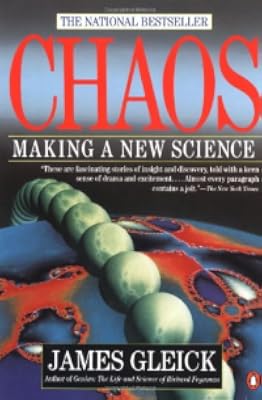
He wrote the worldwide bestseller Chaos, which was nominated for the National Book Award. He was the 1990 McGraw Distinguished Lecturer at Princeton University. (Publisher Provided) James Gleick was born in New York City on August 1, 1954. He received a degree in English and linguistics from Harvard College in 1976. He helped found Metropolis, an show more alternative weekly newspaper in Minneapolis. After the newspaper folded, he worked for ten years as an editor and reporter for The New York Times. In 1989-1990, he was the McGraw Distinguished Lecturer at Princeton University. He has written several books including Chaos: Making a New Science, Genius: The Life and Science of Richard Feynman, Faster: The Acceleration of Just About Everything, What Just Happened: A Chronicle from the Information Frontier, and The Information: A History, a Theory, a Flood. (Bowker Author Biography) show less
Some Editions
Awards and Honors
Awards
Notable Lists
Common Knowledge
- Original title
- Isaac Newton
- Original publication date
- 2003
- People/Characters
- Isaac Newton; Robert Hooke; Robert Boyle; Gottfried Wilhelm von Leibniz; Christiaan Huygens; Edmond Halley
- Important places
- University of Cambridge, Cambridge, Cambridgeshire, England, UK; Cambridge, Cambridgeshire, England, UK
- Important events
- plagues (London, 1666)
- Epigraph*
- Jag frågade honom vat någonstans han låtit göra den, och han svarade att han gjort den själv, och när jag frågade honom var han anskaffade sina verktyg, sade han att han tillverkade dem själv och tillade skrattande: o... (show all)m jag väntat på att andra skulle göra mina verktyg och annat åt mig, då skulle jag aldrig fått något gjort...
- Dedication*
- Till Toby, Caleb, Asher och Will
- First words*
- Isaac Newton sade att han hade slådat längre genom att stå på jättens axlar, men utan att själv tro på det.
- Last words*
- (Click to show. Warning: May contain spoilers.)Ändå efterlämnade han ingen testamente.
- Publisher's editor
- Frank, Dan
- Blurbers
- Weiner, Jonathan; Holmes, Richard; Lightman, Alan; Banville, John
- Original language
- English
*Some information comes from Common Knowledge in other languages. Click "Edit" for more information.
Classifications
Statistics
- Members
- 1,639
- Popularity
- 13,815
- Reviews
- 46
- Rating
- (3.72)
- Languages
- 10 — Chinese, Dutch, English, French, German, Italian, Portuguese, Spanish, Swedish, Turkish
- Media
- Paper, Audiobook, Ebook
- ISBNs
- 26
- ASINs
- 5