
Basil Mahon
Author of Faraday, Maxwell, and the Electromagnetic Field: How Two Men Revolutionized Physics
About the Author
Basil Mahon is a former officer in the Royal Electrical and Mechanical Engineers and a graduate in Engineering. He is a retired Government Civil Servant and ran the 1991 census in England and Wales. He has a long-time passion for the physical sciences and has for many years been fascinated by the show more impact that Maxwell has had on all our lives show less
Works by Basil Mahon
Faraday, Maxwell, and the Electromagnetic Field: How Two Men Revolutionized Physics (2014) 280 copies, 3 reviews
The Forgotten Genius of Oliver Heaviside: A Maverick of Electrical Science (2017) 35 copies, 1 review
Tagged
Common Knowledge
- Gender
- male
Members
Reviews
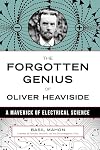
I was given an uncorrected advance reading copy from Edelweiss to review.
I admit, like many I assume, to being aware of Oliver Heaviside, but knowing almost nothing of his contributions or life. And, as is trending with these biographies I am reading, I find his life fascinating and all the more remarkable that he was entirely self-taught..
Predicting a speed of light limit to be later codified by Einstein, reducing Maxwell's theory to something manageable - and in the process, developing show more some rather creative mathematics of vectors and operational calculus that were reviled by the mathematicians of the day (who didn't understand them) yet are commonly used today - and understandable, inventing solutions to loss and distortion minimization in transmission lines of telegraph and telephone, his characteristic impedance contributions to circuit theory later becoming indispensable, Heaviside had such an impact on electrical and electromagnetic theories and mathematics and yet...was dwarfed by the big names and the ones who patented what he didn't. Still, despite making enormous and extensive pioneering advances in field theory, understanding so deeply what baffled even William Thomsen (Lord Kelvin), he could not rationalize the electron that was discovered in 1897, arguing that Maxwell's was a field theory had no place for elements of matter.
This is a great story of a man relegated to relative obscurity, and more's the pity. Heaviside's prolific writings were apparently quite pedantic, and he refused to simplify them (yes, his distillation of Maxwell's theory was simplified, but with quite complex mathematics in that simplification), perhaps to his detriment, but the reality is that the proper readership had not yet been born. He had few friends, but those he had were intensely loyal. He argued fiercely with names of the day (largely in magazine letters...he became nearly completely deaf at a young age and shunned the public), more than not on the correct side of science. And because he declined the limelight, and repeatedly refused help, he spent most of his life in near poverty.
Mahon writes a conversational narrative that is well researched (although I found one factual error that I emailed to the publisher) and presented in an easily read format. He says in the end notes that he "tried to tell the story of Heaviside's life simply and directly, putting the reader at his side, seeing the world from his perspective as his life unfolds." I think he succeeded. show less
I admit, like many I assume, to being aware of Oliver Heaviside, but knowing almost nothing of his contributions or life. And, as is trending with these biographies I am reading, I find his life fascinating and all the more remarkable that he was entirely self-taught..
Predicting a speed of light limit to be later codified by Einstein, reducing Maxwell's theory to something manageable - and in the process, developing show more some rather creative mathematics of vectors and operational calculus that were reviled by the mathematicians of the day (who didn't understand them) yet are commonly used today - and understandable, inventing solutions to loss and distortion minimization in transmission lines of telegraph and telephone, his characteristic impedance contributions to circuit theory later becoming indispensable, Heaviside had such an impact on electrical and electromagnetic theories and mathematics and yet...was dwarfed by the big names and the ones who patented what he didn't. Still, despite making enormous and extensive pioneering advances in field theory, understanding so deeply what baffled even William Thomsen (Lord Kelvin), he could not rationalize the electron that was discovered in 1897, arguing that Maxwell's was a field theory had no place for elements of matter.
This is a great story of a man relegated to relative obscurity, and more's the pity. Heaviside's prolific writings were apparently quite pedantic, and he refused to simplify them (yes, his distillation of Maxwell's theory was simplified, but with quite complex mathematics in that simplification), perhaps to his detriment, but the reality is that the proper readership had not yet been born. He had few friends, but those he had were intensely loyal. He argued fiercely with names of the day (largely in magazine letters...he became nearly completely deaf at a young age and shunned the public), more than not on the correct side of science. And because he declined the limelight, and repeatedly refused help, he spent most of his life in near poverty.
Mahon writes a conversational narrative that is well researched (although I found one factual error that I emailed to the publisher) and presented in an easily read format. He says in the end notes that he "tried to tell the story of Heaviside's life simply and directly, putting the reader at his side, seeing the world from his perspective as his life unfolds." I think he succeeded. show less
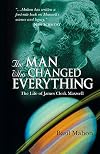
James Clerk Maxwell (Clerk being the true family name as the book points out) lived an exceptional life. I found this book to have a fine balance of his theoretical accomplishments, his personal history, and his character. I was surprised to learn about his influence over vast tracts of physics, not only electromagnetic theory.
After reading this book, I admire many things about JCM. First, his philosophy of science is one I believe in deeply. He believed in being honest in science -- show more acknowledging the struggle and false attempts instead of presenting only what's in the display case. He believed in empowering people to do it themselves and learn from experience rather than venerate those special people who have done it.
He was a believer in letting the subconscious work out details in time that the conscious mind could not. I find myself doing the same and it was exciting to read his own account of this phenomenon. In fact, many of his theories developed over many years as they distilled somewhere in his mind. I imagine his physical fitness also played a role in his ability to let go of thoughts and let them work themselves out.
He was also funny!... Maybe not in a way that makes you roll over and cry, but in an old-timey way that makes you chuckle. He even made a comment about his colleagues at one point early in his career that they didn't enjoy humor, but he put this criticism aside to do the work he loved. How can you not be endeared by a man who called a friend "the doughty knight of Baltimore"?
Most of all I respect JCM because he valued friendship and kinship with others. He viewed his work as advancing all people and that his life would disperse into minds across time to serve them. What a legacy we are lucky enough to receive -- because he ultimately believed in kinship, present and future. It inspires us to think not of ourselves but of our connected stories and to act in kinship as well.
Although the points above were clearly made in the book and relate to his spiritual beliefs, the book did not go in depth on this. His views of God and creation would be very interesting to learn about since it influenced him a great deal. Perhaps I can find this in his writings somewhere.
If you want to be inspired, learn more about a great scientist and his thought process and way of life, I highly recommend this book. show less
After reading this book, I admire many things about JCM. First, his philosophy of science is one I believe in deeply. He believed in being honest in science -- show more acknowledging the struggle and false attempts instead of presenting only what's in the display case. He believed in empowering people to do it themselves and learn from experience rather than venerate those special people who have done it.
He was a believer in letting the subconscious work out details in time that the conscious mind could not. I find myself doing the same and it was exciting to read his own account of this phenomenon. In fact, many of his theories developed over many years as they distilled somewhere in his mind. I imagine his physical fitness also played a role in his ability to let go of thoughts and let them work themselves out.
He was also funny!... Maybe not in a way that makes you roll over and cry, but in an old-timey way that makes you chuckle. He even made a comment about his colleagues at one point early in his career that they didn't enjoy humor, but he put this criticism aside to do the work he loved. How can you not be endeared by a man who called a friend "the doughty knight of Baltimore"?
Most of all I respect JCM because he valued friendship and kinship with others. He viewed his work as advancing all people and that his life would disperse into minds across time to serve them. What a legacy we are lucky enough to receive -- because he ultimately believed in kinship, present and future. It inspires us to think not of ourselves but of our connected stories and to act in kinship as well.
Although the points above were clearly made in the book and relate to his spiritual beliefs, the book did not go in depth on this. His views of God and creation would be very interesting to learn about since it influenced him a great deal. Perhaps I can find this in his writings somewhere.
If you want to be inspired, learn more about a great scientist and his thought process and way of life, I highly recommend this book. show less

I really enjoyed this book. I got my PhD in optics, and have always joked that if I get a tattoo, it'll be of Maxwell's equations, in vector calc form. I appreciated reading about where the theories came from, and what "established" science was overturned to get there. I also liked how detailed the information was about the experiments, at least in the early part of the book.
I felt the last third of the book, the people who came after Faraday and Maxwell, to be quite rushed. I would have show more liked more details about how we went from Maxwell's death to today. I mean, it was there, it was just quite hollow in relation to the rest of the book. Even the information about the Michaelson-Morley experiment was just a couple sentences long, and I don't think quite emphasized how important it was, or exactly why (although I know the reason) it disproved the luminiferous aether theory.
Final thing, the e-book format was disappointing. I thought I had 30% of the book left, and then it ended. The rest of the book was pictures and end notes. At least in a paper book you can tell when the book is about to end. I was just gearing up when the book was over. show less
I felt the last third of the book, the people who came after Faraday and Maxwell, to be quite rushed. I would have show more liked more details about how we went from Maxwell's death to today. I mean, it was there, it was just quite hollow in relation to the rest of the book. Even the information about the Michaelson-Morley experiment was just a couple sentences long, and I don't think quite emphasized how important it was, or exactly why (although I know the reason) it disproved the luminiferous aether theory.
Final thing, the e-book format was disappointing. I thought I had 30% of the book left, and then it ended. The rest of the book was pictures and end notes. At least in a paper book you can tell when the book is about to end. I was just gearing up when the book was over. show less
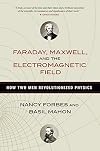
Didn't know that Maxwell first came up with his field equations by considering a purely mechanical analogy involving fictitious wheels and elastic springs being responsible for electromagnetic phenomenon. This really blew my mind. It is unfortunate that our current pedagogy does not encourage or motivate this kind of thinking.
Lists
Awards

You May Also Like


Statistics
- Works
- 4
- Members
- 582
- Popularity
- #43,089
- Rating
- 4.0
- Reviews
- 8
- ISBNs
- 15