
Nancy Forbes (1) (1952–2021)
Author of Faraday, Maxwell, and the Electromagnetic Field: How Two Men Revolutionized Physics
For other authors named Nancy Forbes, see the disambiguation page.
About the Author
Nancy Forbes works as a science and technology analyst for the federal government
Image credit: Nancy Forbes
Works by Nancy Forbes
Faraday, Maxwell, and the Electromagnetic Field: How Two Men Revolutionized Physics (2014) 280 copies, 3 reviews
Tagged
Common Knowledge
- Legal name
- Forbes, Nancy Anne
- Other names
- Forbes, Nancy A.
- Birthdate
- 1952-02-04
- Date of death
- 2021-01-16
- Gender
- female
- Education
- Columbia University (MS - Physics, PhD - Physics)
New York University (MA - Spanish Literature)
University of Virginia (BA - Spanish) - Occupations
- journalist
technical writer
analyst
editor - Organizations
- Association for Women in Science
The Wall Street Transcript
Computing in Science and Engineering
The Industrial Physicist
United States Department of Homeland Security
Central Intelligence Agency (show all 8)
Environmental Protection Agency
Brookhaven National Laboratory - Cause of death
- cardiac arrest (complication of mesothelioma)
- Nationality
- USA
- Birthplace
- Ridgewood, New Jersey, USA
- Places of residence
- Spain
Italy - Place of death
- Washington, D.C., USA
- Associated Place (for map)
- USA
Members
Reviews

I really enjoyed this book. I got my PhD in optics, and have always joked that if I get a tattoo, it'll be of Maxwell's equations, in vector calc form. I appreciated reading about where the theories came from, and what "established" science was overturned to get there. I also liked how detailed the information was about the experiments, at least in the early part of the book.
I felt the last third of the book, the people who came after Faraday and Maxwell, to be quite rushed. I would have show more liked more details about how we went from Maxwell's death to today. I mean, it was there, it was just quite hollow in relation to the rest of the book. Even the information about the Michaelson-Morley experiment was just a couple sentences long, and I don't think quite emphasized how important it was, or exactly why (although I know the reason) it disproved the luminiferous aether theory.
Final thing, the e-book format was disappointing. I thought I had 30% of the book left, and then it ended. The rest of the book was pictures and end notes. At least in a paper book you can tell when the book is about to end. I was just gearing up when the book was over. show less
I felt the last third of the book, the people who came after Faraday and Maxwell, to be quite rushed. I would have show more liked more details about how we went from Maxwell's death to today. I mean, it was there, it was just quite hollow in relation to the rest of the book. Even the information about the Michaelson-Morley experiment was just a couple sentences long, and I don't think quite emphasized how important it was, or exactly why (although I know the reason) it disproved the luminiferous aether theory.
Final thing, the e-book format was disappointing. I thought I had 30% of the book left, and then it ended. The rest of the book was pictures and end notes. At least in a paper book you can tell when the book is about to end. I was just gearing up when the book was over. show less
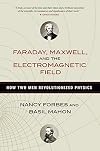
Didn't know that Maxwell first came up with his field equations by considering a purely mechanical analogy involving fictitious wheels and elastic springs being responsible for electromagnetic phenomenon. This really blew my mind. It is unfortunate that our current pedagogy does not encourage or motivate this kind of thinking.
I found the frequent historical quotes distracting. Sometimes the author repeated themselves. would have preferred a little more math.
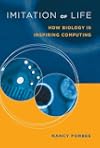
It's now available as an ebook on the MIT press portal http://mitpress-ebooks.mit.edu/product/imitation-life
Lists
You May Also Like


Associated Authors
Statistics
- Works
- 2
- Members
- 321
- Popularity
- #73,714
- Rating
- 4.0
- Reviews
- 4
- ISBNs
- 11
- Favorited
- 1