

Leonard Susskind
Author of The Theoretical Minimum: What You Need to Know to Start Doing Physics
About the Author
Leonard Susskind is the Felix Bloch Professor in theoretical physics at Stanford University. He is the author of The Cosmic Landscape , The Black Hole War, and TheTheoretical Minimum: What You Need to Know to Start Doing Physics. Susskind is a member of the National Academy of Science and the show more American Academy of Arts and Sciences, and the recipient of numerous prizes including the science writing prize of the American Institute of Physics for his Scientific American article on black holes. (Bowker Author Biography) show less
Image credit: Jonathan Maltz
Series
Works by Leonard Susskind
The Theoretical Minimum: What You Need to Know to Start Doing Physics (2013) 1,019 copies, 12 reviews
The Cosmic Landscape: String Theory and the Illusion of Intelligent Design (2005) 552 copies, 14 reviews
An Introduction To Black Holes, Information And The String Theory Revolution: The Holographic Universe (2004) 168 copies
Associated Works
What Is Your Dangerous Idea? Today's Leading Thinkers on the Unthinkable (2007) — Contributor — 668 copies, 8 reviews
The Rise of the Standard Model: Particle Physics in the 1960s and 1970s (1997) — Contributor — 9 copies
Tagged
Common Knowledge
- Birthdate
- 1940
- Gender
- male
- Education
- City College of New York (BS|Physics|1962)
Cornell University (PhD|Physics|1965) - Occupations
- physicist
professor - Organizations
- National Academy of Sciences
American Academy of Arts and Sciences
Perimeter Institute for Theoretical Physics
Korea Institute for Advanced Study
Stanford University - Awards and honors
- J. J. Sakurai Prize for Theoretical Particle Physics (1997)
- Nationality
- USA
- Birthplace
- Bronx, New York, USA
- Associated Place (for map)
- New York, USA
Members
Discussions
Just watched this 1st. lecture by Susskind. in Science! (May 2013)
Reviews
The Black Hole War: My Battle with Stephen Hawking to Make the World Safe for Quantum Mechanics by Leonard Susskind
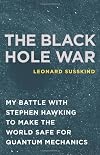
Okay, I need to face facts: I'm a physics geek. I may not be brilliant on all that math stuff, but I have a pretty good intuitive feel for all the big and a lot of the really small questions. Just don't ask me to actually DO the math.
So after all these fun-filled years of grabbing all the popular science books by all the great names in physics today, I revel in all the conflicting theories and directions that they take.
Sometimes, they can get bitter and protracted, and other times... show more friendly, if still intractable. This particular book had a little of it all. But about what? Susskind VS Hawking square-off about BLACK HOLES. Specifically, whether or not entropy is, in fact, happening on the other side of the Schwarzschild radius.
The war is over now and Hawking had backstepped in the early 2000's, but it still meant that two camps of physicists were up in arms against each other about whether information COULD actually be lost in the special conditions of a Black Hole.
From the start to the end of this book, I was hooked. It FELT like we were on the stage of a grand debate. Susskind always felt like he was on the losing side, but you know how those niggling doubts are. Conflict, losses, concessions, brief respites, and ultimate vindication. It's all here. :) Fun. :)
Yeah, but what about the science? Oh? You want to know about that? Well in the spaces of these years, we went from total loss of information and not just scrambled information (information being any kind of physical state in the universe) to a discovery of a cool little idea that states that if you add information (matter or energy) into a Singularity, it will either A: get bigger by at least a Plank or B: heat up. We must incorporate the little idea that the information of a holographic universe is contained on the SURFACE of any kind of container and not its volume.
Cool, right? Well, things get better once we start introducing String Theory. :)
Susskind makes one hell of a narrative here. I love reading about all these great men battling it out over long stretches of time and visiting each other amiably and still holding on to their positions for their lives.
The point is... none of them knew who was going to be right. The battle was the thing. And in the end, it was the very real and fundamental conflicts on a pure science level that pushed everyone to new heights. :) And we got to see it. :)
Very fun. show less
So after all these fun-filled years of grabbing all the popular science books by all the great names in physics today, I revel in all the conflicting theories and directions that they take.
Sometimes, they can get bitter and protracted, and other times... show more friendly, if still intractable. This particular book had a little of it all. But about what? Susskind VS Hawking square-off about BLACK HOLES. Specifically, whether or not entropy is, in fact, happening on the other side of the Schwarzschild radius.
The war is over now and Hawking had backstepped in the early 2000's, but it still meant that two camps of physicists were up in arms against each other about whether information COULD actually be lost in the special conditions of a Black Hole.
From the start to the end of this book, I was hooked. It FELT like we were on the stage of a grand debate. Susskind always felt like he was on the losing side, but you know how those niggling doubts are. Conflict, losses, concessions, brief respites, and ultimate vindication. It's all here. :) Fun. :)
Yeah, but what about the science? Oh? You want to know about that? Well in the spaces of these years, we went from total loss of information and not just scrambled information (information being any kind of physical state in the universe) to a discovery of a cool little idea that states that if you add information (matter or energy) into a Singularity, it will either A: get bigger by at least a Plank or B: heat up. We must incorporate the little idea that the information of a holographic universe is contained on the SURFACE of any kind of container and not its volume.
Cool, right? Well, things get better once we start introducing String Theory. :)
Susskind makes one hell of a narrative here. I love reading about all these great men battling it out over long stretches of time and visiting each other amiably and still holding on to their positions for their lives.
The point is... none of them knew who was going to be right. The battle was the thing. And in the end, it was the very real and fundamental conflicts on a pure science level that pushed everyone to new heights. :) And we got to see it. :)
Very fun. show less
The Black Hole War: My Battle with Stephen Hawking to Make the World Safe for Quantum Mechanics by Leonard Susskind
Well written and fascinating. I devoured this book and enjoyed every second of reading it.
The first chapters talk about how quantum mechanics works in a really basic form. This book is written for the layman, and as such it doesn't really go heavily into the mathematics. Interspersed throughout the book is Susskind's relationship with Hawking and their friendly(?) rivalry to prove the other wrong.
The basic problem was that Stephen Hawking came out with a mathematical reason for Information show more to be lost in a Black Hole and be completely obliterated. Leonard Susskind and Gerard t'Hooft disagreed based on the Second Law of Thermodynamics and had to wait for over 20 years for a formal proof to present itself. In the meantime, they discovered that it might have to do with the universe being a Hologram and many other things. Mostly it has to do with how much entropy can be fit into a certain amount of area.
In any case, I really like reading this book. It would have taken even less time if I hadn't stopped reading it on Saturday and Sunday to go to a Theme Park. show less
The first chapters talk about how quantum mechanics works in a really basic form. This book is written for the layman, and as such it doesn't really go heavily into the mathematics. Interspersed throughout the book is Susskind's relationship with Hawking and their friendly(?) rivalry to prove the other wrong.
The basic problem was that Stephen Hawking came out with a mathematical reason for Information show more to be lost in a Black Hole and be completely obliterated. Leonard Susskind and Gerard t'Hooft disagreed based on the Second Law of Thermodynamics and had to wait for over 20 years for a formal proof to present itself. In the meantime, they discovered that it might have to do with the universe being a Hologram and many other things. Mostly it has to do with how much entropy can be fit into a certain amount of area.
In any case, I really like reading this book. It would have taken even less time if I hadn't stopped reading it on Saturday and Sunday to go to a Theme Park. show less
Ma allora che fine fa, l'informazione, quando precipita in un buco nero?
Leonard Susskind è una vecchia volpe della fisica, così in gamba che riesce a dare a questo rigorosissimo saggio il ritmo di un romanzo d'avventura. Battaglie, colpi di scena, grandissime menti che si confrontano. Il valore di questo libro, oltre che nelle teorie che espone (per inciso qui si parla del paradigma olografico), sta nell'immagine del mondo della fisica e dei fisici che restituisce.
Se qualcuno volesse show more avvicinarsi dalla narrativa alla saggistica scientifica, non esiterei a consigliargli questo libro. show less
Leonard Susskind è una vecchia volpe della fisica, così in gamba che riesce a dare a questo rigorosissimo saggio il ritmo di un romanzo d'avventura. Battaglie, colpi di scena, grandissime menti che si confrontano. Il valore di questo libro, oltre che nelle teorie che espone (per inciso qui si parla del paradigma olografico), sta nell'immagine del mondo della fisica e dei fisici che restituisce.
Se qualcuno volesse show more avvicinarsi dalla narrativa alla saggistica scientifica, non esiterei a consigliargli questo libro. show less
The Black Hole War: My Battle with Stephen Hawking to Make the World Safe for Quantum Mechanics by Leonard Susskind
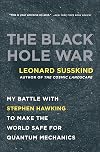
In this popular science book, Susskind takes us on a roughly chronological tour of his decades-long argument with Stephen Hawking and the other proponents of the idea that information is lost in a black hole. Along this journey are peppered many character descriptions, and quite a few very engaging anecdotes as well as some fundamental physics discussions.
On the personal front, Susskind comes across as charismatic, highly engaging, and full of curiosity and fun. Hawking is described in a show more rather complex way - one of the most brilliant scientific minds of the 20th century, but whereas others, including perhaps Hawking himself, have claimed that Hawking's severe disability was an advantage for his science, either because of over-compensation or his ability to focus far more on science, and have the rest of his life taken care of by caregivers, Susskind is frank that, especially towards the latter half of his debilitating life, Hawking's illness made innovative science near impossible. More than this, though, Hawking comes across as a man irrationally stubbornly connected to earlier brilliant, but ultimately probably wrong ideas. And he was too slow to realise that the arguments had moved on. In a rather shocking description of Hawking's misplaced arrogance, Susskind describes how Hawking gives in and relents to Suskind's (and many other) theoretical physicists' position, though as though it were Hawking that had just come to this revelation, rather than giving due credit to the other scientists, quite a few years earlier. Not very flattering.
The physics itself is the main story here, though. Susskind first briefly describes the key historical roots of the black hole debate, in relativity and quantum mechanics, and how black holes could, potentially resolve these apparently clashing theories. Hawking was the first to make key progress in this area, with the idea of a black hole radiating out its contents, though very slowly, and critically in an information-scrambled way. This was an extremely shocking idea to Susskind as it violates the law of conservation of information.
His idea to combat this was first to claim that there are complementary states of events behind and in front of the black hole event horizon. Then came the idea of the holographic principle, where information in some body (black holes, or even our universe) is represented on the outer surface of that body. Initially these ideas weren't necessarily tied to superstring theory, but as the years went on, and superstring theory became ever more pervasive in theoretical physics, these ideas, especially the holographic principle, became ever more intimately connected to superstring theory.
Black holes, often in these debates, are a key idea, at least in theoretical ways. Susskind throughout explains his ideas clearly and carefully and although much of the debates between these theoretical physicists is no doubt extremely technical and mathematical, on the whole he admirably conveys his ideas so that we understand, on a superficial level, what the key points are. Although much of this debate surrounds theories that might not be testable for decades, nevertheless the potential insights and superstring view of the universe Susskind paints are regularly thrilling. show less
On the personal front, Susskind comes across as charismatic, highly engaging, and full of curiosity and fun. Hawking is described in a show more rather complex way - one of the most brilliant scientific minds of the 20th century, but whereas others, including perhaps Hawking himself, have claimed that Hawking's severe disability was an advantage for his science, either because of over-compensation or his ability to focus far more on science, and have the rest of his life taken care of by caregivers, Susskind is frank that, especially towards the latter half of his debilitating life, Hawking's illness made innovative science near impossible. More than this, though, Hawking comes across as a man irrationally stubbornly connected to earlier brilliant, but ultimately probably wrong ideas. And he was too slow to realise that the arguments had moved on. In a rather shocking description of Hawking's misplaced arrogance, Susskind describes how Hawking gives in and relents to Suskind's (and many other) theoretical physicists' position, though as though it were Hawking that had just come to this revelation, rather than giving due credit to the other scientists, quite a few years earlier. Not very flattering.
The physics itself is the main story here, though. Susskind first briefly describes the key historical roots of the black hole debate, in relativity and quantum mechanics, and how black holes could, potentially resolve these apparently clashing theories. Hawking was the first to make key progress in this area, with the idea of a black hole radiating out its contents, though very slowly, and critically in an information-scrambled way. This was an extremely shocking idea to Susskind as it violates the law of conservation of information.
His idea to combat this was first to claim that there are complementary states of events behind and in front of the black hole event horizon. Then came the idea of the holographic principle, where information in some body (black holes, or even our universe) is represented on the outer surface of that body. Initially these ideas weren't necessarily tied to superstring theory, but as the years went on, and superstring theory became ever more pervasive in theoretical physics, these ideas, especially the holographic principle, became ever more intimately connected to superstring theory.
Black holes, often in these debates, are a key idea, at least in theoretical ways. Susskind throughout explains his ideas clearly and carefully and although much of the debates between these theoretical physicists is no doubt extremely technical and mathematical, on the whole he admirably conveys his ideas so that we understand, on a superficial level, what the key points are. Although much of this debate surrounds theories that might not be testable for decades, nevertheless the potential insights and superstring view of the universe Susskind paints are regularly thrilling. show less
Lists
Awards


You May Also Like


Associated Authors
Statistics
- Works
- 10
- Also by
- 2
- Members
- 3,981
- Popularity
- #6,338
- Rating
- 3.9
- Reviews
- 60
- ISBNs
- 82
- Languages
- 8
- Favorited
- 7
