
Carlo Rovelli
Author of Seven Brief Lessons on Physics
About the Author
Carlo Rovelli is a theoretical physicist who has made significant contributions to the physics of space and time. His books Seven Brief Lessons on Physics. Reality Is Not What It Seems, The Order of Time, and There Are Places in the World Where Rules Are Less Important Than Kindness are show more international bestsellers that have been translated into more than fifty languages. show less
Works by Carlo Rovelli
There Are Places in the World Where Rules Are Less Important Than Kindness: And Other Thoughts on Physics, Philosophy and the World (2018) 341 copies, 5 reviews
Covariant Loop Quantum Gravity: An Elementary Introduction to Quantum Gravity and Spinfoam Theory (Cambridge Monographs on Mathematical Physics) (2014) 29 copies
O abismo vertiginoso - Um mergulho nas ideias e nos efeitos da fisica quantica (Em Portugues do Brasil) (2019) 28 copies
Relatività generale: una semplice introduzione: idee, struttura concettuale, buchi neri, onde gravitazionali, cosmologia e cenni di gravità quantistica (2021) 15 copies
General Relativity: The most beautiful of theories (de Gruyter Studies in Mathematical Physics) (2015) 11 copies
Carlo Rovelli Collection 3 Books Set (Reality Is Not What It Seems, The Order of Time, Seven Brief Lessons on Physics) (2019) 5 copies, 1 review
La cattiva coscienza dei fisici 2 copies
Realitatea nu e ceea ce pare 1 copy
Francis Crick 1 copy
Par-delà le visible: La réalité du monde physique et la gravité quantique (OJ.SCIENCES) (2015) 1 copy
واقعیت ناپیدا 1 copy
Białe dziury Fascynująca idea, która wywraca do góry nogami dotychczasowe myślenie o kosmosie (2023) 1 copy
Rovelli Carlo 1 copy
Associated Works
This Will Make You Smarter: New Scientific Concepts to Improve Your Thinking (Edge Question Series) (2012) — Contributor — 899 copies, 17 reviews
What Is Your Dangerous Idea? Today's Leading Thinkers on the Unthinkable (2007) — Contributor — 668 copies, 8 reviews
Tagged
Common Knowledge
- Birthdate
- 1956-05-03
- Gender
- male
- Education
- University of Bologna
University of Padua - Occupations
- theoretical physicist
pacifist - Organizations
- University of Pittsburgh
Aix-Marseille University - Nationality
- Italy
- Birthplace
- Verona, Veneto, Italy
- Places of residence
- Marseille, France
Pittsburgh, Pennsylvania, USA
Rome, Italy - Associated Place (for map)
- Italy
Members
Reviews
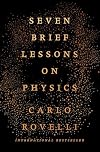
This short book brings together a series of essays originally published by physicist Carlo Rovelli in the Italian newspaper Il Sole 24 Ore. Most of the essays tackle a single idea or topic which is key to modern understandings of physics, such as quantum mechanics or general relativity. Rovelli is mostly a genial writer who aims not to give a very detailed thumbnail sketch of a given topic, but more an impressionistic overview which aims to communicate its scope and importance. His prose has show more a faintly poetic and elegiac quality which I think helps to make the average reader who knows very little about physics (e.g. me) feel like they've learned more than Rovelli actually succeeds in conveying.
This may be an unfair mark against a book which touts its brevity in the title, and which did begin life as a newspaper column. But while Rovelli very consciously works to bring together science and culture here, to show that equations can be as poetic and as creative as a painting or an arabesque, there are hints that he still thinks there's a hierarchy of knowledge:
As if those stories aren't valuable just because they're interested in exploring a different kind of truth.
As if the male hunter (and of course it's a man) is the Ur example of rational inquiry.
As if narrative isn't how people make sense—to the extent that we can—of the world around us. show less
This may be an unfair mark against a book which touts its brevity in the title, and which did begin life as a newspaper column. But while Rovelli very consciously works to bring together science and culture here, to show that equations can be as poetic and as creative as a painting or an arabesque, there are hints that he still thinks there's a hierarchy of knowledge:
"When we talk about the Big Bang or the fabric of space, what we are doing is not a continuation of the free and fantastic stories that humans have told nightly around campfires for hundreds of thousands of years. It is the continuation of something else: of the gaze of those same men in the first light of day looking at tracks left by antelope in the dust of the savannah—scrutinizing and deducting from the details of reality in order to pursue something that we can’t see directly but can follow the traces of."
As if those stories aren't valuable just because they're interested in exploring a different kind of truth.
As if the male hunter (and of course it's a man) is the Ur example of rational inquiry.
As if narrative isn't how people make sense—to the extent that we can—of the world around us. show less
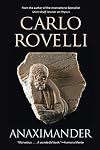
We denizens of planet Earth are in a peculiar fix nowadays. Science generates the powerful technology that enables us to destroy the ecosystems of which we are a part, and science shows how our present trajectory leads us to such destruction. But we stay quite firmly dedicated to more more more of what we kill us. We're not so much suicidal as tragically blind. Is it blindness to refuse to look, like the cleric who refused to look through Galileo's telescope?
Nobody is fighting over show more competing fundamental scientific theories to any significant extent. The battles are much more about the nature of science, about philosophy of science. That is another facet of our peculiar fix. Our scientific knowledge is astoundingly broad and deep. These days maybe it's biochemistry at the most fruitful frontier, but then... really, we are detecting the collisions of black holes, by observing the resulting gravity waves? But however secure our fundamental scientific theories appear, the debates over the nature of scientific knowledge seem ever more unresolved. Most scientists, proud of the reliability of their scientific knowledge, sneer at philosophy of science. "I know what I'm doing, just fund my research!" But just because a person is highly skilled at activity X, that does not mean they have any expertise at what X is all about, how it evolves, how it fits into the bigger picture.
Rovelli is a scientist and no expert in philosophy of science. But he does not sneer at philosophy of science. He has a basic insight about some of the paradoxical nature of scientific knowledge and understands how important it is for people to grapple with these ideas. His insight is, roughly, that the power of science is grounded on an awareness of the limits of scientific knowledge. Science embodies a constant drive to overturn itself. This drive is not a weakness of science, but its strength.
This book has an easy popular style. You won't need a college degree to understand it. Considering the huge importance of the ideas it discusses, publishing a book like this is a real public service.
The danger here is that, while the book discusses a profound idea, it doesn't really explore it in any real depth. Avoiding the depths does make the book a much easier read, but it also opens the book up to easy criticism. With some luck, perhaps the real experts in philosophy of science will take up the project. But of course those experts have their own projects underway, most of which will not be compatible with Rovelli's project. Most philosophy of science seems to be about designing a system, a refined form of scientific practice, that will produce even more solidly reliable knowledge. The minority position is that modern science is unreliable and should be rejected because of all the damage it has done and the greater damage it seems poised to do. Rovelli's project is to point to a third possibility, how uncertainty and reliability can actually support each other. Perhaps it will take a generational cycle for these sorts of ideas to take hold.
One way that I would push a bit deeper with Rovelli's ideas is to put the scientific advances he describes into a richer historical context. For example, Anaximander can be seen as one of the embodiments of the Axial Age that Karl Jaspers noted. Rovelli portrays mythic-religious thinking as very static. But of course it is not. It's true that religion is a lot more respectful of tradition than science is. But one thing is the way that people talk about what they're doing, and another thing is what they are actually doing. Religious revolutionaries will generally present themselves as recovering some ancient truth that had been lost along the way.
OK, Thales, Pythagoras, Anaximander, they didn't have much use for the gods. But in the place of the gods they put mathematical formalism or mechanism. The gods can evolve in unpredictable ways. Mathematical truths are static eternal fixtures. So, is it science or religion that is more dynamic?
Another curious puzzle that I don't think Rovelli pointed out... the great revolutions in physics, relativity and quantum mechanics, happened around the time of World War 1. This was a time when many traditional structure were up-ended.
Science is not some free-floating enterprise that the rest of us just watch in slack-jawed wonder. Science is fully integrated into society and even the planetary ecological web. The folks who dream of interplanetary travel, who are convinced that Star Trek is a prophetic glimpse of our inevitable future... to what extent has science become yet another mytho-religious faith?
Anyway, Rovelli has brought us, with this book, a fresh look at some of the most crucially important topics of our time. He acknowledges that he is out of his depth. I hope folks with the relevant expertise will pick up the ball that he has tossed onto the field. show less
Nobody is fighting over show more competing fundamental scientific theories to any significant extent. The battles are much more about the nature of science, about philosophy of science. That is another facet of our peculiar fix. Our scientific knowledge is astoundingly broad and deep. These days maybe it's biochemistry at the most fruitful frontier, but then... really, we are detecting the collisions of black holes, by observing the resulting gravity waves? But however secure our fundamental scientific theories appear, the debates over the nature of scientific knowledge seem ever more unresolved. Most scientists, proud of the reliability of their scientific knowledge, sneer at philosophy of science. "I know what I'm doing, just fund my research!" But just because a person is highly skilled at activity X, that does not mean they have any expertise at what X is all about, how it evolves, how it fits into the bigger picture.
Rovelli is a scientist and no expert in philosophy of science. But he does not sneer at philosophy of science. He has a basic insight about some of the paradoxical nature of scientific knowledge and understands how important it is for people to grapple with these ideas. His insight is, roughly, that the power of science is grounded on an awareness of the limits of scientific knowledge. Science embodies a constant drive to overturn itself. This drive is not a weakness of science, but its strength.
This book has an easy popular style. You won't need a college degree to understand it. Considering the huge importance of the ideas it discusses, publishing a book like this is a real public service.
The danger here is that, while the book discusses a profound idea, it doesn't really explore it in any real depth. Avoiding the depths does make the book a much easier read, but it also opens the book up to easy criticism. With some luck, perhaps the real experts in philosophy of science will take up the project. But of course those experts have their own projects underway, most of which will not be compatible with Rovelli's project. Most philosophy of science seems to be about designing a system, a refined form of scientific practice, that will produce even more solidly reliable knowledge. The minority position is that modern science is unreliable and should be rejected because of all the damage it has done and the greater damage it seems poised to do. Rovelli's project is to point to a third possibility, how uncertainty and reliability can actually support each other. Perhaps it will take a generational cycle for these sorts of ideas to take hold.
One way that I would push a bit deeper with Rovelli's ideas is to put the scientific advances he describes into a richer historical context. For example, Anaximander can be seen as one of the embodiments of the Axial Age that Karl Jaspers noted. Rovelli portrays mythic-religious thinking as very static. But of course it is not. It's true that religion is a lot more respectful of tradition than science is. But one thing is the way that people talk about what they're doing, and another thing is what they are actually doing. Religious revolutionaries will generally present themselves as recovering some ancient truth that had been lost along the way.
OK, Thales, Pythagoras, Anaximander, they didn't have much use for the gods. But in the place of the gods they put mathematical formalism or mechanism. The gods can evolve in unpredictable ways. Mathematical truths are static eternal fixtures. So, is it science or religion that is more dynamic?
Another curious puzzle that I don't think Rovelli pointed out... the great revolutions in physics, relativity and quantum mechanics, happened around the time of World War 1. This was a time when many traditional structure were up-ended.
Science is not some free-floating enterprise that the rest of us just watch in slack-jawed wonder. Science is fully integrated into society and even the planetary ecological web. The folks who dream of interplanetary travel, who are convinced that Star Trek is a prophetic glimpse of our inevitable future... to what extent has science become yet another mytho-religious faith?
Anyway, Rovelli has brought us, with this book, a fresh look at some of the most crucially important topics of our time. He acknowledges that he is out of his depth. I hope folks with the relevant expertise will pick up the ball that he has tossed onto the field. show less
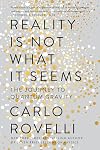
"The world of quantum mechanics is not a world of objects: it is a world of events".
In "Reality Is Not What It Seems" by Carlo Rovelli
Rovelli is more than right to rail against the schism of art and science. Theoretical physics in some sense is the poetry of science; and science in its great evolution from the classical era on was intertwined with art (Galileo was a musician, Leonardo an anatomist and technological innovator; Piero was a geometer, while painters have ever worked at the edge show more of physics (light properties) and materials science (pigments and chemical properties), and so on). Experimentation and transformation in both art and science spring from the same root - to understand, to encapsulate the world. This is why I've ever found reductionism (and scientism) drearily limiting and worthily pompous - that utilitarian speculation over what art 'is for', that misapprehension of art as a kind of elaborate trickery, only readable in the light of neuroscience or physics. The best writers of fiction, artists, composers and scientists are, I've long felt, the ones who see the 'divide' as porous, and are open to findings in both great spheres of endeavour and experimentation.
I have come across this author's work before and have found him to possess a really enlightening, critical yet accessible style. The work of his that I read and still stays with me is his "The First Scientist: Anaximander". It is a brilliant evaluation of the 'Earth as floating stone' thesis of the Greeks.
Just remembered the Hamilton-Jacobi equation ∂S/∂t + H = 0 is another way of describing a classical system. From which you can wiggle your way to the Schrodinger equation. I think particularly interesting is in a paper by Hiley, and de Gosson where they say, Schrodinger was led to his equation from his knowledge of the classical Hamilton-Jacobi approach which has a close connection with the eikonal of classical wave theory. They go on to derive the Schrodinger equation from classical mechanics using a very deep group and operator approach. The Hamilton-Jacobi equation is indeed a good motivation to get to the Schrödinger equation (and is already very similar to it). Whichever way, you are motivated by classical mechanics, but you can't avoid the mathematical complexity of quantum mechanics. Classical mechanics is a good approximation in some regimes, but overall it's wrong and there's no "going back to classical" in physics.
This time around, I'm also struck that superdeterminisst physicists think of correlations between widely separated points as "vacuum correlations", which are well-known to decay faster than exponentially at space-like separation. It seems better to consider correlations that are observed in experiments at widely separated points to be a consequence of experimenters taking months or years to set up and debug and tune their state preparation and measurement apparatus (which, moreover, is often constrained to an effectively 1-dimensional space of light guides or collimated matter or laser beams, so that the 3+1-dimensional vacuum is kept as far away as possible). Full of nonsense as usual, I am. Hey ho.
I think about the work of people like Einstein, Maxwell, Dirac, Heisenberg, Pauli, Fermi. The list is very long. Such as those could pull the physics right out of the math and make either predictions that can be measured or better yet people used the principles to make things like AM/FM radio, transistors, and more recently GPS from good old Einstein; the list is almost endless as I said. But some theoretical work seems very difficult to solidify. Maybe a 1927 style Solvay conference is needed to help the general audience understand where the focus is going on Quantum Mechanics, cosmology, particle physics, the hunt for dark matter, etc. Lot's of great work is being done right now in condensed matter physics that may bring great practical applications but the money spent on the LHC thus far seems to be a dud. Other than the technology that went into it is remarkable but nothing truly remarkable came out yet (the Higgs boson; bah!).
I think Rovelli is closer than t'Hooft as Rovelli focuses on something that seems philosophically important to me. He talked about velocity as though it is meaningless to a particle unless it is measured in relation to another object. It implies that motion isn't a property as much as an observation. Space is relational and not substantival according to what I understood from Rovelli. I would argue that it is neither, but that might seem to "unscientific" to some, I'd imagine. show less
In "Reality Is Not What It Seems" by Carlo Rovelli
Rovelli is more than right to rail against the schism of art and science. Theoretical physics in some sense is the poetry of science; and science in its great evolution from the classical era on was intertwined with art (Galileo was a musician, Leonardo an anatomist and technological innovator; Piero was a geometer, while painters have ever worked at the edge show more of physics (light properties) and materials science (pigments and chemical properties), and so on). Experimentation and transformation in both art and science spring from the same root - to understand, to encapsulate the world. This is why I've ever found reductionism (and scientism) drearily limiting and worthily pompous - that utilitarian speculation over what art 'is for', that misapprehension of art as a kind of elaborate trickery, only readable in the light of neuroscience or physics. The best writers of fiction, artists, composers and scientists are, I've long felt, the ones who see the 'divide' as porous, and are open to findings in both great spheres of endeavour and experimentation.
I have come across this author's work before and have found him to possess a really enlightening, critical yet accessible style. The work of his that I read and still stays with me is his "The First Scientist: Anaximander". It is a brilliant evaluation of the 'Earth as floating stone' thesis of the Greeks.
Just remembered the Hamilton-Jacobi equation ∂S/∂t + H = 0 is another way of describing a classical system. From which you can wiggle your way to the Schrodinger equation. I think particularly interesting is in a paper by Hiley, and de Gosson where they say, Schrodinger was led to his equation from his knowledge of the classical Hamilton-Jacobi approach which has a close connection with the eikonal of classical wave theory. They go on to derive the Schrodinger equation from classical mechanics using a very deep group and operator approach. The Hamilton-Jacobi equation is indeed a good motivation to get to the Schrödinger equation (and is already very similar to it). Whichever way, you are motivated by classical mechanics, but you can't avoid the mathematical complexity of quantum mechanics. Classical mechanics is a good approximation in some regimes, but overall it's wrong and there's no "going back to classical" in physics.
This time around, I'm also struck that superdeterminisst physicists think of correlations between widely separated points as "vacuum correlations", which are well-known to decay faster than exponentially at space-like separation. It seems better to consider correlations that are observed in experiments at widely separated points to be a consequence of experimenters taking months or years to set up and debug and tune their state preparation and measurement apparatus (which, moreover, is often constrained to an effectively 1-dimensional space of light guides or collimated matter or laser beams, so that the 3+1-dimensional vacuum is kept as far away as possible). Full of nonsense as usual, I am. Hey ho.
I think about the work of people like Einstein, Maxwell, Dirac, Heisenberg, Pauli, Fermi. The list is very long. Such as those could pull the physics right out of the math and make either predictions that can be measured or better yet people used the principles to make things like AM/FM radio, transistors, and more recently GPS from good old Einstein; the list is almost endless as I said. But some theoretical work seems very difficult to solidify. Maybe a 1927 style Solvay conference is needed to help the general audience understand where the focus is going on Quantum Mechanics, cosmology, particle physics, the hunt for dark matter, etc. Lot's of great work is being done right now in condensed matter physics that may bring great practical applications but the money spent on the LHC thus far seems to be a dud. Other than the technology that went into it is remarkable but nothing truly remarkable came out yet (the Higgs boson; bah!).
I think Rovelli is closer than t'Hooft as Rovelli focuses on something that seems philosophically important to me. He talked about velocity as though it is meaningless to a particle unless it is measured in relation to another object. It implies that motion isn't a property as much as an observation. Space is relational and not substantival according to what I understood from Rovelli. I would argue that it is neither, but that might seem to "unscientific" to some, I'd imagine. show less
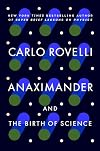
The Italian physicist Carlo Rovelli (b. 1956) is a fluent writer who manages to translate difficult parts of science (especially theoretical physics) into readable language. Moreover, he makes us sensitive to both the strengths and the limitations of science as we know it today. He does this in this booklet as well. Through the early Greek philosopher Anaximander (early 6th century BCE), he provides insight into what exactly is essential to the scientific method: the continuous critical show more questioning of prior insights. Science is therefore not about certainties, but about systematically built-up and scrutinized insights, in a process that will never end.
That is, of course, true, and it is a fine response to the current anti-scientific climate in the Western world. When you see the irresponsible policies currently being pursued in the United States—for example, in the fields of healthcare and ecology, deliberately going against scientific insights—you know that Rovelli’s message absolutely is legitimate.
Nevertheless, a few caveats. Rovelli does underemphasize the rigid nature of contemporary science, firmly anchored as it is in the academic world with its shielded (pay)walls and compartmentalized thinking. And – related to this – he also underemphasizes how science as we know it today sometimes wears an overly reductionist, Cartesian-mathematical, and materialistic lens, and remains blind to other, more creative approaches to reality.
My main criticism of this booklet aligns with this. Rovelli turns Anaximander into the champion of freethinking, the man who had definitively broken with a stifling religious view of the world. He actually portrays him as the hero of the modern world, who had already grasped just about all the revolutionary insights of modernity. With all due respect, based on the sources we have regarding Anaximander, this is, to say the least, an exaggeration. More on that in my History account on Goodreads: https://www.goodreads.com/review/show/8404747422. show less
That is, of course, true, and it is a fine response to the current anti-scientific climate in the Western world. When you see the irresponsible policies currently being pursued in the United States—for example, in the fields of healthcare and ecology, deliberately going against scientific insights—you know that Rovelli’s message absolutely is legitimate.
Nevertheless, a few caveats. Rovelli does underemphasize the rigid nature of contemporary science, firmly anchored as it is in the academic world with its shielded (pay)walls and compartmentalized thinking. And – related to this – he also underemphasizes how science as we know it today sometimes wears an overly reductionist, Cartesian-mathematical, and materialistic lens, and remains blind to other, more creative approaches to reality.
My main criticism of this booklet aligns with this. Rovelli turns Anaximander into the champion of freethinking, the man who had definitively broken with a stifling religious view of the world. He actually portrays him as the hero of the modern world, who had already grasped just about all the revolutionary insights of modernity. With all due respect, based on the sources we have regarding Anaximander, this is, to say the least, an exaggeration. More on that in my History account on Goodreads: https://www.goodreads.com/review/show/8404747422. show less
Lists
Science (1)
Finished in 2019 (1)
Awards


You May Also Like


Associated Authors
Statistics
- Works
- 43
- Also by
- 3
- Members
- 9,106
- Popularity
- #2,639
- Rating
- 3.8
- Reviews
- 252
- ISBNs
- 278
- Languages
- 23
- Favorited
- 8