On This Page
Description
Mystery crime fiction written in the Golden Age of Murder"The degree of suspense Crofts achieves by showing the growing obsession and planning is worthy of Hitchcock." —Booklist STARRED review
We begin with a body. Andrew Crowther, a wealthy retired manufacturer, is found dead in his seat on the 12.30 flight from Croydon to Paris. Rather less orthodox is the ensuing flashback in which we live with the killer at every stage, from the first thoughts of murder to the strains and stresses of show more living with its execution. Seen from the criminal's perspective, a mild-mannered Inspector by the name of French is simply another character who needs to be dealt with.
This is an unconventional yet gripping story of intrigue, betrayal, obsession, justification and self-delusion. And will the killer get away with it?
. show less
Tags
Recommendations

















Member Reviews
You might think a murder on a plane, read by someone who has a phobia about flying, while on a plane is an odd combination. But it's not a plane crash, and Ryanair don't provide dinner, so we're fine. It makes for a nice diverting plane book - engaging while not too heavy. It's also told from back to front, we know the murderer and the means of the murder so it becomes a tale of will he get away with it rather than who did it. Which might not be uncommon now, but seems to have been a remarkable turn about for the time. It's well told and engaging enough.
Andrew Crowther, a retired manufacturer, flies from Croydon to Paris with his son-in-law, granddaughter, and personal attendant to visit his daughter. He is dead on arrival in Paris. Was it accident, suicide, or murder? Actually, we find out very quickly that it’s murder, and we find out whodunnit, flashing back to the planning and observing how the murderer falls apart with the stress and strain of covering up his crime.
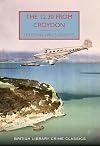
I picked this up mainly because there was a gorgeous airplane on the cover of the British Library Crime Classics edition, and I was hoping for some good airplane bits. The book duly delivered at the beginning—I love stories set during the early days of passenger flight. There wasn’t much airplane after that, but show more that was OK. The rest of the story was well constructed and would have been quite unconventional at the time the book was first published (1934). I was kept in suspense throughout and appreciated the chapters at the end where Inspector French explains how he solved the case.
I also liked the little nods to other detective fiction of the period: one of the police inspectors on the case initially is named Appleby, and at one point the murderer makes a reference to the works of R. Austin Freeman.
This is definitely worth picking up if you’re interested in the golden age of detective fiction. show less
I picked this up mainly because there was a gorgeous airplane on the cover of the British Library Crime Classics edition, and I was hoping for some good airplane bits. The book duly delivered at the beginning—I love stories set during the early days of passenger flight. There wasn’t much airplane after that, but show more that was OK. The rest of the story was well constructed and would have been quite unconventional at the time the book was first published (1934). I was kept in suspense throughout and appreciated the chapters at the end where Inspector French explains how he solved the case.
I also liked the little nods to other detective fiction of the period: one of the police inspectors on the case initially is named Appleby, and at one point the murderer makes a reference to the works of R. Austin Freeman.
This is definitely worth picking up if you’re interested in the golden age of detective fiction. show less
The 12:30 from Croydon is the second mystery by Freeman Wills Crofts I have read. Interestingly, they both feature Inspector French and yet could not be more different. Mystery in the Channel is a traditional whodunnit in which French breaks alibis to figure out the culprit. In The 12:30 from Croydon we not only know whodunnit, we are following the murderer from before he even conceived the crime.
Crofts was a founding member of The Detection Club, the venerable gathering of the best mystery writers whose rules for detective fiction still sound good to me. I still judge a mystery on its fairness and feel shortchanged when key information is withheld from us. This is the sort of mystery Crofts excelled at, exactingly fair procedurals. For show more The 12:30 from Croydon, he was venturing into the psychological thriller genre, a new development in mystery fiction, revealing how Charles Swinburn came to the unwelcome conclusion that his uncle had to die and taking us through the meticulous planning and execution of that and yet another murder.
I was surprised to like this book even more than Mystery in the Channel. I generally prefer mysteries to focus on solving the murder and dislike the mysteries inside the mind of the murderer. Of course, most of the time when a writer puts us inside the mind of a murderer, the killer is a psychopathic serial killer. That is not our Charles. He is, in his view, just a guy trying achieve the greatest good for the most people, really, it’s a service he is doing. Well, not quite. He has pangs of conscience, but they are far less than his narcissism and his determination to “help others” as he persuades himself he is doing.
This is why I like this book so much. So often, when we are allowed into the mind of a killer, he is so very buahhh-haaa-haaa evil that I am turned off. Charles, though, is uncomfortably familiar. He is a person who would never have chosen murder in the ordinary course of events, but when in extremis, could justify anything on utilitarian motives. Isn’t that really what most murderers are like?
Inspector French’s involvement is almost completely off the page. We are with Charles, not French, and we don’t know what French is up to until the final coda, a chapter gathering the lawyers and police to explain how they figured it out. I am not sure that French’s tip-off is one that most police would think of and with a less fictional inspector, it is likely that someone else would have been indicted, but the beauty of these old classics is that all’s well that ends well.
The 12:30 from Croydon will be released on February 7, 2017. I was provided an e-galley from the publisher through NetGalley.
https://tonstantweaderreviews.wordpress.com/2017/01/17/the-1230-from-croydon-by-... show less
Crofts was a founding member of The Detection Club, the venerable gathering of the best mystery writers whose rules for detective fiction still sound good to me. I still judge a mystery on its fairness and feel shortchanged when key information is withheld from us. This is the sort of mystery Crofts excelled at, exactingly fair procedurals. For show more The 12:30 from Croydon, he was venturing into the psychological thriller genre, a new development in mystery fiction, revealing how Charles Swinburn came to the unwelcome conclusion that his uncle had to die and taking us through the meticulous planning and execution of that and yet another murder.
I was surprised to like this book even more than Mystery in the Channel. I generally prefer mysteries to focus on solving the murder and dislike the mysteries inside the mind of the murderer. Of course, most of the time when a writer puts us inside the mind of a murderer, the killer is a psychopathic serial killer. That is not our Charles. He is, in his view, just a guy trying achieve the greatest good for the most people, really, it’s a service he is doing. Well, not quite. He has pangs of conscience, but they are far less than his narcissism and his determination to “help others” as he persuades himself he is doing.
This is why I like this book so much. So often, when we are allowed into the mind of a killer, he is so very buahhh-haaa-haaa evil that I am turned off. Charles, though, is uncomfortably familiar. He is a person who would never have chosen murder in the ordinary course of events, but when in extremis, could justify anything on utilitarian motives. Isn’t that really what most murderers are like?
Inspector French’s involvement is almost completely off the page. We are with Charles, not French, and we don’t know what French is up to until the final coda, a chapter gathering the lawyers and police to explain how they figured it out. I am not sure that French’s tip-off is one that most police would think of and with a less fictional inspector, it is likely that someone else would have been indicted, but the beauty of these old classics is that all’s well that ends well.
The 12:30 from Croydon will be released on February 7, 2017. I was provided an e-galley from the publisher through NetGalley.
https://tonstantweaderreviews.wordpress.com/2017/01/17/the-1230-from-croydon-by-... show less
The opening recounts a family making a rushed trip to France by air when one of the family is injured in a traffic accident. The injured woman’s young daughter is one of the passengers and gives a remarkable account of her first flight. Unfortunately her grandfather is found dead on arrival.
A good old-fashioned mystery that held my attention with a detailed account of how the murderer planned the job. There was the possibility that one or two other characters could have had a hand it and I kept reading, hoping for a different verdict from the jury. First published in 1934, in the Golden Age of detective novels, this would have been a hit at that time just as it was for me.
A good old-fashioned mystery that held my attention with a detailed account of how the murderer planned the job. There was the possibility that one or two other characters could have had a hand it and I kept reading, hoping for a different verdict from the jury. First published in 1934, in the Golden Age of detective novels, this would have been a hit at that time just as it was for me.
This novel was sent to me by the publisher Poisoned Pen Press via NetGalley. Thank you.
The 12:30 from Croydon is a mystery by Freeman Wills Crofts and a departure from the usual style of Golden Age detective stories. In the first chapter Andrew Crowther is murdered. The 12:30 flight from Croydon to Paris is the scene of the crime. It is a small plane with not many passengers and so the suspects are limited.
And then Crofts turns the story on its head because Chapter Two identifies the murderer and, in flashback, the reader follows Charles Swinburn as he contemplates the murder, plans it, and carries it out. The reader is inside the head of the murderer. Today this is not an uncommon device, witness the popularity of Dexter. In 1934 it show more was unique.
And Crofts does not create an evil murderer. He creates an ordinary man who does an evil act. The reader even understands his motives and can sympathize with his problems. It may be self-serving, but when Swinburn considers murdering his uncle in order to get the inheritance which will save his business, he rationalizes that he is saving the jobs of his employees, many who were with the company when it was founded. And, indeed, the first thing he does is order new equipment for the factory when he gets the money.
And so, from the first fleeting thought to what Swinburn believes is the foolproof plan and execution, we see his doubts, bouts of conscience, and moments of exaltation when he pulls off a particularly tricky aspect of his plan.
When Crofts’ Inspector French enters the story at the very end it is almost anticlimactic.
This must have caused the same sensation as Christie’s The Murder of Roger Ackroyd.
And, like the Christie novel, it stands the test of time. A highly recommended read. show less
The 12:30 from Croydon is a mystery by Freeman Wills Crofts and a departure from the usual style of Golden Age detective stories. In the first chapter Andrew Crowther is murdered. The 12:30 flight from Croydon to Paris is the scene of the crime. It is a small plane with not many passengers and so the suspects are limited.
And then Crofts turns the story on its head because Chapter Two identifies the murderer and, in flashback, the reader follows Charles Swinburn as he contemplates the murder, plans it, and carries it out. The reader is inside the head of the murderer. Today this is not an uncommon device, witness the popularity of Dexter. In 1934 it show more was unique.
And Crofts does not create an evil murderer. He creates an ordinary man who does an evil act. The reader even understands his motives and can sympathize with his problems. It may be self-serving, but when Swinburn considers murdering his uncle in order to get the inheritance which will save his business, he rationalizes that he is saving the jobs of his employees, many who were with the company when it was founded. And, indeed, the first thing he does is order new equipment for the factory when he gets the money.
And so, from the first fleeting thought to what Swinburn believes is the foolproof plan and execution, we see his doubts, bouts of conscience, and moments of exaltation when he pulls off a particularly tricky aspect of his plan.
When Crofts’ Inspector French enters the story at the very end it is almost anticlimactic.
This must have caused the same sensation as Christie’s The Murder of Roger Ackroyd.
And, like the Christie novel, it stands the test of time. A highly recommended read. show less
This was a rather revolutionary book when it came out, I think. For most of the plot there is no doubt who the killer is, but only the exact details and whether he'll get away with it or not. All it will take is a cool head and deliberation, just as he showed in the planning and execution of the murder – but can he maintain it?
It's well-written, gripping stuff – a fascinating look at the other side of the whodunnit.
The usual disclaimer: I received this book via Netgalley for review.
It's well-written, gripping stuff – a fascinating look at the other side of the whodunnit.
The usual disclaimer: I received this book via Netgalley for review.
Decades before it was a staple on the "Columbo" television series, this book (originally written in 1934) shows us up front whodunnit. Indeed, the back-of-the-book blurb on my edition all but says it outright. The key here is: will the killer get away with his murders, which we see him planning and plotting in a great deal of detail? The solution was mostly satisfying, though a few key bits of information (which the killer didn't know about) are also withheld from us (such as a key possible source of poison not being viable). But the solution, which is explained in the last few chapters, is logical. Overall, an interesting mystery well worth reading.
Members
- Recently Added By
Lists

Books Read in 2022
5,226 works; 115 members

Tozai Mystery Best 100 | The Top 100 Mystery Novels
111 works; 3 members
Author Information

67+ Works 3,394 Members
Some Editions
Series

Belongs to Publisher Series
British Library Crime Classics (Novel)
Penguin Books (920)
Work Relationships
Common Knowledge
- Canonical title
- The 12.30 from Croydon
- Original title
- The 12.30 from Croydon
- Alternate titles
- Wilful and Premeditated; The 12:30 from Croydon
- Original publication date
- 1934
- People/Characters
- Joseph French (Inspector); Andrew Crowther; Charles Swinburn
- First words
- Rose Morley was an excited young lady as with her father and grandfather and grandfather's servant she reached the air station at Victoria.
- Last words
- (Click to show. Warning: May contain spoilers.)French, highly delighted, explained that his leg would come off if pulled too hard, and the meeting terminated.
Classifications
Statistics
- Members
- 257
- Popularity
- 125,943
- Reviews
- 11
- Rating
- (3.57)
- Languages
- English, Finnish, Italian, Spanish
- Media
- Paper, Audiobook, Ebook
- ISBNs
- 17
- ASINs
- 15