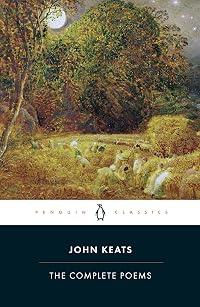
John Keats: The Complete Poems (Penguin Classics)
by John Keats
On This Page
Description
Along with Lord Byron and Percy Bysshe Shelley, John Keats is considered one of the most important figures in the second generation of English Romantic poets. Born on Halloween in 1795, John Keats lived a very short life, dying at the age of twenty-five from tuberculosis. In 1814 John Keats began an apprenticeship with Thomas Hammond, a surgeon and apothecary and by 1816 had achieved his apothecary's license, which allowed him to practice medicine. However Keats passion lied elsewhere and by show more the end of 1816 he was resolved to be a poet and not a surgeon. Despite his short life, Keats produced an immense volume of poetry; however the esteem of his reputation rests primarily on the quality of his Odes, which are marked by their use of sensual imagery. Keats was not well-received during his lifetime and sensing his imminent death viewed himself as a failure as is evidenced by the following statement written in an 1820 letter to Fanny Brawne: "I have left no immortal work behind me-nothing to make my friends proud of my memory-but I have lov'd the principle of beauty in all things, and if I had had time I would have made myself remember'd." History of course has remembered Keats differently, as one of the truly great poetic talents of all-time. This edition includes his complete poetical works and includes an introduction by Britain's poet laureate Robert Bridges. show lessTags
Recommendations
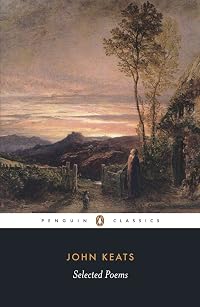


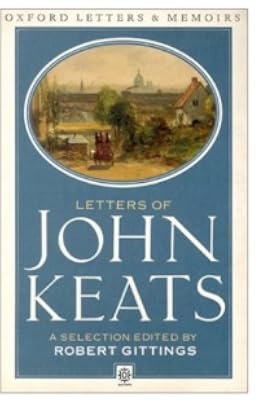


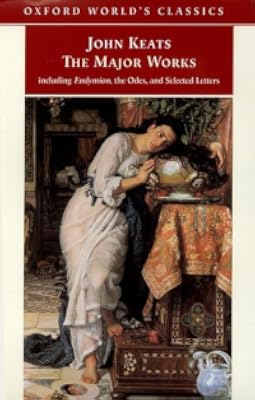









Member Reviews
Looking back over my life in books—or books in my life—there are those I read for pleasure and those I read for information and those I read for spiritual enlightenment. There are books I taught time and time again, and books I studied, and textbooks that engaged me as a student from second grade to graduate school. There are books I’ve read more than once, and books I’ve only read around in, and books I fully intend to read one of these days. There are massive tomes, and little books that just fit in the palm of one’s hand. There are books that are artifacts, like works of art or antiques, that I need to keep in sight or within easy reach—maybe because they’re beautiful, maybe because they’re old, maybe because of what show more they mean to me personally. Like the three old Grosset & Dunlaps my sister gave me for Christmas when I was nine years old (Tom Sawyer, Huck Finn, and Little Men). Like the Goodpasture Bible I won as a senior graduating from college, heading (I thought then) into the ministry. There is a whole bookcase of well-worn children’s books that we read aloud as a family when our children were growing up. There are books that speak to the eye, to the intellect, to the imagination, to the soul.
We define ourselves by the books we cherish. They speak volumes.
For Father’s Day, June 19, 1966, my first son—he was all of two and a half years old—gave me a leather-bound copy of The Poetical Works of John Keats (Oxford, 1962). Of course, his mother chose the book, arranged the custom binding, penned the inscription, and somehow managed what would have been the outlandish cost for the family of a poor graduate student living in married-student housing. Among the many books I treasure, it is the apex.
Understand, I rarely let myself read in it. I have other editions of Keats’ poetry that I have read—indeed, studied carefully—through the years. This one I revere. I enshrine it upon a pedestal, as it were, always near at hand.
Keats’ youthful sonnet written to his friend and tutor, Charles Cowden Clarke, “On First Looking into Chapman’s Homer,” speaks for me. It tells how I felt upon discovering Keats himself and, through him, the world of poetry. “Then felt I like some watcher of the skies / When a new planet swims into his ken.” Just three pages on in this volume is another sonnet, “On the Grasshopper and the Cricket,” not as well known, but one that spoke to me as a young man finding himself: “The poetry of earth is never dead . . . .”
I always rejoice to see how many of Keats’ works make it into those lists of 100 greatest poems of all time. If I were publishing such an anthology, besides the two poems I’ve already cited it would include the first thirty-three lines of Endymion (“A thing of beauty is a joy forever: / Its loveliness increases . . . .”), Lamia, “The Eve of St. Agnes,” “La Belle Dame sans Merci,” “To Autumn,” “Ode to a Nightingale,” and “On Sitting Down to Read King Lear Once Again”:
Chief Poet! and ye clouds of Albion,
Begetters of our deep-eternal theme!
When through the old oak Forest I am gone,
Let me not wander in a barren dream,
But, when I am consumed in the fire,
Give me new Phoenix wings to fly at my desire.
For young readers, I would have to start with the verse he wrote about himself in a letter to his young sister Fanny, while he was on that final, fateful walking tour to the north:
There was a naughty Boy,
A naughty boy was he,
For nothing would he do
But scribble poetry—
No collecton of Keats’ poetry would be complete without his own subconscious elegy to himself:
When I have fears that I may cease to be
Before my pen has glean’d my teeming brain,
Before high-piled books, in charactery,
Hold like rich garners the full ripen’d grain . . . .
But, of course #1 in my list of all-time favorites would be “Ode on a Grecian Urn.” This poem persuaded me to major in English (who as a high school student just a year earlier would have whooped and hollered in protest at the merest suggestion that I might make such a decision—but that’s another story); it has been one I have taught over and over again; it rewards me still each time I read it:
Heard melodies are sweet, but those unheard
Are sweeter; therefore, ye soft pipes, play on;
Not to the sensual ear, but, more endear’d,
Pipe to the spirit ditties of no tone . . . .
That one to challenge the mind, and this one to evoke the deepest emotions:
Bright star, would I were stedfast as thou art—
Not in lone splendour hung aloft the night
. . . . . . . . . .
No—yet still stedfast, still unchangeable,
Pillow’d upon my fair love’s ripening breast,
To feel for ever its soft fall and swell,
Awake for ever in a sweet unrest,
Still, still to hear her tender-taken breath,
And so live ever—or else swoon to death.
Ah, yes, Keats spoke to me as a young man, and speaks still to the young man deep within me.
The leather binding of this gift is deep burgundy, embossed with gold. It is still as new, pure luxury to hold in one’s hand. It is an “objective correlative” to the touch, an artifact suitable for the unheard melodies it houses: a thing of beauty, a joy forever.
Therefore, ye soft pipes, play on . . . . show less
We define ourselves by the books we cherish. They speak volumes.
For Father’s Day, June 19, 1966, my first son—he was all of two and a half years old—gave me a leather-bound copy of The Poetical Works of John Keats (Oxford, 1962). Of course, his mother chose the book, arranged the custom binding, penned the inscription, and somehow managed what would have been the outlandish cost for the family of a poor graduate student living in married-student housing. Among the many books I treasure, it is the apex.
Understand, I rarely let myself read in it. I have other editions of Keats’ poetry that I have read—indeed, studied carefully—through the years. This one I revere. I enshrine it upon a pedestal, as it were, always near at hand.
Keats’ youthful sonnet written to his friend and tutor, Charles Cowden Clarke, “On First Looking into Chapman’s Homer,” speaks for me. It tells how I felt upon discovering Keats himself and, through him, the world of poetry. “Then felt I like some watcher of the skies / When a new planet swims into his ken.” Just three pages on in this volume is another sonnet, “On the Grasshopper and the Cricket,” not as well known, but one that spoke to me as a young man finding himself: “The poetry of earth is never dead . . . .”
I always rejoice to see how many of Keats’ works make it into those lists of 100 greatest poems of all time. If I were publishing such an anthology, besides the two poems I’ve already cited it would include the first thirty-three lines of Endymion (“A thing of beauty is a joy forever: / Its loveliness increases . . . .”), Lamia, “The Eve of St. Agnes,” “La Belle Dame sans Merci,” “To Autumn,” “Ode to a Nightingale,” and “On Sitting Down to Read King Lear Once Again”:
Chief Poet! and ye clouds of Albion,
Begetters of our deep-eternal theme!
When through the old oak Forest I am gone,
Let me not wander in a barren dream,
But, when I am consumed in the fire,
Give me new Phoenix wings to fly at my desire.
For young readers, I would have to start with the verse he wrote about himself in a letter to his young sister Fanny, while he was on that final, fateful walking tour to the north:
There was a naughty Boy,
A naughty boy was he,
For nothing would he do
But scribble poetry—
No collecton of Keats’ poetry would be complete without his own subconscious elegy to himself:
When I have fears that I may cease to be
Before my pen has glean’d my teeming brain,
Before high-piled books, in charactery,
Hold like rich garners the full ripen’d grain . . . .
But, of course #1 in my list of all-time favorites would be “Ode on a Grecian Urn.” This poem persuaded me to major in English (who as a high school student just a year earlier would have whooped and hollered in protest at the merest suggestion that I might make such a decision—but that’s another story); it has been one I have taught over and over again; it rewards me still each time I read it:
Heard melodies are sweet, but those unheard
Are sweeter; therefore, ye soft pipes, play on;
Not to the sensual ear, but, more endear’d,
Pipe to the spirit ditties of no tone . . . .
That one to challenge the mind, and this one to evoke the deepest emotions:
Bright star, would I were stedfast as thou art—
Not in lone splendour hung aloft the night
. . . . . . . . . .
No—yet still stedfast, still unchangeable,
Pillow’d upon my fair love’s ripening breast,
To feel for ever its soft fall and swell,
Awake for ever in a sweet unrest,
Still, still to hear her tender-taken breath,
And so live ever—or else swoon to death.
Ah, yes, Keats spoke to me as a young man, and speaks still to the young man deep within me.
The leather binding of this gift is deep burgundy, embossed with gold. It is still as new, pure luxury to hold in one’s hand. It is an “objective correlative” to the touch, an artifact suitable for the unheard melodies it houses: a thing of beauty, a joy forever.
Therefore, ye soft pipes, play on . . . . show less
There is northing comparable to this as far as top notch poetry is concerned. I picked this book up as a last minute purchase, due to a buy two get third free offer a few years ago, and yet this book is the one I've spent the most time reading. I haven't quite finished reading it all but have read all the short poems, and keep coming back to dip into it when the mood takes me. Since reading it, I've noticed his works being quoted, referenced, and alluded to in nearly every other book I read, from Pullman and Rushdie's fiction to the scientific writings of Dawkins. I would recommend that you find a book of Keat's poems if you only have as much as a passing interest in poetry, you might find yourself inspired as so many others have been show more by it. That he died at the age of 25 is perhaps the greatest tragedy in the history of literature. show less
"A thing of beauty is a joy forever;/ Its loveliness increases; it will never/ Pass into nothingness; but still will keep/ A bower quiet for us."
Keats poetry is this.
Keats poetry is this.
The classic odes that are supposedly his masterpieces, I enjoyed, but overall I did not enjoy the volume and according to the commentary I found within and without on Keats' career that's probably about to be expected?
Il 23 febbraio 1821, il poeta inglese John Keats morì di tubercolosi a Roma all’età di 25 anni. “Sarò presto deposto nella tomba tranquilla, grazie a Dio”, disse al suo amico Joseph Severn, nelle cui braccia morì. “Posso sentire la terra fredda su di me, le margherite che crescono su di me, oh per questa quiete, sarà la mia prima.”
Keats diede istruzioni affinché sulla sua lapide venisse incisa la scritta “qui giace uno il cui nome era scritto nell’acqua”, e i visitatori del cimitero protestante di Roma possono ancora fare un pellegrinaggio per vederlo oggi. Ma lungi dall’essere “scritte in acqua”, le parole di Keats continuano a risuonare, con una miriade di scritti ed eventi che hanno celebrato il 200 ° show more anniversario della sua morte.
“La bellezza, in quanto essenza, non appartiene al mondo fisico, ragion per cui non la si può afferrare e ancor meno possedere; non appena ci si avvicina per sfiorarla, essa sfugge. La bellezza è un mondo fatto esclusivamente per gli occhi; non è destinata né alla bocca né alle mani. Ama essere guardata, ma non sopporta di essere toccata. Occorre quindi essere sempre molto attenti quando si incontra un essere bello. Chi non ha un giusto atteggiamento, può scacciare le entità celesti che abitano in quell’essere dandogli tale bellezza; e se quelle entità si allontanano, lui pure soffrirà, perché perderà l’elemento impalpabile che abbelliva al tempo stesso anche la sua vita. La nostra gioia e la nostra ispirazione dipendono quindi dal rispetto che manifestiamo verso la bellezza. Imparando ogni giorno a contemplarla, assaporiamo la vera vita.”
— —
“Beauty, in its essence, does not belong to the physical world, and that is why we cannot grasp hold of it, much less own it. As soon as you draw close enough to touch it, it slips away. Beauty is a world made exclusively for the eyes; it is not meant for the mouth or hands. It likes to be looked at but cannot bear to be touched. So when you meet people who are beautiful you must always be very careful. If you do not have the right attitude, you can chase away the heavenly entities that inhabit these people, those that give them their beauty. And if these entities go away, you too will suffer, for you will lose this intangible element that simultaneously made your own life beautiful. So our joy and inspiration depend on the respect we have for beauty. By learning how to contemplate it every day, we are given a taste of true life.”
— -
Ode su un’Urna Greca
1.
Tu, ancora inviolata sposa della quiete,
Figlia adottiva del tempo lento e del silenzio,
Narratrice silvana, tu che una favola fiorita
Racconti, più dolce dei miei versi,
Quale intarsiata leggenda di foglie pervade
La tua forma, sono dei o mortali,
O entrambi, insieme, a Tempo o in Arcadia?
E che uomini sono? Che dei? E le fanciulle ritrose?
Qual è la folle ricerca? E la fuga tentata?
E i flauti, e i cembali? Quale estasi selvaggia?
2.
Sì, le melodie ascoltate sono dolci; ma più dolci
Ancora sono quelle inascoltate. Su, flauti lievi,
Continuate, ma non per l’udito; preziosamente
Suonate per lo spirito arie senza suono.
E tu, giovane, bello, non potrai mai finire
Il tuo canto sotto quegli alberi che mai saranno spogli;
E tu, amante audace, non potrai mai baciare
Lei che ti è così vicino; ma non lamentarti
Se la gioia ti sfugge: lei non potrà mai fuggire,
E tu l’amerai per sempre, per sempre così bella.
3.
Ah, rami felici! Non saranno mai sparse
Le vostre foglie, e mai diranno addio alla primavera;
E felice anche te, musico mai stanco,
Che sempre e sempre nuovi canti avrai;
Ma più felice te, amore più felice,
Per sempre caldo e ancora da godere,
Per sempre ansimante, giovane in eterno,
Superiori siete a ogni vivente passione umana
Che il cuore addolorato lascia e sazio,
La fronte in fiamme, secca la lingua.
4.
E chi siete voi, che andate al sacrificio?
Verso quale verde altare, sacerdote misterioso,
Conduci la giovenca muggente, i fianchi
Morbidi coperti da ghirlande?
E quale paese sul mare, o sul fiume,
O inerpicato tra la pace dei monti
Hai mai lasciato questa gente in questo sacro mattino?
Silenziose, o paese, le tue strade saranno per sempre,
E mai nessuno tornerà a dire
Perché sei stato abbandonato.
5.
Oh, forma attica! Posa leggiadra! Con un ricamo
D’uomini e fanciulle nel marmo,
Coi rami della foresta e le erbe calpestate.
Tu, forma silenziosa, come l’eternità
Tormenti e spezzi la nostra ragione. Fredda pastorale!
Quando l’età avrà devastato questa generazione,
Ancora tu ci sarai, eterna, tra nuovi dolori
Non più nostri, amica all’uomo, cui dirai
“Bellezza è verità, verità bellezza”, questo solo
Sulla terra sapete, ed è quanto basta.
----
Thou still unravished bride of quietness!
Thou foster-child of silence and slow time,
Sylvan historian, who canst thus express
A flow’ry tale more sweetly than our rhyme:
What leaf-fringed legend haunts about thy shape
Of deities or mortals, or of both,
In Tempe or the dales of Arcady?
What men or gods are these? What maidens loth?
What mad pursuit? What struggle to escape?
What pipes and timbrels? What wild ecstasy?
Heard melodies are sweet, but those unheard
Are sweeter; therefore, ye soft pipes, play on;
Not to the sensual ear, but, more endeared,
Pipe to the spirit ditties of no tone:
Fair youth, beneath the trees, thou canst not leave
Thy song, nor ever can those trees be bare;
Bold Lover, never, never canst thou kiss,
Though winning near the goal -yet, do not grieve;
She cannot fade, though thou hast not thy bliss,
For ever wilt thou love, and she be fair!
Ah, happy, happy boughs! that cannot shed
Your leaves, nor ever bid the Spring adieu;
And, happy melodist, unwearied,
For ever piping songs for ever new;
More happy love! more happy, happy love!
For ever warm and still to be enjoyed,
For ever panting and for ever young;
All breathing human passion far above,
That leaves a heart high-sorrowful and cloyed,
A burning forehead, and a parching tongue.
Who are these coming to the sacrifice?
To what green altar, O mysterious priest,
Lead’st thou that heifer lowing at the skies,
And all her silken flanks with garlands drest?
What little town by river or sea-shore,
Or mountain-built with peaceful citadel,
Is emptied of its folk, this pious morn?
And, little town, thy streets for evermore
Will silent be; and not a soul to tell
Why thou art desolate, can e’er return.
O Attic shape! Fair attitude! with brede
Of marble men and maidens overwrought,
With forest branches and the trodden weed;
Thou, silent form, dost tease us out of thought
As doth eternity: Cold pastoral!
When old age shall this generation waste,
Thou shalt remain, in midst of other woe
Than ours, a friend to man, to whom thou sayst,
“Beauty is truth, truth beauty,” -that is all
Ye know on earth, and all ye need to know.
John Keats show less
Keats diede istruzioni affinché sulla sua lapide venisse incisa la scritta “qui giace uno il cui nome era scritto nell’acqua”, e i visitatori del cimitero protestante di Roma possono ancora fare un pellegrinaggio per vederlo oggi. Ma lungi dall’essere “scritte in acqua”, le parole di Keats continuano a risuonare, con una miriade di scritti ed eventi che hanno celebrato il 200 ° show more anniversario della sua morte.
“La bellezza, in quanto essenza, non appartiene al mondo fisico, ragion per cui non la si può afferrare e ancor meno possedere; non appena ci si avvicina per sfiorarla, essa sfugge. La bellezza è un mondo fatto esclusivamente per gli occhi; non è destinata né alla bocca né alle mani. Ama essere guardata, ma non sopporta di essere toccata. Occorre quindi essere sempre molto attenti quando si incontra un essere bello. Chi non ha un giusto atteggiamento, può scacciare le entità celesti che abitano in quell’essere dandogli tale bellezza; e se quelle entità si allontanano, lui pure soffrirà, perché perderà l’elemento impalpabile che abbelliva al tempo stesso anche la sua vita. La nostra gioia e la nostra ispirazione dipendono quindi dal rispetto che manifestiamo verso la bellezza. Imparando ogni giorno a contemplarla, assaporiamo la vera vita.”
— —
“Beauty, in its essence, does not belong to the physical world, and that is why we cannot grasp hold of it, much less own it. As soon as you draw close enough to touch it, it slips away. Beauty is a world made exclusively for the eyes; it is not meant for the mouth or hands. It likes to be looked at but cannot bear to be touched. So when you meet people who are beautiful you must always be very careful. If you do not have the right attitude, you can chase away the heavenly entities that inhabit these people, those that give them their beauty. And if these entities go away, you too will suffer, for you will lose this intangible element that simultaneously made your own life beautiful. So our joy and inspiration depend on the respect we have for beauty. By learning how to contemplate it every day, we are given a taste of true life.”
— -
Ode su un’Urna Greca
1.
Tu, ancora inviolata sposa della quiete,
Figlia adottiva del tempo lento e del silenzio,
Narratrice silvana, tu che una favola fiorita
Racconti, più dolce dei miei versi,
Quale intarsiata leggenda di foglie pervade
La tua forma, sono dei o mortali,
O entrambi, insieme, a Tempo o in Arcadia?
E che uomini sono? Che dei? E le fanciulle ritrose?
Qual è la folle ricerca? E la fuga tentata?
E i flauti, e i cembali? Quale estasi selvaggia?
2.
Sì, le melodie ascoltate sono dolci; ma più dolci
Ancora sono quelle inascoltate. Su, flauti lievi,
Continuate, ma non per l’udito; preziosamente
Suonate per lo spirito arie senza suono.
E tu, giovane, bello, non potrai mai finire
Il tuo canto sotto quegli alberi che mai saranno spogli;
E tu, amante audace, non potrai mai baciare
Lei che ti è così vicino; ma non lamentarti
Se la gioia ti sfugge: lei non potrà mai fuggire,
E tu l’amerai per sempre, per sempre così bella.
3.
Ah, rami felici! Non saranno mai sparse
Le vostre foglie, e mai diranno addio alla primavera;
E felice anche te, musico mai stanco,
Che sempre e sempre nuovi canti avrai;
Ma più felice te, amore più felice,
Per sempre caldo e ancora da godere,
Per sempre ansimante, giovane in eterno,
Superiori siete a ogni vivente passione umana
Che il cuore addolorato lascia e sazio,
La fronte in fiamme, secca la lingua.
4.
E chi siete voi, che andate al sacrificio?
Verso quale verde altare, sacerdote misterioso,
Conduci la giovenca muggente, i fianchi
Morbidi coperti da ghirlande?
E quale paese sul mare, o sul fiume,
O inerpicato tra la pace dei monti
Hai mai lasciato questa gente in questo sacro mattino?
Silenziose, o paese, le tue strade saranno per sempre,
E mai nessuno tornerà a dire
Perché sei stato abbandonato.
5.
Oh, forma attica! Posa leggiadra! Con un ricamo
D’uomini e fanciulle nel marmo,
Coi rami della foresta e le erbe calpestate.
Tu, forma silenziosa, come l’eternità
Tormenti e spezzi la nostra ragione. Fredda pastorale!
Quando l’età avrà devastato questa generazione,
Ancora tu ci sarai, eterna, tra nuovi dolori
Non più nostri, amica all’uomo, cui dirai
“Bellezza è verità, verità bellezza”, questo solo
Sulla terra sapete, ed è quanto basta.
----
Thou still unravished bride of quietness!
Thou foster-child of silence and slow time,
Sylvan historian, who canst thus express
A flow’ry tale more sweetly than our rhyme:
What leaf-fringed legend haunts about thy shape
Of deities or mortals, or of both,
In Tempe or the dales of Arcady?
What men or gods are these? What maidens loth?
What mad pursuit? What struggle to escape?
What pipes and timbrels? What wild ecstasy?
Heard melodies are sweet, but those unheard
Are sweeter; therefore, ye soft pipes, play on;
Not to the sensual ear, but, more endeared,
Pipe to the spirit ditties of no tone:
Fair youth, beneath the trees, thou canst not leave
Thy song, nor ever can those trees be bare;
Bold Lover, never, never canst thou kiss,
Though winning near the goal -yet, do not grieve;
She cannot fade, though thou hast not thy bliss,
For ever wilt thou love, and she be fair!
Ah, happy, happy boughs! that cannot shed
Your leaves, nor ever bid the Spring adieu;
And, happy melodist, unwearied,
For ever piping songs for ever new;
More happy love! more happy, happy love!
For ever warm and still to be enjoyed,
For ever panting and for ever young;
All breathing human passion far above,
That leaves a heart high-sorrowful and cloyed,
A burning forehead, and a parching tongue.
Who are these coming to the sacrifice?
To what green altar, O mysterious priest,
Lead’st thou that heifer lowing at the skies,
And all her silken flanks with garlands drest?
What little town by river or sea-shore,
Or mountain-built with peaceful citadel,
Is emptied of its folk, this pious morn?
And, little town, thy streets for evermore
Will silent be; and not a soul to tell
Why thou art desolate, can e’er return.
O Attic shape! Fair attitude! with brede
Of marble men and maidens overwrought,
With forest branches and the trodden weed;
Thou, silent form, dost tease us out of thought
As doth eternity: Cold pastoral!
When old age shall this generation waste,
Thou shalt remain, in midst of other woe
Than ours, a friend to man, to whom thou sayst,
“Beauty is truth, truth beauty,” -that is all
Ye know on earth, and all ye need to know.
John Keats show less
Feb 23, 2025Italian
Ratings
Members
- Recently Added By
Lists

The Well-Educated Mind, Susan Wise Bauer, 2016
179 works; 3 members

Books talked about in Pamela Dean's Tam Lin
74 works; 1 member
Author Information

444+ Works 13,707 Members
John Keats was born in London, the oldest of four children, on October 31, 1795. His father, who was a livery-stable keeper, died when Keats was eight years old, and his mother died six years later. At age 15, he was apprenticed to an apothecary-surgeon. In 1815 he began studying medicine but soon gave up that career in favor of writing poetry. show more The critic Douglas Bush has said that, if one poet could be recalled to life to complete his career, the almost universal choice would be Keats, who now is regarded as one of the three or four supreme masters of the English language. His early work is badly flawed in both technique and critical judgment, but, from his casually written but brilliant letters, one can trace the development of a genius who, through fierce determination in the face of great odds, fashioned himself into an incomparable artist. In his tragically brief career, cut short at age 25 by tuberculosis, Keats constantly experimented, often with dazzling success, and always with steady progress over previous efforts. The unfinished Hyperion is the only English poem after Paradise Lost that is worthy to be called an epic, and it is breathtakingly superior to his early Endymion (1818), written just a few years before. Isabella is a fine narrative poem, but The Eve of St. Agnes (1819), written soon after, is peerless. In Lamia (1819) Keats revived the couplet form, long thought to be dead, in a gorgeous, romantic story. Above all it was in his development of the ode that Keats's supreme achievement lies. In just a few months, he wrote the odes "On a Grecian Urn" (1819), "To a Nightingale" (1819), "To Melancholy" (1819), and the marvelously serene "To Autumn" (1819). Keats is the only romantic poet whose reputation has steadily grown through all changes in critical fashion. Once patronized as a poet of beautiful images but no intellectual content, Keats is now appreciated for his powerful mind, profound grasp of poetic principles, and ceaseless quest for new forms and techniques. For many readers, old and young, Keats is a heroic figure. John Keats died in Rome on February 23, 1821 and was buried in the Protestant Cemetery, Rome. His last request was to be placed under a tombstone bearing no name or date, only the words, "Here lies One whose Name was writ in Water." (Bowker Author Biography) show less
Some Editions
Awards and Honors
Series
Belongs to Publisher Series
Work Relationships
Is contained in
Has as a student's study guide
Common Knowledge
- Canonical title
- John Keats: The Complete Poems (Penguin Classics) (Penguin Classics)
- Original title
- The Complete Poems
- Original publication date
- 1817
- People/Characters
- John Keats
- Important events
- Romanticism; Georgian Era; 19th century
- Quotations
- A thing of beauty is a joy forever
Classifications
Statistics
- Members
- 3,697
- Popularity
- 4,366
- Reviews
- 6
- Rating
- (4.31)
- Languages
- Dutch, English, French, Spanish
- Media
- Paper, Audiobook, Ebook
- ISBNs
- 86
- ASINs
- 140