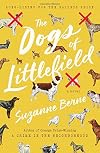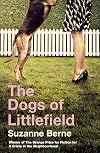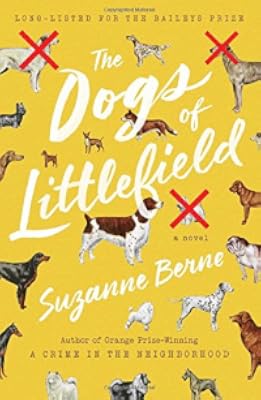
The Dogs of Littlefield
by Suzanne Berne
On This Page
Description
"A "brilliantly done" (Sunday Times, London) comedy of manners that explores the unease behind the manicured lawns of suburban America from the Orange Prize-winning author of A Crime in the Neighborhood. Littlefield, Massachusetts, named one of the Ten Best Places to Live in America, full of psychologists and college professors, is proud of its fine schools, its girls' soccer teams, its leafy streets, and charming village center. Yet no sooner has sociologist Dr. Clarice Watkins arrived to show more study the elements of "good quality of life" than someone begins poisoning the town's dogs. Are the poisonings in protest to an off-leash proposal for Baldwin Park--the subject of much town debate--or the sign of a far deeper disorder? Certainly these types of things don't happen in Littlefield. With an element of suspense, satirical social commentary, and in-depth character portraits, Suzanne Berne's nuanced novel reveals the discontent concealed behind the manicured lawns and picket fences of darkest suburbia. The Dogs of Littlefield is "a compelling, poignant yet unsentimental novel that examines life, love, and loss" (Sunday Mirror, UK)"-- show lessTags
Recommendations
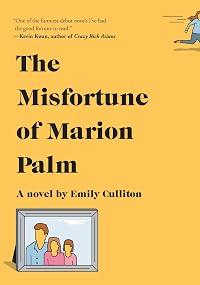
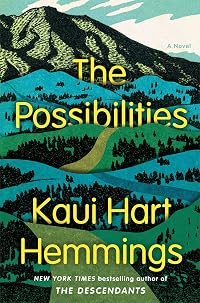
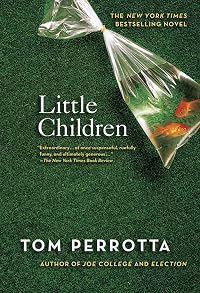

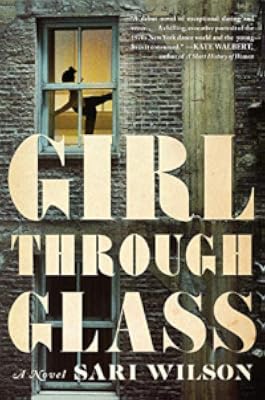





Member Reviews
This was a great read. A seemingly idyllic suburban community is fractured by a fight over a dog park and the ensuing poisoning of dogs. It's about so much more than that, though - primarily the hollowness of such towns and the dissatisfaction felt by people who appear to have everything going for them. There are echoes of John Cheever in that, along with the humor and sharp observation of Elinor Lipman, plus a dash of Stephen King (psychological unease King, not horror King). The novel is well-paced and peopled with interesting characters.
4 stars
4 stars
The backstory: The Dogs of Littlefield is on the longlist for this year's Bailey's Prize. Suzanne Berne won the Orange Prize in 1999 for her first novel, A Crime in the Neighborhood (my review.)
The basics: Set in the idyllic (fictional) town of Littlefield, Massachusetts, famous for its place on the Ten Best Places to Live in America list, as well as its disproportionately high number of psychotherapists, The Dogs of Littlefield explores the characters of this town through their own eyes and through the eyes of Dr. Clarice Watkins, a cultural anthropologist spending a year in Littlefield as a visiting scholar. Soon after she arrives, dogs start getting poisoned, and the paranoia and repercussions of these events ripple throughout show more Littlefield.
My thoughts: When the Bailey's Prize longlist was first announced, the title I was most surprised to see was The Dogs of Littlefield. How, I marveled, did I not know Suzanne Berne had a new novel out? It turns out because it not only isn't yet published in the U.S., there is no forthcoming U.S. publication date (particularly annoying because she's an American author, but British publishing wins again.)
I like my suburban fiction combined with a healthy dose of satire, and The Dogs of Littlefield is full of satire. I frequently laughed as I read, but this novel's humor is all relative--these jokes don't resonate out of context. Berne achieves the delicate balance of commenting on suburban life without doing so at the expense of the characters. The world is so well built I easily pictured real people, even as the characters acted in satirical caricature.
Favorite passage: "She was trying, he realized with a stab of grief, to be interesting."
The verdict: While the mystery of what is happening to the dogs (and who is hurting them) is a central theme to the narrative, it's only as compelling as everything else that's happening in the novel. The characters are the core of this novel, and they are the reason I so enjoyed it. May a U.S. publisher pick up this novel soon so Berne fans on this side of the world may enjoy it. show less
The basics: Set in the idyllic (fictional) town of Littlefield, Massachusetts, famous for its place on the Ten Best Places to Live in America list, as well as its disproportionately high number of psychotherapists, The Dogs of Littlefield explores the characters of this town through their own eyes and through the eyes of Dr. Clarice Watkins, a cultural anthropologist spending a year in Littlefield as a visiting scholar. Soon after she arrives, dogs start getting poisoned, and the paranoia and repercussions of these events ripple throughout show more Littlefield.
My thoughts: When the Bailey's Prize longlist was first announced, the title I was most surprised to see was The Dogs of Littlefield. How, I marveled, did I not know Suzanne Berne had a new novel out? It turns out because it not only isn't yet published in the U.S., there is no forthcoming U.S. publication date (particularly annoying because she's an American author, but British publishing wins again.)
I like my suburban fiction combined with a healthy dose of satire, and The Dogs of Littlefield is full of satire. I frequently laughed as I read, but this novel's humor is all relative--these jokes don't resonate out of context. Berne achieves the delicate balance of commenting on suburban life without doing so at the expense of the characters. The world is so well built I easily pictured real people, even as the characters acted in satirical caricature.
Favorite passage: "She was trying, he realized with a stab of grief, to be interesting."
The verdict: While the mystery of what is happening to the dogs (and who is hurting them) is a central theme to the narrative, it's only as compelling as everything else that's happening in the novel. The characters are the core of this novel, and they are the reason I so enjoyed it. May a U.S. publisher pick up this novel soon so Berne fans on this side of the world may enjoy it. show less
Suzanne Berne’s The Dogs of Littlefield is an amusing, but ultimately melancholy book about a town of privileged people, so privileged the town is on the Wall Street Journal’s list of “Twenty Best Places to Live in America.” It is a town so privileged that Dr. Clarice Watkins, a tenured sociologist from Chicago decides to spend time there as a visiting scholar while studying the townspeople to see how they responded to global destabilization.
Dr. Watkins and the baker at The Forge, a favorite local eatery, are the two people of color in this book. Watkins, an African American who wears caftans and turbans and Ahmed, a Pakistani student, reveal the casual and ignorant racism of the people in town. One woman, inviting Dr. Watkins show more to a potluck, mentions how much she loves tribal cooking. Everyone assumes as a black woman from Chicago, she must know the Obamas. Ahmed is harassed constantly by the police, so much so he buys an electric razor to shave off his beard and is arrested on suspicion of shoplifting when he tries to return it. Dr. Watkins is able to observe the people of Littlefield keenly without resistance because they are so self-absorbed they never asked her why she was there.
The town is full of these self-obsessed comfortable people who from the outside would seem to have no problems. But of course, they have problems. Margaret, the center of the novel, is in a dying marriage and is engulfed in fears. Her husband is feeling allergic to his wife and her daughter is at that angst-ridden age when parents are both refuge and agents of humiliation and embarrassment. There’s a local author named George whose wife has run off, in love with her massage therapist. A couple of local therapists, married with children, whose children seem to mark them as failures in parenting.
To add to the mix, the town is divided by controversy over a local park and whether there should be off-leash hours for dogs. Dog-lovers and dog-haters are terribly worked up. One dog-hater hilariously argued for more restrictions on dogs since they don’t even pay taxes. Adding to the unease, someone begins poisoning the dogs of Littlefield. Suspicion is in the air and the town is restive. There is a bit of a mystery.
I enjoyed Berne’s wit, often very mordant and sly. This book made me smile more than once. I also loved the lush, emotionally evocative prose descriptions of the landscape, the skies, and the snow. The sense of place was solid and easy to visualize. I also enjoyed the characterizations of the people, some of the summed up with Austen-like wit and brevity. However, the novel was uneven and the plot was sparse. The mystery element is a complete red-herring and really nothing to do with the story at all. The lurking menace of the back cover copy was not a mystery, nor was it a menace. It was just a mess. The normal mess of life.
The rest of my review is on my blog at https://tonstantweaderreviews.wordpress.com/2016/03/15/the-dogs-of-littlefield-b... show less
Dr. Watkins and the baker at The Forge, a favorite local eatery, are the two people of color in this book. Watkins, an African American who wears caftans and turbans and Ahmed, a Pakistani student, reveal the casual and ignorant racism of the people in town. One woman, inviting Dr. Watkins show more to a potluck, mentions how much she loves tribal cooking. Everyone assumes as a black woman from Chicago, she must know the Obamas. Ahmed is harassed constantly by the police, so much so he buys an electric razor to shave off his beard and is arrested on suspicion of shoplifting when he tries to return it. Dr. Watkins is able to observe the people of Littlefield keenly without resistance because they are so self-absorbed they never asked her why she was there.
The town is full of these self-obsessed comfortable people who from the outside would seem to have no problems. But of course, they have problems. Margaret, the center of the novel, is in a dying marriage and is engulfed in fears. Her husband is feeling allergic to his wife and her daughter is at that angst-ridden age when parents are both refuge and agents of humiliation and embarrassment. There’s a local author named George whose wife has run off, in love with her massage therapist. A couple of local therapists, married with children, whose children seem to mark them as failures in parenting.
To add to the mix, the town is divided by controversy over a local park and whether there should be off-leash hours for dogs. Dog-lovers and dog-haters are terribly worked up. One dog-hater hilariously argued for more restrictions on dogs since they don’t even pay taxes. Adding to the unease, someone begins poisoning the dogs of Littlefield. Suspicion is in the air and the town is restive. There is a bit of a mystery.
I enjoyed Berne’s wit, often very mordant and sly. This book made me smile more than once. I also loved the lush, emotionally evocative prose descriptions of the landscape, the skies, and the snow. The sense of place was solid and easy to visualize. I also enjoyed the characterizations of the people, some of the summed up with Austen-like wit and brevity. However, the novel was uneven and the plot was sparse. The mystery element is a complete red-herring and really nothing to do with the story at all. The lurking menace of the back cover copy was not a mystery, nor was it a menace. It was just a mess. The normal mess of life.
The rest of my review is on my blog at https://tonstantweaderreviews.wordpress.com/2016/03/15/the-dogs-of-littlefield-b... show less
I live close to fictional Littlefield, MA, which appears to be Wellesley in non-disguise. It is the type of upscale town where everything is perfect until it's not: the valedictorian gets shut out of every Ivy; there's mounds of goose crap on the soccer field; or, as in this novel, there's good and bad dog news. Good: the town is thinking of adding a dog park. Bad: the town is thinking of adding a dog park. Worse: random dogs are being poisoned.
It's a comedy of limited manners, with many annoying white prive-lodgers and an African American sociologist who is studying them but gives up because she doesn't get why they have so much and are so unhappy. Fun but silly, enjoyable but not great. My favorite quips:
A husband and wife are given show more an assignment to write journals about their feelings.
Wife writes: "In times of emotional intensity, there are new possibilities for intimacy"
Husband writes: "I don't feel anything"
"Mrs. Beale, as she was known to everyone, sometimes even herself..."
"She looked something like a trout and also something like Margaret Thatcher, though she smiled more than either."
"On the mantelpiece behind him, two Kokopelli figures seemed to be blowing panpipes into his ears" show less
It's a comedy of limited manners, with many annoying white prive-lodgers and an African American sociologist who is studying them but gives up because she doesn't get why they have so much and are so unhappy. Fun but silly, enjoyable but not great. My favorite quips:
A husband and wife are given show more an assignment to write journals about their feelings.
Wife writes: "In times of emotional intensity, there are new possibilities for intimacy"
Husband writes: "I don't feel anything"
"Mrs. Beale, as she was known to everyone, sometimes even herself..."
"She looked something like a trout and also something like Margaret Thatcher, though she smiled more than either."
"On the mantelpiece behind him, two Kokopelli figures seemed to be blowing panpipes into his ears" show less
Eat Pray Love opened the door to the #whitewomenwoes genre that should be firmly shut unless you can turn it into as poetic and universal an experience as something Edith Wharton or Carson McCullers would write.
Ennui is not easy to empathize with when the sufferers can cure the disease instantly by getting beyond their self-absorbed, insular, fake fears upper middle class to lower rich class lives.
I, silly me, expected the book to involve dogs. Instead, the dogs are just a gimmick to further reflect the misery of people who have too much money, too many possessions, too many prestigious finance jobs, and too many years of being around only people just like each other.
Ennui is not easy to empathize with when the sufferers can cure the disease instantly by getting beyond their self-absorbed, insular, fake fears upper middle class to lower rich class lives.
I, silly me, expected the book to involve dogs. Instead, the dogs are just a gimmick to further reflect the misery of people who have too much money, too many possessions, too many prestigious finance jobs, and too many years of being around only people just like each other.
Like the Seinfeld tv-show-within-a-tv-show episode, this book is about nothing. The story describes bored couples and sullen teenagers in an upscale community. Oh, yeah, there’s a marginal mystery about dog poisonings, but nothing much ever comes of it.
Let’s see, ISIS is terrorizing the Middle East, a nut-case with nuclear capabilities heads North Korea, and gun violence abounds in our nation. And I’m reading a book about white people problems.
The writing itself is good and it’s a very quick read. Good book to kill time on a flight, but steer clear of The Dogs of Littlefield if you are looking for plot, action, or escape from your own dull life.
Let’s see, ISIS is terrorizing the Middle East, a nut-case with nuclear capabilities heads North Korea, and gun violence abounds in our nation. And I’m reading a book about white people problems.
The writing itself is good and it’s a very quick read. Good book to kill time on a flight, but steer clear of The Dogs of Littlefield if you are looking for plot, action, or escape from your own dull life.
A well-written social satire that is strong on description, lovely prose and wonderful characters...and a little light on plot. It's taken me a long time to write this review - so much, that I had to reread the book again. (Fine, I had to finish the book. It took longer than anticipated to finish it.)
There WERE lovely characters - but there were also a lot of them, and because of it, I didn't get to know them as well as I'd like, and I wanted more of them. There were an extraordinary amount of therapists and psychologists (and the expected college professors) for the college town, but they didn't seem...invested enough. Or perhaps that is all part of the tale, but I needed more.
The writing was wonderful, and that is why i finished it. show more But it took a while to get there.... show less
There WERE lovely characters - but there were also a lot of them, and because of it, I didn't get to know them as well as I'd like, and I wanted more of them. There were an extraordinary amount of therapists and psychologists (and the expected college professors) for the college town, but they didn't seem...invested enough. Or perhaps that is all part of the tale, but I needed more.
The writing was wonderful, and that is why i finished it. show more But it took a while to get there.... show less
Members
- Recently Added By
Lists

Your favorite books from the 2014 Baileys Women's Prize for Fiction
20 works; 23 members

Books Read in 2016
4,666 works; 199 members
Author Information

6 Works 1,414 Members
Suzanne Berne teaches in Harvard University's English department.
Awards and Honors
Awards
Classifications
Statistics
- Members
- 132
- Popularity
- 247,688
- Reviews
- 10
- Rating
- (3.08)
- Languages
- English
- Media
- Paper, Audiobook, Ebook
- ISBNs
- 15
- ASINs
- 1