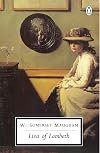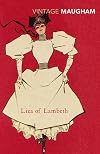
Liza of Lambeth
by W. Somerset Maugham 
On This Page
Description
Liza of Lambeth (1897) narrates Liza's last four months alive. She lives in a working-class area of London, and as the youngest of thirteen siblings she is left to look after their incompetent mother. She rejects a local suitor, but finds herself attracted to a mysterious stranger on a site-seeing trip. The novel gives insight into working-class London at the turn of the century..
Tags
Recommendations
























Member Reviews
It's 'er own fault...she didn't oughter mess about with 'er 'usbind"
By sally tarbox on 24 Feb. 2014
Format: Paperback
Short (136 page) novel set amid the working classes of London. Maugham brings the era to life - albeit with a rather smiling, patronising air, as we see the 'lower orders' socialising in the street, going out on a Bank holiday picnic, and indulging in alcohol and wife beating. All the dialogue is in Cockney.
The story opens with our leading character, Liza, walking down the street in her new dress. Loved and admired by all the locals, a sparky lass, with a faithful if drippy suitor, Liza is just about to run into Mr Blakeston - a married man....
The sort of book that has you reading it in one sitting - I particularly liked show more Mrs Kemp, Liza's awful drinking, whining mother! show less
By sally tarbox on 24 Feb. 2014
Format: Paperback
Short (136 page) novel set amid the working classes of London. Maugham brings the era to life - albeit with a rather smiling, patronising air, as we see the 'lower orders' socialising in the street, going out on a Bank holiday picnic, and indulging in alcohol and wife beating. All the dialogue is in Cockney.
The story opens with our leading character, Liza, walking down the street in her new dress. Loved and admired by all the locals, a sparky lass, with a faithful if drippy suitor, Liza is just about to run into Mr Blakeston - a married man....
The sort of book that has you reading it in one sitting - I particularly liked show more Mrs Kemp, Liza's awful drinking, whining mother! show less
Maugham's early novel is Victorian slum fiction, and a great hit in its day (although it's difficult to see why now). It was presumably considered sensational for not shying away from the brutal unpleasantness of working class life - car crash literature, if you will.
Liza is a gay young woman of the working class, who lives on Vere Street with her self-absorbed drunk mother, an assortment of cheerful children, and various hard-drinking men and endlessly-pregnant or bruised wives who claim their husbands are gentle when they haven't been drinking. The novel charts Liza's downfall from the well-loved young woman out-dancing the street in her new purple dress to fallen woman and social outcast pushed into a public fistfight with her rival show more for the amusement of her neighbours.
Liza is a difficult heroine to root for, being self-absorbed and hard-hearted; the only likeable character, Tom, is perceived as weak or wet and is rejected repeatedly. Although the narrator never overtly comments on Liza's choices, it's difficult not to read the novel as a cautionary tale. That said, it's even-handed in its disdain for slum life as the men - Tom excepted - are all drunks, braggarts and wife beaters.
Apparently based on Maugham's experiences as a doctor at St Thomas's, many elements now feel like cliches and his attempt to try and render local dialect does the novel and the characters no favours. It's not terrible, but I have to label it interesting rather than enjoyable. show less
Liza is a gay young woman of the working class, who lives on Vere Street with her self-absorbed drunk mother, an assortment of cheerful children, and various hard-drinking men and endlessly-pregnant or bruised wives who claim their husbands are gentle when they haven't been drinking. The novel charts Liza's downfall from the well-loved young woman out-dancing the street in her new purple dress to fallen woman and social outcast pushed into a public fistfight with her rival show more for the amusement of her neighbours.
Liza is a difficult heroine to root for, being self-absorbed and hard-hearted; the only likeable character, Tom, is perceived as weak or wet and is rejected repeatedly. Although the narrator never overtly comments on Liza's choices, it's difficult not to read the novel as a cautionary tale. That said, it's even-handed in its disdain for slum life as the men - Tom excepted - are all drunks, braggarts and wife beaters.
Apparently based on Maugham's experiences as a doctor at St Thomas's, many elements now feel like cliches and his attempt to try and render local dialect does the novel and the characters no favours. It's not terrible, but I have to label it interesting rather than enjoyable. show less
First novels are always a little bit tricky, especially when we've since come to know and love an author for his later work. Anyone who's read 'The Torrents of Spring,' Hemingway's first, will agree that what follows doesn't always bear a great relation to what started an author going.
My favourite Maugham novels were all written about a dozen years or more after this one, but that isn't to say that 'Liza of Lambeth' isn't without its charms. Maugham writes his characters' dialogue in an accurately colloquial way, though this takes some getting used to as is it did with Shaw. The setting is magnificently presented, and the reader certainly gets the feel for the locale very quickly.
The plot, such as it is in this, surely one of Maugham's show more shortest full pieces, is a curio I suppose, a look at the tragic consequences a woman meets with when she decides to pursue love and happiness over shelter and comfort, in a time when most women didn't have that luxury.
I think this is one of those books I'm going to have to dwell on before I can say honestly just how well I liked it. I'm glad that Maugham doesn't begin to sentimentalise and cheapen poverty by dressing it up as more than it is; in fact, he does an excellent job of portraying the brutality of living hand to mouth at the turn of the last century. The final pages cut the deepest, as Liza is all but forgotten by those around her, and cunningly her author too - the ending is very well crafted. show less
My favourite Maugham novels were all written about a dozen years or more after this one, but that isn't to say that 'Liza of Lambeth' isn't without its charms. Maugham writes his characters' dialogue in an accurately colloquial way, though this takes some getting used to as is it did with Shaw. The setting is magnificently presented, and the reader certainly gets the feel for the locale very quickly.
The plot, such as it is in this, surely one of Maugham's show more shortest full pieces, is a curio I suppose, a look at the tragic consequences a woman meets with when she decides to pursue love and happiness over shelter and comfort, in a time when most women didn't have that luxury.
I think this is one of those books I'm going to have to dwell on before I can say honestly just how well I liked it. I'm glad that Maugham doesn't begin to sentimentalise and cheapen poverty by dressing it up as more than it is; in fact, he does an excellent job of portraying the brutality of living hand to mouth at the turn of the last century. The final pages cut the deepest, as Liza is all but forgotten by those around her, and cunningly her author too - the ending is very well crafted. show less
This is W. Somerset Maugham’s debut novel, and it shows both his inexperience and his potential. It is a rather sad and, for its time, perhaps cautionary tale, for it is the tale of a girl’s seduction and a reputation’s destruction.
Much of the novel is written in Cockney dialect, which I initially found distracting and difficult to become accustomed to. I had to read much of it aloud so that I could translate in my head and follow the thread of the conversations. After I settled into that, however, it moved quickly and gathered momentum, to its inevitable end.
I do not want to explore any of the details of the plot, it is a very short book and it would be difficult to give even a slight synopsis without risking spoilers. Liza is show more a complex character, she makes you laugh as she bounces about the neighborhood and spares with the young men and boys on her street, she displays both a savvy mind and an innocent heart, while at the same time she is confused about what love is and shows a total lack of conviction or sense of morality. I hated her mother. show less
Much of the novel is written in Cockney dialect, which I initially found distracting and difficult to become accustomed to. I had to read much of it aloud so that I could translate in my head and follow the thread of the conversations. After I settled into that, however, it moved quickly and gathered momentum, to its inevitable end.
I do not want to explore any of the details of the plot, it is a very short book and it would be difficult to give even a slight synopsis without risking spoilers. Liza is show more a complex character, she makes you laugh as she bounces about the neighborhood and spares with the young men and boys on her street, she displays both a savvy mind and an innocent heart, while at the same time she is confused about what love is and shows a total lack of conviction or sense of morality. I hated her mother. show less
Liza of Lambeth was Maugham's first published novel, and it shows. Some of his future strengths are hinted at here: the dialogue is earthy and believable (though his insistence on spelling out the dialect phonetically becomes tedious, almost like listening to a "book on CD" narrated by Eliza Doolittle), and he already shows flashes of his greatest talent, that of conveying human emotion in a raw and irresistible manner.
However, where later Maugham books such as Moon and Sixpence and Cakes and Ale shine a cynical, but ultimately accepting (and even affectionate) eye on people from all walks of life, Liza of Lambeth looks down its nose at the lower-class people whose dialect it reproduces so faithfully. Maugham was inspired to write this show more book by the poor people he met while working in a hospital, and it's clearly the work of a young, bourgeois writer who thought himself a cut above the hard-drinking, wife-beating factory workers in his story. This same class of people would receive far more charitable treatments in the form of the Athelnys in Of Human Bondage and Rosie in Cakes and Ale.
Ultimately, it's hard for me to recommend this book to anyone unless they've already read at least four or five other Maugham books. One of Somerset Maugham's greatest strengths was his worldliness; he became a writer who presented his characters without prejudice, and allowed readers to judge them based on their actions. That worldly, nonjudgmental voice is completely absent here. Liza has a few glimpses of Maugham's future genius, but his voice and point of view were hard to swallow. show less
However, where later Maugham books such as Moon and Sixpence and Cakes and Ale shine a cynical, but ultimately accepting (and even affectionate) eye on people from all walks of life, Liza of Lambeth looks down its nose at the lower-class people whose dialect it reproduces so faithfully. Maugham was inspired to write this show more book by the poor people he met while working in a hospital, and it's clearly the work of a young, bourgeois writer who thought himself a cut above the hard-drinking, wife-beating factory workers in his story. This same class of people would receive far more charitable treatments in the form of the Athelnys in Of Human Bondage and Rosie in Cakes and Ale.
Ultimately, it's hard for me to recommend this book to anyone unless they've already read at least four or five other Maugham books. One of Somerset Maugham's greatest strengths was his worldliness; he became a writer who presented his characters without prejudice, and allowed readers to judge them based on their actions. That worldly, nonjudgmental voice is completely absent here. Liza has a few glimpses of Maugham's future genius, but his voice and point of view were hard to swallow. show less
Liza of Lambeth, Somerset Maugham debut novel is a bit of a pot boiler, however, it is interesting to readers of the author's work as, in essence, in already contains the theme of his opus magnum of human bondage.
This short novel tells the story of Liza in a melodramatic way. Set in a poor part of London, Liza and her friends and relatives belong to the working class, living in poverty and raising large families. Although Liza has a quick flirt with Tom, she is much more attracted to Jim, who seduces her are involves her in an adulturous relationship. The growing jealousie of Jim's wife frightens Liza, but Jim's confidence gives her a false sense of security. However, Jim's wife confronts Liza, shaming her in public. Despite everything, show more Tom still loves Liza, but Liza feels she is doomed, as she is pregnant with Jim's child. Jim turns on his wife, beating her, which frightens Liza even more, although wife beatings are shown to be a common occurrance in the novel. In the end, Liza dies after a miscarriage.
Liza of Lambeth is a melodramatic portrayal of life in poverty-stricken London at the beginning of the Twentieth Century. In the working class milieu of the novel, the men are mainly portrayed as brutes, while the women are passive and frail, and subjected to their passions. The novel is clearly related to the atmosphere in the plays of George Bernard Shaw and the naturalist novel on the continent, such as Zola.
The novel is deterministic in the sense that it suggests that the women have no choice. Liza is driven to her doom following her passion for Jim, and shame seems to keep her from reaching out to Tom, whose helping hand is streched out no matter what happens. Jim's wife holds on to her husband despite his adulterous behaviour and beating her. The novel seems to suggest that her loyalty to her husband is more than matrimonial duty, and that despite all, she probably still loves him.
Although the novel displays interesting aspects, particularly in relation to later work by the author, the reading of Liza of Lambeth is not immediately rewarding. The pervasive Cockney accent makes the novel a bit difficult to read. show less
This short novel tells the story of Liza in a melodramatic way. Set in a poor part of London, Liza and her friends and relatives belong to the working class, living in poverty and raising large families. Although Liza has a quick flirt with Tom, she is much more attracted to Jim, who seduces her are involves her in an adulturous relationship. The growing jealousie of Jim's wife frightens Liza, but Jim's confidence gives her a false sense of security. However, Jim's wife confronts Liza, shaming her in public. Despite everything, show more Tom still loves Liza, but Liza feels she is doomed, as she is pregnant with Jim's child. Jim turns on his wife, beating her, which frightens Liza even more, although wife beatings are shown to be a common occurrance in the novel. In the end, Liza dies after a miscarriage.
Liza of Lambeth is a melodramatic portrayal of life in poverty-stricken London at the beginning of the Twentieth Century. In the working class milieu of the novel, the men are mainly portrayed as brutes, while the women are passive and frail, and subjected to their passions. The novel is clearly related to the atmosphere in the plays of George Bernard Shaw and the naturalist novel on the continent, such as Zola.
The novel is deterministic in the sense that it suggests that the women have no choice. Liza is driven to her doom following her passion for Jim, and shame seems to keep her from reaching out to Tom, whose helping hand is streched out no matter what happens. Jim's wife holds on to her husband despite his adulterous behaviour and beating her. The novel seems to suggest that her loyalty to her husband is more than matrimonial duty, and that despite all, she probably still loves him.
Although the novel displays interesting aspects, particularly in relation to later work by the author, the reading of Liza of Lambeth is not immediately rewarding. The pervasive Cockney accent makes the novel a bit difficult to read. show less
While reading the book, I can't help but feel that Liza and Jim are very silly. Do they really think that nobody will know of their relationship? Do they think that they can hide it from his wife? Of course, the wife ends up knowing, and what ensued is an ugly fight between the wife and Liza. The story ends in a tragedy, with Liza dying from a miscarriage.
Members
- Recently Added By
Lists

The Novels of W. Somerset Maugham
22 works; 2 members

Books Read in 2015
3,299 works; 126 members
Author Information

709+ Works 46,748 Members
Writer William Somerset Maugham was born in Paris on January 25, 1874. He attended St. Thomas's Medical School in London. A prolific writer, Maugham produced novels, short stories, plays, and an autobiographical novel, "Of Human Bondage." Although he remains popular for his novels and short stories, when he was alive his plays, now dated, were show more also popular, and in 1908 four of his plays ran simultaneously. Maugham died in Nice, France, on December 16, 1965. (Bowker Author Biography) show less
W. Somerset Maugham has a Legacy Library. Legacy libraries are the personal libraries of famous readers, entered by LibraryThing members from the Legacy Libraries group.
Some Editions
Series
Belongs to Publisher Series
Work Relationships
Common Knowledge
- Canonical title
- Liza of Lambeth
- Original title
- Liza of Lambeth
- Alternate titles*
- Gatans melodi
- Original publication date
- 1897 (T. Fisher Unwin, First Edition) (T. Fisher Unwin, First Edition); 1930 (Heinemann, Travellers' Library, new preface) (Heinemann, Travellers' Library, new preface); 1934 (Heinemann, The Collected Edition, new preface [greatly expanded version of the previous one]) (Heinemann, The Collected Edition, new preface [greatly expanded version of the previous one]); 1947 (Heinemann, Jubilee Edition, Signed, short new preface) (Heinemann, Jubilee Edition, Signed, short new preface)
- People/Characters
- Liza Kemp; Jim Blakeston; Tom
- Important places
- London, England, UK
- First words
- It was the first Saturday afternoon in August; it had been broiling hot all day, with a cloudless sky, and the sun had been beating down on the houses, so that the top rooms were like ovens; but now with the approach of eveni... (show all)ng it was cooler, and everyone in Vere Street was out of doors.
- Last words
- (Click to show. Warning: May contain spoilers.)The lamp sputtered out.
- Original language
- English
*Some information comes from Common Knowledge in other languages. Click "Edit" for more information.
Classifications
Statistics
- Members
- 524
- Popularity
- 57,338
- Reviews
- 15
- Rating
- (3.42)
- Languages
- 11 — Danish, English, Estonian, Finnish, French, German, Italian, Norwegian (Bokmål), Portuguese, Romanian, Swedish
- Media
- Paper, Audiobook, Ebook
- ISBNs
- 89
- ASINs
- 24