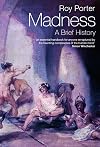
Madness: A Brief History
by Roy Porter
On This Page
Description
This fascinating story of madness reveals the radically different perceptions of madness and approaches to its treatment, from antiquity to the present day.Roy Porter explores what we really mean by 'madness', covering an enormous range of topics from witches to creative geniuses, electric shock therapy to sexual deviancy, psychoanalysis to prozac.The origins of current debates about how we define and deal with insanity are examined through eyewitness accounts of those treating patients, show more writers, artists, and the mad themselves. show lessTags
Recommendations
















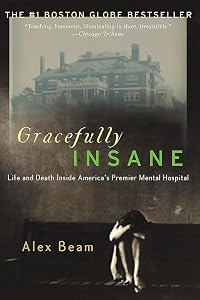















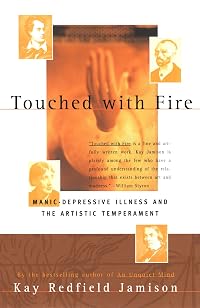


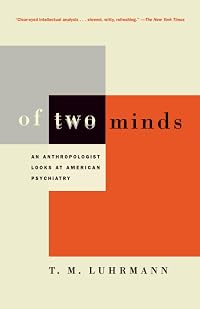



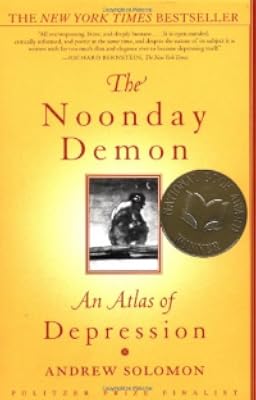




Member Recommendations
Member Reviews
Roy Porter has a gift for summing up complex topics in straightforward yet enlightening short reads. He had done it before with Blood And Guts: A Short History of Medicine, a short history of medicine. He is doing it again here in 'Madness', this time tackling mental health issues with the same dazzling romp.
From pagan beliefs to the Christian Middle Age, Materialist philosophies to Romanticism and, up to the secular and capitalistic era with live in, Roy Porter does more than simply taking us through how insanity was perceived and treated across the centuries. He also manages, brilliantly, to show how our dealing with the mentally ill reflect above all deep sociocultural factors. The focus put on the evolution of mental institutions, show more their ever changing purposes and management is, about, incredibly telling and fascinating.
For whose interested in mental illness, here's a straightforward and must read little book. show less
From pagan beliefs to the Christian Middle Age, Materialist philosophies to Romanticism and, up to the secular and capitalistic era with live in, Roy Porter does more than simply taking us through how insanity was perceived and treated across the centuries. He also manages, brilliantly, to show how our dealing with the mentally ill reflect above all deep sociocultural factors. The focus put on the evolution of mental institutions, show more their ever changing purposes and management is, about, incredibly telling and fascinating.
For whose interested in mental illness, here's a straightforward and must read little book. show less
A great introduction to the history of Mental Illness. He starts from the earliest time of mental illness and to our modern day. Roy does a good job of delineating each era. I learnt a lot of stories, they were intriguing. It seems that, the issue of treating the individual as a human being is important. I am not sure if this is being followed everywhere. A person suffering from mental illness might be brushed aside and thought of as a beast. A lot of people, who were deemed unfit for society were tied into shackles and removed from society.
Now, Roy raises key concerns about institutions and developments through history. Initially Religious schools handled these cases, there were some positive results, however, this segment was taken show more over by affluent families. It seemed that from the reading, people from religious schools might put more empathy, serving people as a part of their life. This may not be necessarily true in all cases, but there's more possibility of them being better. Initially, treating these people were secretive, but after 1800's Psychiatry started to enter public domain as a credible employment. He seems to suggest the Moral therapy was successful in America in the beginning of 1800's but by the end of the century, Psychologists became more interested in the disease than patient. One thing, which I was surprised to learn is that in, every progress in this field, there's a philosophical backbone presupposed, for example: John Locke provided the lockean thinking sets for rationalizing illness, Darwin influenced Freud.
Overall, a great read.
Deus Vult
Gottfried show less
Now, Roy raises key concerns about institutions and developments through history. Initially Religious schools handled these cases, there were some positive results, however, this segment was taken show more over by affluent families. It seemed that from the reading, people from religious schools might put more empathy, serving people as a part of their life. This may not be necessarily true in all cases, but there's more possibility of them being better. Initially, treating these people were secretive, but after 1800's Psychiatry started to enter public domain as a credible employment. He seems to suggest the Moral therapy was successful in America in the beginning of 1800's but by the end of the century, Psychologists became more interested in the disease than patient. One thing, which I was surprised to learn is that in, every progress in this field, there's a philosophical backbone presupposed, for example: John Locke provided the lockean thinking sets for rationalizing illness, Darwin influenced Freud.
Overall, a great read.
Deus Vult
Gottfried show less
A great introduction to the history of Mental Illness. He starts from the earliest time of mental illness and to our modern day. Roy does a good job of delineating each era. I learnt a lot of stories, they were intriguing. It seems that, the issue of treating the individual as a human being is important. I am not sure if this is being followed everywhere. A person suffering from mental illness might be brushed aside and thought of as a beast. A lot of people, who were deemed unfit for society were tied into shackles and removed from society.
Now, Roy raises key concerns about institutions and developments through history. Initially Religious schools handled these cases, there were some positive results, however, this segment was taken show more over by affluent families. It seemed that from the reading, people from religious schools might put more empathy, serving people as a part of their life. This may not be necessarily true in all cases, but there's more possibility of them being better. Initially, treating these people were secretive, but after 1800's Psychiatry started to enter public domain as a credible employment. He seems to suggest the Moral therapy was successful in America in the beginning of 1800's but by the end of the century, Psychologists became more interested in the disease than patient. One thing, which I was surprised to learn is that in, every progress in this field, there's a philosophical backbone presupposed, for example: John Locke provided the lockean thinking sets for rationalizing illness, Darwin influenced Freud.
Overall, a great read.
Deus Vult
Gottfried show less
Now, Roy raises key concerns about institutions and developments through history. Initially Religious schools handled these cases, there were some positive results, however, this segment was taken show more over by affluent families. It seemed that from the reading, people from religious schools might put more empathy, serving people as a part of their life. This may not be necessarily true in all cases, but there's more possibility of them being better. Initially, treating these people were secretive, but after 1800's Psychiatry started to enter public domain as a credible employment. He seems to suggest the Moral therapy was successful in America in the beginning of 1800's but by the end of the century, Psychologists became more interested in the disease than patient. One thing, which I was surprised to learn is that in, every progress in this field, there's a philosophical backbone presupposed, for example: John Locke provided the lockean thinking sets for rationalizing illness, Darwin influenced Freud.
Overall, a great read.
Deus Vult
Gottfried show less
This is good if you want to be able to converse on the history of psychiatry and don't have the time or inclination to read a thicker book or several books. It covers all the important points and I found it very readable, but it's very short, and the author had to rush through everything. People who read many psychology/psychiatry books (like me) probably won't learn anything new.
This brief history is comprehensive in its scope but leaves me wanting much more.
Porter seems not very sympathetic with the attitudes and methods of the practitioners of 'cures', and hints at underlying sociological and anthropological reasons for this.
In such a short book he doesn't find room to elaborate on these, and so rather ironically, he focusses entirely on the treatment of symptoms without attempting to examine the causes: the very failing which he holds each generation's practitioners guilty.
The further reading section at the end is comprehensive and may be the best place to begin.
Overall, though, a readable and informative summary.
Porter seems not very sympathetic with the attitudes and methods of the practitioners of 'cures', and hints at underlying sociological and anthropological reasons for this.
In such a short book he doesn't find room to elaborate on these, and so rather ironically, he focusses entirely on the treatment of symptoms without attempting to examine the causes: the very failing which he holds each generation's practitioners guilty.
The further reading section at the end is comprehensive and may be the best place to begin.
Overall, though, a readable and informative summary.
For an overview of how western cultures have explained and treated insanity from its first mention in recorded history, this little volume does its job. It's a bit dry and clinical at points, but overall a quick and interesting read for anyone who likes to read psychology.
This book was certainly a brief history. Short and informative, it wasn't exactly what I was looking for to read. I was hoping it would focus on the history of the treatment and institutions, but it was mainly about the history and development of psychology. Still, probably a good place to start.
Experiments in Reading
Experiments in Reading
Members
- Recently Added By
Lists

Read These Too
458 works; 9 members

In Our Time books
4,934 works; 2 members
Author Information

78+ Works 6,046 Members
Roy Sydney Porter was born December 31, 1946. He grew up in a south London working class home. He attended Wilson's Grammar School, Camberwell, and won an unheard of scholarship to Cambridge. His starred double first in history at Cambridge University (1968) led to a junior research fellowship at his college, Christ's, followed by a teaching post show more at Churchill College, Cambridge. His Ph.D. thesis, published as The Making Of Geology (1977), became the first of more than 100 books that he wrote or edited. Porter was a Fellow and Director of Studies in History at Churchill College, Cambridge from 1972 to 1979; Dean from 1977 to 1979; Assistant Lecturer in European History at Cambridge University from 1974 to 1977, Lecturer from 1977 to 1979. He joined the Wellcome Institute fot the History of Medicine in 1979 where he was a Senior Lecturer from 1979 to 1991, a Reader from 1991 to 1993, and finally a Professor in the Social History of Medicine from 1993 to 2001. Porter was Elected a fellow of the British Academy in 1994, and he was also made an honorary fellow by both the Royal College of Physicians and the Royal College of Psychiatrists. Roy Porter died March 4, 2002, at the age of 55. (Bowker Author Biography) show less
Awards and Honors
Common Knowledge
- Original publication date
- 2002
- Dedication
- yet again, to the love of my life
NATSU - First words
- To 'define true madness'—the speaker is Polonius, labouring, as ever, to be wittily wise—'what is't but to be nothing else but mad?' (Introduction)
- Last words
- (Click to show. Warning: May contain spoilers.)Is Folly jingling its bells once again?
- Blurbers
- Sacks, Oliver; Winchester, Simon
Classifications
- Genres
- Nonfiction, History, General Nonfiction
- DDC/MDS
- 616.89009 — Applied science & technology Medicine & health Diseases, Allergies, Skin Conditions Nervous Disorders: Autism, Anorexia, OCD Mental disorders: bi-polar/schizophrenia History, geographic treatment, biography
- LCC
- RC438 .P67 — Medicine Internal medicine Internal medicine Neurosciences. Biological psychiatry. Neuropsychiatry Psychiatry
- BISAC
Statistics
- Members
- 438
- Popularity
- 70,279
- Reviews
- 7
- Rating
- (3.56)
- Languages
- 5 — Chinese, Dutch, English, German, Spanish
- Media
- Paper, Ebook
- ISBNs
- 13
- ASINs
- 1