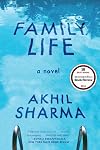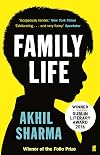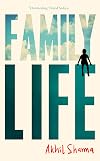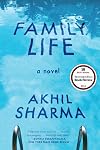
Family Life
by Akhil Sharma 
On This Page
Description
Ajay and Birju play cricket in the streets of Delhi, waiting for the day their plane tickets will arrive. Finally joining their father in America, Ajay and Birju enjoy their new, extraordinary life in New York. Then tragedy strikes, leaving one brother incapacitated and the other practically orphaned in this strange land.Tags
Recommendations

















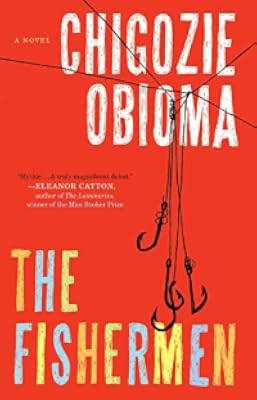

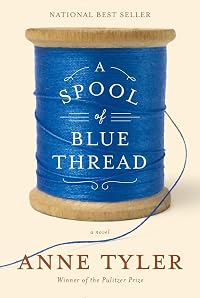

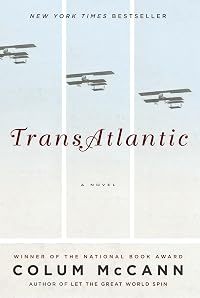
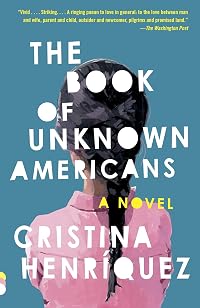
Member Recommendations

akblanchard Families cope with disabled adult children.
Member Reviews
I had the good fortune of attending a lecture and discussion of "Family Life" with author Akhil Sharma at City of Asylum in Pittsburgh, PA a few weeks ago. While I had not read the book at the time of the event, I knew it was a perfect match for me when Sharma read aloud a section detailing the excitement of his family's first time traveling in an airplane as part of their immigration from India to New York City in the 1970s - and his mother's instruction to collect and save every item that was in the front seat pocket.
Small, perfectly told details like this one were reminiscent of my childhood experience and immediately forged a bond I could relate to at every step. "Family Life" presents a portrait that is far from perfect: America show more is not what you fantasized about; parents are not omniscient, indefatigable caretakers; religion can be as fickle as your high school friends; and the seeming necessity to complicate our lives so that we can disentangle, re-connect, and understand what brings us happiness.
"Family Life" isn't an immigrant story, it isn't a Gen X story, it isn't an Indian story, it's a story about doing the best you can when the entire world is falling apart and you don't understand why. It's a story about life: Akhil Sharma's, yours, and mine. Read it. show less
Small, perfectly told details like this one were reminiscent of my childhood experience and immediately forged a bond I could relate to at every step. "Family Life" presents a portrait that is far from perfect: America show more is not what you fantasized about; parents are not omniscient, indefatigable caretakers; religion can be as fickle as your high school friends; and the seeming necessity to complicate our lives so that we can disentangle, re-connect, and understand what brings us happiness.
"Family Life" isn't an immigrant story, it isn't a Gen X story, it isn't an Indian story, it's a story about doing the best you can when the entire world is falling apart and you don't understand why. It's a story about life: Akhil Sharma's, yours, and mine. Read it. show less
This intense and engrossing family drama chronicles the early years of Ajay Mishra, whose family moves from New Delhi to the United States in the late 1970s. Ajay's father emigrates first, fulfilling a lifelong dream. He gets a job as a government clerk, rents an apartment in Queens, and, a year after leaving India, sends plane tickets for his wife and two sons, Ajay and Birju. For Ajay, the shock of finding himself living in America never really goes away, even when he grows up. He is constantly being reminded that Indians are different from Americans and that the differences are real and have an impact on the kind of life one is permitted to live. Still, he assimilates as well as can be expected, though more slowly than Birju, show more watching with a combination of envy and admiration as his older brother accumulates academic successes while his own accomplishments remain ordinary. Still, Ajay can't help but share in the family's pride when Birju is accepted into the prestigious Bronx High School of Science. Then disaster strikes. Birju is injured in a swimming accident. The rest of the story shows us a family in ongoing emotional crisis, alternately at war with and comforting each other on a daily basis. Unable to accept what has happened, Ajay's mother succumbs to the claims of healers who say they can fix her son. Resigned to disappointment and defeat, his father withdraws into a bottle. Ajay continues his efforts to become American and is often mortified by his parents', and his own, Indian-ness. Akhil Sharma's depiction of the conflicting cultural and emotional tensions in Ajay's life is unflinching and poignant, occasionally leavened by absurdist humour. Family Life, despite the tragedy at its core, is an emotionally reticent novel. Even the most heart-rending scenes are narrated in Ajay's coolly distant and unsentimental voice. Paradoxically, it is a voice that generates great suspense and leaves the reader deeply moved. show less
A beautiful and hard book. A rare example for me where knowing why/how he wrote it expanded my understanding and appreciation. The chapter on him using Hemingway to write is fascinating. The complexities of his relationships with his parents and brother are rich and brutal. His creation of self is fascinating. I came to this book having read an excerpt years ago in the New Yorker; it stuck with me. The book will stick with me even more.
It’s the late 1970s, and Ajay Mishra and his family are Indian immigrants to the United States. Soon after Ajay’s older brother Birju is accepted to a prestigious prep school in the Bronx, he has an accident at a swimming pool and becomes immobile and unable to communicate, requiring full-time care. After the traumatic event and ensuing financial difficulties, Ajay’s father begins to drink heavily.
The inevitable process of Americanization tugs at Ajay as he tries to fit in at school. But pulling him in the opposite direction are the strong cultural mores and class divisions that persist among the other Indian immigrants with whom the Mishras primarily associate. Ajay’s behavior at school becomes obnoxious - he boasts and lies show more and insults others - and consequently he has difficulty making friends, despite being in the top of his class academically.
Sharma writes like a more emotionally adept Hemingway (and in fact he gives Ajay a temporary obsession with Hemingway’s style and his faults). The author uses short, swift, plain strokes to uncover personal and societal hypocrisy, cruelty, and contradiction. With rare self-awareness (almost unbelievable at times, but it works because older Ajay is writing from his already-came-of-age perspective), Ajay lays bare his own mixed emotions and motives about taking care of Birju, finding a girlfriend, being a good son, and going to AA meetings with his father. (Although he is glad his father decides to stop drinking, he finds the vulnerability of the alcoholics at the meetings unseemly and weak.) Without any complaint from the narrator, I found myself angry with his family, especially his mother, for setting him up to feel like he can never do anything right, can never be happy.
In turns hilarious and heartbreaking - and with a humdinger of a last sentence that set me cursing at the acknowledgements page for not being more story - Family Life is a beautiful picture of an immigrant family in the throes of both cultural assimilation and personal tragedy. show less
The inevitable process of Americanization tugs at Ajay as he tries to fit in at school. But pulling him in the opposite direction are the strong cultural mores and class divisions that persist among the other Indian immigrants with whom the Mishras primarily associate. Ajay’s behavior at school becomes obnoxious - he boasts and lies show more and insults others - and consequently he has difficulty making friends, despite being in the top of his class academically.
Sharma writes like a more emotionally adept Hemingway (and in fact he gives Ajay a temporary obsession with Hemingway’s style and his faults). The author uses short, swift, plain strokes to uncover personal and societal hypocrisy, cruelty, and contradiction. With rare self-awareness (almost unbelievable at times, but it works because older Ajay is writing from his already-came-of-age perspective), Ajay lays bare his own mixed emotions and motives about taking care of Birju, finding a girlfriend, being a good son, and going to AA meetings with his father. (Although he is glad his father decides to stop drinking, he finds the vulnerability of the alcoholics at the meetings unseemly and weak.) Without any complaint from the narrator, I found myself angry with his family, especially his mother, for setting him up to feel like he can never do anything right, can never be happy.
In turns hilarious and heartbreaking - and with a humdinger of a last sentence that set me cursing at the acknowledgements page for not being more story - Family Life is a beautiful picture of an immigrant family in the throes of both cultural assimilation and personal tragedy. show less
In wonderfully unadorned prose (so refreshing after all the self-consciously "lyrical" writing I've read recently), first person narrator Ajay relates this moving "immigrant coming of age" story.
Normal life comes to an abrupt halt for Ajay's family when older brother Birju sustains a serious brain injury. Ajay and parents, recent immigrants from India, cope as best they can with both a new country and the uncharted territory of Birju's profound disabilities. The results are not always successful. The ending is a bit rushed, but other than that, this is a well-written, unsentimental story of love, loss, and family bonds.
Normal life comes to an abrupt halt for Ajay's family when older brother Birju sustains a serious brain injury. Ajay and parents, recent immigrants from India, cope as best they can with both a new country and the uncharted territory of Birju's profound disabilities. The results are not always successful. The ending is a bit rushed, but other than that, this is a well-written, unsentimental story of love, loss, and family bonds.
What begins as a fairly typical Indian immigrant story soon takes a devastating turn. The parents of the narrator, Ajay, decide to move the family to the United States in hopes of a better life. Hardworking and ambitious, they push their two sons to excel, especially in school, and are ecstatic when the elder boy, Birju, passes the entry exam for the Brooklyn School of Science. But during summer vacation, Birju suffers a traumatic brain injury in a diving accident. Life for the family will never be the same.
The majority of the novel explores the effects of Birju's disability on his family and the local Indian community. Sharma takes us through the highs and lows, the hope and the despair. There are intense descriptions of Birju's show more physical care (and, in some cases, the lack of it). When the decision is made to bring Birju home, family life gets even more difficult. The invalid's bed becomes the center of the home, each member responsible for a shift of turning, feeding, cleaning, medicating. Members of the Hindu temple they attend are unsure of how to react: Should they offer help or sympathy, or should they just pretend that nothing has happened? Some even begin to treat the boy's mother as a saint, asking her to lay hands on their children in blessing. Young Ajay is particularly conflicted. He loves his brother; he hates his brother. He wishes his brother would die; he prays for his brother not to die. He hides the fact that he has a brother; he gives unasked-for grotesque details about his brother to his classmates as a means of getting attention.
Although the novel is an emotionally difficult read, it's not told without humor and, if not hope, at least love.
The end of the novel rushes through Ajay's adult years, giving snippets that demonstrate the powerful effects of the family's sad circumstances. I would have preferred Sharma to slow down a little here, perhaps been a bit more reflective. Still, this was a moving and gripping novel. show less
The majority of the novel explores the effects of Birju's disability on his family and the local Indian community. Sharma takes us through the highs and lows, the hope and the despair. There are intense descriptions of Birju's show more physical care (and, in some cases, the lack of it). When the decision is made to bring Birju home, family life gets even more difficult. The invalid's bed becomes the center of the home, each member responsible for a shift of turning, feeding, cleaning, medicating. Members of the Hindu temple they attend are unsure of how to react: Should they offer help or sympathy, or should they just pretend that nothing has happened? Some even begin to treat the boy's mother as a saint, asking her to lay hands on their children in blessing. Young Ajay is particularly conflicted. He loves his brother; he hates his brother. He wishes his brother would die; he prays for his brother not to die. He hides the fact that he has a brother; he gives unasked-for grotesque details about his brother to his classmates as a means of getting attention.
Although the novel is an emotionally difficult read, it's not told without humor and, if not hope, at least love.
The end of the novel rushes through Ajay's adult years, giving snippets that demonstrate the powerful effects of the family's sad circumstances. I would have preferred Sharma to slow down a little here, perhaps been a bit more reflective. Still, this was a moving and gripping novel. show less
Family life is the painful story of the Mishra family told from the point of view of Ajay, the younger of two brothers. This novel follows an immigrant Indian family's tragedy and aftermath. Older brother Birju is accepted into the prestigious Bronx School of Science, but this good fortune soon turns to catastrophe as Birju has an accident at the local swimming pool and is rendered brain damaged, blind, and unable to walk or talk. The remainder of the novel focuses on the family's grief and how it damages the relationships between the remaining family members. The honest but coldly detached voice that Ajay uses to narrate this unbearably difficult account of his family life allows us to simultaneously view the disintegration of his show more family's intimate relationships from a distance but also to deeply feel his pain. show less
Members
- Recently Added By
Lists

Vulture's 100 Best Books of the 21st Century (So Far)
98 works; 9 members

Folio Prize 2015 Longlist
79 works; 2 members

Books Read in 2015
3,299 works; 129 members

Dublin Literary Award Longlist 2016
148 works; 4 members

Indian Diaspora
42 works; 2 members

NYTimes 10 Best of 2014
10 works; 3 members

Kirkus Reviews Best Fiction of 2014
100 works; 7 members

Asian American Literature
46 works; 6 members

The Atlantic's The Great American Novel
136 works; 12 members

.
184 works; 1 member
Author Information

7+ Works 1,137 Members
Akhil Sharma was born on July 22, 1971 in Delhi, India. He immigrated to the United States when he was eight, and grew up in Edison, New Jersey. He received a B.A. in public policy at the Woodrow Wilson School, Princeton University. He then won a Stegner Fellowship to the writing program at Stanford University, where he won several O. Henry show more Prizes. Sharma is an assistant professor in the creative writing MFA program at Rutgers University-Newark. He has published stories in The New Yorker, The Atlantic Monthly, The Quarterly, Fiction, the Best American Short Stories anthology, and the O. Henry Award Winners anthology. His short story Cosmopolitan was anthologized in The Best American Short Stories 1998 and was made into a 2003 film of the same name, which has appeared on the PBS series Independent Lens. His novels include An Obedient Father and Family Life, which won the 2015 Folio Prize and the 2016 International DUBLIN Literary Award. (Bowker Author Biography) show less
Akhil Sharma is a LibraryThing Author, an author who lists their personal library on LibraryThing.
Awards and Honors
Awards
Distinctions
Common Knowledge
- Canonical title
- Family Life
- Original publication date
- 2014
- Important places
- India
- First words
- My father has a glum nature.
- Last words
- (Click to show. Warning: May contain spoilers.)That was when I knew I had a problem.
Classifications
Statistics
- Members
- 597
- Popularity
- 49,045
- Reviews
- 29
- Rating
- (3.45)
- Languages
- 5 — Dutch, English, French, Italian, Spanish
- Media
- Paper, Audiobook, Ebook
- ISBNs
- 17
- ASINs
- 7