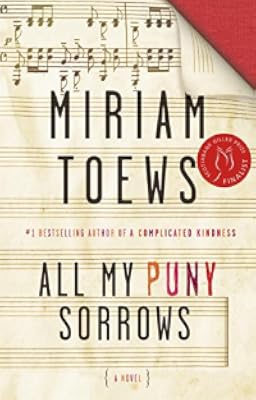
All My Puny Sorrows
by Miriam Toews
On This Page
Description
Elf and Yoli are sisters. While on the surface Elfrieda's life is enviable (she's a world-renowned pianist, glamorous, wealthy, and happily married) and Yolandi's a mess (she's divorced and broke, with two teenagers growing up too quickly), they are fiercely close - raised in a Mennonite household and sharing the hardship of Elf's desire to end her life. After Elf's latest attempt, Yoli must quickly determine how to keep her family from falling apart, how to keep her own heart from breaking, show more and what it means to love someone who wants to die. All My Puny Sorrows is the latest novel from Miriam Toews, one of Canada's most beloved authors - not only because her work is rich with deep human feeling and compassion but because her observations are knife-sharp and her books wickedly funny. And this is Toews at her finest: a story that is as much a comedy as it is a tragedy, a goodbye grin from the friend who taught you how to live. show lessTags
Recommendations



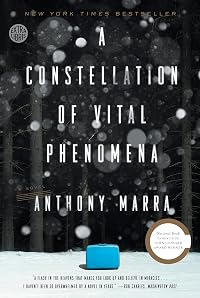
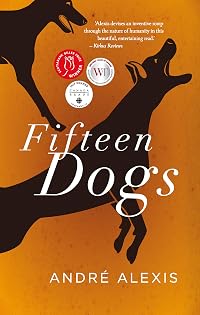
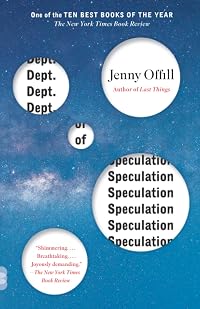
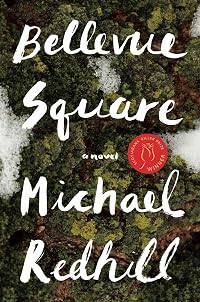




Member Recommendations

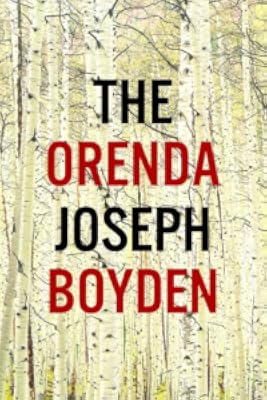
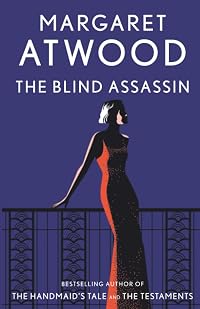
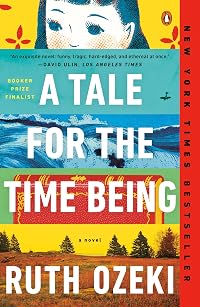
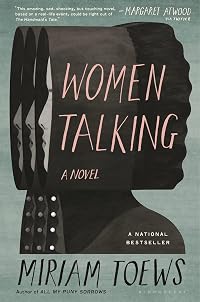
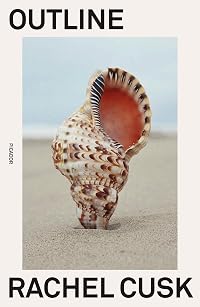
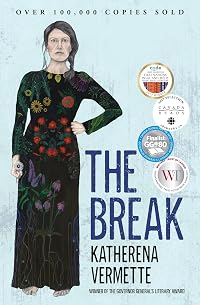
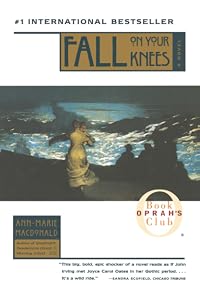
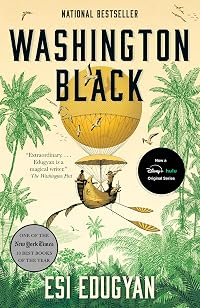
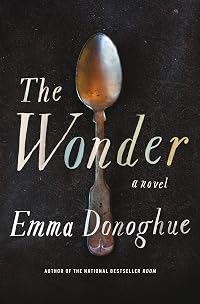
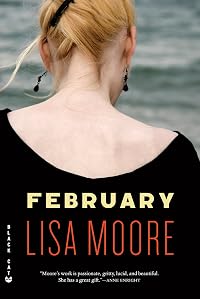
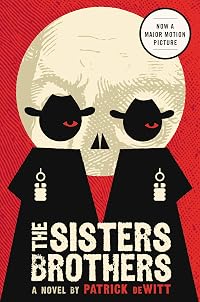
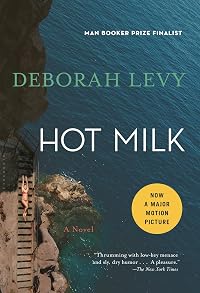
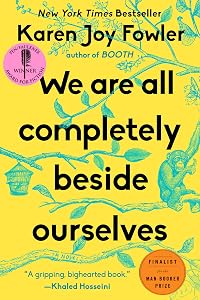
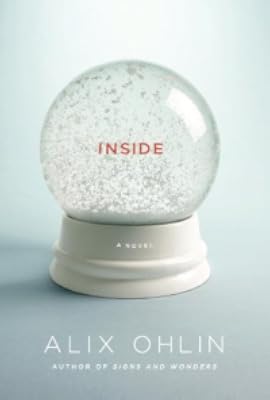
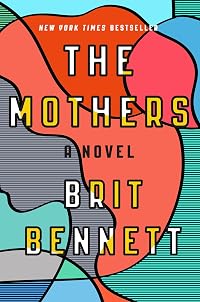
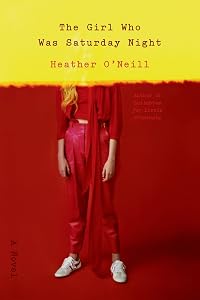
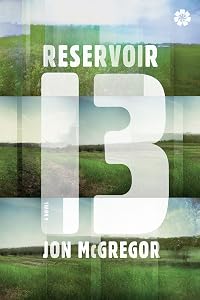
ebeaz Similar exploration of the grieving process among family members who have lost someone close to them. Both books contain a lot of humour, but are able to dole out the heartache when they need to. Plus, there are sections narrated by a tortoise.
Member Reviews
Know your limits when reading this book, know when to take a breather and go do something else, know that as darkly light-hearted as this novel can be about suicide and grief at times, it is no less powerful and moving in its portrayal of such heavy materials. The story does not try to be an all-encompassing treatise on people's experiences with suicides or a debating platform for assisted suicide arguments or a fictional authority on the causes of mental illness (a la My Sister's Keeper or any Jodi Picoult's book on some controversial topic), but instead, it is the story of how a particular family manage to carry on at this particular time.
Even though the main events are set over six weeks, we are mostly presented with a series of show more vignettes, fragments of ongoing family traditions and habits and relationships, of flashbacks, tender reflections and current day-to-days, all of which realises this fictional family so well. It might sound like the novel is a mire of melancholy, burying you in its suffocating sadness and sorrows, but just as it is seemingly impossible for the characters to do anything but be in a perpetual grief and bewilderness, laughter does for them and the reader, bubble and burst through, bright and unexpected.
The narrator's voice is original, honest and realistic, written in the context of our time, where the stigma of mental illnesses is slowly being overcome. The pace of the book is surprisingly swift, even as we are being dangled in the uncomfortable chasm of potential devastation. I really like the absence of quotation marks for speeches when it is done effectively as it was here, it kept us flowing uninterrupted in the narrator's mind but also adds to this pervasive pensiveness.
The novel is definitely a product of our time - will people remember or understand this period where people read Kathy Reichs or attended that MoMA exhibition? In the section where the characters were trying to remember the lyrics to Mockingbird, I actually wondered why they did not know it already from the episode of Breaking Bad, but of course, that came after the novel's timeline. Here is one thoughtful story about suicide and mental illness, but in the future world where they are destigmatised, there will still remain this touching portrait of a family in pain supporting each other as best as they can in their own imperfect ways. Just as how a family of relationships was formed with nothing more than particular anecdotes and words, I am glad that the novel's particular experiences can now also be a part of society's ongoing efforts to bring awareness and sensitivity to the effects of mental illnesses. show less
Even though the main events are set over six weeks, we are mostly presented with a series of show more vignettes, fragments of ongoing family traditions and habits and relationships, of flashbacks, tender reflections and current day-to-days, all of which realises this fictional family so well. It might sound like the novel is a mire of melancholy, burying you in its suffocating sadness and sorrows, but just as it is seemingly impossible for the characters to do anything but be in a perpetual grief and bewilderness, laughter does for them and the reader, bubble and burst through, bright and unexpected.
The narrator's voice is original, honest and realistic, written in the context of our time, where the stigma of mental illnesses is slowly being overcome. The pace of the book is surprisingly swift, even as we are being dangled in the uncomfortable chasm of potential devastation. I really like the absence of quotation marks for speeches when it is done effectively as it was here, it kept us flowing uninterrupted in the narrator's mind but also adds to this pervasive pensiveness.
The novel is definitely a product of our time - will people remember or understand this period where people read Kathy Reichs or attended that MoMA exhibition? In the section where the characters were trying to remember the lyrics to Mockingbird, I actually wondered why they did not know it already from the episode of Breaking Bad, but of course, that came after the novel's timeline. Here is one thoughtful story about suicide and mental illness, but in the future world where they are destigmatised, there will still remain this touching portrait of a family in pain supporting each other as best as they can in their own imperfect ways. Just as how a family of relationships was formed with nothing more than particular anecdotes and words, I am glad that the novel's particular experiences can now also be a part of society's ongoing efforts to bring awareness and sensitivity to the effects of mental illnesses. show less
A very beautiful and sad book, but mysteriously also very funny. Toews shows the absurdity of trying to persuade a patient to come to the communal table to eat by otherwise withholding food when all they want to do is die anyway and her portrayal of Elf's mother is affectionate and hilarious. There was something very uplifting about the way the family suffered tragedy after tragedy with dignity and a sort of acceptance and kept on going in love. My favourite scene was where Yolandi says all the things to Elf that she won't let others say: What about me? I'm the screw-up whose life is a disaster - I should be the one despairing and getting comfort from you.
All My Puny Sorrows tackles the subject of suicide with compassion, humour and humanity. Elf and Yoli Von Riesen are sisters. They grew up in a Mennonite community where their artistic, outward looking family was an anomaly. Elf becomes a concert pianist, expressing and salving her emotions through music. She is smart and funny, but she does not see the point in living with such pain as she feels. Yoli becomes a writer and gives herself the task of keeping Elf alive.
One summer, ahead of a big concert tour, Elf attempts suicide. She is prevented from dying. She games the hospital, complying with their rules for being better in order to get home and try again. Her second attempt is worse, but again she is prevented from dying.
In between show more visiting her sister, looking after her children, finalising her divorce and maintaining two affairs, Yoli recalls their childhoods and how much she looked up to Elf as her clever, talented, rebellious older sister. She examines the family history of depression, wondering whether it isn't a form of terminal illness.
Other family emergencies happen and, despite promises to the contrary, while Yoli and her mother are attending a funeral in Vancouver, the hospital allows Elf a day trip home to celebrate her birthday. Of course, the inevitable happens.
The book ends with Yoli making her peace with what has happened, working through her grief, working out what kind of person she wants to be. She creates a home to share with her mother and her daughter, the three surviving women in their family. She lets go of guilt and shame and learns to really live.
I found this a truly moving book, full of sadness, yes, but also full of hope. show less
One summer, ahead of a big concert tour, Elf attempts suicide. She is prevented from dying. She games the hospital, complying with their rules for being better in order to get home and try again. Her second attempt is worse, but again she is prevented from dying.
In between show more visiting her sister, looking after her children, finalising her divorce and maintaining two affairs, Yoli recalls their childhoods and how much she looked up to Elf as her clever, talented, rebellious older sister. She examines the family history of depression, wondering whether it isn't a form of terminal illness.
Other family emergencies happen and, despite promises to the contrary, while Yoli and her mother are attending a funeral in Vancouver, the hospital allows Elf a day trip home to celebrate her birthday. Of course, the inevitable happens.
The book ends with Yoli making her peace with what has happened, working through her grief, working out what kind of person she wants to be. She creates a home to share with her mother and her daughter, the three surviving women in their family. She lets go of guilt and shame and learns to really live.
I found this a truly moving book, full of sadness, yes, but also full of hope. show less
It is impossible to read this novel without an awareness of certain events in author Miriam Toews’ life badgering you with every line, with every page you turn. Some years ago Toews’ father committed suicide. Some years after that her sister followed suit. It is a harrowing reality that bombards every moment of this fictional account of the repeated, and eventually successful, suicide attempts of a brilliant pianist and her sister’s efforts to thwart this and/or contemplate the possibility of acceding to her sister’s plea and helping her. Sometimes writers are urged to write about what they know. Sometimes they should think twice.
Of course the writing here is brilliant. It effervesces. Toews’ talent tends toward the rapid fire show more one liner, which here fires off without pause, plunging breathlessly onward, faster and faster, through one unmitigated disaster to the next, hurtling headlong into…what? Exactly. We begin in the feverish white heat of the emergency ward and for the next 250 pages we remain at that extreme state of anxiety. It begins to feel and read as though the non-suicidal sister is losing her mind. And rightly so. And thus, it is only in the denouement, which lasts a further 60 pages, that All My Puny Sorrows begins to read like a novel.
I’m certain that Toews found great relief in writing this novel (she says as much in interviews about it). As such it serves its purpose as a kind of grief therapy. For the author. But what does the reader gain from this? Not, I think, what Toews has gained, for few if any of us will have suffered the kinds of immediate loss that she has had to face. Instead, we are offered the chance to witness her grief therapy. Sort of. But that isn’t itself therapeutic for us. And it doesn’t make for a satisfying novel either. Might it perhaps, then, at least have some value as a spur to debate over the possible legalization of assisted suicide? I fear that is precisely how the book has been embraced in the literary community, and it is a mistake. Toews’ private grief made public is not a good grounding for a discussion on the rationality of suicide.
For my part, I think Toews is a wonderful writer. She has an immense talent. It is sad that her life is filled with almost Greek-like tragedy. Suitable material for weeping and the gnashing of teeth. Which would be a perfectly reasonable response. However, the principal characters in Greek tragedies don’t overcome their tragedies by creating art. Rather, Sophocles comes along decades later and enlightens and informs us of their tragic plight. Sadly, not recommended. show less
Of course the writing here is brilliant. It effervesces. Toews’ talent tends toward the rapid fire show more one liner, which here fires off without pause, plunging breathlessly onward, faster and faster, through one unmitigated disaster to the next, hurtling headlong into…what? Exactly. We begin in the feverish white heat of the emergency ward and for the next 250 pages we remain at that extreme state of anxiety. It begins to feel and read as though the non-suicidal sister is losing her mind. And rightly so. And thus, it is only in the denouement, which lasts a further 60 pages, that All My Puny Sorrows begins to read like a novel.
I’m certain that Toews found great relief in writing this novel (she says as much in interviews about it). As such it serves its purpose as a kind of grief therapy. For the author. But what does the reader gain from this? Not, I think, what Toews has gained, for few if any of us will have suffered the kinds of immediate loss that she has had to face. Instead, we are offered the chance to witness her grief therapy. Sort of. But that isn’t itself therapeutic for us. And it doesn’t make for a satisfying novel either. Might it perhaps, then, at least have some value as a spur to debate over the possible legalization of assisted suicide? I fear that is precisely how the book has been embraced in the literary community, and it is a mistake. Toews’ private grief made public is not a good grounding for a discussion on the rationality of suicide.
For my part, I think Toews is a wonderful writer. She has an immense talent. It is sad that her life is filled with almost Greek-like tragedy. Suitable material for weeping and the gnashing of teeth. Which would be a perfectly reasonable response. However, the principal characters in Greek tragedies don’t overcome their tragedies by creating art. Rather, Sophocles comes along decades later and enlightens and informs us of their tragic plight. Sadly, not recommended. show less
All my Puny Sorrows. Miriam Toews. 2015. Gosh, who would think that a novelk on suicide could be so enjoyable? I got this book because my favorite, noir Irish writer, Ken Bruen said, it was “the best” book on suicide he’d ever read. Toews is like Bruen in that she has you laughing at one sentence and crying at the next one. It is a poignant picture of Elf, a brilliant, beautiful pianist who wants to die and Yoli, her sister who loves her so much she is unwillingly considering how she can help her. In the first person narration, Joli describes the agony of the family trying to keep Elf alive and the agony they suffer after her death. I am not sure this book would provide any comfort to anyone who has experienced the tragedy of show more suicide. But I will read more of Toews. show less
"Suicide is an event that is a part of human nature. However much may have been said and done about it in the past, every person must confront it for himself anew, and every age must come to its own terms with it.”
—Johann Wolfgang von Goethe (1749–1832)
This book was amazing. Miriam Toews has taken this thorny, divisive issue and written a beautifully heartbreaking book that brings out the emotions, decisions, and struggles that engulf the people who deal with suicide. Toews is no stranger to suicide, having had a sister commit suicide after many attempts. She pulls no punches in her stark portrayal of suicide. And I thank her for making me think hard about it.
This is a book that really struck me as a lover of literature and as a show more writer. Toews, and her characters, the autobiographical Yolandi and her cerebral and artistic older sister Elfrieda, are obviously well read. There are lots of literary quotes and references throughout the novel, from the above referenced quote of Goethe, to the lifting of the title of the book from Coleridge’s poem “To a Friend, With an Unfinished Poem,” to the quoting of D.H. Lawrence’s “Lady Chatterley’s Lover” that I’ve included at the end of this review because it is so apropos to the story. I love it when books send me off searching for a referenced quote or work or author.
While it might be easy to get annoyed with the suicidal Elf, it is almost impossible to not love her sister Yoli. She is such a “hot mess” compared to the successful sister but she does everything in her power to help her sister either live (preferably) or die (possibly) while also trying to be there for their mother, her own children, and the extended family and friends. An impossible task handled sometimes with humor, sometimes with resignation, and sometimes with despair. Toews does a masterful job of portraying the strong bond of sisterhood.
This is my year of reading writers that present as women (see what I did there?), in order to honor them, and in acknowledgement of the fact that the publishing industry is so skewed towards male-presenting writers. Once again, Powell’s Books Indiespensable Subscription Club has put an amazing author’s book in my hand.
“Ours is essentially a tragic age, so we refuse to take it tragically. The cataclysm has happened, we are among the ruins, we start to build up new little habitats, to have new little hopes. It is rather hard work: there is now no smooth road into the future: but we go round, or scramble over the obstacles. We've got to live, no matter how many skies have fallen." –D. H. Lawrence show less
—Johann Wolfgang von Goethe (1749–1832)
This book was amazing. Miriam Toews has taken this thorny, divisive issue and written a beautifully heartbreaking book that brings out the emotions, decisions, and struggles that engulf the people who deal with suicide. Toews is no stranger to suicide, having had a sister commit suicide after many attempts. She pulls no punches in her stark portrayal of suicide. And I thank her for making me think hard about it.
This is a book that really struck me as a lover of literature and as a show more writer. Toews, and her characters, the autobiographical Yolandi and her cerebral and artistic older sister Elfrieda, are obviously well read. There are lots of literary quotes and references throughout the novel, from the above referenced quote of Goethe, to the lifting of the title of the book from Coleridge’s poem “To a Friend, With an Unfinished Poem,” to the quoting of D.H. Lawrence’s “Lady Chatterley’s Lover” that I’ve included at the end of this review because it is so apropos to the story. I love it when books send me off searching for a referenced quote or work or author.
While it might be easy to get annoyed with the suicidal Elf, it is almost impossible to not love her sister Yoli. She is such a “hot mess” compared to the successful sister but she does everything in her power to help her sister either live (preferably) or die (possibly) while also trying to be there for their mother, her own children, and the extended family and friends. An impossible task handled sometimes with humor, sometimes with resignation, and sometimes with despair. Toews does a masterful job of portraying the strong bond of sisterhood.
This is my year of reading writers that present as women (see what I did there?), in order to honor them, and in acknowledgement of the fact that the publishing industry is so skewed towards male-presenting writers. Once again, Powell’s Books Indiespensable Subscription Club has put an amazing author’s book in my hand.
“Ours is essentially a tragic age, so we refuse to take it tragically. The cataclysm has happened, we are among the ruins, we start to build up new little habitats, to have new little hopes. It is rather hard work: there is now no smooth road into the future: but we go round, or scramble over the obstacles. We've got to live, no matter how many skies have fallen." –D. H. Lawrence show less
Toews’ profoundly sad book was a solid four stars until the final quarter. That’s when this family saga became a tad tedious. And then came the maddeningly confusing ending [no spoilers here]. I can’t recall the last time I read a novel’s conclusion three times in a futile effort to make sense of it. Some reviewers expressed the same frustration, and a few have speculated on Toews’ intentions. If these interpretations are correct, then the author could have found a more effective way to convey her message.
Having said that “All My Puny Sorrows” was engaging and thought-provoking for the most part. The tale of two sisters, one of whom grapples with crippling depression, casts a stark spotlight on suicide. This has been a show more topic I’ve explored in my literary life, because my older brother died of a drug overdose at the young age of 27. Some of us have wondered if the overdose was Billy’s way of ending his seven-year battle with addiction.
This story examines the complex relationship of two sisters who grew up in a small Mennonite community. The fact that the author lost her father and only sister to suicide in 2010 adds an authentic dimension to the book. show less
Having said that “All My Puny Sorrows” was engaging and thought-provoking for the most part. The tale of two sisters, one of whom grapples with crippling depression, casts a stark spotlight on suicide. This has been a show more topic I’ve explored in my literary life, because my older brother died of a drug overdose at the young age of 27. Some of us have wondered if the overdose was Billy’s way of ending his seven-year battle with addiction.
This story examines the complex relationship of two sisters who grew up in a small Mennonite community. The fact that the author lost her father and only sister to suicide in 2010 adds an authentic dimension to the book. show less
Members
- Recently Added By
Lists

The Best of Canadian Literature
235 works; 33 members

Recommend the 20 best books you've read in the last five years
2,168 works; 606 members

Top Five Books of 2014
1,064 works; 398 members

Books Read in 2014
2,343 works; 89 members

Vulture's 100 Best Books of the 21st Century (So Far)
98 works; 9 members

2015 Notable Books for Adults
26 works; 4 members

International IMPAC Dublin Literary Award
179 works; 6 members

Top Five Books of 2015
811 works; 240 members

Powell's Indiespensable
79 works; 6 members

Summer Reads 2014
207 works; 70 members

Five star books
1,767 works; 110 members

Folio Prize 2015 Longlist
79 works; 2 members

Dublin Literary Award Longlist 2016
148 works; 4 members
World Books
51 works; 4 members

Books I Own But Haven't Read
144 works; 2 members
Shirley's Top Reads
9 works; 1 member

CBC's Great Canadian Reading List
149 works; 5 members

Canada
42 works; 3 members

Kirkus Reviews Best Fiction of 2014
100 works; 7 members

Books With the Most Memorable Titles
478 works; 158 members

LitHub's Best Novels of the Decade 2010-2019
39 works; 1 member

Best Books of the 2010s
20 works; 1 member
Author Information

14+ Works 9,034 Members
Miriam Toews was born in 1964 in Canada. She is best known for her novels A Complicated Kindness and All My Puny Sorrows. She has won a number of literary prizes including the Governor General's Award for Fiction and the Writers' Trust Engel/Findley Award for body of work. She is also a two-time finalist for the Scotiabank Giller Prize and a show more two-time winner of the Rogers Writers' Trust Fiction Prize. Toews had a leading role in the feature film Silent Light, written and directed by Mexican filmmaker, Carlos Reygadas and winner of the 2007 Cannes Jury Prize, an experience that influenced her fifth novel, Irma Voth. (Bowker Author Biography) show less
Some Editions
Awards and Honors
Awards
Distinctions
Common Knowledge
- Original publication date
- 2014-11-18
- People/Characters
- Yolandi Von Riesen (Yoli); Elfrieda Von Riesen (Elf); Nic; Nora; Will; Lottie Von Riesen (show all 10); Julie; Jake Von Riesen; Aunt Tina; Uncle Frank
- Important places
- Winnipeg, Manitoba, Canada
- Dedication
- For Erik
- First words
- Our house was taken away on the back of a truck one afternoon late in the summer of 1979.
- Last words
- (Click to show. Warning: May contain spoilers.)Let's just get up, shower, and go.
- Blurbers
- Rakoff, David; Atwood, Margaret
- Canonical DDC/MDS
- 813.54
- Canonical LCC
- PR9199.3.T6113
Classifications
Statistics
- Members
- 1,511
- Popularity
- 15,297
- Reviews
- 71
- Rating
- (4.11)
- Languages
- 10 — Catalan, Chinese, Dutch, English, French, German, Italian, Polish, Spanish, Swedish
- Media
- Paper, Audiobook, Ebook
- ISBNs
- 36
- UPCs
- 1
- ASINs
- 16