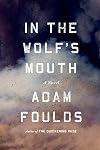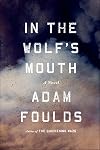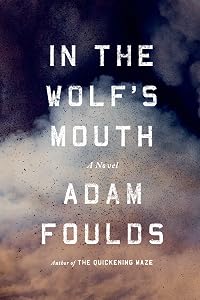
In the Wolf's Mouth
by Adam Foulds
On This Page
Description
"A new novel, set in North Africa and Sicily at the end of World War II, by the author Julian Barnes called one of the best British writers to emerge in the last decade"--Tags
Recommendations





Member Reviews
Reading Adam Foulds’s new novel In the Wolf’s Mouth, I was reminded of literary movements like Oulipo, which explored the concept of ‘potential literature’.
Don’t get me wrong: it’s not that the novel is particularly experimental. It’s the ‘potential’ aspect that stuck in my head. In the world of Oulipo and others, the emphasis was more on the creation of new possibilities, rather than the actual execution of those ideas. In the Wolf’s Mouth is in some ways a potential novel. It sets up a scenario involving multiple characters and storylines, and then leaves those narratives deliberately unconnected, the potential deliberately unfulfilled. It’s a deliberate choice, and there are very clear reasons for it, making it show more an interesting book to read and think about.
First, a word on those different narratives. We start with two rural Sicilians in pre-war Sicily, and then switch for the bulk of the book to the stories of two young Allied soldiers in World War II. Italian-American infantryman Ray Marfione marches across Italy, watches his friends die, and gets badly lost, both spiritually and geographically, while English intelligence officer Will Walker blunders ineffectually across North Africa and Italy.
These characters, Ray and Will, constantly threaten to become protagonists, but never actually do. They lurch from place to place, constantly at the mercy of unseen forces.
Will tries to take bold action, but is frustrated by incompetent and cowardly superior officers. In north Africa, for example, he wants to hold the French colonial government accountable for imprisoning local people in a filthy underground pit called the ‘fish pond’. But his captain talks evasively of the balance of power, and tells him to write up a report. Later, he makes negotiations with local leaders to have the area join the British Empire, but is told that the British are pulling out.
As for Ray, he spends most of the war watching people get maimed and blown up. He threatens to have a deep friendship with a fellow soldier, but they are separated. He hides out in the house of a local Italian prince, and almost has an affair with the prince’s daughter.
The only people who are real protagonists are those rural Sicilians we met right at the beginning – Angilu and Ciro, a shepherd and a Mafioso. Their lives are intertwined, even though one of them goes to America and back, and it’s these two who meet again at the end of the book, with dramatic consequences.
The British and the Americans, on the other hand, are just passing through. Ray and Will both meet the prince for whom Angilu now works, and Will threatens to have Ciro arrested, but they have little real impact on the world of the people whose country they’ve invaded. This is a story that belongs to the local people, not the invaders, just as the land belonged to them before, and will continue to belong to them long after the armies and tanks have departed.
By telling us so much of Ray and Will’s story, and then depriving us of the central role I came to expect of them, Foulds at first left me a little disappointed at the ending, but then when I thought about it some more, I saw what he had done and why he had done it.
It’s a clever strategy, although not without risk: the Daily Mail reviewer concluded that the book lacked narrative drive, and thought that “another draft might have made it a whole lot better.”
I can see why he thought that, but I think Foulds probably went through many drafts, and shaped his story very carefully and deliberately to portray war in the way he saw it. The end result was a book that gave me a fresh perspective on a very old conflict, which I think is something of an achievement. show less
Don’t get me wrong: it’s not that the novel is particularly experimental. It’s the ‘potential’ aspect that stuck in my head. In the world of Oulipo and others, the emphasis was more on the creation of new possibilities, rather than the actual execution of those ideas. In the Wolf’s Mouth is in some ways a potential novel. It sets up a scenario involving multiple characters and storylines, and then leaves those narratives deliberately unconnected, the potential deliberately unfulfilled. It’s a deliberate choice, and there are very clear reasons for it, making it show more an interesting book to read and think about.
First, a word on those different narratives. We start with two rural Sicilians in pre-war Sicily, and then switch for the bulk of the book to the stories of two young Allied soldiers in World War II. Italian-American infantryman Ray Marfione marches across Italy, watches his friends die, and gets badly lost, both spiritually and geographically, while English intelligence officer Will Walker blunders ineffectually across North Africa and Italy.
These characters, Ray and Will, constantly threaten to become protagonists, but never actually do. They lurch from place to place, constantly at the mercy of unseen forces.
Will tries to take bold action, but is frustrated by incompetent and cowardly superior officers. In north Africa, for example, he wants to hold the French colonial government accountable for imprisoning local people in a filthy underground pit called the ‘fish pond’. But his captain talks evasively of the balance of power, and tells him to write up a report. Later, he makes negotiations with local leaders to have the area join the British Empire, but is told that the British are pulling out.
As for Ray, he spends most of the war watching people get maimed and blown up. He threatens to have a deep friendship with a fellow soldier, but they are separated. He hides out in the house of a local Italian prince, and almost has an affair with the prince’s daughter.
The only people who are real protagonists are those rural Sicilians we met right at the beginning – Angilu and Ciro, a shepherd and a Mafioso. Their lives are intertwined, even though one of them goes to America and back, and it’s these two who meet again at the end of the book, with dramatic consequences.
The British and the Americans, on the other hand, are just passing through. Ray and Will both meet the prince for whom Angilu now works, and Will threatens to have Ciro arrested, but they have little real impact on the world of the people whose country they’ve invaded. This is a story that belongs to the local people, not the invaders, just as the land belonged to them before, and will continue to belong to them long after the armies and tanks have departed.
By telling us so much of Ray and Will’s story, and then depriving us of the central role I came to expect of them, Foulds at first left me a little disappointed at the ending, but then when I thought about it some more, I saw what he had done and why he had done it.
It’s a clever strategy, although not without risk: the Daily Mail reviewer concluded that the book lacked narrative drive, and thought that “another draft might have made it a whole lot better.”
I can see why he thought that, but I think Foulds probably went through many drafts, and shaped his story very carefully and deliberately to portray war in the way he saw it. The end result was a book that gave me a fresh perspective on a very old conflict, which I think is something of an achievement. show less
This is an intriguing and complex story set in North Africa and Sicily during the Second World War. A fractured and in places visceral narrative follows and eventually links four characters from different worlds through the chaos of war, and the politics of the aftermath. Powerful stuff.
Ratings
Members
- Recently Added By
Lists

Walter Scott Prize Winners and Shortlist
66 works; 6 members

THE WAR ROOM
813 works; 24 members
Author Information

8+ Works 1,096 Members
Adam Foulds was born in 1974 and lives in south London. In 2001 he graduated from the Creative Writing MA at the University of East Anglia. In 2007 he won a Betty Trask Award for The Truth About These Strange Times and two years later, in 2009, his novel The Quickening Maze was shortlisted for the Booker Prize. (Bowker Author Biography)
Awards and Honors
Distinctions
Common Knowledge
- Canonical title
- In the Wolf's Mouth
- Original publication date
- 2014
Classifications
Statistics
- Members
- 93
- Popularity
- 345,764
- Reviews
- 2
- Rating
- (3.28)
- Languages
- English, French
- Media
- Paper, Audiobook, Ebook
- ISBNs
- 19
- ASINs
- 2