On This Page
Description
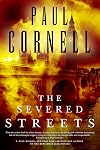
"Desperate to find a case to justify the team's existence, with budget cuts and a police strike on the horizon, Quill thinks he's struck gold when a cabinet minister is murdered by an assailant who wasn't seen getting in or out of his limo. A second murder, that of the Commissioner of the Metropolitan Police, presents a crime scene with a message...identical to that left by the original Jack the Ripper. The new Ripper seems to have changed the MO of the old completely: he's only killing rich show more white men. The inquiry into just what this supernatural menace is takes Quill and his team into the corridors of power at Whitehall, to meetings with MI5, or 'the funny people' as the Met call them, and into the London occult underworld. They go undercover to a pub with a regular evening that caters to that clientele, and to an auction of objects of power at the Tate Modern. Meanwhile, the Ripper keeps on killing and finally the pattern of those killings gives Quill's team clues towards who's really doing this..."-- show lessTags
Recommendations

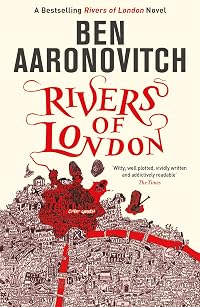
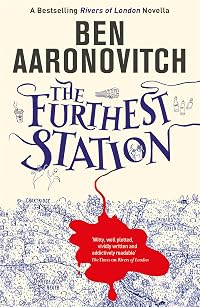
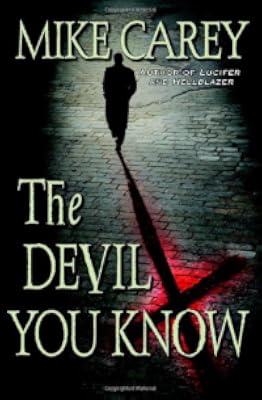
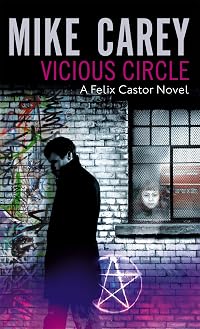


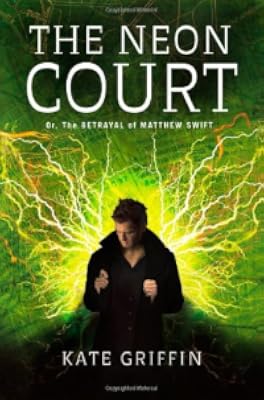
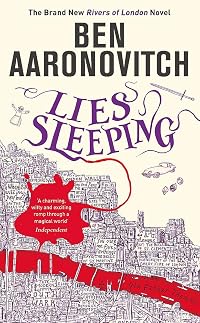

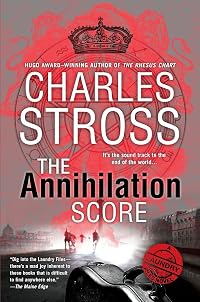

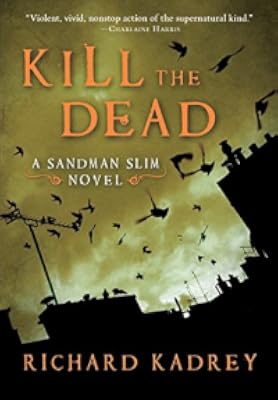




Member Recommendations
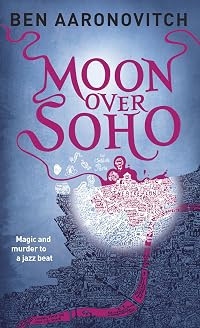
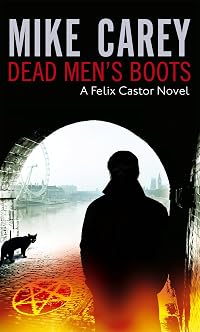
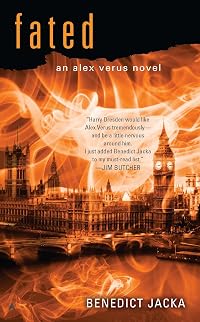
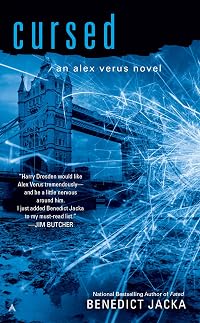
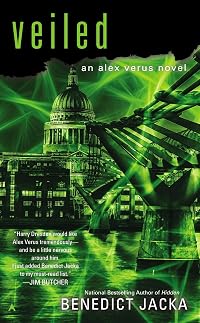
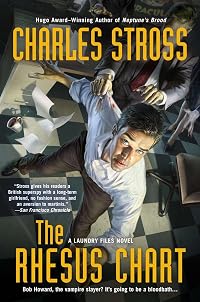
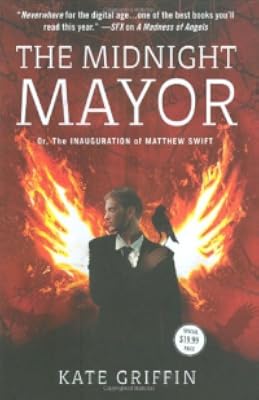
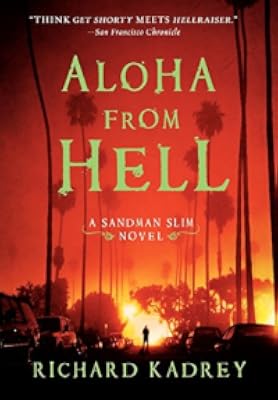
LongDogMom Both series feature British police who deal with supernatural crime and both are more creative and well written than the average urban fantasy
20
LongDogMom British supernatural mystery dealing with the hidden world
Member Reviews
I found "The Severed Streets" to be a surprisingly brutal book. It goes beyond the "Old Bill vs Old Nick on the West Ham Pitch" feel of the first book "London Falling" and crosses the boundary from Urban Fantasy to real Horror.
It continues with the unconventional police unit, all of whom have been gifted with The Sight - the ability to see the magic associated with Old London and used by members of Underground London. This magical community is not glamorous. It's filled with the poverty, grief and sacrifice that are the price paid for using London's magic.
The London at the centre of the magic in this book is very different in tone from the London in Ben Aaronovitch's "Rivers Of London" series. It makes Peter Grant's London seem calm show more and hopeful. The London of "The Severed Streets" is a meat-grinder city, where people's hopes and fears are used to keep them in line while they feed more power to the people at the top. It's a place of desperation, punishment and betrayal.
The plot, which involves an unstoppable supernatural killer that slices up its victims with a supernatural razor, is powered by a strong pulse of contemporary British politics - circa 2014 but it still sounds current - with the police being cut and division being ramped up via social media and street protests and counter-protests to fuel a right-wing coup. The motivation for the coup would fit the current government. The main architect of the coup wants to replace Parliament with more direct control "because what the people in this country need is someone to tell them what to think".
The book is well-written. The characters are strong. The magic world is credible. I found the injection of Neil Gaiman into the novel as a character with an active role in the plot distracting and unnecessary. It seemed like fandom to me. Maybe it would have worked better if I was a Gaiman fan.
I felt the book lagged a little in the middle. I was just starting to feel bogged down in exposition of the crime and the culture when the big surprise happened, the tone got darker and I felt like I'd just crested the top of the rollercoaster and was falling to fast to do anything but hold on.
I found "The Severed Streets" to be a deeply depressing book, soaked in sadness. The Shadow Police themselves are a major source of grief and depression. They deceive each other, distrust each other, despise themselves for the deceit and bemoan the distrust. They are reckless and desperate and well out of their depth.
The overall tone of the book took me back to an explanation of sin that a Jesuit Priest once gave me. He said it starts as a loss of grace. It becomes an absence of grace. It peaks with an inability even to recognise grace. By grace, he meant joy/love/hope/, the things God gives us to help us live a worthwhile life. It seems to me that this book is about the loss of grace, especially by the Shadow Police. Some lose all of it, some have grace eroded but not only does no one thrive but the possibility of a grace-filled life has become nothing but an only partially effective self-deception.
I listened to the audiobook version which was skilfully narrated by Damian Lynch. Click on the SoundCloud link below to hear a sample. show less
It continues with the unconventional police unit, all of whom have been gifted with The Sight - the ability to see the magic associated with Old London and used by members of Underground London. This magical community is not glamorous. It's filled with the poverty, grief and sacrifice that are the price paid for using London's magic.
The London at the centre of the magic in this book is very different in tone from the London in Ben Aaronovitch's "Rivers Of London" series. It makes Peter Grant's London seem calm show more and hopeful. The London of "The Severed Streets" is a meat-grinder city, where people's hopes and fears are used to keep them in line while they feed more power to the people at the top. It's a place of desperation, punishment and betrayal.
The plot, which involves an unstoppable supernatural killer that slices up its victims with a supernatural razor, is powered by a strong pulse of contemporary British politics - circa 2014 but it still sounds current - with the police being cut and division being ramped up via social media and street protests and counter-protests to fuel a right-wing coup. The motivation for the coup would fit the current government. The main architect of the coup wants to replace Parliament with more direct control "because what the people in this country need is someone to tell them what to think".
The book is well-written. The characters are strong. The magic world is credible. I found the injection of Neil Gaiman into the novel as a character with an active role in the plot distracting and unnecessary. It seemed like fandom to me. Maybe it would have worked better if I was a Gaiman fan.
I felt the book lagged a little in the middle. I was just starting to feel bogged down in exposition of the crime and the culture when the big surprise happened, the tone got darker and I felt like I'd just crested the top of the rollercoaster and was falling to fast to do anything but hold on.
I found "The Severed Streets" to be a deeply depressing book, soaked in sadness. The Shadow Police themselves are a major source of grief and depression. They deceive each other, distrust each other, despise themselves for the deceit and bemoan the distrust. They are reckless and desperate and well out of their depth.
The overall tone of the book took me back to an explanation of sin that a Jesuit Priest once gave me. He said it starts as a loss of grace. It becomes an absence of grace. It peaks with an inability even to recognise grace. By grace, he meant joy/love/hope/, the things God gives us to help us live a worthwhile life. It seems to me that this book is about the loss of grace, especially by the Shadow Police. Some lose all of it, some have grace eroded but not only does no one thrive but the possibility of a grace-filled life has become nothing but an only partially effective self-deception.
I listened to the audiobook version which was skilfully narrated by Damian Lynch. Click on the SoundCloud link below to hear a sample. show less
London is in turmoil: mobs are patrolling the streets, and an MP is somehow brutally murdered in his car, surrounded by furious protesters, with the CCTV cameras showing that no one entered or left the car in which he was being driven home – at least no one visible to the general public or the ordinary police – and now the Shadow Police under Detective Inspector James Quill have a new case. Very soon further gruesome killings of rich white men follow, and the team have to use all their resources to find the culprit behind the killings while trying to stay alive ...
I had high hopes for this series after reading London Falling last year, with its combination of ordinary police procedural and urban fantasy elements, but I have to say show more this novel fell entirely flat of my expectations. Despite two gruesome murders being committed within the first 50 pages, I found the plot boring, the off-the-wall fantasy components silly and difficult to swallow, and the narrative and characters hard to engage with; occasionally I also had problems simply understanding what an individual character was talking about as (1) the syntax didn't make much sense and (2) certain key moments from the first volume were referenced, but the author didn't provide an explanation and it's taken for granted that readers will be familiar with events and terms. Once past page 100 the pace appeared to pick up a little but by then I had lost complete interest and gave up on page 126. It's possible that the novel improves in the second half of the book, but I doubt it. I don't think I'll continue with the series. show less
I had high hopes for this series after reading London Falling last year, with its combination of ordinary police procedural and urban fantasy elements, but I have to say show more this novel fell entirely flat of my expectations. Despite two gruesome murders being committed within the first 50 pages, I found the plot boring, the off-the-wall fantasy components silly and difficult to swallow, and the narrative and characters hard to engage with; occasionally I also had problems simply understanding what an individual character was talking about as (1) the syntax didn't make much sense and (2) certain key moments from the first volume were referenced, but the author didn't provide an explanation and it's taken for granted that readers will be familiar with events and terms. Once past page 100 the pace appeared to pick up a little but by then I had lost complete interest and gave up on page 126. It's possible that the novel improves in the second half of the book, but I doubt it. I don't think I'll continue with the series. show less
With Mora Losley dead and the Smiling Man nowhere to be seen, our favorite team of policemen are learning to survive while being able to see the darker corners of London. And just when they start wondering when they will find a new case that will allow the unit to keep existing. And the case finds them - a man is dead and there is no way it happened in any natural way - eviscerated on the back seat of a car with only his driver presented. And the chase is back on.
It was inevitable that Cornell will tackle the Jack the Ripper story - a series set in London and dealing with things that had existed for a while just cannot skip that topic. Most of the authors would have gone for the easy options - the topic lends itself to enough show more interpretations. Cornell ends up naming Jack but by the time it happens, we do not really care - it is irrelevant to this story. Jack is a center figure and at the same time just a side character. And the whole story is upside down - from the victims being all male and mostly affluent to the killer being a ghost (or something).
By the end a lot of people will end up dead, something very old will be discovered again and Neil Gaiman will become a side character, rooting the story in the now and here and making so many small connections between imagination and reality. It could have been anyone but just the name of Gaiman is bringing thoughts of impossibility and danger ("Neverwhere" is not just mentioned but also referenced). It was a nice idea and I loved the execution of it - it is subtle and even though we see him only a few times, he feels real.
One of the biggest issues in the contemporary fantasy (and comics) is that noone stays dead. And usually there isn't enough back history to allow you to see the dead man coming back. Cornell does the opposite - by the time we have a dead body we care about, it is well established that there is a way to get someone back - only once a century. It is a nice setup (and way too many people end up needing it) and it works at the end - both because we really do not know what will be done (although it is not so hard to guess) and because we are know that someone will turn up alive.
The first novel was paced a lot better than this one - the last chapters here are deliberately slowed down with time jumps in all directions in an attempt to keep the story surprising to the end. But combined with a man outside of the normal world and it sounds in places as a way to go around tying up loose ends - so much easier for someone to just feed the information to someone than someone to discover it.
Cornell's London is still fascinating and I will love to return to it - for the city, for the team that found themselves changed by thee end of the novel, for the Smiling Man. And I cannot stop wondering of the ultimate villain's profession here was not a commentary on our world. All of the dead men professions as well come to think of it. show less
It was inevitable that Cornell will tackle the Jack the Ripper story - a series set in London and dealing with things that had existed for a while just cannot skip that topic. Most of the authors would have gone for the easy options - the topic lends itself to enough show more interpretations. Cornell ends up naming Jack but by the time it happens, we do not really care - it is irrelevant to this story. Jack is a center figure and at the same time just a side character. And the whole story is upside down - from the victims being all male and mostly affluent to the killer being a ghost (or something).
By the end a lot of people will end up dead, something very old will be discovered again and Neil Gaiman will become a side character, rooting the story in the now and here and making so many small connections between imagination and reality. It could have been anyone but just the name of Gaiman is bringing thoughts of impossibility and danger ("Neverwhere" is not just mentioned but also referenced). It was a nice idea and I loved the execution of it - it is subtle and even though we see him only a few times, he feels real.
One of the biggest issues in the contemporary fantasy (and comics) is that noone stays dead. And usually there isn't enough back history to allow you to see the dead man coming back. Cornell does the opposite - by the time we have a dead body we care about, it is well established that there is a way to get someone back - only once a century. It is a nice setup (and way too many people end up needing it) and it works at the end - both because we really do not know what will be done (although it is not so hard to guess) and because we are know that someone will turn up alive.
The first novel was paced a lot better than this one - the last chapters here are deliberately slowed down with time jumps in all directions in an attempt to keep the story surprising to the end. But combined with a man outside of the normal world and it sounds in places as a way to go around tying up loose ends - so much easier for someone to just feed the information to someone than someone to discover it.
Cornell's London is still fascinating and I will love to return to it - for the city, for the team that found themselves changed by thee end of the novel, for the Smiling Man. And I cannot stop wondering of the ultimate villain's profession here was not a commentary on our world. All of the dead men professions as well come to think of it. show less
This sequel to London Falling finds our quartet of police officers newly awakened to the supernatural investigating a series of horrific murders carried out in the persona of Jack the Ripper, against the background of an Occupy-like unrest in London and an impending police strike. Two of the protagonists were also busy trying to stay out of Hell/get a parent out of Hell. Neil Gaiman shows up, playing a role I thought too clever by half. I sensed Cornell’s TV background in the late-in-the-book adoption of flashbacks as a device to increase suspense. However, these are overall minor quibbles given the otherwise intriguing story, which managed to maintain a sense of dread while adding worldbuilding details as the protagonists learned show more more about magic at a pace that kept the reader’s frustration in line with their own—they needed to learn more, but that’s what investigation is about. This isn’t a happy book, but I found it satisfying, not least because the protagonists—especially their leader Quinn—had the exact feeling of duty to law and order that I appreciate, much like Sam Vimes (without the surrounding optimism). show less
Gah! I don't know what to think! Can. Not. Rate.
Imagine you are reading a developed, dark mystery series, tracking a killer brutally slashing his victims until they die. Say you are following around Matthew Scudder as he walks the streets of New York City, questioning prostitutes, greasing a palm or two and generally throwing back a whiskey whenever able. Then imagine Scudder gets a lead, goes to the meet in a dark alley, and discovers the informant is James Patterson. Worse, Patterson lurks in the corner of the alley, watching while some toughs beat the stuffing out of Scudder.
Cornell did something similar in The Severed Streets, and for the life of me, I cannot let it go. (for future carol., I think it was Neil Gaiman . It’s a show more messy, fourth-wall-breaking action that destroys the both the atmosphere of danger and the serious emotional tone of the story. Even worse, the guest star reappears not one but twice later, with an implication of involvement in future events.
Until that appearance, The Severed Streets was shaping up to be a notable improvement over the first book, London Falling (my review). It begins when London’s supernatural police team hears about a messy locked-car murder of a prominent politician and is sure the details fit one of their special cases. Investigation of the scene proves they are right, but as they start to make extensions into the hidden world of London’s occult practitioners, another message leads them to consider Jack the Ripper as prime suspect. The team will have to go undercover chasing leads from seedy bars to Parliament in order to find the cause of the killings, and the increase in London’s unrest.
Narrative is limited third person, switching primarily between the four members of the team: lead Detective Inspector James Quill, undercover specialists Kev Sefton and Tony Costain, and support from intelligence analyst Ross, but occasionally including viewpoints from victims, informants and suspects. As a device, I generally dislike it, feeling it’s a cheap technique to develop tension and provide information in one easy shot, but Cornell does it better here. Congruity is obtained by focusing primarily on Quill and Ross, and by limiting the non-team viewpoints to a few pages.
“So today was going to be a bit different and he was now in the mental space he associated with being undercover, lightly wearing a role which could basically be described as ‘definitely not a policeman.’”
The writing stood out this time. At one point early on I had thought of taking notes, as several phrases impressed me, but talked myself out of it on the theory I would re-read. Since re-reading is most definitely out, I’ll have to resort to skimming. Such a good job of developing atmosphere, complexity of emotion and the London setting. Sigh. There is a sense of humor in the mix, but it is the dark humor of someone who sees too much of the callous, selfish side of humanity. I certainly smiled at points, but as I’m a practitioner of that school of humor, it appeals. I did think it avoided being in poor taste, such as victim-mocking.
“A few of them were, even now, giving each other high fives and laughing. But most of them looked grim. Quill looked at their emotion and again felt distant copper annoyance at bloody people. He used to joke that without people his job would be a lot easier. But now he supposed he couldn’t even say that.”
There’s political undertones in the setting, with masked protestors appearing in flash mobs throughout the city. Quite a bit of the vernacular is British slang and British police speech, so it takes a little extra though process if you are an ignorant American. It wasn’t incomprehensible, however.
So, do I recommend it? I don’t know. Besides breaking that fourth wall, there’s a bit that was an emotional shocker. I guess that’s a compliment, right, an author that can evoke that kind of emotion? It really was a four star plus read until that guest came along and ruined the world-building. I can’t imagine what Cornell was thinking, except perhaps that he could treat a two-book UF mystery series like a Dr. Who special? I don’t know, but can attest that it didn’t work.
a gimmick for a gimmick: show less
Imagine you are reading a developed, dark mystery series, tracking a killer brutally slashing his victims until they die. Say you are following around Matthew Scudder as he walks the streets of New York City, questioning prostitutes, greasing a palm or two and generally throwing back a whiskey whenever able. Then imagine Scudder gets a lead, goes to the meet in a dark alley, and discovers the informant is James Patterson. Worse, Patterson lurks in the corner of the alley, watching while some toughs beat the stuffing out of Scudder.
Cornell did something similar in The Severed Streets, and for the life of me, I cannot let it go. (for future carol., I think it was
Until that appearance, The Severed Streets was shaping up to be a notable improvement over the first book, London Falling (my review). It begins when London’s supernatural police team hears about a messy locked-car murder of a prominent politician and is sure the details fit one of their special cases. Investigation of the scene proves they are right, but as they start to make extensions into the hidden world of London’s occult practitioners, another message leads them to consider Jack the Ripper as prime suspect. The team will have to go undercover chasing leads from seedy bars to Parliament in order to find the cause of the killings, and the increase in London’s unrest.
Narrative is limited third person, switching primarily between the four members of the team: lead Detective Inspector James Quill, undercover specialists Kev Sefton and Tony Costain, and support from intelligence analyst Ross, but occasionally including viewpoints from victims, informants and suspects. As a device, I generally dislike it, feeling it’s a cheap technique to develop tension and provide information in one easy shot, but Cornell does it better here. Congruity is obtained by focusing primarily on Quill and Ross, and by limiting the non-team viewpoints to a few pages.
“So today was going to be a bit different and he was now in the mental space he associated with being undercover, lightly wearing a role which could basically be described as ‘definitely not a policeman.’”
The writing stood out this time. At one point early on I had thought of taking notes, as several phrases impressed me, but talked myself out of it on the theory I would re-read. Since re-reading is most definitely out, I’ll have to resort to skimming. Such a good job of developing atmosphere, complexity of emotion and the London setting. Sigh. There is a sense of humor in the mix, but it is the dark humor of someone who sees too much of the callous, selfish side of humanity. I certainly smiled at points, but as I’m a practitioner of that school of humor, it appeals. I did think it avoided being in poor taste, such as victim-mocking.
“A few of them were, even now, giving each other high fives and laughing. But most of them looked grim. Quill looked at their emotion and again felt distant copper annoyance at bloody people. He used to joke that without people his job would be a lot easier. But now he supposed he couldn’t even say that.”
There’s political undertones in the setting, with masked protestors appearing in flash mobs throughout the city. Quite a bit of the vernacular is British slang and British police speech, so it takes a little extra though process if you are an ignorant American. It wasn’t incomprehensible, however.
So, do I recommend it? I don’t know. Besides breaking that fourth wall, there’s a bit that was an emotional shocker. I guess that’s a compliment, right, an author that can evoke that kind of emotion? It really was a four star plus read until that guest came along and ruined the world-building. I can’t imagine what Cornell was thinking, except perhaps that he could treat a two-book UF mystery series like a Dr. Who special? I don’t know, but can attest that it didn’t work.
a gimmick for a gimmick: show less
Amazing work, although it's definitely a second book in a series. While not impossible, 89% of the nuance and context of the characters grew from that book and their initial encounters with the supernatural. Thus, I recommend you read Paul Cornell's London Falling first.
That said, this book took unexpected twists and turns both in the 2nd and 3rd acts that surprised this long-time reader of fantasy, so that alone was worth the price of admission for me.
Also, as a long-time fan of Neil Gaiman the author, seeing him as a secondary character herein was amusing to fascinating to....well, to say more ruins some very fun reading. Go do so. NOW.
That said, this book took unexpected twists and turns both in the 2nd and 3rd acts that surprised this long-time reader of fantasy, so that alone was worth the price of admission for me.
Also, as a long-time fan of Neil Gaiman the author, seeing him as a secondary character herein was amusing to fascinating to....well, to say more ruins some very fun reading. Go do so. NOW.
from Jordan:
The Severed Streets is the second book in Paul Cornell's Shadow Police series and the sequel to my previously reviewed London Falling. It follows the story of four London Metropolitan police officers who, in the course of the previous novel, gain "The Sight," which allows them to see the magical world that overlaps London. While you definitely don't have to read London Falling first -- it brings you up to speed on everything fairly quickly -- it definitely enriches the experience of The Severed Streets.
While to describe the plot in much detail would spoil the story, the officers delve deeper into the magical underworld amongst the many storied locations of London. They're on the trail of a mystical serial killer hiding among show more a group of protesters called the Toffs. The Toffs are a group roughly parallel to the Occupy movement, dressed in masks and capes similar to the Guy Fawkes/V for Vendetta masks. Throughout the novel, they struggle with the Toffs social media inspired flash mobs being used as a distraction for the killer's murders.
The Severed Streets' highs don't quite match London Falling's, but I think that can be at least partially attributed to the fact that the novelty of the concept is now well established. It's still a fun read and I felt myself compelled to keep reading throughout the book. Gone are the lulls in plot that occurred in London Falling. The characters, while retaining what makes them successful, show enough growth to continue being interesting. The books are still far and away better than a lot of the Urban Fantasy series that I've dipped my toe in.
For those unfamiliar, Cornell has a long history of writing both well-reviewed TV episodes for and novels about Doctor Who. He also has written a few standalone novels and a number of fan-favorite comic book series, including the currently running, critically successful Wolverine series. show less
The Severed Streets is the second book in Paul Cornell's Shadow Police series and the sequel to my previously reviewed London Falling. It follows the story of four London Metropolitan police officers who, in the course of the previous novel, gain "The Sight," which allows them to see the magical world that overlaps London. While you definitely don't have to read London Falling first -- it brings you up to speed on everything fairly quickly -- it definitely enriches the experience of The Severed Streets.
While to describe the plot in much detail would spoil the story, the officers delve deeper into the magical underworld amongst the many storied locations of London. They're on the trail of a mystical serial killer hiding among show more a group of protesters called the Toffs. The Toffs are a group roughly parallel to the Occupy movement, dressed in masks and capes similar to the Guy Fawkes/V for Vendetta masks. Throughout the novel, they struggle with the Toffs social media inspired flash mobs being used as a distraction for the killer's murders.
The Severed Streets' highs don't quite match London Falling's, but I think that can be at least partially attributed to the fact that the novelty of the concept is now well established. It's still a fun read and I felt myself compelled to keep reading throughout the book. Gone are the lulls in plot that occurred in London Falling. The characters, while retaining what makes them successful, show enough growth to continue being interesting. The books are still far and away better than a lot of the Urban Fantasy series that I've dipped my toe in.
For those unfamiliar, Cornell has a long history of writing both well-reviewed TV episodes for and novels about Doctor Who. He also has written a few standalone novels and a number of fan-favorite comic book series, including the currently running, critically successful Wolverine series. show less
Members
- Recently Added By
Lists

Civil Service Spec Fic
36 works; 4 members
London Urban Fantasy
33 works; 6 members

Books Read in 2017
4,249 works; 129 members
Author Information

301+ Works 8,813 Members
Some Editions
Awards and Honors
Distinctions
Series

Common Knowledge
- Canonical title
- The Severed Streets
- Original title
- The Severed Streets
- Original publication date
- 2014-05-20
- People/Characters
- James Quill; Lisa Ross; Kevin Sefton; Tony Costain; Neil Gaiman; Rebecca Lofthouse
- Important places
- London, England, UK
- Dedication
- For Neil, with love and thanks
- First words
- London in the summer.
- Last words
- (Click to show. Warning: May contain spoilers.)The sign had read: It's everyone who ever lived in London.
- Blurbers
- Wilson, F. Paul; Colgan, Jenny
- Original language
- English
Classifications
Statistics
- Members
- 381
- Popularity
- 82,367
- Reviews
- 27
- Rating
- (3.81)
- Languages
- English
- Media
- Paper, Audiobook, Ebook
- ISBNs
- 8
- UPCs
- 1
- ASINs
- 6