On This Page
Description
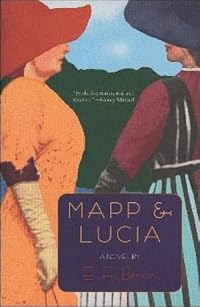
Part of a series of novels that center around a pair of high-society matrons, Miss Mapp introduces one of the most gruff and deliciously malicious characters every to grace the literary canon. Readers who love to wallow in the spite, hatefulness, and backstabbing of the doyennes of the upper classes will delight in this book!.
Tags
Recommendations
























Member Recommendations
Quaint1 A continuation of the Tilling series
Member Reviews
It is no wonder that, when E.F. Benson decided to further the adventures of his divine Emmeline "Lucia" Lucas, he brought her to the town of Tilling. For here, in the first (pre-Lucia) Tilling novel, everything is absurd and hilarious in equal measure. Indeed, Lucia so o'erwhelms the measure in the later books that it is worth settling in to Miss Mapp to recall how perfect Benson's comic creations are, from the doughty title character to "quaint" (read: queer) Irene, the entire town ready to burst into a frenzy over the hoarding of corned beef or the origin of a recipe for "red currant fool".
My comic ideal.
My comic ideal.
Miss Elizabeth Mapp -- malicious, snooping, miserly and snobbish -- serves as the social center of Tilling, a thinly veiled portrait of the English town of Rye, Sussex, in the 1920s. Determined to maintain her position and to one-up her neighbors, Godiva Plaistow and Susan Poppit, MBE, Miss Mapp resents others' success and devotes hours to planning how to elevate herself. Aside from social-climbing, bridge parties and gardening, Miss Mapp's only other concern is the long-shot scheme of entrapping her neighbor, an Army captain and middle-aged bachelor named Benjamin Flint, into matrimony.
Sounds like an outdated bore? In fact, E.F. Benson's biting satire on upper-middle-class pursuits proves hilarious, sort of a more cynical version of a show more P.G. Wodehouse novel. If you're a fan of M.C. Beaton's Agatha Raisin series or of Julian Fellowes' Snobs, you'll love all of the books in the Mapp & Lucia series. show less
Sounds like an outdated bore? In fact, E.F. Benson's biting satire on upper-middle-class pursuits proves hilarious, sort of a more cynical version of a show more P.G. Wodehouse novel. If you're a fan of M.C. Beaton's Agatha Raisin series or of Julian Fellowes' Snobs, you'll love all of the books in the Mapp & Lucia series. show less
I've read the entire Mapp & Lucia series a few times and have come to the conclusion that Miss Mapp is my favourite character. Such a crafty mischief-maker! The machinations and intrigues of the residents of Tilling are hilariously entertaining. Major Flint and Captain Puffin are known to have bibulous disagreements but it was Puffin's belligerent confrontation with Miss Mapp that made me laugh so hard it brought tears to my eyes: "You say I'm drunk, do you? Well I say you're drunk."
On this nth reading, I'm awarding 5 stars yet again.
On this nth reading, I'm awarding 5 stars yet again.
Hilarious episodes about the goings-on in early twentieth-century Tilling, a respectable English village. The title character, Miss Mapp, relentlessly spies from the bow window in her garden room to keep up on her neighbors as they make their rounds. All are ceaselessly busy, as is Miss Mapp, minding each others’ business. That, along with golf, bridge, and supper parties, leaves them no time to do anything else.
Underlying Benson’s humor is the sad reality that beneath the respectable facade, the same human nature seethes as in the hottest war zone. Despite this unsettling insight, I’ll probably read more of the Mapp and Lucia books.
Underlying Benson’s humor is the sad reality that beneath the respectable facade, the same human nature seethes as in the hottest war zone. Despite this unsettling insight, I’ll probably read more of the Mapp and Lucia books.
Forty-ish Elizabeth Mapp, much like the heroine of the last book in this series, Lucia, places great stock in the latest news in her village of Tilling. The first person in possession of the latest tidbits has a tactical advantage over her neighbors. Therefore, she maintains a vigilant surveillance of her neighborhood from her garden room window, where “anger and the gravest suspicions about everybody had kept her young and on the boil.”
Written in 1922, there is very little here to remind readers of the horrid war that effected so many in those years following World War I. By design, this is a light-hearted, humorous look at life in an English village and reading it at this point in time gives the reader a glimpse of a time long ago show more when people took time for tea, had servants, found pleasure and importance everyday occurrences and lived an entirely different kind of life.
Miss Mapp’s primary nemesis is her fellow village resident Godiva Plaistow and the two carry on a hilarious give and take relationship as they try to one-up each other. The main thrust of their one-upmanship occurs as they vie against each other to out-create various dresses. In addition, directly across from Miss Mapp reside two bumbling gentleman, retired military men, who enjoy daily golf outings and take pleasure in each other’s company over a drink or two in the evening.
Every morning at the appointed time village residents fill the streets with their market baskets ready for their purchases, which according to accepted mores, must be kept covered so that no one knows what’s been procured. And Miss Mapp certainly follows all the rules and makes sure that others do so as well. She meets her match, however, when the Contessa comes to town:
”Miss Mapp’s head was in a whirl. The Contessa said in the loudest possible voice all that everybody else only whispered; she displayed (in her basket) all that everybody else covered up with thick layers of paper. If Miss Mapp had only guessed that the Contessa would have a market basket, she would have paraded the High Street with a leg of mutton protruding from one end and a pair of Wellington boots from the other…But who could have suspected that a Contessa…”
It’s hard to over-emphasize the power Miss Mapp has over her fellow village residents or the skill Benson displayed in creating dialogue that dripped with irony and humor. Absolutely delightful. show less
Written in 1922, there is very little here to remind readers of the horrid war that effected so many in those years following World War I. By design, this is a light-hearted, humorous look at life in an English village and reading it at this point in time gives the reader a glimpse of a time long ago show more when people took time for tea, had servants, found pleasure and importance everyday occurrences and lived an entirely different kind of life.
Miss Mapp’s primary nemesis is her fellow village resident Godiva Plaistow and the two carry on a hilarious give and take relationship as they try to one-up each other. The main thrust of their one-upmanship occurs as they vie against each other to out-create various dresses. In addition, directly across from Miss Mapp reside two bumbling gentleman, retired military men, who enjoy daily golf outings and take pleasure in each other’s company over a drink or two in the evening.
Every morning at the appointed time village residents fill the streets with their market baskets ready for their purchases, which according to accepted mores, must be kept covered so that no one knows what’s been procured. And Miss Mapp certainly follows all the rules and makes sure that others do so as well. She meets her match, however, when the Contessa comes to town:
”Miss Mapp’s head was in a whirl. The Contessa said in the loudest possible voice all that everybody else only whispered; she displayed (in her basket) all that everybody else covered up with thick layers of paper. If Miss Mapp had only guessed that the Contessa would have a market basket, she would have paraded the High Street with a leg of mutton protruding from one end and a pair of Wellington boots from the other…But who could have suspected that a Contessa…”
It’s hard to over-emphasize the power Miss Mapp has over her fellow village residents or the skill Benson displayed in creating dialogue that dripped with irony and humor. Absolutely delightful. show less
In the third book of the Make Way For Lucia series, the character of Miss Mapp is the centerpiece. Miss Mapp and the other quirky characters of this novel live in the fictional town of Tilling. Lucia does not appear in this book, as the book is intended to introduce the character of Miss Mapp who will bump heads with Lucia in the next volume.
Once again, we have a small town where the lives of everyone are fodder for gossip and one-upmanship. The difference is that in Lucia, the town of Riseholme revolves around their "Queen", Lucia, where Miss Mapp is the equal of the townsfolk of Tilling, and therefore there is more scheming and backstabbing involved to out maneuver the other residents. And Miss Mapp can be vindictive if she doesn't show more get her way. All of this is done hilariously.
I love the opening line -
"Miss Elizabeth Mapp might have been forty, and she had taken advantage of this opportunity by being just a year or two older."
Miss Mapp's house is situated at the top of a road where she has full view of the residents as they pass by on the street below. She sits behind her curtain with a notebook at her side, making many assumptions about their comings and goings (many of which are incorrect), and these lead to many comical situations. She keeps her eye on her two nearest neighbors, Major Flint and Captain Puffin, as one never knows when they may succumb to her charms. She also keeps an eye on her rival and friend Diva.
""Peace on earth and mercy mild," sang Miss Mapp, holding her head back with her uvula clearly visible. She sat in her usual seat close below the pulpit, and the sun streaming in through a stained-glass window opposite made her face of all colors, like Joseph's coat. Not knowing how it looked from outside, she pictured to herself a sort of celestial radiance coming from within, though Diva, sitting opposite, was reminded of the iridescent hues observable on cold boiled beef. But then, Miss Mapp had registered the fact that Diva's notion of singing alto was to follow the trebles at the uniform distance of a minor third below, so that matters were about square between them."
There are many situations that made me laugh. Miss Mapp is so absurd, that I am looking forward to her meeting Lucia in the next book. Their clashing personalities will make for more fun. I recommend this clever series.
Read July 2013 show less
Once again, we have a small town where the lives of everyone are fodder for gossip and one-upmanship. The difference is that in Lucia, the town of Riseholme revolves around their "Queen", Lucia, where Miss Mapp is the equal of the townsfolk of Tilling, and therefore there is more scheming and backstabbing involved to out maneuver the other residents. And Miss Mapp can be vindictive if she doesn't show more get her way. All of this is done hilariously.
I love the opening line -
"Miss Elizabeth Mapp might have been forty, and she had taken advantage of this opportunity by being just a year or two older."
Miss Mapp's house is situated at the top of a road where she has full view of the residents as they pass by on the street below. She sits behind her curtain with a notebook at her side, making many assumptions about their comings and goings (many of which are incorrect), and these lead to many comical situations. She keeps her eye on her two nearest neighbors, Major Flint and Captain Puffin, as one never knows when they may succumb to her charms. She also keeps an eye on her rival and friend Diva.
""Peace on earth and mercy mild," sang Miss Mapp, holding her head back with her uvula clearly visible. She sat in her usual seat close below the pulpit, and the sun streaming in through a stained-glass window opposite made her face of all colors, like Joseph's coat. Not knowing how it looked from outside, she pictured to herself a sort of celestial radiance coming from within, though Diva, sitting opposite, was reminded of the iridescent hues observable on cold boiled beef. But then, Miss Mapp had registered the fact that Diva's notion of singing alto was to follow the trebles at the uniform distance of a minor third below, so that matters were about square between them."
There are many situations that made me laugh. Miss Mapp is so absurd, that I am looking forward to her meeting Lucia in the next book. Their clashing personalities will make for more fun. I recommend this clever series.
Read July 2013 show less
NOTE: This review applies to the entire Mapp and Lucia series.
This appears to be one of those series that people either love or hate. Set in the early decades of the 20th century, E.F. Benson skewers the frivolous lives of the elite in rural English villages. The heroine is Mrs. Emmeline Lucas, known to all as Lucia (the Italian pronunciation, if you please). Lucia rules the village of Riseholme with an iron fist in a velvet glove, ruthlessly running the social lives of the others in her social class. Despite their occasional resentment and attempts to break free of Lucia's influence, the village invariably finds life gray and boring without their benevolent dictator in residence.
The second book in the series, Miss Mapp, at first show more appears to be a completely unrelated book, as Lucia does not appear and instead the main character is Elizabeth Mapp, a never-married woman "of a certain age" in the village of Tilling. Like Lucia, she rules her social class with a strong will, although with somewhat less grace than her counterpart in Riseholme. The third book, Lucia in London, leaves Mapp and Tilling behind and returns to focus on Lucia, this time on her adventures during the social season in London.
Finally, in Book Four (Mapp and Lucia), the irresistible force (Lucia) meets the immovable object (Mapp) when Lucia decides to move to Tilling. This town is not big enough for both of them to rule, and the schemes and shenanigans that ensue are delightfully sharp and witty. Their tussles continue in the final two books in the series, Lucia's Progress and Trouble for Lucia.
The lives of the people spotlighted in Riseholme and in Tilling are spectacularly shallow. The biggest intrigues involve who is paired with who at the evening bridge games, and gossip is traded freely during the morning marketing, when anyone who is anyone gathers on the High Street with their baskets and their cutting observations. Scarcely a reference is ever made to world wars or depressions, even though both raged throughout the time period of these books. To read such accounts written in a serious manner would be intolerably smug, but Benson's writing is slyly cutting, as he appears to take all of the plotting with the utmost sincerity even while winking at the reader with his asides.
Readers who prefer their heroes and heroines to be a bit less shallow and a bit more kind will find the Lucia series less than enjoyable, as will those readers neither old enough to remember the early 20th century nor with any interest in life among the middle class (being, in those days and in that country, truly in the middle between the poor and working classes on one end and the aristocracy on the other). Those who, like me, enjoy a sharp bite to their fiction will find themselves alternately rooting for the downfall of Mapp and Lucia and cheering their subsequent rise back to prominence. show less
This appears to be one of those series that people either love or hate. Set in the early decades of the 20th century, E.F. Benson skewers the frivolous lives of the elite in rural English villages. The heroine is Mrs. Emmeline Lucas, known to all as Lucia (the Italian pronunciation, if you please). Lucia rules the village of Riseholme with an iron fist in a velvet glove, ruthlessly running the social lives of the others in her social class. Despite their occasional resentment and attempts to break free of Lucia's influence, the village invariably finds life gray and boring without their benevolent dictator in residence.
The second book in the series, Miss Mapp, at first show more appears to be a completely unrelated book, as Lucia does not appear and instead the main character is Elizabeth Mapp, a never-married woman "of a certain age" in the village of Tilling. Like Lucia, she rules her social class with a strong will, although with somewhat less grace than her counterpart in Riseholme. The third book, Lucia in London, leaves Mapp and Tilling behind and returns to focus on Lucia, this time on her adventures during the social season in London.
Finally, in Book Four (Mapp and Lucia), the irresistible force (Lucia) meets the immovable object (Mapp) when Lucia decides to move to Tilling. This town is not big enough for both of them to rule, and the schemes and shenanigans that ensue are delightfully sharp and witty. Their tussles continue in the final two books in the series, Lucia's Progress and Trouble for Lucia.
The lives of the people spotlighted in Riseholme and in Tilling are spectacularly shallow. The biggest intrigues involve who is paired with who at the evening bridge games, and gossip is traded freely during the morning marketing, when anyone who is anyone gathers on the High Street with their baskets and their cutting observations. Scarcely a reference is ever made to world wars or depressions, even though both raged throughout the time period of these books. To read such accounts written in a serious manner would be intolerably smug, but Benson's writing is slyly cutting, as he appears to take all of the plotting with the utmost sincerity even while winking at the reader with his asides.
Readers who prefer their heroes and heroines to be a bit less shallow and a bit more kind will find the Lucia series less than enjoyable, as will those readers neither old enough to remember the early 20th century nor with any interest in life among the middle class (being, in those days and in that country, truly in the middle between the poor and working classes on one end and the aristocracy on the other). Those who, like me, enjoy a sharp bite to their fiction will find themselves alternately rooting for the downfall of Mapp and Lucia and cheering their subsequent rise back to prominence. show less
Members
- Recently Added By
Lists

In and About the 1920s
181 works; 31 members

Books Read in 2020
4,379 works; 123 members

Books Read in 2021
5,361 works; 113 members

Folio Society
831 works; 53 members
Author Information

256+ Works 9,808 Members
Some Editions
Series

Belongs to Publisher Series
Impedimenta (110)
Work Relationships
Is contained in
Contains
Common Knowledge
- Canonical title
- Miss Mapp
- Original publication date
- 1922 (Miss Mapp) (Miss Mapp); 1929 (The Male Impersonator) (The Male Impersonator)
- People/Characters
- Elizabeth Mapp; Godiva Plaistow (Diva); Benjamin Flint (Major Benjy); Richard Puffin; Algernon Wyse; Susan Wyse (Susan Poppit) (show all 13); Isabel Poppit; Kenneth Bartlett (Padre); Evie Bartlett; Irene Coles (Quaint Irene); Withers (Mapp's parlourmaid); Amelia Faraglione (Contessa); Figgis (the Wyses' butler)
- Important places
- Tilling, Hampshire, England, UK; Mallards, Tilling, Hampshire, England, UK; Starlings Cottage, Porpoise Street, Tilling, Hampshire, England, UK
- First words
- Miss Elizabeth Mapp might have been forty, and she had taken advantage of this opportunity by being just a year or two older.
- Last words
- (Click to show. Warning: May contain spoilers.)'Snowdrops, i'fegs!' said he...
Classifications
Statistics
- Members
- 721
- Popularity
- 39,142
- Reviews
- 24
- Rating
- (4.07)
- Languages
- 5 — Catalan, English, French, German, Spanish
- Media
- Paper, Audiobook, Ebook
- ISBNs
- 67
- ASINs
- 17