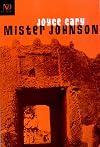
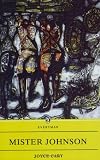
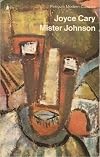
Mister Johnson
by Joyce Cary
On This Page
Description
Johnson may not be the Empire's most able servant, but he certainly is keen and is very good at replacing expertise with enthusiasm. How, though, to protect the Empire from its most devoted upholder? How, come to that, to protect Johnson from himself?Tags
Recommendations


















Member Reviews
Masterful character depictions not limited to the titular character nor other native people of Nigeria, but the white "overlords" as well--from Pig's-Neck to his wife and even barelly sketched minor characters. Mister Johnson himself is a tragi-comic character who makes us laugh along with, and a bit *at,* and love this absurd man who, in the end, just wants to make everyone happy. Using colourful words that may be politically incorrect today, Cary can be forgiven for using words of his generation; the book was published 1939. And he (i neer knew Joyce was a 'he') shows great empathy for his character. Truly a pleasure.
I had always imagined from reading the blurbs about this book that it was in some way comic. It isn't. I was reminded of the miasmic sense of futility that pervaded George Orwell's "Shooting an Elephant".
Mister Johnson suffers from the "Big Man" syndrome. He imagines wealth and the good things in life are his due because he has a chief clerk's job in a District office of the Nigerian Colonial Service. He is inept; he steals, he borrows irresponsibly, he lies and is a farcical husband.
Meanwhile, the District Officer sees the opportunity of a road building project as a lasting memorial to his term of tenure at his otherwise tedious posting.
All transactions are corrupt in this dusty set-up. Accounts are falsified, money diverted, the show more roading project brings only overcrowding and no prosperity.
There is no resolution to the colonial divide, and it is Cary's genius that drives home the futility of colonial administration amid the chronically corrupt and mean culture of the native population. The final scenes are a devastating commentary on the whole sorry story. show less
Mister Johnson suffers from the "Big Man" syndrome. He imagines wealth and the good things in life are his due because he has a chief clerk's job in a District office of the Nigerian Colonial Service. He is inept; he steals, he borrows irresponsibly, he lies and is a farcical husband.
Meanwhile, the District Officer sees the opportunity of a road building project as a lasting memorial to his term of tenure at his otherwise tedious posting.
All transactions are corrupt in this dusty set-up. Accounts are falsified, money diverted, the show more roading project brings only overcrowding and no prosperity.
There is no resolution to the colonial divide, and it is Cary's genius that drives home the futility of colonial administration amid the chronically corrupt and mean culture of the native population. The final scenes are a devastating commentary on the whole sorry story. show less
Problematic in the same fashion as Conrad's Heart of Darkness, Cary's presentation of Africans is questionable at best, and racist at worst. Yet, his style and the story give this novel some heavy worth even so, even regardless of this historical worth of such novels. Whether viewed as a simple story, as a metaphor, or as allegory, the story explores characters whose adaptations (and lack thereof) end up driving their fates. And, in some ways, Cary explores an immoral example of Myshkin, the prince from Dostoevsky's Idiot. If you're interested, this might well be worth your while--just keep in mind what you're walking into.
Rattled along like Steinbeck's Cannery Row, this book, with hilarious characters (Mister Johnson is utterly endearing, foolish and enterprising, as well as dangerous), characters demanding our respect and sympathy, characters we despise but enjoy reading about and characters who are a little hazy, and then wallop! I was gripped with fear and sadness to wards the end and wept on completing the book. It probably merits an immediate re-read - something I might well do when I've recovered. Very different in style to Conrad's Heart of Darkness, but set similarly in the action of the Empire 'taming the savages' withy the similar theme of the questionability of bringing wealth and industry to established bush culture. The questionability is show more dealt with intelligently and responsibly and provides absolutely no easy answers.
A quite beautiful, suprising gem of a book, carrying a tremendously painful set of events amongst some great comedy and joy. show less
A quite beautiful, suprising gem of a book, carrying a tremendously painful set of events amongst some great comedy and joy. show less
A chilling story of the gradual corruption of a village magistrate and his chief clerk. Set in Nigeria, in the thirties, Mr. Johnson starts as a loyal servant of the empire, and continues so, all the way to the completely frightening conclusion. A vivid experience, and not to be missed.
Another buddy matinee with dear friend Bettie, watching another movie with Pierce Brosnam.
Another buddy matinee with dear friend Bettie, watching another movie with Pierce Brosnam.
Members
- Recently Added By
Lists

The Guardian's 1000 Novels Everyone Must Read
1,005 works; 548 members

Canon de la narrativa universal del s. XX (cicutadry)
499 works; 3 members

Slightly Foxed 1
21 works; 1 member
Author Information

41+ Works 3,204 Members
Joyce Cary was born as Arthur Joyce Lunel Cary in Londonderry, Northern Ireland, in 1888. Cary studied art in Edinburgh and Paris and law at Oxford, before fighting in West Africa in World War I. He took up writing when injuries and bad health forced him into an early retirement. Cary wrote several novels, among them Mister Johnson, using his show more experiences in Africa as background. Cary has been acclaimed for his skill in creating well-developed plots and credible characterizations and for his unique sense of humor, and is best known for a trilogy that includes the novels Herself Surprised, To Be a Pilgrim, and The Horse's Mouth. Cary died in 1957. (Bowker Author Biography) show less
Some Editions
Awards and Honors
Series
Belongs to Publisher Series
Work Relationships
Has the adaptation
Common Knowledge
- Original publication date
- 1939; 1962 - Penguin edition; 1952 - First published in Carfax ed.; 1949 - 2nd impression December.
- People/Characters
- Mister Johnson; Bamu; Rudbeck, the Assistant District Officer.
- Important places
- Fada, Nigeria
- Important events
- The Murder of Sergeant Gollup
- Related movies
- Mister Johnson (1990 | IMDb)
- Dedication
- To MUSA
- First words
- The young women of Fada, in Nigeria, are well known for beauty.
- Last words
- (Click to show. Warning: May contain spoilers.)"I couldn't let anyone else do it, could I?"
Classifications
Statistics
- Members
- 487
- Popularity
- 62,166
- Reviews
- 11
- Rating
- (3.43)
- Languages
- English, French, Italian, Spanish
- Media
- Paper, Ebook
- ISBNs
- 19
- UPCs
- 2
- ASINs
- 27