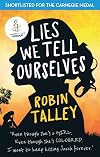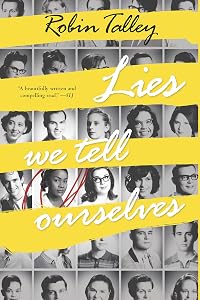
Lies We Tell Ourselves
by Robin Talley
On This Page
Description
Historical Fiction. Young Adult Fiction. HTML:In 1959 Virginia, the lives of two girls on opposite sides of the battle for civil rights will be changed forever.Sarah Dunbar is one of the first black students to attend the previously all-white Jefferson High School. An honors student at her old school, she is put into remedial classes, spit on and tormented daily.
Linda Hairston is the daughter of one of the town's most vocal opponents of school integration. She has been taught all her life show more that the races should be kept "separate but equal."
Forced to work together on a school project, Sarah and Linda must confront harsh truths about race, power and how they really feel about one another.
Boldly realistic and emotionally compelling, Lies We Tell Ourselves is a brave and stunning novel about finding truth amid the lies, and finding your voice even when others are determined to silence it. show less
Tags
Recommendations

Member Reviews
History books abound with cursory details about desegregation, the legal battles that occurred all over the South after the Brown v. Board of Education ruling, and the crowds that surrounded each school on that first fateful day of a desegregated school year. What history books do not share is what life was like for those pioneering students once the media left and the cameras were turned off. Lies We Tell Ourselves fills this gap with shocking clarity.
Told from opposing viewpoints, the story starts from the first day of school until graduation day. Both Sarah and Linda are seniors just trying to make the most of their last year of school, even though their experiences are anything but similar. While Linda rails against the loss of show more certain senior activities, like the prom, and how disruptive these new students are to her school experience, Sarah deals with daily fear of violence, a constant barrage of curses hurled her way, and other indignities at every turn. Once at the top of her class, she now faces teachers who are surprised she can read. The two girls’ experiences are shocking in their honesty and brutal in the picture of humanity they present. It is as chilling a portrait of the civil rights movement as one will ever find.
If the story focused on just Sarah’s and Linda’s experiences, the story would be outstanding. Instead, Ms. Talley includes the complexity of sexual orientation. This could be its own separate novel and ultimately should be because it diminishes the impact of the civil rights lessons to learn. Sarah’s daily experiences in Jefferson High School are so visceral, so ugly, and so terrifying that her story does not need the added torment of sexual identity in the 1950s. Similarly, watching Linda struggle with the life-long prejudices she’s always heard versus what she observes with her own eyes is compelling reading. The story is powerful on its own without any additional identity crises.
If one ignores the secondary story, the main plot of Lies We Tell Ourselves is an outstanding example of historical fiction. It tells the intense story of two girls caught in the middle of the civil rights movement, each one a pawn in the adult game of racial equality. Sarah and Linda are intriguing as they face their fears and discover their own opinions about these high-stakes issues. Vibrant and honest as only the young truly are, their voices are powerful in their lost innocence. Unfortunately, the secondary plot becomes an integral part of Linda and Sarah’s self-identity, and the story moves from realistic to exaggerated. This move trivializes the racial issues at the heart of the story and proves to be a distraction for readers. Given how important the history lesson and just how impactful the racial tension are, readers will find themselves disappointed that the focus shifts as much as it does. show less
Told from opposing viewpoints, the story starts from the first day of school until graduation day. Both Sarah and Linda are seniors just trying to make the most of their last year of school, even though their experiences are anything but similar. While Linda rails against the loss of show more certain senior activities, like the prom, and how disruptive these new students are to her school experience, Sarah deals with daily fear of violence, a constant barrage of curses hurled her way, and other indignities at every turn. Once at the top of her class, she now faces teachers who are surprised she can read. The two girls’ experiences are shocking in their honesty and brutal in the picture of humanity they present. It is as chilling a portrait of the civil rights movement as one will ever find.
If the story focused on just Sarah’s and Linda’s experiences, the story would be outstanding. Instead, Ms. Talley includes the complexity of sexual orientation. This could be its own separate novel and ultimately should be because it diminishes the impact of the civil rights lessons to learn. Sarah’s daily experiences in Jefferson High School are so visceral, so ugly, and so terrifying that her story does not need the added torment of sexual identity in the 1950s. Similarly, watching Linda struggle with the life-long prejudices she’s always heard versus what she observes with her own eyes is compelling reading. The story is powerful on its own without any additional identity crises.
If one ignores the secondary story, the main plot of Lies We Tell Ourselves is an outstanding example of historical fiction. It tells the intense story of two girls caught in the middle of the civil rights movement, each one a pawn in the adult game of racial equality. Sarah and Linda are intriguing as they face their fears and discover their own opinions about these high-stakes issues. Vibrant and honest as only the young truly are, their voices are powerful in their lost innocence. Unfortunately, the secondary plot becomes an integral part of Linda and Sarah’s self-identity, and the story moves from realistic to exaggerated. This move trivializes the racial issues at the heart of the story and proves to be a distraction for readers. Given how important the history lesson and just how impactful the racial tension are, readers will find themselves disappointed that the focus shifts as much as it does. show less
Buddy read with Lola 😊
Really interesting novel about the desegregation of schools in the US in Virginia in 1959, and the African-American students who endured terrible torment and racism as they integrated a previously all-white school. I found the narration of Sarah, Ruth, Ennis, and the other students raw and gripping as they had to push their way into the school while being spit on, mauled and screamed at. It made me very angry to read at times when there was no help to be found, not from teachers, not from any of the students, I can just imagine how terrified and angry and violated I would have felt, helpless to do anything while this sea of horrible people swarmed around me… and I had to go to school there.
Sarah’s life is show more such an interesting contrast to Linda’s, the white girl whose father runs the local paper, and who is a younger redheaded bullhorn for his racist views. Sarah has the strong family support system, but is constantly fighting institutionalized racism. The way the author writes every minute of her school day is just so exhausting. And honestly, reading Linda’s perspective is exhausting, too, listening to her babble on, so convinced of her racist diatribe. Linda is intended to become a love interest for Sarah, but it’s hard to picture her as such. Even when she thinks half-heartedly of a compliment towards Sarah, it’s always nastily tied in the same sentence to some little racist jab. Sarah, it’s easy to cheer for. Linda, you really want off the page.
There were parts of this book I find absolutely amazing. The way Robin Talley writes the sequence of Sarah’s fear and self-loathing and desperation following the kiss with Linda felt so visceral and real and just made me ache for her. One of the very best sections in the book. You really get the sense of how trapped she feels in more than one sense. And then I also loved the small triumph of singing Amazing Grace so beautifully, even if few white people applauded, to persevere despite the pianist trying to screw things up. Such great scenes. My problem in this section was that the kiss itself rang untrue for me. I just have a really hard time imagining… not that Sarah could be attracted to a white girl, but that she could be attracted to this white girl, who may put on her party manners one minute, but then has no problem making extremely racist statements the next. So the fact that Sarah in that moment just went in for that kiss… I was pulled out of the narrative.
I really enjoyed reading Sarah’s journey, and to some extent, Linda’s which felt like a beginning. I feel like this book might have been better though, if it hadn’t been a romance. Linda, ultimately remained racist… she just also had an attraction to Sarah… and you have to kind of wonder why that worked for Sarah? Because I ultimately liked a lot of other things about the author’s writing, I think maybe it was because Sarah feels she has no other options. She believes to be attracted to another girl is something wrong with her, certainly something she can’t tell anyone, and maybe views Linda as her only chance to have a girlfriend.
Please excuse typos/name misspellings. Entered on screen reader. show less
Really interesting novel about the desegregation of schools in the US in Virginia in 1959, and the African-American students who endured terrible torment and racism as they integrated a previously all-white school. I found the narration of Sarah, Ruth, Ennis, and the other students raw and gripping as they had to push their way into the school while being spit on, mauled and screamed at. It made me very angry to read at times when there was no help to be found, not from teachers, not from any of the students, I can just imagine how terrified and angry and violated I would have felt, helpless to do anything while this sea of horrible people swarmed around me… and I had to go to school there.
Sarah’s life is show more such an interesting contrast to Linda’s, the white girl whose father runs the local paper, and who is a younger redheaded bullhorn for his racist views. Sarah has the strong family support system, but is constantly fighting institutionalized racism. The way the author writes every minute of her school day is just so exhausting. And honestly, reading Linda’s perspective is exhausting, too, listening to her babble on, so convinced of her racist diatribe. Linda is intended to become a love interest for Sarah, but it’s hard to picture her as such. Even when she thinks half-heartedly of a compliment towards Sarah, it’s always nastily tied in the same sentence to some little racist jab. Sarah, it’s easy to cheer for. Linda, you really want off the page.
There were parts of this book I find absolutely amazing. The way Robin Talley writes
I really enjoyed reading Sarah’s journey, and to some extent, Linda’s which felt like a beginning. I feel like this book might have been better though, if it hadn’t been a romance. Linda, ultimately remained racist… she just also had an attraction to Sarah… and you have to kind of wonder why that worked for Sarah? Because I ultimately liked a lot of other things about the author’s writing, I think maybe it was because Sarah feels she has no other options. She believes to be attracted to another girl is something wrong with her, certainly something she can’t tell anyone, and maybe views Linda as her only chance to have a girlfriend.
Please excuse typos/name misspellings. Entered on screen reader. show less
I thought it had to be that way. That I had no choice but to stay quiet, with only my own thoughts to keep me company. I never thought there was any other way to live.
Until I met Linda.
Of all people, I had to pick her.
Except I didn't pick her. I didn't plan any of this. It just... happened.
There's so much I don't like about her. She's absurdly stubborn. She'll say anything it takes to make her point. She's determined to prove herself right, no matter the consequences. She's far too opinionated for a girl.
But... I'm all those things, too.
This work of historical fiction takes place in 1959, when a fictional Virginian high school, Jefferson High, is integrated. Ten black students, once the top of their class at their old school, head the show more movement to desegregate schools in the South- but in a small town like Davisburg, racism is rampant and tensions are high on both sides of the race divide, and every day the black students have to walk to school through an angry mob of white students like these:
Charming, aren't they?
I don't want to give away too much of the plot, but I will say that two girls, Sarah Dunbar and Linda Hairston, black and white respectively, form a tenuous relationship amongst the chaos of everyday life in a school where black students are hit, tripped, insulted, taunted, threatened, and intimidated daily. They're both strong and stubborn and at first refuse to see eye to eye- until they are both gripped by feelings that every teenager has felt, but that are especially dangerous in a racially polarised town like Davisburg, Viginia.
The writing was smooth and easy to read, both main characters (the story is told in the alternating perspectives of Sarah and Linda) had strong, distinct voices and strikingly similar struggles (look at that alliteration!). I especially loved the format- chapters centered around a lie that each girl tells herself, which, in the last few chapters, changes to truths they begin to admit.
This was the first book I've read that was based around a lesbian romance. (I know, how has it taken me this long?!) The romance was so subtle and complex, it added to the story rather than detracted from it as so many YA love interests do nowadays. It was one of the VERY few romances that didn't make me want to vomit or gouge my eye out with a spoon! Hooray! show less
"Rule One: Ignore anything the white people say to you and keep walking
Rule two: always sit at the front of the classroom, near the door, so you can make a quick getaway if you need to
Rule three: stay together whenever you possibly can.
These are the rules of survival for the first group of students to utilize desegregation and enter an all white school.
This is an amazing story. Told in a strong voice of mainly 2 young girls - Linda who is white and privileged but not leading a perfect life and Sarah, a girl of color who does have a pretty good home life but is living the nightmare that is trying to change a whole school's (really, a whole TOWN's) prejudice against her skin color.
And wow, the violence but also the small little horrible show more things they do to these kids every minute of every single day. Little things that just make their life almost unbearable. It's just awful. And the worst instigators are ADULTS. This is all too true and a great reminder of what we can never ever ever repeat. We must learn from our past mistakes.
and sometimes the best way to learn is read a book like this - that gives you the raw, ugly side of just what these kids went through. And they survived and they made change. and I'm amazing and awed by their bravery and I'm so grateful they made the stand they did. show less
Rule two: always sit at the front of the classroom, near the door, so you can make a quick getaway if you need to
Rule three: stay together whenever you possibly can.
These are the rules of survival for the first group of students to utilize desegregation and enter an all white school.
This is an amazing story. Told in a strong voice of mainly 2 young girls - Linda who is white and privileged but not leading a perfect life and Sarah, a girl of color who does have a pretty good home life but is living the nightmare that is trying to change a whole school's (really, a whole TOWN's) prejudice against her skin color.
And wow, the violence but also the small little horrible show more things they do to these kids every minute of every single day. Little things that just make their life almost unbearable. It's just awful. And the worst instigators are ADULTS. This is all too true and a great reminder of what we can never ever ever repeat. We must learn from our past mistakes.
and sometimes the best way to learn is read a book like this - that gives you the raw, ugly side of just what these kids went through. And they survived and they made change. and I'm amazing and awed by their bravery and I'm so grateful they made the stand they did. show less
This is a pretty intense book. Narration alternates between Sarah and Linda.
The year is 1959, and a high school in a small Virginia town is being integrated for the first time. Nine select black students will be attending. Sarah Dunbar is one of those students. The realistic portrayal of the viscous racism that the black students encounter is a fierce and unrelenting theme in this book. Knowing about the integration battles in Little Rock, Arkansas and at other places, I'd never realized until reading this novel, just how courageous those first students had to be. The things they endured were horrendous, and yet, they did it. Sarah's introspective narrative tells about it all.
Linda Hairston is the white daughter of the town's newspaper show more publisher. She is totally convinced that her father (adamantly against integration) is right in all things, even though he is a terrible father figure to her. Linda's equally introspective narration initially gives the view of the anti-integration faction, but (as you would expect in a teen novel) Linda's views change over time.
Sarah is quickly forced to partner in a school project with Linda (and Linda's friend Judy). In their forced work together, Sarah begins to convince Linda to change her views. It's a realistically slow change. There is no single big "oh my God, I've been wrong all along" moment.
Now... the reason they have such a rapport is that (and remember it's 1959, when this wasn't merely unacceptable in society, it wasn't discussed at all) Linda and Sarah are both lesbians, and have secret crushes on each other. They don't even know the word "lesbian" but they know the kind of attraction they have. The first lesbian love aspect of the book is distantly secondary to the racism aspect, but is still a vital part of the plot.
The book is somewhat slow paced - but slow paced with a purpose... making sure the horrors everyone is going through really sink in with the reader. Thought provoking and an excellent historical fiction novel. show less
The year is 1959, and a high school in a small Virginia town is being integrated for the first time. Nine select black students will be attending. Sarah Dunbar is one of those students. The realistic portrayal of the viscous racism that the black students encounter is a fierce and unrelenting theme in this book. Knowing about the integration battles in Little Rock, Arkansas and at other places, I'd never realized until reading this novel, just how courageous those first students had to be. The things they endured were horrendous, and yet, they did it. Sarah's introspective narrative tells about it all.
Linda Hairston is the white daughter of the town's newspaper show more publisher. She is totally convinced that her father (adamantly against integration) is right in all things, even though he is a terrible father figure to her. Linda's equally introspective narration initially gives the view of the anti-integration faction, but (as you would expect in a teen novel) Linda's views change over time.
Sarah is quickly forced to partner in a school project with Linda (and Linda's friend Judy). In their forced work together, Sarah begins to convince Linda to change her views. It's a realistically slow change. There is no single big "oh my God, I've been wrong all along" moment.
Now... the reason they have such a rapport is that (and remember it's 1959, when this wasn't merely unacceptable in society, it wasn't discussed at all) Linda and Sarah are both lesbians, and have secret crushes on each other. They don't even know the word "lesbian" but they know the kind of attraction they have. The first lesbian love aspect of the book is distantly secondary to the racism aspect, but is still a vital part of the plot.
The book is somewhat slow paced - but slow paced with a purpose... making sure the horrors everyone is going through really sink in with the reader. Thought provoking and an excellent historical fiction novel. show less
What a tremendous way to start off a reading year! Lies We Tell Ourselves is an intense read straight from page one, as it unflinchingly takes on racism, desegregation during the time period, and the institutionalized oppression systems that are still affecting our society today. Despite being a well-researched period piece and an issue book, at its core the story is a beautiful romance that puts most het romance to shame. As well as having an intense, life-or-death plot tension, the author also balanced a softer romantic tension that had my toes curling, and this balance kept the story engaging and exciting straight to the last page.
The thing that struck me first and hardest about the book was the alternative viewpoint it offered me. show more This story is mostly told through the eyes of a black girl, and though it's peppered with passages from Linda's very opposite point of view, they only serve to support Sarah's narrative. Secondly, the dynamic with tension was something I'd never seen before. We have a school environment, and a story of ten kids simply trying to go through an average school day, and yet it's riddled with life-and-death danger. Everywhere Sarah and her fellow black students go, they're insulted, tormented, have things thrown at them, humiliated, and downright abused at every opportunity. Normally we'd see this kind of high-stakes tension in a school environment only in something like urban fantasy, where you can support that life-or-death element with supernatural dangers. But there's nothing supernatural about the danger facing these kids. It's completely realistic and true, which helps to highlight a whole side of reality that many (including myself) can hardly imagine.
The characters themselves were beautifully crafted. They were all very real people, strong and independent but still struggling with their own insecurities and weaknesses. I especially liked the subtle approach to Sarah's character, as she in incredibly strong and courageous, but you can see the cracks that let her insecurities bleed through. Linda was a difficult character to read at times because of her blatant racism and prejudice. I was able to grit my teeth and push through her point of view passages mostly because I knew she was going to undergo a change. The change in her character was very realistic as well, occurring gradually and not without struggle, which made her transformation much more believable.
This story is a romance, and with such a bigoted character as one side of that romance, I understand why some readers might take issue with Linda. The trope of the abuser and the abused falling in love is not only all-to common, but harmful to survivors of abuse. There's no arguing that Linda is an abuser, but I also believe this book properly shows humanity's capacity for change. We are all human, we all have things in our past we regret and have learned from, and it's harmful to everyone to assume we are unable to change. The key component that makes this relationship stay healthy, is not only that Linda strives to change and shows remorse for her past, but Sarah doesn't accept any of the abuse. She calls it out and at times even rises above Linda's trolling behaviour.
This book may be difficult for some to read because of the intensity of abuse the kids undergo, but it is necessary to acknowledge it as part of our past. This book wonderfully captures the courage of kids who sacrificed their sense of safety for the promise of a more equal society. Underneath that, though, is the gentle and beautiful love story of two girls in a Romeo-and-Juliet style circumstance. This is one of those instant classic books that belongs on every reader's shelf.
All in all, 5/5 stars. A beautifully balanced period piece and romance story that makes my heart happy. show less
The thing that struck me first and hardest about the book was the alternative viewpoint it offered me. show more This story is mostly told through the eyes of a black girl, and though it's peppered with passages from Linda's very opposite point of view, they only serve to support Sarah's narrative. Secondly, the dynamic with tension was something I'd never seen before. We have a school environment, and a story of ten kids simply trying to go through an average school day, and yet it's riddled with life-and-death danger. Everywhere Sarah and her fellow black students go, they're insulted, tormented, have things thrown at them, humiliated, and downright abused at every opportunity. Normally we'd see this kind of high-stakes tension in a school environment only in something like urban fantasy, where you can support that life-or-death element with supernatural dangers. But there's nothing supernatural about the danger facing these kids. It's completely realistic and true, which helps to highlight a whole side of reality that many (including myself) can hardly imagine.
The characters themselves were beautifully crafted. They were all very real people, strong and independent but still struggling with their own insecurities and weaknesses. I especially liked the subtle approach to Sarah's character, as she in incredibly strong and courageous, but you can see the cracks that let her insecurities bleed through. Linda was a difficult character to read at times because of her blatant racism and prejudice. I was able to grit my teeth and push through her point of view passages mostly because I knew she was going to undergo a change. The change in her character was very realistic as well, occurring gradually and not without struggle, which made her transformation much more believable.
This story is a romance, and with such a bigoted character as one side of that romance, I understand why some readers might take issue with Linda. The trope of the abuser and the abused falling in love is not only all-to common, but harmful to survivors of abuse. There's no arguing that Linda is an abuser, but I also believe this book properly shows humanity's capacity for change. We are all human, we all have things in our past we regret and have learned from, and it's harmful to everyone to assume we are unable to change. The key component that makes this relationship stay healthy, is not only that Linda strives to change and shows remorse for her past, but Sarah doesn't accept any of the abuse. She calls it out and at times even rises above Linda's trolling behaviour.
This book may be difficult for some to read because of the intensity of abuse the kids undergo, but it is necessary to acknowledge it as part of our past. This book wonderfully captures the courage of kids who sacrificed their sense of safety for the promise of a more equal society. Underneath that, though, is the gentle and beautiful love story of two girls in a Romeo-and-Juliet style circumstance. This is one of those instant classic books that belongs on every reader's shelf.
All in all, 5/5 stars. A beautifully balanced period piece and romance story that makes my heart happy. show less
This was a difficult book to read, but it was completely worth it. The point of view switches between Sarah, a black teenager who is one of the first to attend Jefferson High School and Linda, a white teenager who is the daughter of one of the town's most vocal opponents of integration. Forced to work together on a school project, Linda and Sarah eventually become to see beyond the color of each other's skin to the person underneath.
Sarah's descriptions of what the black kids endure from the white students are incredibly painful, as are Linda's justifications for the behavior of both white kids and adults. Talley does a really good job of writing from both points of view. Both Linda and Sarah have very strong, unique voices and both show more changed as a result of knowing the other. show less
Sarah's descriptions of what the black kids endure from the white students are incredibly painful, as are Linda's justifications for the behavior of both white kids and adults. Talley does a really good job of writing from both points of view. Both Linda and Sarah have very strong, unique voices and both show more changed as a result of knowing the other. show less
Members
- Recently Added By
Lists

1900s: America
31 works; 2 members

Historical Fiction Books
99 works; 5 members

Books Read in 2017
4,249 works; 129 members
Author Information

10+ Works 1,902 Members
Robin Talley is the New York Times-bestselling author of four novels for teen readers: Our Own Private Universe, As I Descended, What We Left Behind, and Lies We Tell Ourselves. Her first book, Lies We Tell Ourselves, was the winner of the inaugural Amnesty CILIP Honour. Robin was a Lambda Literary Foundation fellow, and has contributed short show more stories to the young adult anthologies A Tyranny of Petticoats: 15 Stories of Belles, Bank Robbers and Other Badass Girls, All Out, and Feral Youth. (Bowker Author Biography) show less
Awards and Honors
Awards
Distinctions
Notable Lists
Common Knowledge
- Canonical title
- Lies We Tell Ourselves
- Original publication date
- 2014
- People/Characters
- Sarah Dunbar; Linda Hairston
- Important places
- Virginia, USA
- Important events
- Civil Rights Movement, USA
- Dedication
- To the Norfolk 17:
Delores Johnson Brown
LaVera Forbes Brown
Louis Cousins
Alveraze Frederick Gonsouland
Andrew Heidelberg
Geraldine Talley Hobby
Edward Jordan
Betty Jea... (show all)n Reed Kea
Olivia Driver Lindsay
Lolita Portis-Jones
Johnnie Rouse
James Turner Jr.
Patricia Turner
Carol Wellington
Claudia Wellington
Patricia Godbolt White
Reginald Young
May your courage resonate with every generation. - First words
- THE WHITE PEOPLE are waiting for us.
- Last words
- (Click to show. Warning: May contain spoilers.)And I think I know what Sarah meant when she said I'm the one who really decides.
- Original language
- English
- Canonical DDC/MDS
- 813.6
- Canonical LCC
- PZ7.T1566
Classifications
Statistics
- Members
- 649
- Popularity
- 44,812
- Reviews
- 39
- Rating
- (3.89)
- Languages
- English, French
- Media
- Paper, Ebook
- ISBNs
- 13
- ASINs
- 6