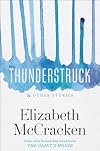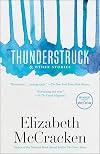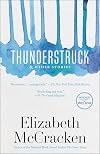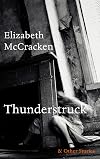
Thunderstruck and Other Stories
by Elizabeth McCracken
On This Page
Description
A collection of stories navigates the fragile space between love and loneliness, including the title story in which a family finds their lives irrevocably changed by their teenage daughter's risky behavior.Tags
Recommendations









Member Reviews
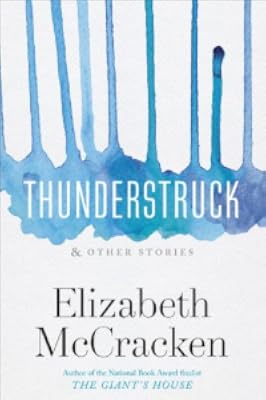
A gorgeous cover and a gorgeous typeface (Sabon) for a collection of stories without a single dud. I tried to go slowly and take breaks between each story but I still finished in two days. Stories take place in the Midwest, in New England, in France; they involve interactions between family members, neighbors, and strangers; loss, death, and grief make frequent appearances
Quotes
"Something Amazing" - a grieving mother takes in a neighborhood boy whose older brother tortures him; the older brother disappears.
Whatever you have lost there are more of, just not yours. (5)
"Property" - a widower spends nine months in a terrible house whose owner is dismayed by the changes he makes.
You couldn't believe the people who believed that not show more mentioning sadness was a kind of magic that could stave off the very sadness you didn't mention - as though grief were the opposite of Rumpelstiltskin and materialized only at the sound of its own name. (40)
"Some Terpsichore" - a woman meets a man who tells her she can sing, and they perform shows (her singing, him on a musical saw); years later, an audience member asks her about her performance, and a moment of violence.
Listen: don't tell me otherwise. It was not nice love, it was not good love, but you cannot tell me that it wasn't love. Love is not oxygen, though many songwriters will tell you that it is; it is not a chemical substance that is either definitively present or not present; it cannot be reduced to its parts. It is not like a flower, or an animal, or anything that you will ever be able to recognize when you see it. Love is food. That's all. (54-55)
"Juliet" - a library patron is murdered; the siblings of the boy who was accused of the murder continue to come to the library.
She held the books as if they were a compress for her heart... (76)
"The House of Two Three-Legged Dogs" - a couple is about to be evicted from their house by their son, who plans to sell it out from under them. Poverty, alcohol, rain, and a parrot.
That was the advantage and danger of an eight-bedroom house: eventually the oddest things would have their own rooms. (92)
This was finally how their marriage would drift apart: Tony didn't understand loving fifty birds at a time, and Izzy didn't understand loving only one. (103)
"Hungry" - a grandmother takes care of her granddaughter while the son/father is in the hospital following a heart attack.
Not more or less but differently. If one could measure love - but even then love was too various, one love would have to be measured by degrees Fahrenheit and one by atomic weight. ...To compare was nonsense. (115)
Her job as a mother - she believed this then, believed it now - was to make sure that her children would be loved by the maximum number of other people. This was the source of all her anxiety. (116)
They hadn't yet sustained that particular damage. Damage:...as though any of us made it through life in mint condition. (125)
Yes, thought Sylvia, she's take the blame but she also demanded some credit. (126)
"The Lost & Found Department of Greater Boston" - a boy's mother disappears; a convenience store clerk finds the boy shoplifting food and calls the police, who go to the house and discover that the boy's grandfather, who has starved the boy nearly to death, has died. Years later the convenience store clerk goes back to the house to find the boy living there, grown up, and with a very different memory of their long-ago interaction.
The children knew nothing about palmistry, little about life, less about love, but they believed in life lines and love lines the way they believed in mercury thermometers: they meant something but probably you needed a grown-up to read them. (128)
Later he'd be furious, but for the moment he felt only the deep sorrow that visited him whenever he got someplace later than he should have, when he saw how helpless the world was, eventually, to protect its children. (134)
"You can't question someone else's pain," she told him. "Listen. It's all valid. You can't - you can't compare one person's grief to another's."
Of course you could....Of course you could compare one person's grief to another's! All he wanted was for one single person to compare, to say to him, yes, your sadness is worse than anyone else's. Your sadness is inestimable. (147)
"Peter Elroy: A Documentary by Ian Casey" - Dying Peter Ellroy goes to visit his ex-friend Ian Casey, but Ian isn't there; Peter talks with his wife instead. A probing look at identity and how we present ourselves to the world, sometimes obscuring our origins.
So why had he come? Because a broken promise will tie two people together more surely than any ceremony. (157)
Later, he tried not to be too hard on himself for not understanding. There wasn't a man in the world smart enough to see his own subtext. (167)
Somewhere, a dog barked. No, it didn't. Only in novels did you catch such a break, a hollow in your stomach answered by some far-off dog making an unanswered dog-call. Dogs were not allowed at Drake's Landing. Still, surely, somewhere in the world a dog was barking, a cat was hissing, a parrot with an unkind recently deceased owner was saying something inappropriate to an animal shelter volunteer.
Outside, in the light from the Drake's Landing floodlights, the snow sparkled like something that wasn't snow. Diamonds, or asphalt, or emery boards. (176)
"Thunderstruck" - a family with a daughter on the cusp of puberty travels to Paris, where the daughter has a terrible accident. The mother sees the situation with terrible clarity, but for the father - and the reader - the truth takes longer to sink in.
Everything in the world now looked like something to fall from. (205)
She sounded insulted that he'd misunderstood her so badly. The French, in his experience, were often insulted by other people's stupidity. (217)
All her life, she'd been too bright a light. (223) show less
Quotes
"Something Amazing" - a grieving mother takes in a neighborhood boy whose older brother tortures him; the older brother disappears.
Whatever you have lost there are more of, just not yours. (5)
"Property" - a widower spends nine months in a terrible house whose owner is dismayed by the changes he makes.
You couldn't believe the people who believed that not show more mentioning sadness was a kind of magic that could stave off the very sadness you didn't mention - as though grief were the opposite of Rumpelstiltskin and materialized only at the sound of its own name. (40)
"Some Terpsichore" - a woman meets a man who tells her she can sing, and they perform shows (her singing, him on a musical saw); years later, an audience member asks her about her performance, and a moment of violence.
Listen: don't tell me otherwise. It was not nice love, it was not good love, but you cannot tell me that it wasn't love. Love is not oxygen, though many songwriters will tell you that it is; it is not a chemical substance that is either definitively present or not present; it cannot be reduced to its parts. It is not like a flower, or an animal, or anything that you will ever be able to recognize when you see it. Love is food. That's all. (54-55)
"Juliet" - a library patron is murdered; the siblings of the boy who was accused of the murder continue to come to the library.
She held the books as if they were a compress for her heart... (76)
"The House of Two Three-Legged Dogs" - a couple is about to be evicted from their house by their son, who plans to sell it out from under them. Poverty, alcohol, rain, and a parrot.
That was the advantage and danger of an eight-bedroom house: eventually the oddest things would have their own rooms. (92)
This was finally how their marriage would drift apart: Tony didn't understand loving fifty birds at a time, and Izzy didn't understand loving only one. (103)
"Hungry" - a grandmother takes care of her granddaughter while the son/father is in the hospital following a heart attack.
Not more or less but differently. If one could measure love - but even then love was too various, one love would have to be measured by degrees Fahrenheit and one by atomic weight. ...To compare was nonsense. (115)
Her job as a mother - she believed this then, believed it now - was to make sure that her children would be loved by the maximum number of other people. This was the source of all her anxiety. (116)
They hadn't yet sustained that particular damage. Damage:...as though any of us made it through life in mint condition. (125)
Yes, thought Sylvia, she's take the blame but she also demanded some credit. (126)
"The Lost & Found Department of Greater Boston" - a boy's mother disappears; a convenience store clerk finds the boy shoplifting food and calls the police, who go to the house and discover that the boy's grandfather, who has starved the boy nearly to death, has died. Years later the convenience store clerk goes back to the house to find the boy living there, grown up, and with a very different memory of their long-ago interaction.
The children knew nothing about palmistry, little about life, less about love, but they believed in life lines and love lines the way they believed in mercury thermometers: they meant something but probably you needed a grown-up to read them. (128)
Later he'd be furious, but for the moment he felt only the deep sorrow that visited him whenever he got someplace later than he should have, when he saw how helpless the world was, eventually, to protect its children. (134)
"You can't question someone else's pain," she told him. "Listen. It's all valid. You can't - you can't compare one person's grief to another's."
Of course you could....Of course you could compare one person's grief to another's! All he wanted was for one single person to compare, to say to him, yes, your sadness is worse than anyone else's. Your sadness is inestimable. (147)
"Peter Elroy: A Documentary by Ian Casey" - Dying Peter Ellroy goes to visit his ex-friend Ian Casey, but Ian isn't there; Peter talks with his wife instead. A probing look at identity and how we present ourselves to the world, sometimes obscuring our origins.
So why had he come? Because a broken promise will tie two people together more surely than any ceremony. (157)
Later, he tried not to be too hard on himself for not understanding. There wasn't a man in the world smart enough to see his own subtext. (167)
Somewhere, a dog barked. No, it didn't. Only in novels did you catch such a break, a hollow in your stomach answered by some far-off dog making an unanswered dog-call. Dogs were not allowed at Drake's Landing. Still, surely, somewhere in the world a dog was barking, a cat was hissing, a parrot with an unkind recently deceased owner was saying something inappropriate to an animal shelter volunteer.
Outside, in the light from the Drake's Landing floodlights, the snow sparkled like something that wasn't snow. Diamonds, or asphalt, or emery boards. (176)
"Thunderstruck" - a family with a daughter on the cusp of puberty travels to Paris, where the daughter has a terrible accident. The mother sees the situation with terrible clarity, but for the father - and the reader - the truth takes longer to sink in.
Everything in the world now looked like something to fall from. (205)
She sounded insulted that he'd misunderstood her so badly. The French, in his experience, were often insulted by other people's stupidity. (217)
All her life, she'd been too bright a light. (223) show less
Nine pretty bleak and sad stories here. Missing children, dead children, injured children. A woman who sings like a man playing a saw. A son who sells his parents' house right from under them. ARGH. But the last story - the one that names the book - is Paris sad with lovely father-daughter overtones. Can't say I really enjoyed it, though the writing is impeccable.
I have a hard time reading short story collections because I always want to stay longer in a story once I get to know the characters. It feels like each one is over too soon, and then it's hard to switch gears and move on to the next one. Elizabeth McCracken handles her stories so expertly in Thunderstruck though, that their integrity as distinct, complete works is unassailable, and I could not beg her for a page or sentence more for any of them. She writes exactly as much (or as little) as she needs to to convey the poignancy of her characters' human foibles and the stark pain of their losses. After the first couple of stories I knew I was in good hands, and trusted her to lead the way down the path of each new narrative. Really well done.
I was one of the lucky winners to get this as a Goodreads Giveaway. This is a wonderful collection. McCracken is a master storyteller with razor-sharp sentences. These stories are all devastating--murder, missing persons, dead or dying loved ones, injured children, grief, mourning, loss--but McCracken's unsentimental sense of humor combined with with an all-encompassing empathy for all of her characters, whether admirable or self-centered, lift these stories above what might sound from their descriptions like dreary plots. There's not a bad story in the book, but my favorites are "Property," "The Lost and Found Department of Greater Boston," and the title story. But then after saying that, I want to add "Hungry," "Something Amazing, show more "Some Terpsichore," and "Juliet." I could quote numerous sentences from these stories that made me gasp or laugh out loud, but to do so would spoil the adventure of encountering them for yourself.
These stories put their characters and readers through the ringer with their sudden jolts of perspective and insight, with their depth of feeling. No easy answers or tidy endings here. And that's as it should be. show less
These stories put their characters and readers through the ringer with their sudden jolts of perspective and insight, with their depth of feeling. No easy answers or tidy endings here. And that's as it should be. show less
These stories are tragically luminous. Or luminously tragic. Either way they're sad and haunting, shot through with moments of humour and pathos, but overwhelmingly, achingly, sad. They're about loss, tragedy, grief and mourning and how events can rip us out of our lives and leave us unable to re-find the tracks we thought we were on. The title story is the standout, but it's a consistently excellent collection.
This short collection (around 150 pages) has been a rewarding read. It’s the first book I’ve read by Elizabeth McCracken, but I’ve enjoyed these bittersweet nine stories so much that I plan to read one of her novels soon. Although most of the stories are about death or tragedy, about sad, lonely people, and you feel sorry and empathize with the characters, they are not maudlin nor bleak, quite the opposite, there are plenty of funny and absurd moments when you feel forced to smile. There’s not a weak story in the book, and the prose and the plot is powerful in all of them, but I’d like to highlight my favorites ones: “Juliet”, “The Lost & Found Department of Greater Boston” and “Peter Elroy: A Documentary by Ian show more Casey”. And most of all, the unforgettable, brilliant and heartbreaking “Thunderstruck”, one of the best stories I’ve read in a long time. Highly recommended for anyone. A must-read for any short fiction fan. show less
I primarily read novels but periodically a short story collection works its way into my stack. I am glad this collection by Elizabeth McCracken did. Her characters and stories are off kilter and expertly wrought. I found her pithy character descriptions particularly exquisite: “The grandmother was a bright, cellophane-wrapped hard candy of a person: sweet, but not necessarily what a child wanted.” I will definitely read more of her work.
Members
- Recently Added By
Lists

Top Five Books of 2014
1,064 works; 398 members

Short Story Collections and Anthologies
261 works; 42 members

Kirkus Reviews Best Fiction of 2014
100 works; 7 members

Folio Prize 2015 Longlist
79 works; 2 members

Books Read in 2021
5,361 works; 114 members
Author Information

15+ Works 4,516 Members
Awards and Honors
Awards
Common Knowledge
- Canonical title
- Thunderstruck and Other Stories
- Original publication date
- 2014
Classifications
Statistics
- Members
- 303
- Popularity
- 105,782
- Reviews
- 15
- Rating
- (4.28)
- Languages
- English, Italian
- Media
- Paper, Audiobook, Ebook
- ISBNs
- 12
- ASINs
- 4