No Bed for Bacon
by Caryl Brahms, S. J. Simon
On This Page
Description
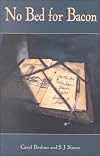
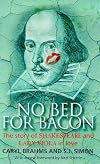
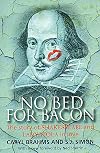
First published in 1941, No Bed for Bacon is a comic classic. Out of print since 1985, but much-discussed in the press following the release of the Oscar-showered film Shakespeare in Love, the novel fizzes with wit, warmth and the occasional custard pie. It is a festive celebration of 'The Great Bard' par excellence. Bess is stirring in her four-poster and is feeling neither happy nor glorious. Down at the Globe, Will Shakespeare is chewing the end of his quill: something's amiss with Love's show more Labours Wunne. And Walter Raleigh, boiling his new potato in the depths of the regal kitchens, is getting very hot under the collar of his latest cloak - will his spud achieve the perfect fluffiness for The Royal Tasting? Heads are sure to roll before the day is out. which will delight all scholars of Shakespeare, history and gleeful frivolity alike. show lessTags
Recommendations
















Member Reviews
In this hilarious send-up of the Elizabethan era -- or rather, the Elizabethan era as perceived by popular culture -- Sir Francis Bacon is desperate to obtain a bed that Queen Elizabeth has slept in during one of her royal progresses. He wants it to be an heirloom for his family, as he knows the bed's value will only increase through the years. Sir Walter Raleigh's attention is divided between his new cloak, which he hopes will be the envy of everyone at Elizabeth's court (especially that dandy, the Earl of Essex), and his upcoming introduction of the potato to England. Meanwhile, Sir Francis Drake is grumbling about the fact that he hasn't been able to do any really good pirating in years; theater owner Philip Henslowe will do anything show more in his power to shut down his rival, Burbage; and Shakespeare is trying to work on a new play, Love's Labour's Wunne, but he keeps getting distracted by the problem of how to spell his own name. Add a little romance, an overly ambitious watchman, and some reminiscing about the glory days of the Armada, and the stage is set for high comedy with a few history lessons thrown in.
I didn't know it until I read the introduction, but this book is actually part of the basis for the Academy Award-winning movie "Shakespeare in Love." But while the movie focuses almost entirely on the romance between Shakespeare and the noble Lady Viola, in the book it's just one of many plots involving the most famous figures of the Elizabethan age. If you know anything about the era or are interested in learning more, I highly recommend this book! It's pure farce, so there isn't much "plot" to speak of, but the jokes are more than funny enough to make up for that! One of my favorites was an exchange between Shakespeare and Bacon about some plot element of Shakespeare's play that Bacon didn't like. Shakespeare responds with great indignation, "Master Bacon, do I write my plays or do you?" Then there's this internal monologue from a Puritan who seeks to shut down the theater: "People had no right to enjoy themselves. He was going to stop them. His cause was a just one and he knew it. He was enjoying himself." So if you like Shakespeare and don't mind a little (or a lot of) silliness, you should definitely check out this book! show less
I didn't know it until I read the introduction, but this book is actually part of the basis for the Academy Award-winning movie "Shakespeare in Love." But while the movie focuses almost entirely on the romance between Shakespeare and the noble Lady Viola, in the book it's just one of many plots involving the most famous figures of the Elizabethan age. If you know anything about the era or are interested in learning more, I highly recommend this book! It's pure farce, so there isn't much "plot" to speak of, but the jokes are more than funny enough to make up for that! One of my favorites was an exchange between Shakespeare and Bacon about some plot element of Shakespeare's play that Bacon didn't like. Shakespeare responds with great indignation, "Master Bacon, do I write my plays or do you?" Then there's this internal monologue from a Puritan who seeks to shut down the theater: "People had no right to enjoy themselves. He was going to stop them. His cause was a just one and he knew it. He was enjoying himself." So if you like Shakespeare and don't mind a little (or a lot of) silliness, you should definitely check out this book! show less
Take some odd accounting entries by Philip Henslowe, some of the plot lines from "Twelfth Night", a few quotes from Francis Bacon, and a mass of lore from Elizabethan Drama Scholars, old sailors reminiscing about the Armada...and you will spend at least a quarter of an hour howling with laughter. Into the bargain, you will learn a good deal about how hard it was to write Shakespeare's plays, considering the nutcases he had to deal with. . I read it fifty-six years ago, and can still recall the punchlines.
I would not exactly call this droll satire of Elizabethan England a laugh riot, though it did produce some chuckles. If you like sort of brainy, dry comedy and are into Shakespeare, this will probably be enjoyable. It features a quirky cast of both major and minor characters, a raging rivalry between two theater troupes, a girl in drag as a boy in drag as a girl, and some funny scenes of Gloriana in her senescence. It ran out of steam, in my opinion, about 75 pages before the end. But we finally got to find out where Anne Hathaway's second best bed came from!
The epigraph page of No Bed for Bacon bears a Warning to Scholars: ‘This book is fundamentally unsound’. It may be so, but it’s both fun and, surely, hugely influential. Written in the course of several frenzied months in 1940, this historical farce imagines the London of Queen Elizabeth I at just the time that so many parts of the city were being destroyed in the Blitz. The two authors, both of whom were serving as air raid wardens, often had only an hour or so together each day to exchange ideas, and were reduced to leaving cryptic notes for one another in their wardens’ log-book. Though they squabbled passionately, and at one point considered taking out a legal injunction to prevent them ever having to work together again, show more they managed to produce a work of high British silliness. At its heart is Francis Bacon, an ambitious courtier who wants nothing more than to be awarded one of Gloriana’s beds from her progresses, so that he can pass it down to his heirs as an investment. Across town, the rival impresarios Philip Henslowe and Richard Burbage strive for theatrical domination, while the author Will Shakespeare is struggling to find a suitable opening for his new play Love’s Labours Won. A young aristocrat, Viola Compton, dreams of becoming an actor. And, at court, Sir Walter Raleigh plans for the greatest day of his life: the ceremonial tasting of the first potato from the New World. If only he can find a new cloak elegant enough to wear…
For the full review, please see my blog:
https://theidlewoman.net/2020/06/15/no-bed-for-bacon-caryl-brahms-s-j-simon/ show less
For the full review, please see my blog:
https://theidlewoman.net/2020/06/15/no-bed-for-bacon-caryl-brahms-s-j-simon/ show less
It is time for the Queen's Revels and Elizabeth is on a tear. It seems as if she will not be pleased with anything and anyone.
Shakespeare has been commissioned to write a play but can't make up his mind. The two theatres are major competitors and are out to destroy each other while being polite and courteous to each other's faces. Essex is rebelling and Raleigh is worried how his new discovery will be liked or not liked. He has just brought a new delicacy - the potato - to England and it is to be tasted for the first time during the events. Drake just goes on and on about his old battles.
Oh, and Bacon and the bed? Seems there is quite a cachet to owning a bed that the queen has slept in. Quite a status symbol and Bacon is out to get show more the next one this time.
It is the lunatic asylum out on the streets and in court with all that is going on. Humourous and entertaining with an Elizabethan flourish. show less
Shakespeare has been commissioned to write a play but can't make up his mind. The two theatres are major competitors and are out to destroy each other while being polite and courteous to each other's faces. Essex is rebelling and Raleigh is worried how his new discovery will be liked or not liked. He has just brought a new delicacy - the potato - to England and it is to be tasted for the first time during the events. Drake just goes on and on about his old battles.
Oh, and Bacon and the bed? Seems there is quite a cachet to owning a bed that the queen has slept in. Quite a status symbol and Bacon is out to get show more the next one this time.
It is the lunatic asylum out on the streets and in court with all that is going on. Humourous and entertaining with an Elizabethan flourish. show less
No Bed for Bacon, written in 1941, is believed by some to be the inspiration for the film 'Shakespeare in Love,' but aside from the appearance of a young woman named Viola who disguises as a boy player and falls for Will Shakespeare and the continuing struggle of the company to survive, there's not a lot of similarity. Nevertheless, the novel is a lot of fun. The title character, Elizabeth's taciturn Attorney General, longs to be given a bed in which the queen has slept--apparently a great honor. (Brahms & Simon suggest that he was the model Malvolio.) In between, London is preparing for a celebration marking the sixth anniversary of the defeat of the Spanish Armada, Henslowe and Burbage are scheming to destroy one another's theatres, show more Sir Walter Raleigh is about to introduce the potato, and the Earl of Essex has big plans of his own. While Shakespeare strives to fulfill a commission to write a play for the celebration, what he is really absorbed with is a new play entitled 'Love's Labour's Wonne.'
It's all in good fun, and I did indeed get some laughs out of it, but I have to admit that, as a Shakespearean, I found myself gritting my teeth at some of the anachronisms. The story takes place in 1594, but Sir Philip Sidney, who appears in several scenes, was killed at Zutphen in 1586--two years before the Armada. The timing of Love's Labour's Lost is right on, but Twelfth Night wasn't written for another six or seven years. And Bacon was not appointed Attorney General until 1613--ten years after Elizabeth's death. I apologize if all that sounds rather pedantic. But as a teacher, what bothers me is not the anachronisms--this is, after all, fiction--but rather that so many readers, especially students, take historical fiction more as historical fact than fiction. But I guess I should take solace in the fact that few of them will be reading a book written in 1941!
Overall, a fun piece of fluff for those who love the Elizabethan period and who are able to separate fact from fiction. show less
It's all in good fun, and I did indeed get some laughs out of it, but I have to admit that, as a Shakespearean, I found myself gritting my teeth at some of the anachronisms. The story takes place in 1594, but Sir Philip Sidney, who appears in several scenes, was killed at Zutphen in 1586--two years before the Armada. The timing of Love's Labour's Lost is right on, but Twelfth Night wasn't written for another six or seven years. And Bacon was not appointed Attorney General until 1613--ten years after Elizabeth's death. I apologize if all that sounds rather pedantic. But as a teacher, what bothers me is not the anachronisms--this is, after all, fiction--but rather that so many readers, especially students, take historical fiction more as historical fact than fiction. But I guess I should take solace in the fact that few of them will be reading a book written in 1941!
Overall, a fun piece of fluff for those who love the Elizabethan period and who are able to separate fact from fiction. show less
What a surprise! Picked this up off the bookswap shelf in the Common Room. Only ever heard of it before in connection with Stoppard's 'Shakespeare in Love', but it's not really the source for the film at all. Ned Sherrin's intro says Stoppard read through it to check he wasn't incorporating the same jokes. He wasn't; and it's a really wittily written, beautifully constructed and very skillful little tome. Greatly enjoying reading it, and am just a little curious as to whether it predates Anthony Burgess's books on the Shakespearean theme, Nothing Like the Sun and Enderby's Dark Lady. Something about the way scenes change ...
Members
- Recently Added By
Lists

The Guardian's 1000 Novels Everyone Must Read
1,005 works; 548 members

wilfully eccentric little england (cosy read novels, england)
45 works; 15 members

made me cackle as I read (fiction)
20 works; 3 members

the play's the thing... (novels themed around the theatre + acting)
34 works; 5 members

COMFORT READS. ~ Feelgood fic
13 works; 1 member

Author Information
33 Works 894 Members
30 Works 910 Members
Some Editions
Awards and Honors
Notable Lists
Work Relationships
Is contained in
Inspired
Common Knowledge
- Canonical title
- No Bed for Bacon
- Alternate titles
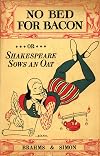
- No Bed for Bacon: Or, Shakespeare Sows an Oat
- Original publication date
- 1941
- People/Characters
- William Shakespeare; Elizabeth I, Queen of England
- Epigraph
- 'To my Wife, My Second Best Bed . . .'
- Dedication
- To our parents
- First words
- 'Five o'clock of a fine summer's morning,' chanted the night-watchman.
- Last words
- (Click to show. Warning: May contain spoilers.)Soon he was writing again. 'Shall I compare thee to a summer's day . . .'
Classifications
Statistics
- Members
- 266
- Popularity
- 121,907
- Reviews
- 12
- Rating
- (3.84)
- Languages
- English, French, German
- Media
- Paper
- ISBNs
- 8
- ASINs
- 13