On This Page
Description
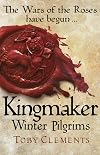
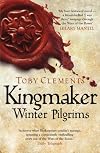
February 1460In the bitter dawn of a winter's morning, a young man and a woman escape from a priory.In fear of their lives, they are forced to flee across a land ravaged by conflict.For this is the Wars of the Roses, one of the most savage and bloody civil wars in history,Where brother confronts brother, king faces king,And Thomas and Katherine must fight - just to stay alive ...Tags
Recommendations














Member Reviews
During the bitter winter of 1460, while simply going about their business, a nun and a monk from the Order of Gilbert of St Mary's Priory near Lincoln are attacked by a sadistic knight, his son and their violent company. Katherine and Thomas manage to defend themselves, but they have made enemies for life. Both are expelled from their order and flee, by coincidence ending up in the retinue of Sir John Fakenham, who is taking them to Calais, where they end up joining the army supporting the Earl of Warwick in the bloody civil war known as the Wars of the Roses.
This was a highly affecting and astonishingly mature debut novel, which brings the past vividly to life. The author has clearly done his research and cleverly interweaves known show more historical facts with fiction. There are many terms that are unfamiliar to the modern reader, but in my opinion they don't distract from the story but add colour and texture to the plot as the meanings are fairly easy to guess, if only in general terms. The characterisations in particular are astonishing, with characters so real they appeared to jump out of the page; incredible to think they've *only* sprung out of someone's imagination.
While many historical novels shine a spotlight on known historical figures, here the focus is very much reversed: the Earl of Warwick, the Earl of March – after the death of his father the new Duke of York and eventually King Edward IV – and William Hastings move into Katherine and Thomas's orbit, and even during the skirmishes, sieges and battles the author concentrates on telling the story of the common person, who usually had no choice about participation in the violence. As befits a novel focusing on the Wars of the Roses, it is a very violent book, while at the same time bringing out the humanity of the two central characters. The descriptions of the Battle of Towton in particular are breathtaking in the depiction of the slaughter and savagery that humans are capable of inflicting on each other.
Until time travel is invented, novels like these are the best option to explore the past. The next volume in the series is already on my shelf, and I'm looking forward to following Thomas and Katherine's path further. show less
This was a highly affecting and astonishingly mature debut novel, which brings the past vividly to life. The author has clearly done his research and cleverly interweaves known show more historical facts with fiction. There are many terms that are unfamiliar to the modern reader, but in my opinion they don't distract from the story but add colour and texture to the plot as the meanings are fairly easy to guess, if only in general terms. The characterisations in particular are astonishing, with characters so real they appeared to jump out of the page; incredible to think they've *only* sprung out of someone's imagination.
While many historical novels shine a spotlight on known historical figures, here the focus is very much reversed: the Earl of Warwick, the Earl of March – after the death of his father the new Duke of York and eventually King Edward IV – and William Hastings move into Katherine and Thomas's orbit, and even during the skirmishes, sieges and battles the author concentrates on telling the story of the common person, who usually had no choice about participation in the violence. As befits a novel focusing on the Wars of the Roses, it is a very violent book, while at the same time bringing out the humanity of the two central characters. The descriptions of the Battle of Towton in particular are breathtaking in the depiction of the slaughter and savagery that humans are capable of inflicting on each other.
Until time travel is invented, novels like these are the best option to explore the past. The next volume in the series is already on my shelf, and I'm looking forward to following Thomas and Katherine's path further. show less
This is a historical adventure story set at the beginning of the Wars of the Roses. Starting in the Priory of St Mary, in Lincolnshire in 1460, it charts the lives of two members of the priory, Brother Thomas and Sister Katherine as they leave the Priory and head out into the world. With little knowledge of life beyond the walls they meet friends and make enemies and it’s often not apparent which is which. As they are drawn into the world of civil war, opposing armies and the associated politics they are faced with challenges and peril while largely ignorant of the world around them.
It’s a while since I read this and, opening it again to refresh my memory of the characters and events, I found it drawing me in. The descriptions of show more the harsh winter landscape, the harsher life in the priory cut off from the world, the characters painted with enough detail to be real at the same time as being mysterious, I’m sure I could read the whole thing again and enjoy it just as much.
Clements’ research seems real enough, his refence to the specific types of trees in the landscape, his knowledge of medieval life and the roles and behaviours of people in a religious community, all add flavour to the experience even if you have to look up the meaning of someone called a Pardoner. (That was a lesson learned when I finally got around to Googling it.) But these references don’t slow the story down. The fact that I didn’t know what a Pardoner did in 1460 doesn’t really matter, it’s just a job title. (It wouldn’t matter if a character was described as a Traffic Warden if you didn’t know what the job entailed so long as they were off duty.)
As regards the battles, and there are a lot of them, it is the Wars of the Roses after all, they are very graphic. There’s a fight scene fairly early on and it sets the tone for the bloodshed from the start. I wouldn’t say that the violence is gratuitous, rather that the story doesn’t shy away in its depiction of medieval warfare which must have been bloody terrifying. The sheer brutality of the people, often not just to their enemies, left me with a sense of shock, but in a world if Game of Thrones and the like this may be less of a surprise to others. I’ve not read this sort of thing before, having been given this copy by a friend and I’m glad to have it.
Having said that I would read more. Were I not busy with a reading list longer than I care to admit and my own fish to fry, I’d read this again. However, I have put the other two in the series on my fiction list of books to read. There are clearly some unresolved mysteries that are hinted at throughout and I’d like to know how they turn out and what becomes of Thomas and Katherine as the wars continue.
If you like a bit of history, like to imagine what life would have been like in an age of knights on horseback, peasant armies pressed into service and people without human rights just trying to keep their heads down (literally in many cases), then I recommend it.
Four out of five stars. show less
It’s a while since I read this and, opening it again to refresh my memory of the characters and events, I found it drawing me in. The descriptions of show more the harsh winter landscape, the harsher life in the priory cut off from the world, the characters painted with enough detail to be real at the same time as being mysterious, I’m sure I could read the whole thing again and enjoy it just as much.
Clements’ research seems real enough, his refence to the specific types of trees in the landscape, his knowledge of medieval life and the roles and behaviours of people in a religious community, all add flavour to the experience even if you have to look up the meaning of someone called a Pardoner. (That was a lesson learned when I finally got around to Googling it.) But these references don’t slow the story down. The fact that I didn’t know what a Pardoner did in 1460 doesn’t really matter, it’s just a job title. (It wouldn’t matter if a character was described as a Traffic Warden if you didn’t know what the job entailed so long as they were off duty.)
As regards the battles, and there are a lot of them, it is the Wars of the Roses after all, they are very graphic. There’s a fight scene fairly early on and it sets the tone for the bloodshed from the start. I wouldn’t say that the violence is gratuitous, rather that the story doesn’t shy away in its depiction of medieval warfare which must have been bloody terrifying. The sheer brutality of the people, often not just to their enemies, left me with a sense of shock, but in a world if Game of Thrones and the like this may be less of a surprise to others. I’ve not read this sort of thing before, having been given this copy by a friend and I’m glad to have it.
Having said that I would read more. Were I not busy with a reading list longer than I care to admit and my own fish to fry, I’d read this again. However, I have put the other two in the series on my fiction list of books to read. There are clearly some unresolved mysteries that are hinted at throughout and I’d like to know how they turn out and what becomes of Thomas and Katherine as the wars continue.
If you like a bit of history, like to imagine what life would have been like in an age of knights on horseback, peasant armies pressed into service and people without human rights just trying to keep their heads down (literally in many cases), then I recommend it.
Four out of five stars. show less
A sweeping, dramatic, gritty look at The War of the Roses.
A monk momentarily forgets himself and acts spontaneously, saving the lives of two nuns. In the aftermath he is almost killed but, through a mixture of pure chance and a rough upbringing, he survives aided in part by one of the nuns, Katherine. Neither of them has any clear idea about what they will do, but each finds they possess skills that will keep them alive day to day.
Completely by accident, they fall in with a knight and his fighting men, who are indentured to Lord Fauconberg, uncle to the Earl of Warwick, the Kingmaker of the title. From there on, Thomas and Katherine - now dressed as a boy and calling herself Kit - find themselves drawn into the turbulent, brutal show more battles that scar England as rival factions fight for the throne.
Clements sends his characters on a rollercoaster ride through a country riven with tension and fraught with danger. He's not afraid to kill off characters either. Some of the exposition is slightly clunky, but not massively so, and it's essential for any reader not familiar with this ruthless, lawless, bloody period of history.
I would recommend this highly readable, well-written, and well-researched first novel in a promising series to all who love history, historical fiction, and even those who enjoy high fantasy like A Song of Ice and Fire as it reads much the same...except no dragons. show less
A monk momentarily forgets himself and acts spontaneously, saving the lives of two nuns. In the aftermath he is almost killed but, through a mixture of pure chance and a rough upbringing, he survives aided in part by one of the nuns, Katherine. Neither of them has any clear idea about what they will do, but each finds they possess skills that will keep them alive day to day.
Completely by accident, they fall in with a knight and his fighting men, who are indentured to Lord Fauconberg, uncle to the Earl of Warwick, the Kingmaker of the title. From there on, Thomas and Katherine - now dressed as a boy and calling herself Kit - find themselves drawn into the turbulent, brutal show more battles that scar England as rival factions fight for the throne.
Clements sends his characters on a rollercoaster ride through a country riven with tension and fraught with danger. He's not afraid to kill off characters either. Some of the exposition is slightly clunky, but not massively so, and it's essential for any reader not familiar with this ruthless, lawless, bloody period of history.
I would recommend this highly readable, well-written, and well-researched first novel in a promising series to all who love history, historical fiction, and even those who enjoy high fantasy like A Song of Ice and Fire as it reads much the same...except no dragons. show less
Good start to a series. I love the Wars of the Roses and this book gives it that personal touch, taking you right into the heart of the action. It's no Conn Iggulden but the author has a different style which is interesting and stands on its own merits.
Highly entertaining, down to the grim descriptions of battle and slaughter. Yes, if you have a delicate stomach better not to listen to those parts in the narration, but otherwise I highly recommend this. As there are three more books in the series, I can't wait to get stuck in the next audiobook.
I don't know what I was expecting from a book set in the Wars of the Roses, but this was gruesome extended battle scenes most of the way through. The rest was detailed descriptions of late medieval surgery or brutal personal violence.
bookshelves: currently-reading, first-in-series, newtome-author, net-galley, published-2014, winter-20132014, wars-of-the-roses, medieval5c-16c, historical-fiction, war, series, e-book, adventure, religion, plague-disease, seven-seas, superstitions, britain-england, pirates-smugglers-wreckers, france, betrayal, medical-eew, revenge, spies, travel
Read from February 12 to 20, 2014
ARC received with thanks from Net Galley and Random House UK, Cornerstone in exchange for an honest review.
Richard Neville, 16th Earl of Warwick One of the Yorkist leaders in the Wars of the Roses, he was instrumental in the deposition of two kings, a fact which later earned him his epithet of "Kingmaker" to later generations. (wiki sourced)
Description: show more February, 1460: in the bitter dawn of a winter’s morning a young nun is caught outside her priory walls by a corrupt knight and his vicious retinue.
In the fight that follows, she is rescued by a young monk and the knight is defeated. But the consequences are far-reaching, and Thomas and Katherine are expelled from their religious Orders and forced to flee across a land caught in the throes of one of the most savage and bloody civil wars in history: the Wars of the Roses.
Their flight will take them across the Narrow Sea to Calais where Thomas picks up his warbow, and trains alongside the Yorkist forces. Katherine, now dressed as a man, hones her talents for observation and healing both on and off the fields of battle. And all around them, friends and enemies fight and die as the future Yorkist monarch, Edward, Earl of March, and his adviser the Earl of Warwick, later to become known as the Kingmaker, prepare to do bloody battle.
Encompassing the battles of Northampton, Mortimer's Cross and finally the great slaughter of Towton, this is war as experienced not by the highborn nobles of the land but by ordinary men and women who do their best just to stay alive. Filled with strong, sympathetic characters, this is a must-read series for all who like their fiction action-packed, heroic and utterly believable.
Dedication: To Karen, with all my love
Opening is February 1460: The Dean comes for him during the Second Repose, when the night is at its darkest. He brings with him a rush light and a quarterstaff and wakes him with a heavy prod.
'Up now, Brother Thomas,' he says. 'The Prior's asking for you.'
Epic adventuring that had me hooked by page 52. In the time-honoured way of honest reviewing I shall point out the things that stopped this excellent story from being the 5* this read really deserves:
-The present tense prose: didn't bother me at all once I was into the story but it will not appeal to some of my reading pals.
-That carrot ending: this really is a turn-off to many a reader and could be the kiss of death for a series. We don't want to have it taken for granted by the author that we will buy into the next installment.
-Some secondary characters were barely fleshed out: I'm especially looking at a giant of a man who comes across as cartoon thug.
I loved this story, non-stop action featuring a lovely pair of modest but surprising heroes and that is all I can say for the moment as this is not due to be published until April. To I recommend it? Oh yes, the best adventure novel I have read in quite a while.
A word on Scrofula, sourced by The Science Museum:
In the Middle Ages it was believed in England and France that a touch from royalty could heal skin disease known as scrofula or the ‘king's evil’. Scrofula was usually a swelling of the lymph nodes in the neck caused by tuberculosis. The practice began with King Edward the Confessor in England (1003/4-1066) and Philip I (1052-1108) in France.
Subsequent English and French kings were thought to have inherited this ‘royal touch’, which was supposed to show that their right to rule was God-given. In grand ceremonies, kings touched hundreds of people afflicted by scrofula. They received special gold coins called 'touchpieces' which they often treated as amulets.
By the late 1400s it was believed that you could also be cured by touching a type of coin called an angel, which had been touched by the monarch. After angels ceased to be minted in the 1620s the same effect was said to be achieved by touching a gold medallion embossed much like the old coin.
Henry Beaufort, 3rd Duke of Somerset (26 January 1436 – 15 May 1464) was an important Lancastrian military commander during the English Wars of the Roses. He is sometimes numbered the 2nd Duke of Somerset, since the title was re-created for his father after his uncle died. He also held the subsidiary titles of 5th Earl of Somerset, 2nd Marquess of Dorset and 2nd Earl of Dorset.Source
Kidwelly Castle
EXTRAS: You too can watch Dating in the Middle Ages
Crossposted:
Wordpress
Booklikes
LeafMark
Librarything
aNobii show less
Read from February 12 to 20, 2014
ARC received with thanks from Net Galley and Random House UK, Cornerstone in exchange for an honest review.
Richard Neville, 16th Earl of Warwick One of the Yorkist leaders in the Wars of the Roses, he was instrumental in the deposition of two kings, a fact which later earned him his epithet of "Kingmaker" to later generations. (wiki sourced)
Description: show more February, 1460: in the bitter dawn of a winter’s morning a young nun is caught outside her priory walls by a corrupt knight and his vicious retinue.
In the fight that follows, she is rescued by a young monk and the knight is defeated. But the consequences are far-reaching, and Thomas and Katherine are expelled from their religious Orders and forced to flee across a land caught in the throes of one of the most savage and bloody civil wars in history: the Wars of the Roses.
Their flight will take them across the Narrow Sea to Calais where Thomas picks up his warbow, and trains alongside the Yorkist forces. Katherine, now dressed as a man, hones her talents for observation and healing both on and off the fields of battle. And all around them, friends and enemies fight and die as the future Yorkist monarch, Edward, Earl of March, and his adviser the Earl of Warwick, later to become known as the Kingmaker, prepare to do bloody battle.
Encompassing the battles of Northampton, Mortimer's Cross and finally the great slaughter of Towton, this is war as experienced not by the highborn nobles of the land but by ordinary men and women who do their best just to stay alive. Filled with strong, sympathetic characters, this is a must-read series for all who like their fiction action-packed, heroic and utterly believable.
Dedication: To Karen, with all my love
Opening is February 1460: The Dean comes for him during the Second Repose, when the night is at its darkest. He brings with him a rush light and a quarterstaff and wakes him with a heavy prod.
'Up now, Brother Thomas,' he says. 'The Prior's asking for you.'
Epic adventuring that had me hooked by page 52. In the time-honoured way of honest reviewing I shall point out the things that stopped this excellent story from being the 5* this read really deserves:
-The present tense prose: didn't bother me at all once I was into the story but it will not appeal to some of my reading pals.
-That carrot ending: this really is a turn-off to many a reader and could be the kiss of death for a series. We don't want to have it taken for granted by the author that we will buy into the next installment.
-Some secondary characters were barely fleshed out: I'm especially looking at a giant of a man who comes across as cartoon thug.
I loved this story, non-stop action featuring a lovely pair of modest but surprising heroes and that is all I can say for the moment as this is not due to be published until April. To I recommend it? Oh yes, the best adventure novel I have read in quite a while.
A word on Scrofula, sourced by The Science Museum:
In the Middle Ages it was believed in England and France that a touch from royalty could heal skin disease known as scrofula or the ‘king's evil’. Scrofula was usually a swelling of the lymph nodes in the neck caused by tuberculosis. The practice began with King Edward the Confessor in England (1003/4-1066) and Philip I (1052-1108) in France.
Subsequent English and French kings were thought to have inherited this ‘royal touch’, which was supposed to show that their right to rule was God-given. In grand ceremonies, kings touched hundreds of people afflicted by scrofula. They received special gold coins called 'touchpieces' which they often treated as amulets.
By the late 1400s it was believed that you could also be cured by touching a type of coin called an angel, which had been touched by the monarch. After angels ceased to be minted in the 1620s the same effect was said to be achieved by touching a gold medallion embossed much like the old coin.
Henry Beaufort, 3rd Duke of Somerset (26 January 1436 – 15 May 1464) was an important Lancastrian military commander during the English Wars of the Roses. He is sometimes numbered the 2nd Duke of Somerset, since the title was re-created for his father after his uncle died. He also held the subsidiary titles of 5th Earl of Somerset, 2nd Marquess of Dorset and 2nd Earl of Dorset.Source
Kidwelly Castle
EXTRAS: You too can watch Dating in the Middle Ages
Crossposted:
Wordpress
Booklikes
LeafMark
Librarything
aNobii show less
Members
- Recently Added By
Lists

Books We Want To Read Again For The First Time
384 works; 160 members
Author Information

11 Works 467 Members
Series

Common Knowledge
- Canonical title
- Kingmaker: Winter Pilgrims
- Original publication date
- 2014
- People/Characters
- Thomas Everingham; Katherine
- Important places
- Lincolnshire, England, UK; Calais, Pas-de-Calais, Hauts-de-France, France
- Important events
- The Wars of the Roses
- First words
- The Dean comes for him during the Second Repose, when the night is at its darkest.
- Last words
- (Click to show. Warning: May contain spoilers.)And this time she hears him, and she turns.
Classifications
Statistics
- Members
- 180
- Popularity
- 182,633
- Reviews
- 8
- Rating
- (3.95)
- Languages
- English, German, Portuguese
- Media
- Paper, Audiobook, Ebook
- ISBNs
- 11
- ASINs
- 6