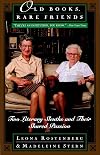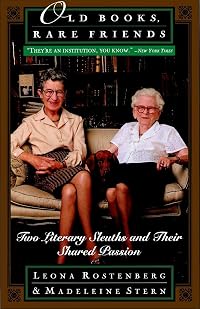
Old Books, Rare Friends: Two Literary Sleuths and Their Shared Passion
by Leona Rostenberg, Madeleine B. Stern
On This Page
Description
Louisa May Alcott once wrote that she had taken her pen for a bridegroom. Leona Rostenberg and Madeleine Stern, friends and business partners for fifty years, have in many ways taken up their pens and passion for literature much in the same way. The "Holmes & Watson" of the rare book business, Rostenberg and Stern are renowned for unlocking the hidden secret of Louisa May Alcott's life when they discovered her pseudonym, A.M. Barnard, along with her anonymously published "blood and thunder" show more stories on subjects like transvestitism, hashish smoking, and feminism. Old Books, Rare Friends describes their mutual passion for books and literary sleuthing as they take us on their earliest European book buying jaunts. Using what they call Finger-spitzengefühl, the art of evaluating antiquarian books by handling, experience, and instinct, we are treated to some of their greatest discoveries amid the mildewed basements of London's booksellers after the Blitz. We experience the thrill of finding one of the earliest known books printed in America between 1617-1619 by the Pilgrim Press and learn about the influential role of publisher-printers from the fifteenth century. Like a precious gem, Old Books, Rare Friends is a book to treasure about the companionship of two rare friends and their shared passion for old books. show lessTags
Recommendations
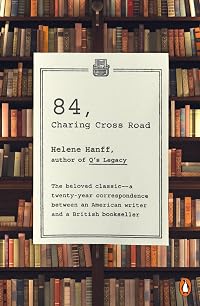
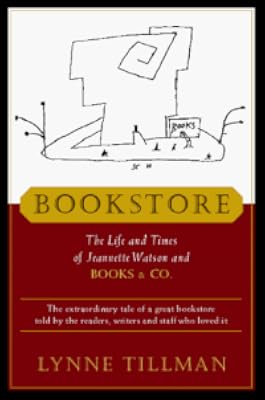
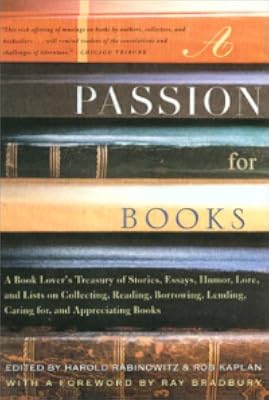
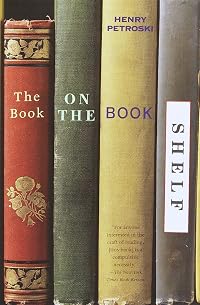



Member Recommendations
Member Reviews
“Old Books, Rare Friends” is the story of two remarkable women who became antiquarian booksellers and experts but most of all, who became and stayed true friends for their entire lives. I fell head over heels in love with these two through the course of this autobiography/memoir which took each from their early childhoods through their halcyon days as their rare book business expanded and grew, and finally to old age with their curiosity and enthusiasm as fresh as when they were young.
Leona Rostenberg charted her own course through her doctoral studies, refusing to follow the path urged upon her by her thesis supervisor (who sabotaged her, in the end). She felt the influence of early printers had shaped the society of their show more respective eras and set out to prove it, researching in Strasbourg before the Second World War. This research would provide the basis for a profound knowledge of printing houses, the books they produced and the authors they fostered. Leona was possessed of that instinct dubbed “Finger-Spitzengefül”, a kind of tingling in the fingers which tells you that you are about to discover something rare and wonderful.
Madeleine Stern became a biographer (her first about Margaret Fuller) with a propensity for detailed and painstaking research. She discovered that Louisa May Alcott had had a secret life as a writer of “blood and thunder” novels which paid her and enabled her to provide support for her family. She succeeded in getting a Guggenheim fellowship so that she could research Alcott on a full-time basis and eventually broke through the secret identity to reveal Alcott’s alternative pen name, astonishing the academic world which had previously overlooked the clues. With their eye for detail and their Sherlockian instincts, they were perfect candidates to become expert at finding rare and difficult to find books.
Their deep love for each other informs every page of this book, making their work and explorations a joy. Hardworking, energetic, extraordinarily intelligent and perceptive, these two appear to have left the book lovers’ world a better place for their having been here. A charming book by two delightful characters. How I wish I could have known them! show less
Leona Rostenberg charted her own course through her doctoral studies, refusing to follow the path urged upon her by her thesis supervisor (who sabotaged her, in the end). She felt the influence of early printers had shaped the society of their show more respective eras and set out to prove it, researching in Strasbourg before the Second World War. This research would provide the basis for a profound knowledge of printing houses, the books they produced and the authors they fostered. Leona was possessed of that instinct dubbed “Finger-Spitzengefül”, a kind of tingling in the fingers which tells you that you are about to discover something rare and wonderful.
Madeleine Stern became a biographer (her first about Margaret Fuller) with a propensity for detailed and painstaking research. She discovered that Louisa May Alcott had had a secret life as a writer of “blood and thunder” novels which paid her and enabled her to provide support for her family. She succeeded in getting a Guggenheim fellowship so that she could research Alcott on a full-time basis and eventually broke through the secret identity to reveal Alcott’s alternative pen name, astonishing the academic world which had previously overlooked the clues. With their eye for detail and their Sherlockian instincts, they were perfect candidates to become expert at finding rare and difficult to find books.
Their deep love for each other informs every page of this book, making their work and explorations a joy. Hardworking, energetic, extraordinarily intelligent and perceptive, these two appear to have left the book lovers’ world a better place for their having been here. A charming book by two delightful characters. How I wish I could have known them! show less
This was a very interesting account of the literary sleuthing lives of two remarkable women. Underlying their mutual love of old and rare books was so much knowledge of world history, literature, languages and art that I was often more impressed by their ability to know what they had discovered than by the treasure itself. Imagine picking up a 16th century volume of sermons by Martin Luther, seeing the woodcut portrait on the title page, and having the mental historical resources to suspect that this might be the earliest portrait of Luther in existence.
In addition to being internationally respected collectors and sellers of antiquarian books, the authors were both prolific writers. Rostenberg and Stern each had their own areas of show more specialization, but they also often collaborated on books about their trade in general, and their own experiences in it in particular. Leona Rostenberg researched and wrote throughout her life on the history of publishing and printing. Madeleine Stern became widely known as an authority on the literary "double life" of Louisa May Alcott, editing several collections of Alcott's so-called "blood and thunder" pot-boiler stories, which she tracked down in their original publications in an endeavor quite worthy of Sherlock Holmes.
February 2009 show less
In addition to being internationally respected collectors and sellers of antiquarian books, the authors were both prolific writers. Rostenberg and Stern each had their own areas of show more specialization, but they also often collaborated on books about their trade in general, and their own experiences in it in particular. Leona Rostenberg researched and wrote throughout her life on the history of publishing and printing. Madeleine Stern became widely known as an authority on the literary "double life" of Louisa May Alcott, editing several collections of Alcott's so-called "blood and thunder" pot-boiler stories, which she tracked down in their original publications in an endeavor quite worthy of Sherlock Holmes.
February 2009 show less
Two members of the Greatest Generation recall their lives with books and each other. Leona Rostenberg and Madeline Stern seem to have embodied the idea of the Antiquarian book dealer. Knowledgeable, intensely inquisitive, and in love with books not for their investment value but for their significance to history and society, both women write about their academic and book discoveries with a contagious sort of excitement. You can tell as you read that these women loved their jobs, and what's not to love about discovering a goldmine of pseudonymous wild tales from the author of Little Women, or coming across one of the earliest volumes of Americana to ever exist in a British catalog for a fraction of its value?
The world as it was when show more Rostenberg and Stern were hitting eureka after eureka in the postwar attics of Europe are long gone, but as long as there are people like Leona Rostenberg and Madeline Stern in the world, the love of books and discovery will never die. show less
The world as it was when show more Rostenberg and Stern were hitting eureka after eureka in the postwar attics of Europe are long gone, but as long as there are people like Leona Rostenberg and Madeline Stern in the world, the love of books and discovery will never die. show less
A biography of two real characters! I would never have imagined that I would find a book about two old ladies who I had never heard of so unputdownable. I enjoyed this book about books so much that I started searching out the author's other books and found not all of them so well written or enjoyable as this one. I couldn't even slog through the first chapter of [b:The Life of Margaret Fuller: A Revised, Second Edition|2330119|The Life of Margaret Fuller A Revised, Second Edition (Contributions in Women's Studies)|Madeleine B. Stern|http://photo.goodreads.com/books/1266736738s/2330119.jpg|2336683].
A biography of two real characters! I would never have imagined that I would find a book about two old ladies who I had never heard of so unputdownable. I enjoyed this book about books so much that I started searching out the author's other books and found not all of them so well written or enjoyable as this one. I couldn't even slog through the first chapter of [b:The Life of Margaret Fuller: A Revised, Second Edition|2330119|The Life of Margaret Fuller A Revised, Second Edition (Contributions in Women's Studies)|Madeleine B. Stern|http://photo.goodreads.com/books/1266736738s/2330119.jpg|2336683].
I wanted to read this book as extension of my study of Louisa May Alcott. I expected the discovery of Alcott's sensational stories to have a bigger place in the book. I had read Madeleine Stern's biography of LMC. Most other LMC biographies are at least partially based on hers.
Leona and Madeleine switch off telling their story. At times I got confused about who did what. After they start their book business most of the stories are about how they found certain obscure rare books. In the beginning I was fascinated, but after a while it sounded all the same. It struck me that they found most rare books by simply remembering a small, to the layman insignificant, fact. How these two women must have studied to know enough to get the show more Fingerspitzen gefuhl (sensitive fingertips= intuition) they talk about. I really admired them. I also had never thought that there was a feminist slant to rare books, but there obviously is.
I enjoyed reading most of the book, but lost interest in the last quarter of it. show less
Leona and Madeleine switch off telling their story. At times I got confused about who did what. After they start their book business most of the stories are about how they found certain obscure rare books. In the beginning I was fascinated, but after a while it sounded all the same. It struck me that they found most rare books by simply remembering a small, to the layman insignificant, fact. How these two women must have studied to know enough to get the show more Fingerspitzen gefuhl (sensitive fingertips= intuition) they talk about. I really admired them. I also had never thought that there was a feminist slant to rare books, but there obviously is.
I enjoyed reading most of the book, but lost interest in the last quarter of it. show less
As a novice book collector myself (modern first editions; frowned upon by these authors as "too easy" to collect), I was excited to receive and read this book. It is an elegant story of 2 women who lived outside of and beyond the expectations of upper middle class young women in the 1930's and beyond. They defied convention and became highly educated women and chose a life of book writing, collecting and selling, along with "literary sleuthing" to make connections between antiquarian books and moments and key figures in history. Thanks to their sleuthing we also know much more about Louisa May Alcott's "scandalous" stories published anonymously or pseudonomously.
I found most of the book to be enjoyable but did skim the final chapters show more that were highly detailed descriptions of books bought and sold. Still quite an enjoyable book. show less
I found most of the book to be enjoyable but did skim the final chapters show more that were highly detailed descriptions of books bought and sold. Still quite an enjoyable book. show less
Members
- Recently Added By
Author Information

20 Works 1,075 Members
30+ Works 1,287 Members
Some Editions
Common Knowledge
- Canonical title
- Old Books, Rare Friends: Two Literary Sleuths and Their Shared Passion
- Original publication date
- 1997
- Epigraph
- A friend may well be reckoned the masterpiece of Nature.—Ralph Waldo Emerson
- Dedication
- To Madeleine with love and gratitude from Leona
To Leona with gratitude and love from Madeleine - First words
- Early one morning in September 1995, the telephone rang.
- Last words
- (Click to show. Warning: May contain spoilers.)Together we look to the future—to our next find, to our next book, to our next adventure.
Classifications
- Genres
- Nonfiction, Biography & Memoir, General Nonfiction
- DDC/MDS
- 381.45002092 — Society, government, & culture Commerce, communications & transportation regulations Domestic Trade (Commerce) Specific products and services Books
- LCC
- Z473 .R77 .R665 — Bibliography, Library Science and Information Resources Book industries and trade Bookselling and publishing
- BISAC
Statistics
- Members
- 546
- Popularity
- 54,701
- Reviews
- 14
- Rating
- (3.66)
- Languages
- English, German
- Media
- Paper, Ebook
- ISBNs
- 5
- ASINs
- 3