On This Page
Description
Margerit Sovitre did not expect to inherit Baron Saveze's fortunes-even less his bodyguard, a ruthlessly efficient swordswoman known only as Barbara. Wealth suddenly makes Margerit a highly eligible heiress and buys her the enmity of the new Baron. He had expected to inherit all, and now eyes her fortune with open envy. Barbara proudly served as the old Baron's duelist but she had expected his death to make her a free woman. Bitterness turns to determination when she finds herself the only show more force that stands between Margerit and the new Baron's greed. At first Margerit protests the need for Barbara's services, but soon she cannot imagine sending Barbara away. And Barbara's duty has become something far more hazardous to her heart than the point of a sword. But greater dangers loom than one man's hatred-the Prince of Alpennia is ill. Deadly intrigue surrounds the succession and the rituals of divine power known as The Mysteries of the Saints. Heather Rose Jones debuts with a sweeping story rich in intrigue and the clash of loyalties and love. Contains mature themes. LGBTQIA+ (Fiction.) Fantasy. Fiction. Romance. show lessTags
Recommendations









































Member Recommendations

reconditereader Both beginning series with similar-feeling settings.
Member Reviews
This was my favorite novel of 2014. Frittering away my life watching Rose of Versailles has made me really enjoy stories about female swordfighters. I had modest expectations for this book, which were exponentially exceeded. It’s an incredibly compelling and well-written fantasy novel set in a mythical European country. I think this was some of the best worldbuilding I’ve ever encountered. It’s a world where there’s magic but, very realistically, exactly how the magic works is not that well understood and most people don’t really care because their minds are on other stuff. I thought this novel also dealt very nicely with some common problems in lesbian historical fiction (see, that’s what it read like, even though it was show more fantasy), such as having a realistic happy ending in a homophobic society, and also dealing with the lovers-pretending-to-be-mistress-and-servant trope. If you are looking for a lesbian Patrick O’Brian-esque fantasy novel, which I would have looked for had I ever dreamed such a thing was possible, this is it. Whatever Heather Rose Jones writes next, I want it. show less
Daughter of Mystery is set in the fictional European country of Alpennia, sometime in the early 19th century. Chapters alternate between Barbara’s perspective and Margerit’s. Barbara knows she’s of noble birth but has no idea who her parents are. Her father lost everything due to his gambling debts and sold her to Baron Seveze when she was only a baby. She is now the baron’s armin (formal bodyguard/duelist).
Margerit Sovitre is the baron’s goddaughter, although he generally hasn’t been in her life much. Margerit is an orphan who was taken in by her aunt and uncle. She has no interest in attending balls or getting married, but that’s the direction in which her life seems to be going, until Baron Seveze dies and everyone show more learns to their shock that he has left her his entire fortune. He also left her Barbara, despite his promise to free her, and made it so that Margerit cannot free her before she (Margerit) comes of age without most of the baron’s fortune going to the Convent of Saint Orisul instead. Margerit is willing to do this, but her uncle, who still controls her life, isn’t willing to let her. However, Margerit’s efforts win her Barbara’s loyalty. With Barbara at her side, Margerit pursues her heart’s desire: studying philosophy and theology at the university in Rotenek. Meanwhile, Barbara digs into the mystery of her own past.
I hate writing reviews of things I actually enjoyed. I came very close to just pushing out three bulleted lists: What I Liked, What I Didn’t Like, and Things That Didn’t Fit Into the Other Two Categories. ::sigh::
I adored the first half of this book. Sure, it was slow, but in a good way. It reminded me strongly of Katherine Addison’s The Goblin Emperor, if that book had been written from the perspective of its women. There was Barbara, who usually dressed as a man and was a skilled bodyguard and duelist. And there was Margerit, who, like The Goblin Emperor’s Maia, was abruptly thrust into the limelight by her changed circumstances. She was expected to find a husband, manage his household, and bear his children, and instead the baron’s money opened up a path to all the things she’d really wanted (plus at least one thing she hadn't even considered).
The setting had a definite sense of weight and depth to it, and the politics was intriguing, if occasionally confusing. I was fascinated with the way religion and magic seemed to be intertwined, even as I worried that Margerit was happily and blindly heading towards being declared a heretic. Even though Barbara spent more of the book in on-page danger than Margerit, I tended to worry more about Margerit than her. Barbara was cool, competent, and definitely more politically savvy.
The pacing occasionally got too slow for my tastes, especially in the second half. There were times when I wished some of the political details and Margerit and Barbara’s analyses of religious mysteries had been tightened up a bit. To be fair, many of the things that looked unimportant or unrelated did eventually tie together in the end, it just took longer than I expected.
Barbara and Margerit’s relationship was one of those things I both enjoyed and had issues with. I liked that it took a while for them to go from bonding over shared interests to mutual secret attraction, and finally to discussing how they felt about each other. Considering the difference in their positions - after all, Barbara was technically Margerit’s inherited property - it would have felt weird if things had progressed more quickly. Which isn’t to say that I didn’t occasionally get frustrated with how long everything took.
For the most part, Barbara seemed to be more acutely aware of the difference in their positions than Margerit...up until a scene late in the book when Margerit told Barbara “You forget your place” during an argument. I was horrified, Barbara felt like she’d been kicked in the gut, and Margerit immediately regretted it. I kept waiting for them to talk about it. Margerit mentioned the scene once, a little, when she voiced her fear that she’d lost Barbara for good, and they talked more about some related issues near the end, but I still felt like the author brushed that one scene aside a bit too much.
Despite my issues with the pacing and my slight dissatisfaction with the way Margerit and Barbara’s relationship was handled, I really enjoyed Daughter of Mystery and am looking forward to reading the next book. I wish I'd purchased the whole series while it was still on sale at Kobo.
(Original review posted on A Library Girl's Familiar Diversions.) show less
Margerit Sovitre is the baron’s goddaughter, although he generally hasn’t been in her life much. Margerit is an orphan who was taken in by her aunt and uncle. She has no interest in attending balls or getting married, but that’s the direction in which her life seems to be going, until Baron Seveze dies and everyone show more learns to their shock that he has left her his entire fortune. He also left her Barbara, despite his promise to free her, and made it so that Margerit cannot free her before she (Margerit) comes of age without most of the baron’s fortune going to the Convent of Saint Orisul instead. Margerit is willing to do this, but her uncle, who still controls her life, isn’t willing to let her. However, Margerit’s efforts win her Barbara’s loyalty. With Barbara at her side, Margerit pursues her heart’s desire: studying philosophy and theology at the university in Rotenek. Meanwhile, Barbara digs into the mystery of her own past.
I hate writing reviews of things I actually enjoyed. I came very close to just pushing out three bulleted lists: What I Liked, What I Didn’t Like, and Things That Didn’t Fit Into the Other Two Categories. ::sigh::
I adored the first half of this book. Sure, it was slow, but in a good way. It reminded me strongly of Katherine Addison’s The Goblin Emperor, if that book had been written from the perspective of its women. There was Barbara, who usually dressed as a man and was a skilled bodyguard and duelist. And there was Margerit, who, like The Goblin Emperor’s Maia, was abruptly thrust into the limelight by her changed circumstances. She was expected to find a husband, manage his household, and bear his children, and instead the baron’s money opened up a path to all the things she’d really wanted (plus at least one thing she hadn't even considered).
The setting had a definite sense of weight and depth to it, and the politics was intriguing, if occasionally confusing. I was fascinated with the way religion and magic seemed to be intertwined, even as I worried that Margerit was happily and blindly heading towards being declared a heretic. Even though Barbara spent more of the book in on-page danger than Margerit, I tended to worry more about Margerit than her. Barbara was cool, competent, and definitely more politically savvy.
The pacing occasionally got too slow for my tastes, especially in the second half. There were times when I wished some of the political details and Margerit and Barbara’s analyses of religious mysteries had been tightened up a bit. To be fair, many of the things that looked unimportant or unrelated did eventually tie together in the end, it just took longer than I expected.
Barbara and Margerit’s relationship was one of those things I both enjoyed and had issues with. I liked that it took a while for them to go from bonding over shared interests to mutual secret attraction, and finally to discussing how they felt about each other. Considering the difference in their positions - after all, Barbara was technically Margerit’s inherited property - it would have felt weird if things had progressed more quickly. Which isn’t to say that I didn’t occasionally get frustrated with how long everything took.
For the most part, Barbara seemed to be more acutely aware of the difference in their positions than Margerit...up until a scene late in the book when Margerit told Barbara “You forget your place” during an argument. I was horrified, Barbara felt like she’d been kicked in the gut, and Margerit immediately regretted it. I kept waiting for them to talk about it. Margerit mentioned the scene once, a little, when she voiced her fear that she’d lost Barbara for good, and they talked more about some related issues near the end, but I still felt like the author brushed that one scene aside a bit too much.
Despite my issues with the pacing and my slight dissatisfaction with the way Margerit and Barbara’s relationship was handled, I really enjoyed Daughter of Mystery and am looking forward to reading the next book. I wish I'd purchased the whole series while it was still on sale at Kobo.
(Original review posted on A Library Girl's Familiar Diversions.) show less
Alpennia is a small country, probably near Switzerland, at perhaps, roughly, the Regency period in English history. This is a different history, though, and along with all the normal rites of the Church, there are the Mysteries, real visions and miracles, with their own rites and ceremonies.
Margerit Sovitre is an orphan whose guardians are her mother's brother, and her father's sister--who often do not see eye to eye. With a limited fortune of her own, and Uncle Fulpi having two daughters of his own to bring out, Margerit is getting one season to find a husband, maybe a second if necessary.
And then, quite unexpectedly, her godfather, Baron Saveze, dies, and leaves his wealth to her. He does not leave her his title, which goes to his show more nephew Estefan, with whom he has been on bad terms for a long time.
Margerit is suddenly wealthy, and also suddenly has an enemy. It's just as well the Baron has also left her his bodyguard, Barbara.
When Margerit and her kin relocate to the capital, Rotenek, Margerit starts getting an education--in several senses. She's long wanted to be a scholar; now she can, pretending to be a dilettante, pursue an education though not a degree at the university. Having learned that not everyone sees the "ordinary" visions she sees, Margerit is learning to use her gift. She's getting a less welcome education in the ways of a higher level of society than she knew back home in Chalanz,
Less welcome even than that is the education she's getting in politics. She doesn't have any title or any position except that of wealthy heiress, but the prince is old and ailing, and here in the capital, the possibility of doing or saying the wrong thing, of seeming to support one or another of the prospective heirs--and maybe not the successful one--is quite real. Estefan's enmity is even more dangerous here than in Chalanz.
And Margerit is getting an education in love, from the most unexpected part of her inheritance, Barbara, her godfather's armin.
Barbara's background is completely obscure; the Baron bought her from her fallen and imprisoned father as an infant, and has never told her his name. She's gotten an extensive education--fit for a lady, an heir, and an armin. And she had expected to be freed on the Baron's death, but instead, she is now bound for two more years, until she and Margerit are both of age.
Jones has created an absorbing mix of intrigue, fantasy, and romance, with unexpected twists along the way. Neither Margarit nor Barbara is in any way perfect, but they are both interesting, smart, decent, and ultimately likable. I'm looking forward to reading more in this world.
Recommended.
I bought this book. show less
Margerit Sovitre is an orphan whose guardians are her mother's brother, and her father's sister--who often do not see eye to eye. With a limited fortune of her own, and Uncle Fulpi having two daughters of his own to bring out, Margerit is getting one season to find a husband, maybe a second if necessary.
And then, quite unexpectedly, her godfather, Baron Saveze, dies, and leaves his wealth to her. He does not leave her his title, which goes to his show more nephew Estefan, with whom he has been on bad terms for a long time.
Margerit is suddenly wealthy, and also suddenly has an enemy. It's just as well the Baron has also left her his bodyguard, Barbara.
When Margerit and her kin relocate to the capital, Rotenek, Margerit starts getting an education--in several senses. She's long wanted to be a scholar; now she can, pretending to be a dilettante, pursue an education though not a degree at the university. Having learned that not everyone sees the "ordinary" visions she sees, Margerit is learning to use her gift. She's getting a less welcome education in the ways of a higher level of society than she knew back home in Chalanz,
Less welcome even than that is the education she's getting in politics. She doesn't have any title or any position except that of wealthy heiress, but the prince is old and ailing, and here in the capital, the possibility of doing or saying the wrong thing, of seeming to support one or another of the prospective heirs--and maybe not the successful one--is quite real. Estefan's enmity is even more dangerous here than in Chalanz.
And Margerit is getting an education in love, from the most unexpected part of her inheritance, Barbara, her godfather's armin.
Barbara's background is completely obscure; the Baron bought her from her fallen and imprisoned father as an infant, and has never told her his name. She's gotten an extensive education--fit for a lady, an heir, and an armin. And she had expected to be freed on the Baron's death, but instead, she is now bound for two more years, until she and Margerit are both of age.
Jones has created an absorbing mix of intrigue, fantasy, and romance, with unexpected twists along the way. Neither Margarit nor Barbara is in any way perfect, but they are both interesting, smart, decent, and ultimately likable. I'm looking forward to reading more in this world.
Recommended.
I bought this book. show less
I was reading a book that was super dark and heavy, and I realized that I needed something lighter instead. Scrolling through my Kindle, I found Daughter of Mystery. It seemed like it’d be just perfect for the moment. And it was.
Daughter of Mystery is a historical fantasy novel with a romance between two women. Margerit Sovitre is an orphan girl whose guardians are anxious to see marry well, even though she has no wish to marry. Her future changes for ever when her wealthy godfather, Baron Saveze, decides to leave his entire fortune to her. However, his bequest comes with a stipulation — Margerit must take on the services of Barbara, a young woman who served as his bodyguard and duelist. Margerit’s new wealth puts a target on her, show more and she’ll need Barbara by her side. Meanwhile, Barbara starts attempting to unravel the mystery of her parentage and the secrets Baron Saveze was keeping from her.
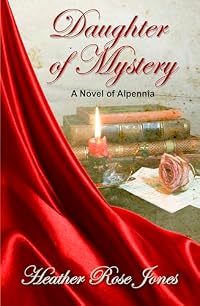
My big concern with Daughter of Mystery is that I tend not to like romance, and this looks like it would be heavy on romance. Just look at that cover! Thankfully, this proved not to be an issue. While the burgeoning relationship between Margerit and Barbara isn’t insubstantial, it’s not the only thing happening of the book. Daughter of Mystery compares fairly well to some of the other historical fantasy novels I’ve enjoyed, such as Sorcerer to the Crown.
And I actually did like the romance this time. Possibly it helps that it was f/f, but I also liked both of the characters involved. It could have easily ventured into some iffy territory re: power differential, but it mostly avoided it. Also, there was no sex, which is good for my bookish tastes.
At this point, you might be wondering what are the fantasy elements in Daughter of Mystery. The answer is, they’re the mysteries referred to in the title. In the world Heather Rose Jones has created, miracles are a common part of daily life. People petition saints for miracles, and sometimes they are answered. But there’s an almost scientific underpinning to it — what saints do you invoke? With what language? It’s sort of like building formulas to produce miracles, and it’s fascinating. Margerit has always had a knack for getting the ear of the saints, but she’s just starting to realize her full potential and create miracles of her own.
The story is well written and felt appropriate to the time period. I enjoyed the political intrigue and the mystery of Barbara’s parentage. Even if I did figure out some of the plot points fairly quickly, Daughter of Mystery left me with plenty of twists I didn’t foresee. I fully intend on reading the sequel.
Review from The Illustrated Page. show less
Daughter of Mystery is a historical fantasy novel with a romance between two women. Margerit Sovitre is an orphan girl whose guardians are anxious to see marry well, even though she has no wish to marry. Her future changes for ever when her wealthy godfather, Baron Saveze, decides to leave his entire fortune to her. However, his bequest comes with a stipulation — Margerit must take on the services of Barbara, a young woman who served as his bodyguard and duelist. Margerit’s new wealth puts a target on her, show more and she’ll need Barbara by her side. Meanwhile, Barbara starts attempting to unravel the mystery of her parentage and the secrets Baron Saveze was keeping from her.
My big concern with Daughter of Mystery is that I tend not to like romance, and this looks like it would be heavy on romance. Just look at that cover! Thankfully, this proved not to be an issue. While the burgeoning relationship between Margerit and Barbara isn’t insubstantial, it’s not the only thing happening of the book. Daughter of Mystery compares fairly well to some of the other historical fantasy novels I’ve enjoyed, such as Sorcerer to the Crown.
And I actually did like the romance this time. Possibly it helps that it was f/f, but I also liked both of the characters involved. It could have easily ventured into some iffy territory re: power differential, but it mostly avoided it. Also, there was no sex, which is good for my bookish tastes.
At this point, you might be wondering what are the fantasy elements in Daughter of Mystery. The answer is, they’re the mysteries referred to in the title. In the world Heather Rose Jones has created, miracles are a common part of daily life. People petition saints for miracles, and sometimes they are answered. But there’s an almost scientific underpinning to it — what saints do you invoke? With what language? It’s sort of like building formulas to produce miracles, and it’s fascinating. Margerit has always had a knack for getting the ear of the saints, but she’s just starting to realize her full potential and create miracles of her own.
The story is well written and felt appropriate to the time period. I enjoyed the political intrigue and the mystery of Barbara’s parentage. Even if I did figure out some of the plot points fairly quickly, Daughter of Mystery left me with plenty of twists I didn’t foresee. I fully intend on reading the sequel.
Review from The Illustrated Page. show less
Historical fiction with more fantasy. I confess I'm a geek; lovely as the romance was I was even more interested in the science of the religious magic, in the legal dilemmas, and in working out the relationship of Alpennian to our-world Romance languages. Actually I'd been expecting more of a focus on the "scientist vs religious powers" conflict, my preconceptions there perhaps muddying my understanding of just how heretical (or not) what Margerit was doing was. Or perhaps the political ramifications just temporarily overshadowed that: a lot was going on in this. So a satisfying ending but would happily read more of her future studies.
I enjoyed this quite a lot. It's not high in action most of the time, but it's captivating nonetheless. I liked the characters, 2 women in very different roles, both finding a way to thwart society in its expectations and pursuing their dreams. Lovely.
Sometimes I think about the great women of history, and how terrible it is that so many of them were cut down in their prime or prevented from acheiving more by poverty or family duties. How different would things be if those women had had the resources and freedom of men? In Daughter of Mystery, Margerit receives a surprise inheritance from a previously uninterested godfather, and promptly sets about acheiving her dream of escaping the marriage market and going to university.
After the initial excitement of the inheritance and Margerit learning how to play the game, gaining her freedom without losing her reputation, the story slows down. The middle third of the book progresses so slowly that I almost thought I was bored. Although I like show more stories about bookish nerdy girls being bookish, I could have done with fewer long library sessions and more swordfights! When the pace picked up again for the final third of the book, I saw that there had been more than I realised in all those slow college scenes. The details and the clues for the final political denouement had all been so cleverly laid that I hadn't even realised it. All the loose threads were brought together perfectly and tied up in a quite gripping denouement.
My affection for Margerit and Barbara kept me going through the slower scenes, and the love story is the strength of the book. It was an absolutely heart-warming romance. Especially as Margerit and Barbara were both fundamentally good people. It is their determination to do the right thing - for themselves, for their families and for each other - that creates misunderstanding between them. Their love (and some well meaning shoves from friends!) overcomes it. show less
After the initial excitement of the inheritance and Margerit learning how to play the game, gaining her freedom without losing her reputation, the story slows down. The middle third of the book progresses so slowly that I almost thought I was bored. Although I like show more stories about bookish nerdy girls being bookish, I could have done with fewer long library sessions and more swordfights! When the pace picked up again for the final third of the book, I saw that there had been more than I realised in all those slow college scenes. The details and the clues for the final political denouement had all been so cleverly laid that I hadn't even realised it. All the loose threads were brought together perfectly and tied up in a quite gripping denouement.
My affection for Margerit and Barbara kept me going through the slower scenes, and the love story is the strength of the book. It was an absolutely heart-warming romance. Especially as Margerit and Barbara were both fundamentally good people. It is their determination to do the right thing - for themselves, for their families and for each other - that creates misunderstanding between them. Their love (and some well meaning shoves from friends!) overcomes it. show less
Members
- Recently Added By
Lists

Best Fantasy Novels
821 works; 358 members

Best Lesbian Fiction (And Narrative Non-Fiction)
155 works; 36 members

Best 21st Century Books (So Far)
670 works; 86 members

LGBTQ+ Speculative Fiction
818 works; 51 members

Books for a Queer Valentine's Day
46 works; 6 members

f/f regency romance
23 works; 1 member
Speculative Fiction to Read
706 works; 32 members

Favorite Modern Romance Novels
70 works; 1 member

Good LGBT fiction for LGBT folk and friends
537 works; 54 members

Literature About Women and Girls
391 works; 39 members

Fictional European countries
58 works; 2 members
First Novels
373 works; 17 members

Books Mentioned in the A+ Autostraddle Pop Up Discords Nov 2022 & Dec 2022
223 works; 3 members

Favorite Romance Fiction
247 works; 115 members

hypatian_kat to-read
429 works; 3 members
Author Information

17+ Works 433 Members
Some Editions
Awards and Honors
Series

Common Knowledge
- Canonical title
- Daughter of Mystery
- Original publication date
- 2014
- People/Characters
- Barbara; Margerit Sovitre; Baron Saveze
- Important places
- Alpennia
- Dedication
- Dedicated in loving memory to Phyllis G. Jones and Judy Gerjuoy
- First words
- Baron Saveze nodded almost imperceptibly to the waiting footman who removed a silver cover from the dish of chapon à la Provençale and slipped it deftly onto the table before him.
- Last words
- (Click to show. Warning: May contain spoilers.)The oddest was the one she shared lifelong with Margerit Sovitre, the scholar, who came to be called Fil'misitir, Daughter of Mystery.
Classifications
Statistics
- Members
- 173
- Popularity
- 188,443
- Reviews
- 7
- Rating
- (4.00)
- Languages
- English
- Media
- Paper, Audiobook, Ebook
- ISBNs
- 3
- ASINs
- 2