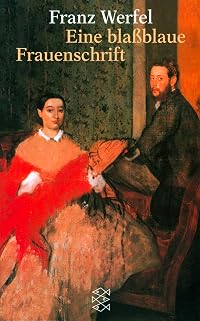
Pale Blue Ink in a Lady's Hand
by Franz Werfel
On This Page
Description
The evasions and self-deceptions of Franz Werfel's characters, the various Austrian types both Jewish and non-Jewish, and the pervading air of anti-Semitism perfectly capture Austria between the two world wars in its poignant final days of toleration.Tags
Recommendations




























Member Reviews
This novella was written in exile during the war, and it's a surprisingly delicate satirical view of the Austrian ruling classes in the years immediately before the Anschluss. Leonidas, son of an impoverished schoolmaster, is now a middle-aged senior civil servant with a villa in Hietzing and a beautiful wife from a patrician family, but still very conscious of the fact that he owes his membership of the élite to an improbable stroke of good luck (inheriting a suit of evening clothes from a student colleague who killed himself). When a letter addressed in a lady's hand in pale blue ink appears on the breakfast table one day in the autumn of 1936, he knows his past is about to catch up with him. And it does.
Obviously Werfel is showing show more off a bit, by taking what may well be the corniest of all possible plot-lines and turning it into something clever, charming and original. Despite the tenderness and finesse with which he handles poor old Leonidas, we can't fail to see the analogy between the political situation of Austria and Leonidas's cowardice and failure to grasp the slim chance of redemption he has been offered. You finish the book with a wry smile, but there is a shiver going down the back of your neck at the same time.
I couldn't help wondering how much of the description of Leonidas's relationship with his high-maintenance wife Amelie reflects the home-life of the Werfels, but I suspect that Alma must have been in a league of her own... show less
Obviously Werfel is showing show more off a bit, by taking what may well be the corniest of all possible plot-lines and turning it into something clever, charming and original. Despite the tenderness and finesse with which he handles poor old Leonidas, we can't fail to see the analogy between the political situation of Austria and Leonidas's cowardice and failure to grasp the slim chance of redemption he has been offered. You finish the book with a wry smile, but there is a shiver going down the back of your neck at the same time.
I couldn't help wondering how much of the description of Leonidas's relationship with his high-maintenance wife Amelie reflects the home-life of the Werfels, but I suspect that Alma must have been in a league of her own... show less
A high-ranking civil servant, celebrating his 50th birthday in 1936, receives among congratulatory cards, a letter from a woman he had seduced years before while tutoring her brother in her father's house, asking for his help for a young man. This letter leads to all kinds of complications. The author has given a good idea of what can ensue from misunderstanding, and also, a devastating portrait of a creep, the main character. A good psychological study, a forerunner to the whole genre of "Holocaust literature."
“Gli è sta inviata un’offerta di salvezza, sa di non essere stato capace a raccoglierla. Sa che a questa non faranno seguito altre offerte…”
Sullo sfondo di una Vienna pre-annessione alla Germania, e di un antisemitismo ormai vicino alla fase critica, si svolge la vicenda di un funzionario che vede riapparire, con una lettera, un antico amore da lui abbandonato in favore di un matrimonio con un’altra donna, di cui, più che altro, ha amato la ricchezza e la posizione sociale. Il funzionario vedrà il già fragile equilibrio che lo sorregge vacillare pericolosamente in seguito al contenuto della lettera.
L’autore offre attraverso la vicenda alquanto meschina di quest’uomo, integrato nel sistema grazie alla ricchezza della show more moglie e terrorizzato dalla sua ex amante ebrea che è ricomparsa, uno splendido spaccato dell’Austria tra le due guerre, adagiata mollemente sui vecchi fasti e restia a percepire il reale pericolo costituito dal suo irrequieto vicino, nelle sue parole e nelle sue descrizioni il canto del cigno dell’irripetibile cultura mitteleuropea che di li a poco sarà spazzata via per sempre.
Franz Werfel si conferma uno scrittore dai toni pacati, ma non per questo meno incisivo nella sua prosa, nell’incontro che il funzionario avrà con la sua ex amante in fuga dalla Germania perché ebrea, incontro intenso ma non concitato, si avverte molto bene la tragedia, ormai non più evitabile, che metterà a dura prova tutta l’Europa, è l’uomo stesso, con la sua povertà d’animo, la metafora discendente che lo scrittore usa per evidenziare un crepuscolo che presto avvolgerà tutti. show less
Sullo sfondo di una Vienna pre-annessione alla Germania, e di un antisemitismo ormai vicino alla fase critica, si svolge la vicenda di un funzionario che vede riapparire, con una lettera, un antico amore da lui abbandonato in favore di un matrimonio con un’altra donna, di cui, più che altro, ha amato la ricchezza e la posizione sociale. Il funzionario vedrà il già fragile equilibrio che lo sorregge vacillare pericolosamente in seguito al contenuto della lettera.
L’autore offre attraverso la vicenda alquanto meschina di quest’uomo, integrato nel sistema grazie alla ricchezza della show more moglie e terrorizzato dalla sua ex amante ebrea che è ricomparsa, uno splendido spaccato dell’Austria tra le due guerre, adagiata mollemente sui vecchi fasti e restia a percepire il reale pericolo costituito dal suo irrequieto vicino, nelle sue parole e nelle sue descrizioni il canto del cigno dell’irripetibile cultura mitteleuropea che di li a poco sarà spazzata via per sempre.
Franz Werfel si conferma uno scrittore dai toni pacati, ma non per questo meno incisivo nella sua prosa, nell’incontro che il funzionario avrà con la sua ex amante in fuga dalla Germania perché ebrea, incontro intenso ma non concitato, si avverte molto bene la tragedia, ormai non più evitabile, che metterà a dura prova tutta l’Europa, è l’uomo stesso, con la sua povertà d’animo, la metafora discendente che lo scrittore usa per evidenziare un crepuscolo che presto avvolgerà tutti. show less
Sep 16, 2017Italian
Una scrittura femminile azzurro pallido appartiene al novero dei libri che preannunciano/ descrivono i primi anni delle dittature, sia per il periodo - è stato scritto tra il 1940 ed il 1941 (pubblicato postumo nel 1955) - sia per le tematiche: l'antisemitismo nemmeno tanto strisciante della società austriaca.
Questo romanzo breve ricorda un po' Bel Ami: la rapida ascesa di un diseredato che grazie al cinismo ed alle belle maniere diventa parte integrante della classe dominante. A differenza di Bel Ami(dedicato alla politica ed ai media), l'elegante vetriolo viennese è rivolto contro la burocrazia, destinata ben presto a piegarsi ad un nuovo ordine, e contro l'élite, che ha ricevuto una "offerta di salvezza, oscura, sommessa, show more irresoluta" e non è stata in grado di accoglierla, segnando così la propria fine (simboleggiata dalla finale identificazione tra Leonida ed il mendicante).
La salvezza - impossibile - della società austriaca è affidata a Vera: la sua richiesta di protezione per un ragazzo - il presunto figlio di Leonida, in realtà un orfano di padre (ucciso dai nazisti) e di madre (morta per il dolore) - è in realtà un invito ad ergersi contro la Germania, a prestare fede alle "favole" (le atrocità commesse in Germania).
Leonida, alla fine del racconto sembra rinnegare la promessa di proteggere il ragazzo: si ripropone infatti di essere "una pecora nel gregge", di sapersi "accontentare" e di "sapersi emendare prima che arrivi il grande emendamento": un altro "pover'uomo" destinato ad essere spazzato via... show less
Questo romanzo breve ricorda un po' Bel Ami: la rapida ascesa di un diseredato che grazie al cinismo ed alle belle maniere diventa parte integrante della classe dominante. A differenza di Bel Ami(dedicato alla politica ed ai media), l'elegante vetriolo viennese è rivolto contro la burocrazia, destinata ben presto a piegarsi ad un nuovo ordine, e contro l'élite, che ha ricevuto una "offerta di salvezza, oscura, sommessa, show more irresoluta" e non è stata in grado di accoglierla, segnando così la propria fine (simboleggiata dalla finale identificazione tra Leonida ed il mendicante).
La salvezza - impossibile - della società austriaca è affidata a Vera: la sua richiesta di protezione per un ragazzo - il presunto figlio di Leonida, in realtà un orfano di padre (ucciso dai nazisti) e di madre (morta per il dolore) - è in realtà un invito ad ergersi contro la Germania, a prestare fede alle "favole" (le atrocità commesse in Germania).
Leonida, alla fine del racconto sembra rinnegare la promessa di proteggere il ragazzo: si ripropone infatti di essere "una pecora nel gregge", di sapersi "accontentare" e di "sapersi emendare prima che arrivi il grande emendamento": un altro "pover'uomo" destinato ad essere spazzato via... show less
Dec 5, 2012 (Edited)Italian
This story of an egocentric and opportunistic high-ranking civil servant in inter-war Austria is simultaneously a portrait of Austrian society in this period of the country’s history. It is set in 1936, just two years before Austria was annexed by nazi Germany.
Jul 25, 2025 (Edited)English (UK)
Aardige, tragikomische vertelling over een Oostenrijkse ambtenaar ten tijde van het interbellum, met een wat nadrukkelijke moraal.
Nov 4, 2016Dutch
Den här boken kunde gärna fått vara lite längre. Den skapar en underbar stämning trots att den behandlar lite sorgliga händelser. Det är något speciellt med den där lugna, långsamma sättet att berätta en historia som hör den där tiden till då den skrevs.
Aug 1, 2017Swedish
Members
- Recently Added By
Lists

Schwob Nederland
207 works; 2 members
Author Information

Born in Prague of Jewish parents, Werfel served in World War I, then lived and wrote in Vienna until driven out by the Nazi occupation of Austria. And the Bridge Was Love: Memories of a Lifetime, by his wife, Alma Werfel, in collaboration with E. B. Ashton, is a deeply personal autobiography of a remarkable life in Vienna by the woman who was also show more married to the composer-conductor Mahler and the architect Gropius. Werfel escaped to the United States after the fall of France in 1940, where he won international recognition for his fiction. The most popular of Werfel's works was the novel The Song of Bernadette (1942), recounting the miraculous vision of the Virgin Mary granted to the young girl who founded Lourdes. Werfel said he wrote the story in honor of his "miraculous" escape from the Nazis but neither affirmed nor denied the miracle at Lourdes. Werfel also wrote lyrical poetry and drama. His comedy Jacobowsky and the Colonel (1944) was successfully produced in New York in 1944. In 1967 the Hamburg Opera presented Giselher Klebe's operatic version of the play at the Metropolitan Opera House in New York. (Bowker Author Biography) show less
Some Editions
Awards and Honors
Series
Belongs to Publisher Series
Work Relationships
Common Knowledge
- Canonical title
- Pale Blue Ink in a Lady's Hand
- Original title
- Eine blaßblaue Frauenschrift
- Original publication date
- 1955
- People/Characters
- Leónidas (León); Vera Wormser; Amelie
- Important places
- Viena, Austria
- First words
- Posti odotti aamiaispöydällä.
La correspondencia estaba sobre la mesa del desayuno
The morning mail lay on the breakfast table. - Last words
- (Click to show. Warning: May contain spoilers.)Hän tietää, ettei toista tarjousta tule.
(Click to show. Warning: May contain spoilers.)Y sabe también que jamás le será presentada una nueva.
(Click to show. Warning: May contain spoilers.)He knows that a new offer will not be made again. - Original language
- Alemán; German
Classifications
- Genres
- Fiction and Literature, General Fiction
- DDC/MDS
- 833.912 — Literature & rhetoric German & related literatures German fiction 1900- 1900-1990 1900-1945
- LCC
- PT2647 .E77 .B513 — Language and Literature German, Dutch and Scandinavian literatures German literature Individual authors or works 1860/70-1960
- BISAC
Statistics
- Members
- 341
- Popularity
- 93,071
- Reviews
- 11
- Rating
- (3.81)
- Languages
- 11 — Catalan, Danish, Dutch, English, Finnish, French, German, Hebrew, Italian, Spanish, Swedish
- Media
- Paper, Ebook
- ISBNs
- 37
- ASINs
- 9