Rabbit-Proof Fence
by Doris Pilkington
On This Page
Description
A Stolen Generations story of astounding courage: three Aboriginal girls, taken from their mothers, escape barefoot back to their beloved homeland in East Pilbara. This is the true account of Nugi Garimara' s mother, Molly, made legendary by the film Rabbit-Proof Fence. In 1931 Molly led her two sisters on an extraordinary 1600-kilometre walk across remote Western Australia. Aged eight, eleven and fourteen, they escaped the confinement of a government institution for Aboriginal children show more removed from their families. Barefoot, without provisions or maps, tracked by Native Police and search planes, the girls followed the rabbit-proof fence, knowing it would lead them home. Their journey longer than many of the celebrated treks of recognised explorers reveals a past more cruel than we could ever imagine. show lessTags
Recommendations



















Member Reviews
This is the story of three Aboriginal half caste girls removed from their families in Western Australia by government officials who sent them 1000 miles away to a 'residential school', more like a prison than a boarding school, where they were incarcerated and expected to learn to read and write and speak English before being sent off to be servants. The author, Doris Pilkington (Aboriginal name Nugi Garimara)is the daughter of the eldest girl, Molly and she retells their story in simple, straightforward language.
Molly and the two younger girls, sisters Daisy and Gracie run away from the school within days of arriving with only the clothes on their backs and no provisions. They amazingly manage to survive using their native skills in show more hunting and finding clean water and later strangers who give them food and clothing. Somehow, partly due to the rain and partly to their skills at hiding they manage to evade the police and the trackers sent to find them. Molly is familiar with the rabbit proof fence that runs the length of the state and knows if she can find that then they will just need to follow it home.
Although told simply, this incredible story of tenacity and survival is powerful in portraying the devastation of white settlement on Australia's Aboriginal communities, first by depriving them of their land and the ability to feed themselves and then by allowing a paternalistic government to deprive them of their mixed race children. show less
Molly and the two younger girls, sisters Daisy and Gracie run away from the school within days of arriving with only the clothes on their backs and no provisions. They amazingly manage to survive using their native skills in show more hunting and finding clean water and later strangers who give them food and clothing. Somehow, partly due to the rain and partly to their skills at hiding they manage to evade the police and the trackers sent to find them. Molly is familiar with the rabbit proof fence that runs the length of the state and knows if she can find that then they will just need to follow it home.
Although told simply, this incredible story of tenacity and survival is powerful in portraying the devastation of white settlement on Australia's Aboriginal communities, first by depriving them of their land and the ability to feed themselves and then by allowing a paternalistic government to deprive them of their mixed race children. show less
This is the story of three girls (Molly, aged 14, Gracie, aged 11, and Daisy, aged 8), who were removed from their home in the Pilbara to a school close to Perth, as a part of what became known as the Stolen Generations. They had Indigenous mothers and white fathers, and the plan was to let them grow up apart from the families, make them forget their cultural roots, and train them to be workers and servants.
However, the author starts the story much earlier. In a sequence of scenes, she depicts several generations of First Nations Australians and how they deal with the arrival of white colonialists, how they adapt to the circumstances, until finally we arrive at Molly's life and how she is snatched from home, her family watching show more powerless. Thus, the trip to the Moore River Native Settlement (the so-called school) and the long trek up north back to their families only starts around half way through the book. This really surprised me the first time around, and again this time, since I had nearly forgotten about it.
The style of the book is rather simple, but it feels authentic. The author is Molly's daughter and she conducted interviews with Molly and Daisy before writing this. The book defies expectations of an exciting adventure novel or gripping nonfictional report, but if you set these expectations aside, it is possible to feel the orality in the writing, appearing, I think, in the details of the descriptions of trees and flowers, of the meals the girls prepared and also in the detachedness after so many years. It does not make the writing really thrilling, and I would have wished for more background information, more emotions and a longer book involving what happened afterwards. However, this doesn't make the book and the story behind it any less special. show less
However, the author starts the story much earlier. In a sequence of scenes, she depicts several generations of First Nations Australians and how they deal with the arrival of white colonialists, how they adapt to the circumstances, until finally we arrive at Molly's life and how she is snatched from home, her family watching show more powerless. Thus, the trip to the Moore River Native Settlement (the so-called school) and the long trek up north back to their families only starts around half way through the book. This really surprised me the first time around, and again this time, since I had nearly forgotten about it.
The style of the book is rather simple, but it feels authentic. The author is Molly's daughter and she conducted interviews with Molly and Daisy before writing this. The book defies expectations of an exciting adventure novel or gripping nonfictional report, but if you set these expectations aside, it is possible to feel the orality in the writing, appearing, I think, in the details of the descriptions of trees and flowers, of the meals the girls prepared and also in the detachedness after so many years. It does not make the writing really thrilling, and I would have wished for more background information, more emotions and a longer book involving what happened afterwards. However, this doesn't make the book and the story behind it any less special. show less
Rating: 3.5* of five
The Publisher Says: This extraordinary story of courage and faith is based on the actual experiences of three girls who fled from the repressive life of Moore River Native Settlement, following along the rabbit-proof fence back to their homelands. Assimilationist policy dictated that these girls be taken from their kin and their homes in order to be made white. Settlement life was unbearable with its chains and padlocks, barred windows, hard cold beds, and horrible food. Solitary confinement was doled out as regular punishment. The girls were not even allowed to speak their language. Of all the journeys made since white people set foot on Australian soil, the journey made by these girls born of Aboriginal mothers and show more white fathers speaks something to everyone.
My Review: Doris Pilkington's father was a cowardly white man who failed to protect his three half-Aboriginal daughters from the colonial mentality espousing their forced removal from their parents. Their mother left the cad, good on her, and was still powerless to act against the white government to get her daughters out of their "residential school" where they were maltreated. The aim of their removal from Aboriginal society was to prevent them from passing on the values of their society, instead becoming darker-skinned white people. Oh, and not just that, but inferior servant-class white people.
Can't imagine where the Aussies got such a horrible idea. Nope. Just can't. Nor where the South Africans got the idea for apartheid. Nuh-uh. Imponderable. No relation to the American policies on Native peoples or former slaves. Dear me, no.
That sarcasm out of the way, I will remark that the story is presented as a novel despite the fact that Pilkington aka Garimara (1937-2014) was writing about her very own mother's story. It freed her to write about the details of the girls' experiences, ones she must have heard from her mother's own lips, without the burden of fact-checking or documenting things that were never written down or part of any official record in the first event.
The prose isn't stellar. In fact it's pretty clunky. I enjoyed the Aboriginal words used without explanation, since there was a handy-dandy glossary in the back of the book; I didn't want the author to lead me by my lily-white hand to the Promised Land of Otherness. I expect that my rating would've been a lot lower had she done that. I was simply dropped into the otherness, as Molly and her sisters were. It's a good technique, effectively putting the reader into the shoes of scared children.
In the end, the experience of reading the book was better than the book itself. What a weird sentence that is; I know I must sound like a raving loonie. But what I mean by that is that this is a truly important and continually relevant (depressingly) tale of oppression and victimization based on ethnic difference. It just isn't a particularly well-written one. And still it makes a strong impression on the reader, one that means something inside shifts a bit, hopefully in a positive direction. I'd suggest reading it to anyone who thinks the segregation of an ethnic minority is in any way a good idea.
The 2002 film, Rabbit-Proof Fence, is only $2.99 to rent at Amazon. It's got some areas where it's a bit better than the book, and some lovely cinematography. The book and the film are best enjoyed together. How unusual is that! show less
The Publisher Says: This extraordinary story of courage and faith is based on the actual experiences of three girls who fled from the repressive life of Moore River Native Settlement, following along the rabbit-proof fence back to their homelands. Assimilationist policy dictated that these girls be taken from their kin and their homes in order to be made white. Settlement life was unbearable with its chains and padlocks, barred windows, hard cold beds, and horrible food. Solitary confinement was doled out as regular punishment. The girls were not even allowed to speak their language. Of all the journeys made since white people set foot on Australian soil, the journey made by these girls born of Aboriginal mothers and show more white fathers speaks something to everyone.
My Review: Doris Pilkington's father was a cowardly white man who failed to protect his three half-Aboriginal daughters from the colonial mentality espousing their forced removal from their parents. Their mother left the cad, good on her, and was still powerless to act against the white government to get her daughters out of their "residential school" where they were maltreated. The aim of their removal from Aboriginal society was to prevent them from passing on the values of their society, instead becoming darker-skinned white people. Oh, and not just that, but inferior servant-class white people.
Can't imagine where the Aussies got such a horrible idea. Nope. Just can't. Nor where the South Africans got the idea for apartheid. Nuh-uh. Imponderable. No relation to the American policies on Native peoples or former slaves. Dear me, no.
That sarcasm out of the way, I will remark that the story is presented as a novel despite the fact that Pilkington aka Garimara (1937-2014) was writing about her very own mother's story. It freed her to write about the details of the girls' experiences, ones she must have heard from her mother's own lips, without the burden of fact-checking or documenting things that were never written down or part of any official record in the first event.
The prose isn't stellar. In fact it's pretty clunky. I enjoyed the Aboriginal words used without explanation, since there was a handy-dandy glossary in the back of the book; I didn't want the author to lead me by my lily-white hand to the Promised Land of Otherness. I expect that my rating would've been a lot lower had she done that. I was simply dropped into the otherness, as Molly and her sisters were. It's a good technique, effectively putting the reader into the shoes of scared children.
In the end, the experience of reading the book was better than the book itself. What a weird sentence that is; I know I must sound like a raving loonie. But what I mean by that is that this is a truly important and continually relevant (depressingly) tale of oppression and victimization based on ethnic difference. It just isn't a particularly well-written one. And still it makes a strong impression on the reader, one that means something inside shifts a bit, hopefully in a positive direction. I'd suggest reading it to anyone who thinks the segregation of an ethnic minority is in any way a good idea.
The 2002 film, Rabbit-Proof Fence, is only $2.99 to rent at Amazon. It's got some areas where it's a bit better than the book, and some lovely cinematography. The book and the film are best enjoyed together. How unusual is that! show less
A true story and an important story, but unfortunately very poorly written. As narrative non-fiction it just doesn't work. The author tries to stick too closely to the bits and pieces of details remembered by the protagonists after a period of 50+ years without giving thought to the narrative effect and the 'story' for the reader. Factual historical information, while giving authenticity, is inserted in such a clunky way. And we are not given the girl's story and that of the trek until quite late in the book; after an initial lesson from "invasion history 101".
The author is Molly's daughter and is clearly too emotionally close to not only the immediate story, but having suffered the same fate herself, also to the whole issue of the show more stolen generations. Emotive and biased language is used too readily, giving the impression of an obvious political aim (even if not intended); whereas some distance and more balance would actually have served her better in portraying this atrocious policy and truly shameful period in Australia's history.
On the other hand, more fictionalisation, better editing and less effort at including historical research verbatim would have made for a more powerful retelling of her mother's amazing story. show less
The author is Molly's daughter and is clearly too emotionally close to not only the immediate story, but having suffered the same fate herself, also to the whole issue of the show more stolen generations. Emotive and biased language is used too readily, giving the impression of an obvious political aim (even if not intended); whereas some distance and more balance would actually have served her better in portraying this atrocious policy and truly shameful period in Australia's history.
On the other hand, more fictionalisation, better editing and less effort at including historical research verbatim would have made for a more powerful retelling of her mother's amazing story. show less
I've had this book for a while, and it caught my eye from my TBR pile.
This is the story of three girls taken from their family to be brought up in a facility in the south of Australia who escape and make their way back home. The three girls in question are Molly, Daisy and their cousin, Gracie, mixed race children from Jigalong, are removed from their family to be trained as domestic servants. They leave the facility one night and manage to get home, using the rabbit-proof fence which ran north to south as their guide.
The book is simply written, and there is not much more than the events as seen through the girls' eyes, backed up with copies of telegrams and letters. What is clear is the sense of kinship between the girls, show more sister-cousins as they are, a designation which is strange in English, we don't even have a word for it. Ripped from a loving family environment with the arrogance that as half-white children they would be better suited to the white world, the girls make up part of the "Stolen Generations", the victims of a national policy.
Pilkington lets the story do the talking, though I felt that I wanted to know more, about how the girls were really feeling, not just their physical ailments. On the other hand, the sparseness of the book felt right for the culture it was describing. The text rang true, using a mixture of language (there is a glossary at the back), and also Pilkington's extra information about the flora and fauna and how she placed the story in time using these kinds of details.
I enjoyed the book, but ultimately wish it had been longer and included Pilkington's own story. show less
This is the story of three girls taken from their family to be brought up in a facility in the south of Australia who escape and make their way back home. The three girls in question are Molly, Daisy and their cousin, Gracie, mixed race children from Jigalong, are removed from their family to be trained as domestic servants. They leave the facility one night and manage to get home, using the rabbit-proof fence which ran north to south as their guide.
The book is simply written, and there is not much more than the events as seen through the girls' eyes, backed up with copies of telegrams and letters. What is clear is the sense of kinship between the girls, show more sister-cousins as they are, a designation which is strange in English, we don't even have a word for it. Ripped from a loving family environment with the arrogance that as half-white children they would be better suited to the white world, the girls make up part of the "Stolen Generations", the victims of a national policy.
Pilkington lets the story do the talking, though I felt that I wanted to know more, about how the girls were really feeling, not just their physical ailments. On the other hand, the sparseness of the book felt right for the culture it was describing. The text rang true, using a mixture of language (there is a glossary at the back), and also Pilkington's extra information about the flora and fauna and how she placed the story in time using these kinds of details.
I enjoyed the book, but ultimately wish it had been longer and included Pilkington's own story. show less
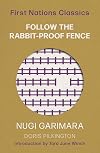
This is one of a series of books republished under the University of Queensland Press First Nations Classics series, which seeks to bring back to the attention of the public earlier books (novels, poetry, memoirs, other) written by First nations peoples.
The physical appearance is wonderful...seeing all 10 of the first issues (of which this is one) is mesmerising.
Rabbit Proof Fence is a story (though factual, not a novel) that is relatively well known, in my opinion, even if the detail is not. It gained a little more prominence following the publication of Sally Morgan's "My Place" and yet again after the release of the movie in 2002 of "Rabbit Proof Fence" (which I have not seen yet, though I have listened and love the soundtrack by show more Peter Gabriel). I am sure there are other works which have brought the story to the forefront, both before and after these mentioned.
It is said to be one of (if not the) first articulation (in the form of a book or extended portrayal) of the impact of the then policy of the WA Govt (we are talking of the 1930s) of (without consent, either of the children or their parents, nor of any actual evidence as to the children in question of them being in any actual or threatened harm or disadvantage) removing children from mixed (First Nations Peoples and others) from their families and sending them to facilities, where they are trained to be servants (of various descriptions) in a (my words) more Western society.
The book follows the tribulations of three girls, including the author, as they grow up in their community, before being removed from there and transported far away to such an institution, only to leave there to walk back home.
They do this notwithstanding they have no food or other supplies, the vast distance involved (said to be in the vicinity of 2400km), they being tracked by First Nations' trackers, that they were travelling across desert for much of the time and that when they came across remote farming/stock stations (where they asked for food/water) they were often thereafter reported by the station owners to those searching for the girls (aged 8-14).
They were successful in returning to their homes.
It is an extraordinary tale. And I have read some reviewers criticising the literary merit of the book. But I disagree, not because I think it is of high literary merit (and I mean no disrespect in saying so), but because it conveys an important part of our history. If one reds the journals of our European explorers, they often (if not always) read particularly well, even if they nevertheless convey relevant, if not important information, or at least context.
I would encourage those even mildly interested to give this a go, as I will with other issues in this series.
Big Ship
1 August 2023 show less
The physical appearance is wonderful...seeing all 10 of the first issues (of which this is one) is mesmerising.
Rabbit Proof Fence is a story (though factual, not a novel) that is relatively well known, in my opinion, even if the detail is not. It gained a little more prominence following the publication of Sally Morgan's "My Place" and yet again after the release of the movie in 2002 of "Rabbit Proof Fence" (which I have not seen yet, though I have listened and love the soundtrack by show more Peter Gabriel). I am sure there are other works which have brought the story to the forefront, both before and after these mentioned.
It is said to be one of (if not the) first articulation (in the form of a book or extended portrayal) of the impact of the then policy of the WA Govt (we are talking of the 1930s) of (without consent, either of the children or their parents, nor of any actual evidence as to the children in question of them being in any actual or threatened harm or disadvantage) removing children from mixed (First Nations Peoples and others) from their families and sending them to facilities, where they are trained to be servants (of various descriptions) in a (my words) more Western society.
The book follows the tribulations of three girls, including the author, as they grow up in their community, before being removed from there and transported far away to such an institution, only to leave there to walk back home.
They do this notwithstanding they have no food or other supplies, the vast distance involved (said to be in the vicinity of 2400km), they being tracked by First Nations' trackers, that they were travelling across desert for much of the time and that when they came across remote farming/stock stations (where they asked for food/water) they were often thereafter reported by the station owners to those searching for the girls (aged 8-14).
They were successful in returning to their homes.
It is an extraordinary tale. And I have read some reviewers criticising the literary merit of the book. But I disagree, not because I think it is of high literary merit (and I mean no disrespect in saying so), but because it conveys an important part of our history. If one reds the journals of our European explorers, they often (if not always) read particularly well, even if they nevertheless convey relevant, if not important information, or at least context.
I would encourage those even mildly interested to give this a go, as I will with other issues in this series.
Big Ship
1 August 2023 show less
I wanted to like this book. It's about an amazing true story of three girls escaping an abusive facility and making the long trek home. But something about the writing style just super didn't work for me. The telling of the story somehow manages to make it dry and dull, just a recitation of "this happened. then this happened." It was also weird to me that the blurb on the back says they escaped after "regular stays in solitary confinement", but the book tells us that Molly planned and led the escape after only one night there?
Members
- Recently Added By
Lists

Black Authors
384 works; 32 members

Read the book and saw the movie
1,170 works; 195 members

Non-Fiction Worth Reading
1,016 works; 262 members

Australia, New Zealand and Oceania
88 works; 20 members

Books Bought & Received as Gifts in 2014
81 works; 1 member

Books Read in 2015
3,299 works; 129 members

Books read in 2015
213 works; 5 members

Books Set in Australia.
45 works; 9 members

Stories set on Australian Continent
67 works; 5 members

Best Biographies of Notable Women
279 works; 101 members

Animals in the Title
498 works; 11 members
Author Information

4+ Works 989 Members
Work Relationships
Is a (non-series) prequel to
Has the adaptation
Common Knowledge
- Canonical title
- Rabbit-Proof Fence
- Original title
- Follow the Rabbit-Proof Fence
- Original publication date
- 1996
- People/Characters
- Molly Craig; Gracie Fields; Daisy Kadibil
- Important places
- Western Australia, Australia; Pilbara, Western Australia, Australia; Marble Bar, Western Australia, Australia; Fremantle, Western Australia, Australia; Perth, Western Australia, Australia; Margaret River, Western Australia, Australia (show all 8); Jigalong, Western Australia, Australia; Wiluna, Western Australia, Australia
- Important events
- Stolen Generations
- Related movies
- Rabbit-Proof Fence (2002 | IMDb)
- Dedication
- To all of my mother's and aunty's children
and their descendants for inspiration,
encouragement and determination. - First words
- It was still very cool in the early summer morning; the fresh, clean air he breathed into his lungs felt good.
The trek back home to Jigalong in the north-west of Western Australia from the Moore River Native Settlement just north of Perth was not only a historical event, it was also one of the most incredible feats imaginable, undert... (show all)aken by three Aboriginal girls in the 1930s. - Last words
- (Click to show. Warning: May contain spoilers.)Daisy now lives with her son and daughters and their families at Jigalong.
- Blurbers
- Noyce, Phillip
- Original language
- English
Classifications
Statistics
- Members
- 915
- Popularity
- 29,319
- Reviews
- 30
- Rating
- (3.39)
- Languages
- 7 — Dutch, English, French, German, Italian, Swedish, Turkish
- Media
- Paper, Audiobook, Ebook
- ISBNs
- 43
- ASINs
- 8