On This Page
Description
"Ray Celestin skillfully depicts the desperate revels of that idiosyncratic city and its bizarre legends in his first novel."—The New York Times Book ReviewThe Axeman stalks the streets of The Big Easy...
New Orleans, 1919: In a town filled with gangsters, voodoo, and jazz trumpets sounding from the dance halls, a sense of intoxicating mystery often beckons from the back alleys. But when a serial killer roams the sultry nights, the corrupt cops can't see the clues. That is, until a letter show more from the Axeman himself is published in the newspaper, proclaiming that any home playing jazz music will be spared in his next attack.
Three individuals set out to unmask the Axeman: the police detective in charge of the official investigation, who struggles to find any leads; his former boss, newly released from prison and working with the mafia; and a secretary at the Pinkerton Detective Agency who stumbles upon the clues that could change everything...
A chilling and atmospheric serial killer mystery inspired by a true story, The Axeman brings to life the vibrant, volatile New Orleans of the Jazz Age, filled with as much desperate ambition as utter fear.
. show less
Tags
Recommendations












Member Reviews
Brilliant New Orleans Thriller
The Axeman’s Jazz by debut author Ray Celestin, is an incredibly well written fictional account of an actual serial murderer in New Orleans between 1918 and 1919, for which nobody has even been prosecuted. Celestin’s prose is beautiful and evocative that brings to life pre-prohibition New Orleans in the post war period. We get the hustle and bustle a town where everyone is an outsider, mixed with the segregation of the period, the Sicilian mobsters who rule the underworld, corrupt politicians and police and the Irish. Everyone living in a parallel world joined together in fear. The title of the book coming from a piece of music written for Axeman’s night, to protect the people of New Orleans from show more being the next victim they are told.
The opening is intriguing in that Celestin uses a letter the Axeman sent to the New Orleans Times Picayune and more importantly lands on the desk of veteran report John Riley who decides to publish the letter. Riley is one of the main supporting cast of characters in the book who appears across the narrative guiding police and the corrupt in the attempt to find who the Axeman is and stop his next murder.
Lieutenant Michael Talbot is tasked with solving the series of murders a case he expects to end his career in the New Orleans Police Department. He is already not popular with his colleagues as he is considered a “rat” for helping to convict corrupt cop and mentor to Talbot Luca D’Andrea. To make matters worse Luca has just been released early from his prison sentence up state and will no doubt cross his path as he will be tasked to investigate the murders against the Italians by the Mob and in particular the Don of the local mob.
Ida Davis works at the Pinkerton Detective Agency and is desperate to do some field work, but her boss only lets her do the filing at most. She decides to take matters in her own hands and investigate the serial murderer but she will need help from her friend and local musician Lewis Armstrong, or ‘Lil’ Louey to the locals before he became more refined as Louis Armstrong. Her investigation will get the pair of them in to various scrapes all over New Orleans.
Michael, Ida and Luca all run separate investigations in to the Axeman murders and all their investigations look at various aspects of the crime which tie up nicely at the end of the novel. All looking for the same murderer and who it may be and why they are murdering people will we find out?
This is an excellent debut by Celestin who’s prose makes this book a pleasure to read and his evocative imagery brings New Orleans to life for the reader. One is able to imagine being in the Big Easy with all the sights sounds and smells able to taste the fear of the residents as the body count piles up. This is a brilliant exposition of the historical crime genre and worth every minute of enjoyment you get from beginning to end. show less
The Axeman’s Jazz by debut author Ray Celestin, is an incredibly well written fictional account of an actual serial murderer in New Orleans between 1918 and 1919, for which nobody has even been prosecuted. Celestin’s prose is beautiful and evocative that brings to life pre-prohibition New Orleans in the post war period. We get the hustle and bustle a town where everyone is an outsider, mixed with the segregation of the period, the Sicilian mobsters who rule the underworld, corrupt politicians and police and the Irish. Everyone living in a parallel world joined together in fear. The title of the book coming from a piece of music written for Axeman’s night, to protect the people of New Orleans from show more being the next victim they are told.
The opening is intriguing in that Celestin uses a letter the Axeman sent to the New Orleans Times Picayune and more importantly lands on the desk of veteran report John Riley who decides to publish the letter. Riley is one of the main supporting cast of characters in the book who appears across the narrative guiding police and the corrupt in the attempt to find who the Axeman is and stop his next murder.
Lieutenant Michael Talbot is tasked with solving the series of murders a case he expects to end his career in the New Orleans Police Department. He is already not popular with his colleagues as he is considered a “rat” for helping to convict corrupt cop and mentor to Talbot Luca D’Andrea. To make matters worse Luca has just been released early from his prison sentence up state and will no doubt cross his path as he will be tasked to investigate the murders against the Italians by the Mob and in particular the Don of the local mob.
Ida Davis works at the Pinkerton Detective Agency and is desperate to do some field work, but her boss only lets her do the filing at most. She decides to take matters in her own hands and investigate the serial murderer but she will need help from her friend and local musician Lewis Armstrong, or ‘Lil’ Louey to the locals before he became more refined as Louis Armstrong. Her investigation will get the pair of them in to various scrapes all over New Orleans.
Michael, Ida and Luca all run separate investigations in to the Axeman murders and all their investigations look at various aspects of the crime which tie up nicely at the end of the novel. All looking for the same murderer and who it may be and why they are murdering people will we find out?
This is an excellent debut by Celestin who’s prose makes this book a pleasure to read and his evocative imagery brings New Orleans to life for the reader. One is able to imagine being in the Big Easy with all the sights sounds and smells able to taste the fear of the residents as the body count piles up. This is a brilliant exposition of the historical crime genre and worth every minute of enjoyment you get from beginning to end. show less
This book set in 1919 New Orleans is one of the creepiest and most atmospheric books I've ever read. The characters are very well-drawn and the plot goes along at a breakneck pace in three or four different directions while all of New Orleans is trying to find the killer who is stalking their city and killing families with an axe. The police are trying to capture the killer, and Lieutenant Michael Talbot and his team think it is the mafiosos that are arranging the killers. A young woman, who happens to be a friend of a young Louis Armstrong, is trying to earn her bones as a Pinkerton investigator, and she enters into a different criminal empire that is not the mafioso, but it is run by a particularly ruthless man who has been in charge show more of the brothels in Storyville in New Orleans for years, and former Lieutenant Luca d'Andrea who has just been released from prison where he has spent the last five years, arrested because of his connection to the Mafia and the things that he did while in the force for his Mafia friends. d'Andrea has been hired by the Mafia to find the axe killer, and he is working with a different set of suspects. d'Andrea is on a different tack all together and his is based on history and revenge killing appears to be the motive from long ago atrocities. Each thinks they have found their suspect, but actually only one is the right solution On the night when a big flood hits New Orleans after many days of rain, all three sleuths are faced with death, each by their chosen suspect. Only one is right, and is the truth going to come out and the proper suspect put into prison? This is definitely a page-turner of a book, and I love the setting and the time-frame. It's all here -- a keep you up at night kind of thriller, and I highly recommend it. Keep your head in the game as you read because there are more red herrings than I've ever seen in any one book. show less
The writing was good, and the mystery kept me hooked, but because it's more detective procedural than murder mystery I realized it's big really my genre. Still a good take on an unsolved serial killer case. Unfortunately won't be reading any of the others in the series.
One year after the end of the War and New Orleans is experiencing changes on an unprecedented scale, the Italians are running most of the vice but brothels have been closed down and not all the police are corrupt. Whilst segregation in Louisiana is not as great as in neighbouring Mississippi people are still judged by colour and jazz music is bridging the gap. Into this city a murderer appears slaying individuals with an axe and leaving a tarot card behind. He taunts the police by letter and they seem powerless to catch him. Who is the Axeman?
This is Ray Celestin's debut novel but his craft appears fully formed. Rather than have a single central character there are a section of voices adding layers to the storyline and different clues show more to the outcome. From the policeman with the secret coloured family to the enthusiastic young woman to the corrupt former cop to the addicted journalist, each is fresh and forms part of a jigsaw. In fact the only part of this book which jars is the inclusion of Lewis 'Louie' Armstrong, the character is fine, it is the forcing of a known 'game' into the narrative which feels false. Other than that this is a really satisfying and exciting book. show less
This is Ray Celestin's debut novel but his craft appears fully formed. Rather than have a single central character there are a section of voices adding layers to the storyline and different clues show more to the outcome. From the policeman with the secret coloured family to the enthusiastic young woman to the corrupt former cop to the addicted journalist, each is fresh and forms part of a jigsaw. In fact the only part of this book which jars is the inclusion of Lewis 'Louie' Armstrong, the character is fine, it is the forcing of a known 'game' into the narrative which feels false. Other than that this is a really satisfying and exciting book. show less
This was a book group book, the last one before the Covid19 lockdown in NZ.
Set in New Orleans, it traded heavily on that city, its culture and environs. I couldn’t work or if the story would have worked if it had been set somewhere else?
Was that Male lead character meant to be Louis Armstrong? If he was, it was a drag because you knew that he wouldn’t get killed anywhere in this tale.
Anyway, the contrast between the young woman private detective and the colour bar breaking white cop detective was very good as both a plot device and a social commentary.
It rained a lot and everything was damp and moist all the time.
Most of it happened at night so it was dark and damp. It was so evocative that twice I had to put the book down and show more go and change of my damp clothes. I kept looking over my shoulder too it was that creepy.
And it just kinda ended without any resolution between the young black woman and the white cop or was that the lead in to the next in series novel?
Anyway, it was a good read show less
Set in New Orleans, it traded heavily on that city, its culture and environs. I couldn’t work or if the story would have worked if it had been set somewhere else?
Was that Male lead character meant to be Louis Armstrong? If he was, it was a drag because you knew that he wouldn’t get killed anywhere in this tale.
Anyway, the contrast between the young woman private detective and the colour bar breaking white cop detective was very good as both a plot device and a social commentary.
It rained a lot and everything was damp and moist all the time.
Most of it happened at night so it was dark and damp. It was so evocative that twice I had to put the book down and show more go and change of my damp clothes. I kept looking over my shoulder too it was that creepy.
And it just kinda ended without any resolution between the young black woman and the white cop or was that the lead in to the next in series novel?
Anyway, it was a good read show less
It is 1919 New Orleans and a serial killer, nicknamed the Axeman because of his Axemanmodus operandi, is on the loose. Pressure is mounting for his/her capture. There are three separate investigations taking place. The first is run by the police, who tapped Detective Lieutenant Michael Talbot, a disliked, expendable police officer to lead the investigation. The second is orchestrated by Ida Davis. Davis, a Negro who can pass for white, is bored being a secretary at Pinkerton's National Detective Agency so she begins to put bits of information together to catch a killer. The third is being conducted by Luca D'Andrea, formerly Talbot's police mentor until Talbot testified against him because of his mafia connections. Just released after show more serving five years at Angola prison, Luca is investigating the murders at the behest of mafia boss Carlo Matranga, in return (theoretically) for Luca's return passage home to his native Italy. It seems that the serial killer has been targeting Italians which is bad for Carlo's protection business.
Based on a real unsolved case from the era (the 'Axeman' killed six people from 1918 through 1919), Ray Celestin's debut novel, The Axeman, is a 'literary' mystery. That's not to say that there's no action in the book. There's quite a bit but character development and setting are equally as important as plot and action.
Readers will be immersed in early 20th century New Orleans. While I always thought that New Orleans, a melting pot of ethnicity and race, was a racially progressive city and in many ways it was, segregation and bigotry still abounded. The fact that Talbot is married to a Black woman (they had to go out of state in order to get married) is shoved in his face when necessary. The rivers overflowed their banks and the levees, drowning the city on occasion. Prohibition was soon to begin, which was not well accepted in a city that loves its drink. There were the rich and the poor, with not much in between. There was still a widespread belief in witchcraft and the bayou was a dangerous and mysterious place where people disappear, either on purpose or by accident.
Ida Davis' best friend and confidant is fledgling musician Louis Armstrong and while I typically LouisArmstrongdon't like when real famous people are brought into fiction, in this particular instance it worked quite well. It allowed Celestin to describe the music of the times and also work that into the Axeman murders. Readers will get an interesting history lesson, such as how Storyville got its name and why it was supposedly dismantled.
RedStormThe Axeman brings to mind two very disparate books. The first is The Red Storm: A Mystery by Grant Bywaters that takes place in New Orleans in the late 1930s. Although the writing is more akin to pulp mystery fiction of that decade, the feeling of the book and its setting is very similar and New Orleanian's attitudes towards Blacks had changed little in the two decades separating the stories. AJuneOfOrdinaryMurdersThe other book is A June of Ordinary Murders by Conor Brady. Although this book takes place in Ireland, it is the literary style and the pressure to solve both cases that made me think of it.
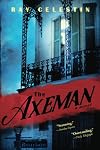
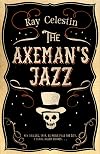
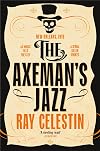
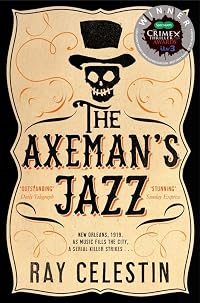
I rarely say this but I love the cover of The Axeman. The New Orleans architecture is so distinctive and it comes through on the book cover.
In A Conversation With the Author at the end of the book, Celestin says he is working on a sequel. I, for one, am anxiously awaiting its release. In the meantime pick up The Axeman or A June of Ordinary Murders. show less
Based on a real unsolved case from the era (the 'Axeman' killed six people from 1918 through 1919), Ray Celestin's debut novel, The Axeman, is a 'literary' mystery. That's not to say that there's no action in the book. There's quite a bit but character development and setting are equally as important as plot and action.
Readers will be immersed in early 20th century New Orleans. While I always thought that New Orleans, a melting pot of ethnicity and race, was a racially progressive city and in many ways it was, segregation and bigotry still abounded. The fact that Talbot is married to a Black woman (they had to go out of state in order to get married) is shoved in his face when necessary. The rivers overflowed their banks and the levees, drowning the city on occasion. Prohibition was soon to begin, which was not well accepted in a city that loves its drink. There were the rich and the poor, with not much in between. There was still a widespread belief in witchcraft and the bayou was a dangerous and mysterious place where people disappear, either on purpose or by accident.
Ida Davis' best friend and confidant is fledgling musician Louis Armstrong and while I typically LouisArmstrongdon't like when real famous people are brought into fiction, in this particular instance it worked quite well. It allowed Celestin to describe the music of the times and also work that into the Axeman murders. Readers will get an interesting history lesson, such as how Storyville got its name and why it was supposedly dismantled.
RedStormThe Axeman brings to mind two very disparate books. The first is The Red Storm: A Mystery by Grant Bywaters that takes place in New Orleans in the late 1930s. Although the writing is more akin to pulp mystery fiction of that decade, the feeling of the book and its setting is very similar and New Orleanian's attitudes towards Blacks had changed little in the two decades separating the stories. AJuneOfOrdinaryMurdersThe other book is A June of Ordinary Murders by Conor Brady. Although this book takes place in Ireland, it is the literary style and the pressure to solve both cases that made me think of it.
I rarely say this but I love the cover of The Axeman. The New Orleans architecture is so distinctive and it comes through on the book cover.
In A Conversation With the Author at the end of the book, Celestin says he is working on a sequel. I, for one, am anxiously awaiting its release. In the meantime pick up The Axeman or A June of Ordinary Murders. show less
First of all, I'd like to thank both the publisher and NetGalley for the opportunity to review this book before publication date. It was truly an honour.
Based on the real life Axeman murders in New Orleans in 1919 (of which a person was never convicted), this book is filled with suspense, mystery and conspiracies beyond your wildest imaginations. This is a brilliant fictional story based around real life events that shook the whole of New Orleans.
I would like to prelude this review by stating that this is an incredibly well written book. Celestin has a gift to manipulate and mould the English language in a fluid and beautiful way, and I think he has a natural talent for writing. It's almost like poetry to read; everything just flows show more together and you end up reading so much that you didn't realise how much you'd read until you've stopped. It seems like the pages turn themselves.
Celestin portrays the segregation, sexism and almost demonic part of society in that time and place in a gentle and sensitive way, which means that although it's difficult to read because it has the air of truth about it, in no way do you feel forced to a particular point of view and it's written about respectfully. I think that that is a decent thing to do, and actually made me enjoy the book all the more.
The plot was definitely captivating. There are so many mysteries and clues that don't seem relevant or don't seem to fit together, that all of a sudden just fall into place with each other and you think "oh... well I didn't see that coming but it makes so much sense!" You are gradually revealed snippets of information as you read on, but you never receive more than the author wants you to, and it is because of this that you could never figure out the ending. If you, as a reader, managed to figure out who did it and why, I tip my hat to you. I adored seeing how each of the character's mysteries tied together and became resolved. None of it seemed unrealistic, either. All of it was believable, and this, tied with the fact that it's based on a true event in history, made the whole book all the more suspense-filled.
The only thing I believe this book could do better were the descriptions of the places and the people. I would have loved to have been enveloped in the rich sights, smells and sounds of the city at the time. What were the colours, the foods, the fumes like? I feel like Celestin, while he did put in some description and scene-setting, could have developed the surroundings more and really used the surroundings to his advantage in his writing. It just lacked a certain richness that I craved.
Overall I think this is an absolute gem of a historical crime thriller, and it was an honour to read. show less
Based on the real life Axeman murders in New Orleans in 1919 (of which a person was never convicted), this book is filled with suspense, mystery and conspiracies beyond your wildest imaginations. This is a brilliant fictional story based around real life events that shook the whole of New Orleans.
I would like to prelude this review by stating that this is an incredibly well written book. Celestin has a gift to manipulate and mould the English language in a fluid and beautiful way, and I think he has a natural talent for writing. It's almost like poetry to read; everything just flows show more together and you end up reading so much that you didn't realise how much you'd read until you've stopped. It seems like the pages turn themselves.
Celestin portrays the segregation, sexism and almost demonic part of society in that time and place in a gentle and sensitive way, which means that although it's difficult to read because it has the air of truth about it, in no way do you feel forced to a particular point of view and it's written about respectfully. I think that that is a decent thing to do, and actually made me enjoy the book all the more.
The plot was definitely captivating. There are so many mysteries and clues that don't seem relevant or don't seem to fit together, that all of a sudden just fall into place with each other and you think "oh... well I didn't see that coming but it makes so much sense!" You are gradually revealed snippets of information as you read on, but you never receive more than the author wants you to, and it is because of this that you could never figure out the ending. If you, as a reader, managed to figure out who did it and why, I tip my hat to you. I adored seeing how each of the character's mysteries tied together and became resolved. None of it seemed unrealistic, either. All of it was believable, and this, tied with the fact that it's based on a true event in history, made the whole book all the more suspense-filled.
The only thing I believe this book could do better were the descriptions of the places and the people. I would have loved to have been enveloped in the rich sights, smells and sounds of the city at the time. What were the colours, the foods, the fumes like? I feel like Celestin, while he did put in some description and scene-setting, could have developed the surroundings more and really used the surroundings to his advantage in his writing. It just lacked a certain richness that I craved.
Overall I think this is an absolute gem of a historical crime thriller, and it was an honour to read. show less
Members
- Recently Added By
Lists

Crime Writers' Association Daggers
76 works; 4 members

Books Read in 2018
4,360 works; 110 members

Books Read in 2019
4,052 works; 108 members

Books Read in 2015
3,299 works; 129 members
Author Information
6 Works 751 Members
Awards and Honors
Series

Work Relationships
Has the (non-series) sequel
Common Knowledge
- Canonical title
- The Axeman's Jazz
- Original title
- The Axeman's Jazz
- Original publication date
- 2014-05-08
- People/Characters
- Louis Armstrong
- Important places
- New Orleans, Louisiana, USA
- Epigraph
- "When I blow I think of times and things from outta the past that gives me an image of the tune. Like moving pictures passing in front of my eyes. A town, a chick somewhere back down the line, an old man you seen once in a pl... (show all)ace you don't remember."
Louis Armstrong - Dedication
- To Captain Alex and my godparents
- First words
- John Riley stumbled into the offices of the New Orleans Times Picayune an hour and a half after he was supposed to have started work.
- Canonical DDC/MDS
- 823.92
- Canonical LCC
- PR6103.E54
Classifications
Statistics
- Members
- 443
- Popularity
- 69,348
- Reviews
- 17
- Rating
- (3.91)
- Languages
- 5 — English, French, German, Spanish, Swedish
- Media
- Paper, Audiobook, Ebook
- ISBNs
- 27
- UPCs
- 1
- ASINs
- 10