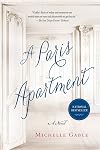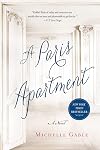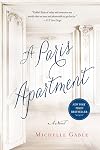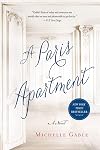
A Paris Apartment
by Michelle Gable
On This Page
Description
"When April Vogt's boss tells her about the discoveries in a cramped, decrepit ninth arrondissement apartment, the Sotheby's continental furniture specialist does not hear the words "dust" or "rats" or "shuttered for seventy years." She hears Paris. She hears escape. Once in France, April quickly learns the apartment is not merely some rich hoarder's repository. Beneath the dust and cobwebs and stale perfumed air is a goldmine and not because of the actual gold (or painted ostrich eggs or show more mounted rhinoceros horns or bronze bathtub). First, there's a portrait by one of the masters of the Belle Epoque. And then there are letters and journals written by the woman in the painting, documents showing she was more than a renowned courtesan with enviable decolletage. Suddenly it's no longer about the bureau plats and Louis-style armchairs that will fetch millions at auction. It's about a life. Two lives, actually. With the help of a salty (and annoyingly sexy) Parisian solicitor and the courtesan's private documents, April tries to uncover the secrets buried in the apartment. As she digs into one woman's life, April can't help but take a deeper look into her own. When the two things she left bubbling back in the States begin to boil over, April starts to wonder whether she'll ever find--in the apartment, or in her life--just what she's looking for"-- show lessTags
Recommendations




























Member Reviews
What a surprise this book is! I borrowed the audiobook from SimplyE, thinking it would be a delightful, romantic romp through Paris and what I call a “popcorn read.” Something light and fluffy that I can consume quickly and greatly enjoy.
To my great surprise, A Paris Apartment was not a popcorn read. It was nuanced and detailed, containing mysteries all throughout that didn’t unfold or resolve in two pages, so it kept the reader wondering.
The main character, April, had a lot of baggage, quirks and issues. She wasn’t always likable. I find that important in a book, because rarely do we ever like or agree or sympathize 100-percent with someone in real life. It makes for a more realistic character, in my humble opinion.
The show more mysteries and family drama that unfolds in this book is CRAZY. It had me shouting updates to my roommate, who periodically tuned into the audiobook by default. :)
I spent a fair amount of time googling names I didn’t know, to find that they were real people! The author clearly did a ton of research for this book.
For example, did you know that fartiste was a real profession? It’s a professional farter. I can’t believe that I’ve only just heard of that for the first time!
Also, if you really want to be immersed in the book, buy some cheese and champagne, because those staples get mentioned. A lot. And now I crave a cheese platter.
Really enjoyable read and jaunt through Parisian history and a Parisian family, through the good, the bad and the laide. show less
To my great surprise, A Paris Apartment was not a popcorn read. It was nuanced and detailed, containing mysteries all throughout that didn’t unfold or resolve in two pages, so it kept the reader wondering.
The main character, April, had a lot of baggage, quirks and issues. She wasn’t always likable. I find that important in a book, because rarely do we ever like or agree or sympathize 100-percent with someone in real life. It makes for a more realistic character, in my humble opinion.
The show more mysteries and family drama that unfolds in this book is CRAZY. It had me shouting updates to my roommate, who periodically tuned into the audiobook by default. :)
I spent a fair amount of time googling names I didn’t know, to find that they were real people! The author clearly did a ton of research for this book.
For example, did you know that fartiste was a real profession? It’s a professional farter. I can’t believe that I’ve only just heard of that for the first time!
Also, if you really want to be immersed in the book, buy some cheese and champagne, because those staples get mentioned. A lot. And now I crave a cheese platter.
Really enjoyable read and jaunt through Parisian history and a Parisian family, through the good, the bad and the laide. show less
I'd been following news articles about an apartment in Paris that had been discovered only after the rent stopped being paid. When the doors to the residence were opened, it was learned that these rooms had been untouched for seventy years-- and were a veritable treasure trove of antiques and ephemera (like the dozens and dozens of calling cards that the author used to put together a sort of cast of characters for this book). When I learned that Michelle Gable had written a book using this very same apartment at its heart, I couldn't wait to read it.
The segments describing many of the items found in the apartment sparkled and made me feel as though I were present at some wonderful archaeological discovery. Equally strong was the story show more line involving the courtesan who owned the apartment and wrote the letters and journals found by the appraiser. Marthe de Florian is a fully fleshed figure, one that a reader can empathize with and even condemn on occasion.
The story line that really didn't hold up its end was the modern one of April Vogt. She's pursued by a Parisian lawyer while doing her best to avoid her husband, who once cheated on her. Granted, there's not much new and exciting in a tale like that, but I didn't mind it. What I did mind was April's character. She has every appearance of traveling through her life with blinders on... as though she believes there's only one side to every story. Her willful blindness soon began to annoy me, which meant that I took respite in Marthe de Florian's story. And how wonderful it is that there's so much more to this book than April! show less
The segments describing many of the items found in the apartment sparkled and made me feel as though I were present at some wonderful archaeological discovery. Equally strong was the story show more line involving the courtesan who owned the apartment and wrote the letters and journals found by the appraiser. Marthe de Florian is a fully fleshed figure, one that a reader can empathize with and even condemn on occasion.
The story line that really didn't hold up its end was the modern one of April Vogt. She's pursued by a Parisian lawyer while doing her best to avoid her husband, who once cheated on her. Granted, there's not much new and exciting in a tale like that, but I didn't mind it. What I did mind was April's character. She has every appearance of traveling through her life with blinders on... as though she believes there's only one side to every story. Her willful blindness soon began to annoy me, which meant that I took respite in Marthe de Florian's story. And how wonderful it is that there's so much more to this book than April! show less
When I read this delightful book, I was utterly mesmerized, because it is based on a true story that came to light in 2010 about a 9th-arrondissement apartment had been sealed for seven decades.
Abandoned in 1942 on the eve of the Nazi occupation and frozen in time, Marthe de Florian’s apartment overflowed with treasures from the Belle Époque era. The dusty stash included high-end furniture, a classic Mickey Mouse stuffed animal, and an unknown painting of the mistress painted by the most renowned portraitist of the 19th century — Giovanni Boldini. The canvas ultimately sold for a record-high for the artist.
The story so captured Michelle Gable that she spent several years researching and writing a fictionalized account of Marthe de show more Florian, a demimondaine, which was a unique class of fashionable woman supported by one or more wealthy male patrons.
In A Paris Apartment, Michelle Gable deftly weaves two stories, one of a contemporary Sotheby’s furniture specialist, and the other of a Belle Époque beauty and demimondaine. Stylish and sophisticated, it’s a story of complex relationships, romance, and history. show less
Abandoned in 1942 on the eve of the Nazi occupation and frozen in time, Marthe de Florian’s apartment overflowed with treasures from the Belle Époque era. The dusty stash included high-end furniture, a classic Mickey Mouse stuffed animal, and an unknown painting of the mistress painted by the most renowned portraitist of the 19th century — Giovanni Boldini. The canvas ultimately sold for a record-high for the artist.
The story so captured Michelle Gable that she spent several years researching and writing a fictionalized account of Marthe de show more Florian, a demimondaine, which was a unique class of fashionable woman supported by one or more wealthy male patrons.
In A Paris Apartment, Michelle Gable deftly weaves two stories, one of a contemporary Sotheby’s furniture specialist, and the other of a Belle Époque beauty and demimondaine. Stylish and sophisticated, it’s a story of complex relationships, romance, and history. show less
I can’t remember when I’ve been this confused by a book. It started out clear; it was a story of two women, from two different times, one from the past and one from present day. April, the woman of present day, was assigned the task of preparing an abandoned apartment in Paris for auction. In the process she ran across the journal of the woman from the past, Marthe. April is conflicted; her husband has just admitted a marital transgression. She herself has befriended a fascinating Frenchman. Marthe is a courtesan, and the apartment filled with many riches was hers.
Things went along swimmingly for some time and then both Marthe and April do inexplicable things, things that seem random. The entire last section seemed very confused, show more with all the characters doing inexplicable things, perhaps simply to tie up the loose ends of the story.
This was not an ARC, sadly; it was a fully published book, taken from the shelves of my public library. Was there an editor? Do authors not receive any editing help these days? Do publishers just think people will buy any old thing with a lovely cover and a good start? Did the publisher really read the novel to the end? Very disappointed. show less
Things went along swimmingly for some time and then both Marthe and April do inexplicable things, things that seem random. The entire last section seemed very confused, show more with all the characters doing inexplicable things, perhaps simply to tie up the loose ends of the story.
This was not an ARC, sadly; it was a fully published book, taken from the shelves of my public library. Was there an editor? Do authors not receive any editing help these days? Do publishers just think people will buy any old thing with a lovely cover and a good start? Did the publisher really read the novel to the end? Very disappointed. show less
I admire any first time author who has the courage and fortitude to keep writing and get a novel (any novel) published, so it is with mixed feelings that I must tell you I tried to look at this debut from several different viewpoints, but there is no getting around my disappointment.
Perhaps I had unrealistically high expectations - what a great story could be told -- the unopened apartment, the story behind the painting, Marthe and the time of the Belle Epoque. Then contrast that with the modern-day story of the antiques experts who must have been agog at the opportunity to research the priceless antiques and delve into Marthe's journals.
The actual Marthe started out as a bartender at the famous Les Folies Bergères, became an elegant show more courtesan known for having famous lovers, including a few prime ministers, a French president and the artist Boldini. Marthe left the apartment to her granddaughter, Madame de Florian, who shuttered the apartment and fled Paris at the start of WWII.
So,I was seriously excited to open this book and settle in for a good read.
The chapters alternate between Marthe de Florian's story told through fictionalized diary entries and April Vogt, a current-day American furniture expert from Sotheby’s who is called to Paris to help prepare the contents of the apartment for auction.
Marthe's storyline was at times fascinating and the author (thankfully) took much from her actual life -- how she created her name, her elegant persona and how she dug herself out of a brothel into the high class society during the Bell Epoque. In contrast, the modern day story of April Vogt reads like poorly written chic-lit. I found my self slogging through April's chapters and only somewhat enjoying Marthe's.
There is some magical writing - the description of the famous chandelier at Les Folies Bergères is wonderful. The Paris setting(s) are beautifully and deliciously described. However, Ms. Gable stumbles in re-telling Marthe's story, her diary entries seemed staged and she lets modern day language creep in. Sadly April is completely one-dimensional, so much so that this reader ended up disliking her character and her storyline was so predictable that I found myself imagining other outcomes. The novel borders on the raunchy and is written with such tactlessness that I cringed for the real Marthe de Florian. I found the ending almost ridiculous and in need of major editing - or perhaps, even completely deleted
Sigh -- The Paris Apartment gets many 4 and 5 star reviews on both Goodreads and Amazon, so I am in the minority here. (Perhaps you'll like this novel - go and seek it out if it interests you.)
Unfortunately, I wanted more -- more richness, more depth, better writing - not this breezy and shallow version of what in reality must have been a fascinating story. The discovery of the forgotten apartment and its contents, the true life story of Marthe de Florian -- they deserve a more intelligent telling
** SEE ALL MY REVIEWS at http://www.bookbarmy.com show less
Perhaps I had unrealistically high expectations - what a great story could be told -- the unopened apartment, the story behind the painting, Marthe and the time of the Belle Epoque. Then contrast that with the modern-day story of the antiques experts who must have been agog at the opportunity to research the priceless antiques and delve into Marthe's journals.
The actual Marthe started out as a bartender at the famous Les Folies Bergères, became an elegant show more courtesan known for having famous lovers, including a few prime ministers, a French president and the artist Boldini. Marthe left the apartment to her granddaughter, Madame de Florian, who shuttered the apartment and fled Paris at the start of WWII.
So,I was seriously excited to open this book and settle in for a good read.
The chapters alternate between Marthe de Florian's story told through fictionalized diary entries and April Vogt, a current-day American furniture expert from Sotheby’s who is called to Paris to help prepare the contents of the apartment for auction.
Marthe's storyline was at times fascinating and the author (thankfully) took much from her actual life -- how she created her name, her elegant persona and how she dug herself out of a brothel into the high class society during the Bell Epoque. In contrast, the modern day story of April Vogt reads like poorly written chic-lit. I found my self slogging through April's chapters and only somewhat enjoying Marthe's.
There is some magical writing - the description of the famous chandelier at Les Folies Bergères is wonderful. The Paris setting(s) are beautifully and deliciously described. However, Ms. Gable stumbles in re-telling Marthe's story, her diary entries seemed staged and she lets modern day language creep in. Sadly April is completely one-dimensional, so much so that this reader ended up disliking her character and her storyline was so predictable that I found myself imagining other outcomes. The novel borders on the raunchy and is written with such tactlessness that I cringed for the real Marthe de Florian. I found the ending almost ridiculous and in need of major editing - or perhaps, even completely deleted
Sigh -- The Paris Apartment gets many 4 and 5 star reviews on both Goodreads and Amazon, so I am in the minority here. (Perhaps you'll like this novel - go and seek it out if it interests you.)
Unfortunately, I wanted more -- more richness, more depth, better writing - not this breezy and shallow version of what in reality must have been a fascinating story. The discovery of the forgotten apartment and its contents, the true life story of Marthe de Florian -- they deserve a more intelligent telling
** SEE ALL MY REVIEWS at http://www.bookbarmy.com show less
I received a free copy of the finished book through a blog win at France Book Tours
Often when I read these two story line novels, especially ones containing a story from the past entwined with a contemporary story, I find one story gets in the way of the other and I get confused in the muddle. If you can decipher the proceeding sentence then maybe you have a chance with this book.
It is not that I didn't like either story. I found both interesting. The contemporary story concerned April Vogt, a furniture expert assigned to assess the value of objects found in a "time capsule"--a Paris apartment locked up and untouched since the 1940s. April has some problems, including a difficult marriage, which complicate an extended stay in Paris.
The show more historic story involves Marthe de Florian a courtesan of Belle Époque Paris, who owned the contents of the apartment. A fascinating woman who had several lovers and admirers including the painter Giovanni Boldini. Gable's book presents a fictionalized account of Marthe as recorded in a series of diary entries. How much of this story is based on fact and how much on the author's imagination is unclear, but it really doesn't matter. It's a good story and it introduces a lot of interesting characters some of which are historical persons. (This stimulated a lot of fun Googling on my part.)
My problem was the way the two stories were connected. The presentation of April's reading of the diary entries at times seems out of sequence and choppy. At times I felt that it would have been better as two completely separate novels. I had to read the last few chapters a couple of times to make sure I got the story straight.
But it was a fun read. In the modern story the Frenchman Luc's stereotypical attitudes about Americans will amuse Americans, especially ones who have traveled or lived abroad. show less
Often when I read these two story line novels, especially ones containing a story from the past entwined with a contemporary story, I find one story gets in the way of the other and I get confused in the muddle. If you can decipher the proceeding sentence then maybe you have a chance with this book.
It is not that I didn't like either story. I found both interesting. The contemporary story concerned April Vogt, a furniture expert assigned to assess the value of objects found in a "time capsule"--a Paris apartment locked up and untouched since the 1940s. April has some problems, including a difficult marriage, which complicate an extended stay in Paris.
The show more historic story involves Marthe de Florian a courtesan of Belle Époque Paris, who owned the contents of the apartment. A fascinating woman who had several lovers and admirers including the painter Giovanni Boldini. Gable's book presents a fictionalized account of Marthe as recorded in a series of diary entries. How much of this story is based on fact and how much on the author's imagination is unclear, but it really doesn't matter. It's a good story and it introduces a lot of interesting characters some of which are historical persons. (This stimulated a lot of fun Googling on my part.)
My problem was the way the two stories were connected. The presentation of April's reading of the diary entries at times seems out of sequence and choppy. At times I felt that it would have been better as two completely separate novels. I had to read the last few chapters a couple of times to make sure I got the story straight.
But it was a fun read. In the modern story the Frenchman Luc's stereotypical attitudes about Americans will amuse Americans, especially ones who have traveled or lived abroad. show less
It's kind of on the "chick lit" side of the best-seller list, but it's very clever chick lit. The parts based on the real exploits of Marta de Florian were much more interesting than the exploits of the auctioneer (or "expert") and her annoying husband and crafty French lawyer to which she would obviously flock to, though they occasionally exchanged some witty barbs. If you're interested in "La Belle Epoque" (the late 19th Paris art explosion) and you enjoy this sort of fiction, it's definitely recommended. The Paris descriptions are a nice escape. Excuse the obvious critics' cliche, but the author truly makes the city a character. One thing that could have helped would be to include some photos of the areas of Paris from the early era show more and from the modern era. show less
Members
- Recently Added By
Lists

First Novels
373 works; 17 members

Books recommended by Calgary Public Library staff
1,588 works; 4 members
Author Information

11+ Works 1,604 Members
Some Editions
Common Knowledge
- Canonical title
- A Paris Apartment
- Original publication date
- 2014
- People/Characters
- April Vogt; Marthe de Florian; Giovanni Boldini; Troy Vogt; Luc Thebault; Agnes Vannier
- Important places
- Paris, France; New York, New York, USA; San Diego, California, USA
- Dedication
- For Dennis.
For everything. - First words
- She only wanted to get out of town.
- Last words
- (Click to show. Warning: May contain spoilers.)There was no reason to think he wouldn't.
- Blurbers
- Scotch, Allison Winn; Littlefield, Sophie
- Original language
- English US
Classifications
Statistics
- Members
- 555
- Popularity
- 53,742
- Reviews
- 21
- Rating
- (3.53)
- Languages
- 5 — English, French, German, Italian, Romanian
- Media
- Paper, Audiobook, Ebook
- ISBNs
- 16
- UPCs
- 1
- ASINs
- 4