On This Page
Description
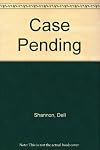
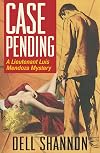
Another murder, another unanswered question. And Detective Mendoza hates to leave things undone.Hers was the kind of casual homicide that occurred every week in a city like Los Angeles in the sixties. Beaten, robbed, and left in an abandoned lot, Elena Ramirez's death was like many others... in fact, nearly identical to a murder that happened six months earlier—a case that Detective Luis Mendoza was never able to solve.
The detective isn't a fan of puzzles but knows one when he sees it. show more He puts two and two together—these vicious murders must have been committed by the same deranged individual—and leads the charge into a case that is astounding in its complexity. Along with the begrudging help of Detective-Sergeant Hackett, Mendoza must separate the many twisted threads of this crime—from murder to black-market adoption and extortion.
Considered the "queen of the police procedural," Dell Shannon offers a glimpse into the world of police-work before the aid of forensics or technology. An Edgar Award finalist in 1961, Case Pending introduces the Mexican American Detective Mendoza, a dynamic character who will stop at nothing to find answers, working in a Los Angeles that had not forgotten the 1943 "zoot suit" riots targeting young Chicanos.
. show less
Tags
Recommendations
















Member Reviews
Barbara Elizabeth Linington published Case Pending in 1960, under the pen name Dell Shannon, introducing her detective, Lieutenant Luis Mendoza. In a well-written and eminently useful introduction to the text, Leslie Klinger tells us that Shannon's writing style departed from contemporary police procedural novels, bringing deeper characterisation of the investigators and the victims, as well as some sociopolitical context to the crimes she wrote about. But Klinger also warns us that Linington/Shannon's own limited knowledge of Spanish, coupled with her heavy reliance on racial stereotypes and tropes, constrains this progressivism. Inspector Mendoza might have been one of the first Latino detectives in US American fiction, but he was show more also, Linington takes great pains to point out, one of the 'good ones'. Wealthy, well-dressed, of 'true Spanish blood' and therefore different from the other, poorer 'Mexes' she writes about, Linington's unrepentant dive into respectability politics creates a jarring portrait that might have seemed out of place a decade ago, but fits quite well into current American political contexts. I went armed with Klinger's warnings, but still found the narrative a bit hard to get through for these reasons.
In Case Pending, the battered body of a young girl is found on a street. Lieutenant Luis Mendoza, intelligent, keen, sharply dressed and a bit of a ladies' man, investigates. He's assisted by Sergeant Hackett, who dislikes him, but grows to respect his investigative skills over the course of the book. Mendoza believes the case is linked to another crime that happened months ago, but in both cases, there are nearly no clues. Across the city, a young man finds a spot of blood on his sleeve and thinks, 'Not again' - but his mother tells him not to mind it and focus on his studies. While Mendoza and Hackett try to resolve these crimes, another policeman in their department struggles with trying to adopt a child through variously legal means. Shannon brings these various threads together, with a good look at the nitty-gritty of how policing was carried out in the 1960s, and the focus is on this, and not so much the mystery, which is signalled quite early on.
Despite the many warnings in the introduction, the very obvious racial prejudices of the author, the even more apparent racial remarks by the characters, and the deep sexism of nearly every male character makes this is a bit of a chore to get through. I can usually get through books from this time being aware of the context in which they were written, but this is a bit more blatant and over the top than the usual. I cannot say that the plot is interesting enough to surmount this: other than anyone with an academic interest in crime novels of the period, I can't say this would be of much interest or worth reading. show less
In Case Pending, the battered body of a young girl is found on a street. Lieutenant Luis Mendoza, intelligent, keen, sharply dressed and a bit of a ladies' man, investigates. He's assisted by Sergeant Hackett, who dislikes him, but grows to respect his investigative skills over the course of the book. Mendoza believes the case is linked to another crime that happened months ago, but in both cases, there are nearly no clues. Across the city, a young man finds a spot of blood on his sleeve and thinks, 'Not again' - but his mother tells him not to mind it and focus on his studies. While Mendoza and Hackett try to resolve these crimes, another policeman in their department struggles with trying to adopt a child through variously legal means. Shannon brings these various threads together, with a good look at the nitty-gritty of how policing was carried out in the 1960s, and the focus is on this, and not so much the mystery, which is signalled quite early on.
Despite the many warnings in the introduction, the very obvious racial prejudices of the author, the even more apparent racial remarks by the characters, and the deep sexism of nearly every male character makes this is a bit of a chore to get through. I can usually get through books from this time being aware of the context in which they were written, but this is a bit more blatant and over the top than the usual. I cannot say that the plot is interesting enough to surmount this: other than anyone with an academic interest in crime novels of the period, I can't say this would be of much interest or worth reading. show less
In 1960, author Barbara Elizabeth Linington, under the pseudonym Dell Shannon, released Case Pending, a police procedural somewhat different from Ed McBain’s 87th Precinct series, but in its own way just as good. Case Pending received runner-up for Best First Mystery Novel from the Mystery Writers of America, and the next couple she wrote in the groundbreaking Lt. Luis Mendoza series, were also nominated for various awards. Over time, Dell Shannon — for those who knew the writer of this fine series was a woman — became known as Queen of the Procedurals, to McBain’s King of the Procedurals.
Having read many efforts in the Mendoza police procedurals many years ago, I revisited the series with the first effort, Case Pending, and show more remembered why I enjoyed them so much. Besides breaking ground by having the main character be Hispanic, there was a distinctness about the series in the manner Linington chose to present them. They straddled the line between traditional mystery storytelling and police procedural storytelling, which was just being defined by McBain. The Lt. Mendoza stories always had involving side stories which intersected with the main case in some way, though not always evident until the end. They also contained subtle psychological insights (sort of P.D. James-extra light) into not only the main characters, but often those surrounding the crime or crimes being investigated. In some ways, these were just as much short novels as they were police procedurals. Linington was a fine writer, walking the high-wire between the two, and seldom faltering. The Lt. Mendoza series makes a nice contrast to the grittier 87th Precinct novels of McBain.
Not recalling much of Case Pending (it had been decades since I read it) I found it to be terrific. Because it is the first in the series, Mendoza is still single here, Linington defining his character, and setting the template and tone for the series. To her great credit, since there must have been pressure to have Mendoza be exemplary, she writes him as very likable but also flawed. He dresses above his pay grade, for example, drives a Ferrari — albeit a 13 year old Ferrari — and is a bit of a womanizer (which will change as the series progresses and he becomes a family man). He is also more than a touch vain, though he is quite aware of this weakness.
Linington paints Mendoza as an excellent detective, a man not uncaring, but mostly doing his job and taking pride in doing it well. Mendoza isn’t crazy about puzzles and solving them, which makes him refreshingly different from other more traditional cozy detectives. He is compelled, however, to solve crimes because he doesn’t like leaving things undone. Case Pending is also brave — for its time period — in that it flat-out shows that while Mendoza will work with equal vigor to solve the individual murders of two very different girls, he secretly views one of the murders as a greater tragedy, because that girl was going to amount to something, while the other was most likely not. This honest assessment of how police privately view crime, especially because it is coming from a Hispanic cop, is quite bold for the time period.
As Mendoza, along with his subordinate Hackett, attempt to tie the slayings of the two girls together on the slimmest of evidence, because Mendoza has a hunch, two separate stories begin to subtly interplay with his investigation. One concerns a couple of young boys and a mother, the other a man in a jam whose only way out may be murder. When Mendoza discovers one of the girls had complained of being watched by someone at the skating rink, and then a new doll she’d just purchased went missing from the crime scene, the other stories start to tie in with the case he’s working on. Mendoza also meets pretty Alice in this first entry, and begins to court her.
I highly recommend this if you like a blending of traditional mystery and police procedural. It is extremely well-done and quite involving. It is not, however, as gritty nor as fast flowing as Ed McBain's 87th Precinct series. In fact, it leans toward a cozy which just happens to be a police procedural as well. If you do enjoy it, there are a slew of them available on Kindle to supplement — and contrast — the grittier 87th Precinct series by Ed McBain.
On a footnote: the transfer of text to Kindle of this over fifty-year-old novel has some issues. While all the text is justified, there are quite a number of typos throughout which were not in the original. It is by no means even close to the worst I’ve seen, and it’s not as annoying because it’s generally easy to see what is meant or was supposed to be there. You will, however, run across it on a fairly regular basis with the Kindle version. Depending on your tastes, and your affinity for once popular series from prior decades, you might be ecstatic to discover an old/new series you’ll enjoy reading from time to time. show less
Having read many efforts in the Mendoza police procedurals many years ago, I revisited the series with the first effort, Case Pending, and show more remembered why I enjoyed them so much. Besides breaking ground by having the main character be Hispanic, there was a distinctness about the series in the manner Linington chose to present them. They straddled the line between traditional mystery storytelling and police procedural storytelling, which was just being defined by McBain. The Lt. Mendoza stories always had involving side stories which intersected with the main case in some way, though not always evident until the end. They also contained subtle psychological insights (sort of P.D. James-extra light) into not only the main characters, but often those surrounding the crime or crimes being investigated. In some ways, these were just as much short novels as they were police procedurals. Linington was a fine writer, walking the high-wire between the two, and seldom faltering. The Lt. Mendoza series makes a nice contrast to the grittier 87th Precinct novels of McBain.
Not recalling much of Case Pending (it had been decades since I read it) I found it to be terrific. Because it is the first in the series, Mendoza is still single here, Linington defining his character, and setting the template and tone for the series. To her great credit, since there must have been pressure to have Mendoza be exemplary, she writes him as very likable but also flawed. He dresses above his pay grade, for example, drives a Ferrari — albeit a 13 year old Ferrari — and is a bit of a womanizer (which will change as the series progresses and he becomes a family man). He is also more than a touch vain, though he is quite aware of this weakness.
Linington paints Mendoza as an excellent detective, a man not uncaring, but mostly doing his job and taking pride in doing it well. Mendoza isn’t crazy about puzzles and solving them, which makes him refreshingly different from other more traditional cozy detectives. He is compelled, however, to solve crimes because he doesn’t like leaving things undone. Case Pending is also brave — for its time period — in that it flat-out shows that while Mendoza will work with equal vigor to solve the individual murders of two very different girls, he secretly views one of the murders as a greater tragedy, because that girl was going to amount to something, while the other was most likely not. This honest assessment of how police privately view crime, especially because it is coming from a Hispanic cop, is quite bold for the time period.
As Mendoza, along with his subordinate Hackett, attempt to tie the slayings of the two girls together on the slimmest of evidence, because Mendoza has a hunch, two separate stories begin to subtly interplay with his investigation. One concerns a couple of young boys and a mother, the other a man in a jam whose only way out may be murder. When Mendoza discovers one of the girls had complained of being watched by someone at the skating rink, and then a new doll she’d just purchased went missing from the crime scene, the other stories start to tie in with the case he’s working on. Mendoza also meets pretty Alice in this first entry, and begins to court her.
I highly recommend this if you like a blending of traditional mystery and police procedural. It is extremely well-done and quite involving. It is not, however, as gritty nor as fast flowing as Ed McBain's 87th Precinct series. In fact, it leans toward a cozy which just happens to be a police procedural as well. If you do enjoy it, there are a slew of them available on Kindle to supplement — and contrast — the grittier 87th Precinct series by Ed McBain.
On a footnote: the transfer of text to Kindle of this over fifty-year-old novel has some issues. While all the text is justified, there are quite a number of typos throughout which were not in the original. It is by no means even close to the worst I’ve seen, and it’s not as annoying because it’s generally easy to see what is meant or was supposed to be there. You will, however, run across it on a fairly regular basis with the Kindle version. Depending on your tastes, and your affinity for once popular series from prior decades, you might be ecstatic to discover an old/new series you’ll enjoy reading from time to time. show less
Ratings
Members
- Recently Added By
Author Information

110+ Works 3,734 Members
Awards and Honors
Awards
Series

Belongs to Publisher Series
Work Relationships
Is contained in
Common Knowledge
- Original publication date
- 1960
- People/Characters
- Luis Mendoza
- Important places
- Los Angeles, California, USA
- Epigraph
- "The cause is hidden, but the result is known."
--OVID - First words
- When Gunn came down the hall to his office at half-past eight, he found Curtis waiting.
- Last words
- (Click to show. Warning: May contain spoilers.)He smiled to himself; he expected to enjoy Alison...
- Original language
- English
Classifications
Statistics
- Members
- 83
- Popularity
- 384,764
- Reviews
- 2
- Rating
- (3.25)
- Languages
- English
- Media
- Paper, Ebook
- ISBNs
- 15
- ASINs
- 6