On This Page
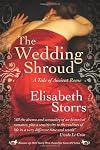
Description
In 406 BC, to seal a tenuous truce, the young Roman Caecilia is wedded to Vel Mastarna, an Etruscan nobleman from Veii. Leaving her militaristic homeland, Caecilia is determined to remain true to Roman virtues while living among the sinful Etruscans. But, despite her best intentions, she is seduced by a culture that offers women education, independence, sexual freedom, and an empowering religion. Enchanted by Veii but terrified of losing ties to Rome, Caecilia performs rites to delay show more becoming a mother, thereby postponing true entanglement. Yet as she develops an unexpected love for Mastarna, she's torn between her birthplace and the city in which she now lives. As war looms, Caecilia discovers Fate is not so easy to control, and she must choose where her allegiance lies. The Wedding Shroud is the first book in the series A Tale of Ancient Rome. Subsequent books in the series include The Golden Dice and Call to Juno. show lessTags
Recommendations















Member Reviews
First in a new series called Tales of Ancient Rome, the Wedding Shroud is set in 406 BC. Roman noble Caecilia is the orphaned daughter of a patrician woman and a plebian tribune. She was adopted by her maternal uncle, Aemilius, and is being sent to the city of Veii in Etruria to wed Vel Mastarna to seal a truce between the two cities. She feels no attraction to Vel and longs to stay in Rome where she's in love with Drusus, rather than enter into a political marriage as a hostage.
The wedding shroud, part of the Etruscan wedding ritual, is a mantle that covers the couple during the ceremony symbolizing a united destiny in life and death. Caecilia's been taught her entire life that the only right way is the Roman way. She's appalled and show more intrigued by the Etruscan way of life and the freedom the woman are allowed. Caecelia is stubbornly trying to cling to her stoic self control and rigid behavior but she reluctantly begins adjusting to the new freedom offered her in Veii. She learns of Vel's dark and painful past and reluctantly begins to fall in love with him.
The book is filled with rich historical detail and complex character development. There are intriguing details of both Roman and Etruscan life. The detail is artfully handled with an eye to revealing more about the cultural attitudes. Both historical and romance-oriented, the sexual situations are handled within what I would consider the time period. I really enjoyed the book and look forward to the second of the series, The Golden Dice. show less
The wedding shroud, part of the Etruscan wedding ritual, is a mantle that covers the couple during the ceremony symbolizing a united destiny in life and death. Caecilia's been taught her entire life that the only right way is the Roman way. She's appalled and show more intrigued by the Etruscan way of life and the freedom the woman are allowed. Caecelia is stubbornly trying to cling to her stoic self control and rigid behavior but she reluctantly begins adjusting to the new freedom offered her in Veii. She learns of Vel's dark and painful past and reluctantly begins to fall in love with him.
The book is filled with rich historical detail and complex character development. There are intriguing details of both Roman and Etruscan life. The detail is artfully handled with an eye to revealing more about the cultural attitudes. Both historical and romance-oriented, the sexual situations are handled within what I would consider the time period. I really enjoyed the book and look forward to the second of the series, The Golden Dice. show less
This was such a good book. It's complex yet not hard to understand, and it has amazing characters that linger on in my mind. I fell in love a little with Mastarna, and wow, the way the book ends, you really root for this couple.
I've seen some comments about Caecilia and would like to add my two cents. She's just 18 when BOOM, she's told she's being given in marriage to a man (a complete stranger, and 20 years older than her) who is the enemy of Rome! (In some political thing.) This to me would be similar to some of the stories we see of young women being given in marriage to old men in certain countries today. We feel bad for those girls: some have committed suicide. This is no different. It's important to remember the facts as they show more were given to her: she has lived an extremely sheltered life and all of a sudden she's married to an enemy, and taken away from everything she's ever known. For me, Caecilia's reactions were spot on, very believable, and any other reaction on her part would have turned this historical delight into a romance. Oh, there's plenty of romance, by the way--but because it's hard won, it has more meaning. One line I thought described it so well: "She felt like she was nothing. Less than nothing. Displaced among the living; unwanted amid the dead." Tarchon, her stepson, takes her under his wing, teaches her the language, is kind to her, as is Mastarna's mother. Yes, Caecilia clings to her past, to her loyalty to Rome, to her cousin and a Roman boy she thinks loves her. She knows nothing else. But, in the end....
There are also those in her new home who don't have Caecilia's best interests at heart, though they pretend to--for awhile, which of course lends itself well to painful betrayals. It all makes for a fascinating, enlightening, memorable read! I really enjoyed how carefully the author fleshed out everyone, even minor characters. Everyone, for me, had a face, a personality. I was involved with them all.
When she does go back to Rome, she is chastised for "changing." Really? I thought her reply magnificent: "What did you expect," she said, "when you sent a bride to live with lions?" What a wonderful line!
The research that went into the detail and flow of the story is impressive. The author doesn't skimp on the sights, smells, and sounds either. I felt immersed in Rome, in the Etruscan society, in the time period, and in the characters. show less
I've seen some comments about Caecilia and would like to add my two cents. She's just 18 when BOOM, she's told she's being given in marriage to a man (a complete stranger, and 20 years older than her) who is the enemy of Rome! (In some political thing.) This to me would be similar to some of the stories we see of young women being given in marriage to old men in certain countries today. We feel bad for those girls: some have committed suicide. This is no different. It's important to remember the facts as they show more were given to her: she has lived an extremely sheltered life and all of a sudden she's married to an enemy, and taken away from everything she's ever known. For me, Caecilia's reactions were spot on, very believable, and any other reaction on her part would have turned this historical delight into a romance. Oh, there's plenty of romance, by the way--but because it's hard won, it has more meaning. One line I thought described it so well: "She felt like she was nothing. Less than nothing. Displaced among the living; unwanted amid the dead." Tarchon, her stepson, takes her under his wing, teaches her the language, is kind to her, as is Mastarna's mother. Yes, Caecilia clings to her past, to her loyalty to Rome, to her cousin and a Roman boy she thinks loves her. She knows nothing else. But, in the end....
There are also those in her new home who don't have Caecilia's best interests at heart, though they pretend to--for awhile, which of course lends itself well to painful betrayals. It all makes for a fascinating, enlightening, memorable read! I really enjoyed how carefully the author fleshed out everyone, even minor characters. Everyone, for me, had a face, a personality. I was involved with them all.
When she does go back to Rome, she is chastised for "changing." Really? I thought her reply magnificent: "What did you expect," she said, "when you sent a bride to live with lions?" What a wonderful line!
The research that went into the detail and flow of the story is impressive. The author doesn't skimp on the sights, smells, and sounds either. I felt immersed in Rome, in the Etruscan society, in the time period, and in the characters. show less
I'm going to give this book a 4 star rating, mostly because of it's potential to be amazing. The first half and maybe even a bit more I was completely hooked. The main character is wonderful and you love her from the beginning, however, once you get passed the first half, the story starts to become muddled with way too much going on and the characters start to suffer from an identity crisis of sorts. Now some might argue that this is the point for the main character, but that seemed to transfer to the others as well. I did love it enough to look forward to the next book in the series though.
Elisabeth Storrs resurrects the lost world of the Etruscans in her masterful novel The Wedding Shroud set in 407 B.C. Long overshadowed by the Romans, the earlier Etruscan culture of ancient Italy is brilliantly revealed through the eyes of the novel's heroine, a young Roman woman named Caecilia. The daughter of an awkward plebian and patrician union, Caecilia is used to seal a peace treaty between Rome and Veii, a nearby Etruscan city. Her scheming male relatives force her to marry Vel Mastarna, a powerful and wealthy Veientane, and Caecilia is carried away to her new home. Veii is only twelve miles from Rome, but it is a world away for Caecilia. The author convincingly illustrates how small an individual's personal world could be in show more earlier times, especially a girl raised within the confining patriarchy of Rome. Although the ancient Mediterranean world was cosmopolitan and some people were well traveled, most were like Caecilia, who finds herself within an utterly foreign culture a mere dozen miles from her native home.
Once Caecilia arrives in Veii, the informative historical contrasts between Roman and Etruscan cultures are revealed through detail-rich prose. Caecilia has been raised within the austere and outwardly puritan Roman culture that values sacrifice, duty, and war. In Rome, women are nearly cloistered within their homes. They wear plain wool clothes, are forbidden to drink wine, and are not allowed to join the serious conversations of men. With such a background, Caecilia immediately finds Veii to be a constant moral outrage. Men and women mingle. They wear flamboyant and immodest clothes. They eat rich fancy food. Women can drink and debauch at banquets right alongside their men.
But some things are a pleasant surprise for Caecilia in her new household. She is given a slave, Cythergis. Never was such a luxury granted to Caecilia in Rome. And Caecilia is expected to hold audiences with her husband as his tenants and other guests petition him. In Veii, women have status and respect and are allowed to indulge in the luxuries of life. They might even be worthy of a funeral banquet and honorary games, which astounds Caecilia. She welcomes some of the nice things about life in Veii and is gradually tempted by darker forces in a society where most anything goes.
Despite her elevated status, Caecilia is not a truly liberated woman. The differences in female oppression between Romans and Etruscans are a matter of degree. Although Caecilia is free of the mind-numbing denial and drudgery of a Roman matron, she is still the possession of her husband and her paramount purpose is to produce an heir for Mastarna. This fictional study of female status is carefully crafted by Elisabeth Storrs. Delicate comparisons are presented through the characters of Erene, the courtesan, Caecilia, the proper wife, and Cythergis, the slave woman. All three types are dependent on men and under their control. Erene is strictly for pleasure. She is more than a slave but less than a wife. As a wife, Caecilia is allowed sexual pleasure by Etruscan culture with her husband with the great purpose of procreation looming above all. Most miserable is the slave woman Cythergis, who has endured having her children sold. Although Cythergis enjoys men, she hopes to avoid more pregnancies so she can stop breeding slaves. The nuances of the difficult lives of these three ancient women are touchingly revealed.
Complex relationships in The Wedding Shroud are the ships upon which the story flows. Caecilia struggles to adapt to her new and foreign household where Val Mastarna and his brother Artile, a powerful priest, vie for the affection and approval of their mother, Larthia. The adopted son of Mastarna, Tarchon, is also embroiled in an inappropriate sexual relationship with Artile. The priest is a constant source of meddling within the family, and he soon sinks his painted claws into the vulnerable Caecilia and begins to control her with religion and addictive drugs.
The character of Artile serves to educate the reader about the practices and corruptions of ancient religions. His power is great and even the educated elites are swayed by his interpretations of signs, with the notable exception of his brother Mastarna. Although the Etruscan culture has technology and fine artistry, it remains like all ancient cultures steeped in superstition. The imprint of the primitive world remains deep and fresh despite the presence of architecture, music, metallurgy, writing, and mathematics. Animal sacrifice is commonplace with the most horrifying example shown in wild rites that culminate with the tearing up and eating of fawns. And then as part of a funeral rite, a criminal is savagely executed by having a maddened dog set loose on him.
All of this assaults the sensibilities of Caecilia, whose sheltered upbringing as a female among joyless Romans, leaves her reeling with disgust. Amid the carnal abandon of Veii, Caecilia's husband Mastarna represents a rare force of rationality and affection. Frustratingly Caecilia too often rebuffs his attempts to help her adjust. As the reader, I often wanted her to be more accepting of Mastarna because he really was a relatively nice person, but Caecilia's turmoil and many mistakes are understandable. She is young, inexperienced, and alone in an alien culture. This formula usually adds up to poor choices.
I could write another thousand words exploring the subtleties of this novel without giving away any spoilers. Storrs presents a tremendous amount of research in a gripping story with characters that all feel genuine. Her writing has a literary quality packed with artistic descriptions and intelligent metaphors. For example, from page 79: "It was as though she had kicked the top off an ants' nest and found another world of industry and intricacy and purpose foreign to her own, exposing herself also to the danger of being bitten." The whole novel flows like a coastal Mediterranean wind and supports an unfolding narrative with the strong reach of a thick grape vine. I was drawn in completely to the emotional edginess of Caecilia and pined for her to accept her unwanted love of Mastarna. The Wedding Shroud is not purely a psychological journey. Episodes of visceral action punctuate the unfolding drama, like the breathtaking chapter in which Mastarna recklessly wrestles an Olympic champion. I highly recommend The Wedding Shroud to historical fiction readers. Elisabeth Storrs has created a wonderful novel from a willing marriage of her historical research and writing talent. show less
Once Caecilia arrives in Veii, the informative historical contrasts between Roman and Etruscan cultures are revealed through detail-rich prose. Caecilia has been raised within the austere and outwardly puritan Roman culture that values sacrifice, duty, and war. In Rome, women are nearly cloistered within their homes. They wear plain wool clothes, are forbidden to drink wine, and are not allowed to join the serious conversations of men. With such a background, Caecilia immediately finds Veii to be a constant moral outrage. Men and women mingle. They wear flamboyant and immodest clothes. They eat rich fancy food. Women can drink and debauch at banquets right alongside their men.
But some things are a pleasant surprise for Caecilia in her new household. She is given a slave, Cythergis. Never was such a luxury granted to Caecilia in Rome. And Caecilia is expected to hold audiences with her husband as his tenants and other guests petition him. In Veii, women have status and respect and are allowed to indulge in the luxuries of life. They might even be worthy of a funeral banquet and honorary games, which astounds Caecilia. She welcomes some of the nice things about life in Veii and is gradually tempted by darker forces in a society where most anything goes.
Despite her elevated status, Caecilia is not a truly liberated woman. The differences in female oppression between Romans and Etruscans are a matter of degree. Although Caecilia is free of the mind-numbing denial and drudgery of a Roman matron, she is still the possession of her husband and her paramount purpose is to produce an heir for Mastarna. This fictional study of female status is carefully crafted by Elisabeth Storrs. Delicate comparisons are presented through the characters of Erene, the courtesan, Caecilia, the proper wife, and Cythergis, the slave woman. All three types are dependent on men and under their control. Erene is strictly for pleasure. She is more than a slave but less than a wife. As a wife, Caecilia is allowed sexual pleasure by Etruscan culture with her husband with the great purpose of procreation looming above all. Most miserable is the slave woman Cythergis, who has endured having her children sold. Although Cythergis enjoys men, she hopes to avoid more pregnancies so she can stop breeding slaves. The nuances of the difficult lives of these three ancient women are touchingly revealed.
Complex relationships in The Wedding Shroud are the ships upon which the story flows. Caecilia struggles to adapt to her new and foreign household where Val Mastarna and his brother Artile, a powerful priest, vie for the affection and approval of their mother, Larthia. The adopted son of Mastarna, Tarchon, is also embroiled in an inappropriate sexual relationship with Artile. The priest is a constant source of meddling within the family, and he soon sinks his painted claws into the vulnerable Caecilia and begins to control her with religion and addictive drugs.
The character of Artile serves to educate the reader about the practices and corruptions of ancient religions. His power is great and even the educated elites are swayed by his interpretations of signs, with the notable exception of his brother Mastarna. Although the Etruscan culture has technology and fine artistry, it remains like all ancient cultures steeped in superstition. The imprint of the primitive world remains deep and fresh despite the presence of architecture, music, metallurgy, writing, and mathematics. Animal sacrifice is commonplace with the most horrifying example shown in wild rites that culminate with the tearing up and eating of fawns. And then as part of a funeral rite, a criminal is savagely executed by having a maddened dog set loose on him.
All of this assaults the sensibilities of Caecilia, whose sheltered upbringing as a female among joyless Romans, leaves her reeling with disgust. Amid the carnal abandon of Veii, Caecilia's husband Mastarna represents a rare force of rationality and affection. Frustratingly Caecilia too often rebuffs his attempts to help her adjust. As the reader, I often wanted her to be more accepting of Mastarna because he really was a relatively nice person, but Caecilia's turmoil and many mistakes are understandable. She is young, inexperienced, and alone in an alien culture. This formula usually adds up to poor choices.
I could write another thousand words exploring the subtleties of this novel without giving away any spoilers. Storrs presents a tremendous amount of research in a gripping story with characters that all feel genuine. Her writing has a literary quality packed with artistic descriptions and intelligent metaphors. For example, from page 79: "It was as though she had kicked the top off an ants' nest and found another world of industry and intricacy and purpose foreign to her own, exposing herself also to the danger of being bitten." The whole novel flows like a coastal Mediterranean wind and supports an unfolding narrative with the strong reach of a thick grape vine. I was drawn in completely to the emotional edginess of Caecilia and pined for her to accept her unwanted love of Mastarna. The Wedding Shroud is not purely a psychological journey. Episodes of visceral action punctuate the unfolding drama, like the breathtaking chapter in which Mastarna recklessly wrestles an Olympic champion. I highly recommend The Wedding Shroud to historical fiction readers. Elisabeth Storrs has created a wonderful novel from a willing marriage of her historical research and writing talent. show less
After her father dies, Caecilia of Ancient Rome is relieved when she is adopted by her uncle. However, her relief is short-lived when she learns that she is to be married to Mastarna, an Etruscan nobleman and widower for political purposes. Although Mastarna lives in the Veii, a city in Etruria, and is only approximately twelve miles north of Rome, its culture is so different from her home, it might as well be hundreds of miles away. Although she welcomes the more egalitarian relationships between the sexes refreshing, she finds many of the religious and sexual practices abhorrent. Although the affection between Caecilia and Mastarna grows, she feels that the love for her deceased wife is an insurmountable barrier between them.
Much of show more the book describes Caecilia feeling like a “stranger in a strange land” grieving unfulfilled dreams left in Rome. The novel did provide a list of principle characters and glossary of terms which helped with unfamiliar aspects of both the Roman and Etruscan cultures; however, I did find that I spent so much time looking up terms that it took away from the story. show less
Much of show more the book describes Caecilia feeling like a “stranger in a strange land” grieving unfulfilled dreams left in Rome. The novel did provide a list of principle characters and glossary of terms which helped with unfamiliar aspects of both the Roman and Etruscan cultures; however, I did find that I spent so much time looking up terms that it took away from the story. show less
Elisabeth Storrs debut novel, The Wedding Shroud, is set primarily in a time and place rarely found in historical fiction - the Etruscan city of Veii during the early 4th century B.C.
Opening in ancient Rome, the novel follows the life of Caecilia, a young Roman woman whose hand is offered in marriage to an Etruscan nobleman in order to cement a peace treaty between Rome and the neighboring Etruscan civilization. Forced into a union she doesn't want, Caecilia must not only marry a man she knows little about, but she must also come to terms with living amongst Etruscans, a people whose culture and belief systems are vastly different from those of early Rome.
The development of Caecilia's character is one of the greatest strengths of this show more novel. While Caecilia goes into her marriage with the intention of staying true to Rome, Storrs skillfully illustrates Caecilia's inner struggles as she finds herself caught between two worlds. In reading the novel, the reader is witness to the evolution of Caecilia as she works to find her place in the world, and it is through these efforts that she comes to better understand herself and those around her.
Vividly descriptive and rich in historical detail, The Wedding Shroud successfully brings to life not only Caecilia's story, but also the customs, beliefs and political machinations of ancient Etruria and early Rome. It is evident right from the opening pages that a significant amount of research went into the writing of this novel. Well-written and engaging, this is novel that fans of historical fiction should find enjoyable. I look forward to Elisabeth Storrs' next book. show less
Opening in ancient Rome, the novel follows the life of Caecilia, a young Roman woman whose hand is offered in marriage to an Etruscan nobleman in order to cement a peace treaty between Rome and the neighboring Etruscan civilization. Forced into a union she doesn't want, Caecilia must not only marry a man she knows little about, but she must also come to terms with living amongst Etruscans, a people whose culture and belief systems are vastly different from those of early Rome.
The development of Caecilia's character is one of the greatest strengths of this show more novel. While Caecilia goes into her marriage with the intention of staying true to Rome, Storrs skillfully illustrates Caecilia's inner struggles as she finds herself caught between two worlds. In reading the novel, the reader is witness to the evolution of Caecilia as she works to find her place in the world, and it is through these efforts that she comes to better understand herself and those around her.
Vividly descriptive and rich in historical detail, The Wedding Shroud successfully brings to life not only Caecilia's story, but also the customs, beliefs and political machinations of ancient Etruria and early Rome. It is evident right from the opening pages that a significant amount of research went into the writing of this novel. Well-written and engaging, this is novel that fans of historical fiction should find enjoyable. I look forward to Elisabeth Storrs' next book. show less
I wanted to like this book more than I did.
Set in 406 BC, this novel told of a political marriage between an unwilling Roman girl and a noble Etruscan meant to bring peace between two cities who hate each other. The opening sentence "Her whole world was orange" grabbed me--her Roman wedding. She returns to Veii with her husband, is married in Etruscan rites but then the book lost me halfway through. She does nothing to accept her husband's culture until she's under the influence of an aphrodisiac to make her submit to her husband willingly, then drugs to bring about religious ecstasy. She finally makes and acts on a momentous decision. The result is not what she expected and she has another choice to make. The author did mention show more several books she used as source material, but the drug aspect and the too-permissive nature of the Etruscan society seemed fabricated. Yes, the descriptions of the clothing, surroundings, and opulence were well done but hard to believe. I liked the husband and his family, but the heroine to me was an absolute idiot for not accepting the husband for his good points and for her getting involved in drugs and an ancient death cult. I had my heart in my mouth at a pankration match between a Greek Olympian champion and her husband. show less
Set in 406 BC, this novel told of a political marriage between an unwilling Roman girl and a noble Etruscan meant to bring peace between two cities who hate each other. The opening sentence "Her whole world was orange" grabbed me--her Roman wedding. She returns to Veii with her husband, is married in Etruscan rites but then the book lost me halfway through. She does nothing to accept her husband's culture until she's under the influence of an aphrodisiac to make her submit to her husband willingly, then drugs to bring about religious ecstasy. She finally makes and acts on a momentous decision. The result is not what she expected and she has another choice to make. The author did mention show more several books she used as source material, but the drug aspect and the too-permissive nature of the Etruscan society seemed fabricated. Yes, the descriptions of the clothing, surroundings, and opulence were well done but hard to believe. I liked the husband and his family, but the heroine to me was an absolute idiot for not accepting the husband for his good points and for her getting involved in drugs and an ancient death cult. I had my heart in my mouth at a pankration match between a Greek Olympian champion and her husband. show less
Members
- Recently Added By
Published Reviews
ThingScore 100
'From the moment I stepped under the orange veil to the last roll of the dice, I found myself wanting more of her world, to walk with her characters and to immerse myself in their lives, if only for a time.'
added by elisabethstorrs
"All the drama and sensuality expected of a historical romance, plus a sensitivity to the realities of life in a very different time and world."
added by elisabethstorrs
Author Information

5 Works 251 Members

Elisabeth Storrs is a LibraryThing Author, an author who lists their personal library on LibraryThing.
Some Editions
Awards and Honors
Awards
Series

Common Knowledge
- Canonical title
- The Wedding Shroud
- People/Characters
- Aemilia Caeciliana (Caecilia); Marcus Aemilius Mamercus Junior; Appius Claudius Drusus; Marcus Furius Camillus; Marcus Aemilius Mamercus Senior; Lucius Caecilius (show all 26); Aurelia (Aemilius's wife); Aemilia (Caecilia's mother, Aemilius's sister); Vel Mastarna; Artile Mastarna; Tarchon Mastarna; Larthia Atelinas; Cytheris; Erene; Arruns; Seianta; Arnth Ulthes; Laris Tulumnes; Apercu; Vipinas; Pesna; Aricia; Velia; Aule Porsenna; Tuchulcha; Amyntor (a Greek athlete)
- Important places
- Rome, Italy (Roman Republic); Veii, Etruria; Etruria
- Important events
- Festival of Fufluns; Third Veientine War (405-396 BC)
- Dedication
- To David, Andrew, and Lucas
- First words
- Her whole world was orange.
- Quotations
- "All the drama and sensuality expected of a historical romance, plus a sensitivity to the realities of life in a very different time and world." Ursula Le Guin
- Last words
- (Click to show. Warning: May contain spoilers.)They were smooth to the touch.
Classifications
Statistics
- Members
- 169
- Popularity
- 193,327
- Reviews
- 11
- Rating
- (3.48)
- Languages
- English
- Media
- Paper, Ebook
- ISBNs
- 6
- ASINs
- 5