
E. Knight (1)
Author of Ribbons of Scarlet
For other authors named E. Knight, see the disambiguation page.
E. Knight (1) has been aliased into Eliza Knight.
Series
Works by E. Knight
Works have been aliased into Eliza Knight.
Associated Works
Works have been aliased into Eliza Knight.
Songs of Blood and Gold — Contributor — 4 copies
Tagged
Common Knowledge
There is no Common Knowledge data for this author yet. You can help.
Members
Reviews
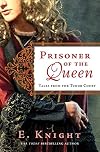
Prisoner of the Queen by E. Knight
Book #2: Tales from the Tudor Court
Source: Netgalley
My Rating: 4½/5 stars
My Review:
As Prisoner of the Queen opens, England is in turmoil as Henry VIII’s only surviving yet sickly son is on the throne and his daughters, Mary and Elizabeth struggle with their place in the world and their claim to the throne of England. As the young King’s days come to a close, the Grey family makes their play and places their eldest daughter, Jane on the throne. Known as show more the nine-day Queen, Jane Grey is wholly incapable of holding her position and along with her father and several others, loses her head for treason. Sitting in the wings and knowing she is pawn in a much larger game is Jane’s sister Katherine Grey.
Born of noble blood, Katherine has always known she is nothing more than a pawn in other’s games. Katherine is kind, caring, generous, and totally uninterested in suffering the fate of her sister, Jane. In fact, from the very beginning she is clear to any and all who will listen, she has no interest in being a queen no matter her bloodline nor does she have any desire to stand in the way of Mary and Elizabeth and their respective claims to the throne. Katherine wants what a normal and quiet life that includes a man who loves her, a home far from court, her beloved pets, and a ridiculous number of children. At a very early age, Katherine meets the man she is to love for the rest of her life, Ned, a beautiful and titled young man who knows instantly that Katherine is meant to be his.
The bulk of Prisoner of the Queen is devoted to Katherine and Ned and the tragic love they share. Like Katherine, Ned is from a politically ambitious family and a union between his house and hers would certainly be seen as a threat to the throne. While most would simply get married and call it a day, Ned and Katherine have to receive approval from the crown which is granted shortly before Queen Mary dies. As we all know, Queen Elizabeth was a cat of a different color and was in no way inclined to continue the policies of her now-deceased half-sister. As Elizabeth begins her reign, it is imperative to her safety and security that she identify her enemies and keep them in check. High on her list of potential threats is Katherine Grey.
The moment Elizabeth takes the throne, she makes it clear to Katherine that she will not ever approve her marriage to Ned and her every action will be watched. Katherine isn’t just watched, her letters are read, her words are marked, and her every step is shadowed by someone looking to bring a claim of treason against her. Elizabeth warns Katherine constantly that she is a threat that will be neutralized should she (Katherine) put even a toe out of line. In order to ensure they cannot be together, Elizabeth often engages Ned’s services which keeps him far, far from court. But, love is a powerful emotion to overcome and Katherine and Ned are committed to one another. Knowing they could lose their heads for treason, they wed in secret with the hope that one day, the Queen will approve of their union.
The Bottom Line: Once again, Knight has taken a well-known story and reported on it from a totally different character’s perspective. I LOVED IT!! From the very beginning, Katherine is an individual you want to root for all the while knowing she will never truly have what her heart desires. Despite her actions nearly always supporting her words, Katherine is dealt blow after blow by a suspicious and vindictive queen. This is one of the first books I have read (and I’ve read A LOT of Tudor-related titles) that depicts Queen Elizabeth I as something other than a reasonably decent human who only wants what is best for her subjects and her country. Knight portrays Elizabeth as paranoid, suspicious, untrusting, and cruel. I LOVED IT!! There are some truly beautiful moments in this read for Katherine and Ned but overall, their road is long, hard, and paved with a great deal of misery. Though there is still an incredible amount of detail in this read (BLECH!!) it does end better than the first book and I found myself quite satisfied with the end result. show less
Book #2: Tales from the Tudor Court
Source: Netgalley
My Rating: 4½/5 stars
My Review:
As Prisoner of the Queen opens, England is in turmoil as Henry VIII’s only surviving yet sickly son is on the throne and his daughters, Mary and Elizabeth struggle with their place in the world and their claim to the throne of England. As the young King’s days come to a close, the Grey family makes their play and places their eldest daughter, Jane on the throne. Known as show more the nine-day Queen, Jane Grey is wholly incapable of holding her position and along with her father and several others, loses her head for treason. Sitting in the wings and knowing she is pawn in a much larger game is Jane’s sister Katherine Grey.
Born of noble blood, Katherine has always known she is nothing more than a pawn in other’s games. Katherine is kind, caring, generous, and totally uninterested in suffering the fate of her sister, Jane. In fact, from the very beginning she is clear to any and all who will listen, she has no interest in being a queen no matter her bloodline nor does she have any desire to stand in the way of Mary and Elizabeth and their respective claims to the throne. Katherine wants what a normal and quiet life that includes a man who loves her, a home far from court, her beloved pets, and a ridiculous number of children. At a very early age, Katherine meets the man she is to love for the rest of her life, Ned, a beautiful and titled young man who knows instantly that Katherine is meant to be his.
The bulk of Prisoner of the Queen is devoted to Katherine and Ned and the tragic love they share. Like Katherine, Ned is from a politically ambitious family and a union between his house and hers would certainly be seen as a threat to the throne. While most would simply get married and call it a day, Ned and Katherine have to receive approval from the crown which is granted shortly before Queen Mary dies. As we all know, Queen Elizabeth was a cat of a different color and was in no way inclined to continue the policies of her now-deceased half-sister. As Elizabeth begins her reign, it is imperative to her safety and security that she identify her enemies and keep them in check. High on her list of potential threats is Katherine Grey.
The moment Elizabeth takes the throne, she makes it clear to Katherine that she will not ever approve her marriage to Ned and her every action will be watched. Katherine isn’t just watched, her letters are read, her words are marked, and her every step is shadowed by someone looking to bring a claim of treason against her. Elizabeth warns Katherine constantly that she is a threat that will be neutralized should she (Katherine) put even a toe out of line. In order to ensure they cannot be together, Elizabeth often engages Ned’s services which keeps him far, far from court. But, love is a powerful emotion to overcome and Katherine and Ned are committed to one another. Knowing they could lose their heads for treason, they wed in secret with the hope that one day, the Queen will approve of their union.
The Bottom Line: Once again, Knight has taken a well-known story and reported on it from a totally different character’s perspective. I LOVED IT!! From the very beginning, Katherine is an individual you want to root for all the while knowing she will never truly have what her heart desires. Despite her actions nearly always supporting her words, Katherine is dealt blow after blow by a suspicious and vindictive queen. This is one of the first books I have read (and I’ve read A LOT of Tudor-related titles) that depicts Queen Elizabeth I as something other than a reasonably decent human who only wants what is best for her subjects and her country. Knight portrays Elizabeth as paranoid, suspicious, untrusting, and cruel. I LOVED IT!! There are some truly beautiful moments in this read for Katherine and Ned but overall, their road is long, hard, and paved with a great deal of misery. Though there is still an incredible amount of detail in this read (BLECH!!) it does end better than the first book and I found myself quite satisfied with the end result. show less

Funny, I wonder if there is a bit of truth in the way the "barbarians" underestimated the Romans by their effete appearance. Sadly, the tribe leaders met with maybe the least impressive, Claudius. Tragically so.
I've always found it odd that the Romans wiped out the Druid practice/religion when they pretty much left all others alone, even encouraging people to build temples in Rome to foreign gods.
Interesting the self-interest on display when the outraged Britons quake under the prospect of show more becoming Roman slaves when they enslave each other with abandon.
Not sure I'll finish this. It's a foregone conclusion and there is a ton of grisly action and cruelty, to be expected with war, but I'll never listen to it again even if I do get through it. Back to Audible it will go.
Ok, I made it through, but skipped over some more gratuitous passages - droning on about curses and battle blows. It strikes me, in the fierce pride of the women in the book, that the only way they can have any agency is to adopt the bloodthirsty violence made the cultural norm by men. Behaving with gentleness, kindness, compassion and compromise are all weak and despised. Why? Because they are the default position of many women? Because they don't result in absolute domination and oppression? Why do we value those qualities in humans over the others? Why are we, and by we I mean the culture as a whole and men in particular, so afraid of that other side to us? Sometimes called the feminine side, but I don't think it's that specific. It's just been nearly completely wiped out of so much of how we think of ourselves and what we consider normal and natural. Sad really. We never learn and it will be the end of us one day. And, sadly, probably all life on earth as we know it. show less
I've always found it odd that the Romans wiped out the Druid practice/religion when they pretty much left all others alone, even encouraging people to build temples in Rome to foreign gods.
Interesting the self-interest on display when the outraged Britons quake under the prospect of show more becoming Roman slaves when they enslave each other with abandon.
Not sure I'll finish this. It's a foregone conclusion and there is a ton of grisly action and cruelty, to be expected with war, but I'll never listen to it again even if I do get through it. Back to Audible it will go.
Ok, I made it through, but skipped over some more gratuitous passages - droning on about curses and battle blows. It strikes me, in the fierce pride of the women in the book, that the only way they can have any agency is to adopt the bloodthirsty violence made the cultural norm by men. Behaving with gentleness, kindness, compassion and compromise are all weak and despised. Why? Because they are the default position of many women? Because they don't result in absolute domination and oppression? Why do we value those qualities in humans over the others? Why are we, and by we I mean the culture as a whole and men in particular, so afraid of that other side to us? Sometimes called the feminine side, but I don't think it's that specific. It's just been nearly completely wiped out of so much of how we think of ourselves and what we consider normal and natural. Sad really. We never learn and it will be the end of us one day. And, sadly, probably all life on earth as we know it. show less

What an unusual twist on co-authoring! The story of Boudica's rebellion is told in (mostly) linear time, but from the points of view of several different characters with each installment carrying on the story from a different p.o.v. as told by a different author. Surprisingly, there's not a blatantly lesser section in the lot.
Given how little we know about Boudica, the culture of Celtic Britain, and Druidism, the authors had very little to work with, yet they've created a very plausible show more sociopolitical setting for their novel. The characters are round and believable and often sympathetic. There's not a single uninflected "good guy," which seems appropriate, given the historical roots of the tale and the fact that this is primarily a story of war.
As expected, the subject means that the book gets pretty much all the content warnings. Violence, SA, child abuse, gore, cruelty to humans and animals, homophobia, racism, etc. There are many disturbing scenes and elements, but none are exploitative or unnecessarily detailed or prolonged. If you've somehow gotten this far in life without realizing that humans, even those who are generally decent in other contexts, often do abjectly horrific things to each other in war, this novel will thoroughly correct that oversight. Also, if you don't know the source story, be aware that Boudica revolted against the Roman occupation of Britain after the Roman provincial procurator had her publicly stripped and flogged and allowed Roman soldiers to rape her daughters, so things get ugly pretty quickly in this book and then just stay ugly.
Human nature is actually the most disturbing thing about the book. As in life, there are a few characters who are so thoroughly degenerate and brutal that we feel pretty comfortable hating them and it's a relief when they're taken out of circulation, but the vast majority of the characters are not so easily managed. Nearly every main character, whether Roman or Britton, does things that, to a comfortable 21st-century eye, are terrible. Sometimes they have no choice, but often they make what seems like the best decision in the moment, even if it leads them into committing injustices. And yet every single one has moments in which the reader sees their humanity and feels for them. For a book with seven authors, that's pretty impressive. show less
Given how little we know about Boudica, the culture of Celtic Britain, and Druidism, the authors had very little to work with, yet they've created a very plausible show more sociopolitical setting for their novel. The characters are round and believable and often sympathetic. There's not a single uninflected "good guy," which seems appropriate, given the historical roots of the tale and the fact that this is primarily a story of war.
As expected, the subject means that the book gets pretty much all the content warnings. Violence, SA, child abuse, gore, cruelty to humans and animals, homophobia, racism, etc. There are many disturbing scenes and elements, but none are exploitative or unnecessarily detailed or prolonged. If you've somehow gotten this far in life without realizing that humans, even those who are generally decent in other contexts, often do abjectly horrific things to each other in war, this novel will thoroughly correct that oversight. Also, if you don't know the source story, be aware that Boudica revolted against the Roman occupation of Britain after the Roman provincial procurator had her publicly stripped and flogged and allowed Roman soldiers to rape her daughters, so things get ugly pretty quickly in this book and then just stay ugly.
Human nature is actually the most disturbing thing about the book. As in life, there are a few characters who are so thoroughly degenerate and brutal that we feel pretty comfortable hating them and it's a relief when they're taken out of circulation, but the vast majority of the characters are not so easily managed. Nearly every main character, whether Roman or Britton, does things that, to a comfortable 21st-century eye, are terrible. Sometimes they have no choice, but often they make what seems like the best decision in the moment, even if it leads them into committing injustices. And yet every single one has moments in which the reader sees their humanity and feels for them. For a book with seven authors, that's pretty impressive. show less
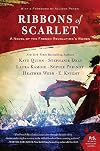
Liberté, égalité, sororité!
Six of my favorite historical fictions writers, referred to as the "Scarlet Sisters" (Stephanie Dray, Laura Kamoie, Eliza Knight, Sophie Perinot, Kate Quinn and Heather Webb), have combined forces in this exquisite compendium of tales of the French Revolution. The book features seven sections in chronological order - each told through the voice of an historic female figure of the revolution and written by one of the "Scarlet Sisters". The stories intentionally show more intersect from time to time, imagining how these women of note may have interacted. These historic woman come from all walks of life whether peasantry, royalty, aristocracy, merchant class or enlightened philosophy and were assuredly aware of one another.
The research which went into telling these tales is herculean. The writing is exquisite and the tales are deftly rendered. I loved how well the stories segued into one another and how beautifully the women's lives were brought to life. My own senses were heightened through the writing as I could easily imagine the stench of a prison, the wafting of a ladies rosewater perfume, the shimmer of light against the guillotine's blade and the din of an angry mob beyond control.
Although her own schedule did not allow for participating in the writing of one of the book's sections, renowned historical fiction writer, Allison Pataki provided a wonderful foreword, drawing the reader into these pages of "herstory". To the beloved "Scarlet Sisters", bravi pour un travail bien fait! show less
Six of my favorite historical fictions writers, referred to as the "Scarlet Sisters" (Stephanie Dray, Laura Kamoie, Eliza Knight, Sophie Perinot, Kate Quinn and Heather Webb), have combined forces in this exquisite compendium of tales of the French Revolution. The book features seven sections in chronological order - each told through the voice of an historic female figure of the revolution and written by one of the "Scarlet Sisters". The stories intentionally show more intersect from time to time, imagining how these women of note may have interacted. These historic woman come from all walks of life whether peasantry, royalty, aristocracy, merchant class or enlightened philosophy and were assuredly aware of one another.
The research which went into telling these tales is herculean. The writing is exquisite and the tales are deftly rendered. I loved how well the stories segued into one another and how beautifully the women's lives were brought to life. My own senses were heightened through the writing as I could easily imagine the stench of a prison, the wafting of a ladies rosewater perfume, the shimmer of light against the guillotine's blade and the din of an angry mob beyond control.
Although her own schedule did not allow for participating in the writing of one of the book's sections, renowned historical fiction writer, Allison Pataki provided a wonderful foreword, drawing the reader into these pages of "herstory". To the beloved "Scarlet Sisters", bravi pour un travail bien fait! show less
Lists
Awards


You May Also Like
Associated Authors
Statistics
- Works
- 5
- Also by
- 1
- Members
- 574
- Popularity
- #43,645
- Rating
- 4.1
- Reviews
- 53
- ISBNs
- 36