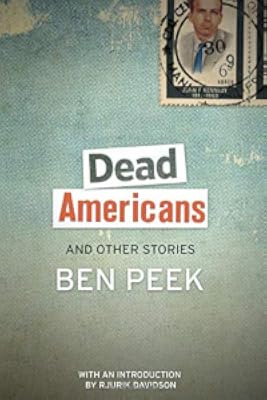
Dead Americans
by Ben Peek
On This Page
Description
A collection of the critically acclaimed dark, weird and surreal short fiction of Ben Peek. It presents a world where bands are named after the murderer of a dead president, where the work of Octavia E. Butler is turned into an apocalypse meta-narrative, and John Wayne visits a Wal-Mart. It presents a world where a dying sun shines over a broken, bitter landscape and men and women tattoo their life onto their skin for an absent god. It presents Mark Twain dreaming of Sydney, and answers a show more questionnaire you never read. show lessTags
Recommendations



Member Reviews
Dead Americans and Other Stories by Ben Peek is a collection of short and long stories. Mostly on the longer side, really. They were an odd bunch and some of them went a bit over my head for various reasons (see below) but several of them did involve dead Americans, as promised in the title. (Somewhat unusually, the collection is not named after one of the story titles.)
My favourite stories, looking back over them were, in order of appearance, "The Dreaming City", which was the only Australian-flavoured story, "Johnny Cash", which was pretty funny, "The Souls of Dead Soldiers are for Blackbirds, Not Little Boys", and "theleeharveyoswaldband", which was a relatively straight forward, albeit it definitely speculative, tale.
"The Souls of show more Dead Soldiers are for Blackbirds, Not Little Boys" along with three other stories, "Possession", "The Funeral, Ruined" and "Under the Red Sun" were all set in the same world. They were set in very different parts of the world, so that it wasn't until I got to the third story, which referenced both of the two before it, that I realised. I am fond of short stories expanding on the same world. In this case, all the stories dealt with death and life after death, both in the religious sense and in the sense of coming back as a cyborg. I liked the way in which Peek touched upon, for example, the war that affected different aspects of the world, without centring the story on the war itself, just some of its ramifications. And the different attitudes that different people had towards cyborgs were broadly explored throughout the stories.
I have to admit that some of the stories went a bit over my head, I suspect as a result of not being familiar with the right part of American culture. Especially "John Wayne". I caught some of the social commentary, but definitely not all of it. Similarly, I enjoyed "Octavia E Butler (a remix)", but I am positive that there are references to that author's work which I missed on account of not having read any of it (I know, I know, bad me, I'll get to it eventually).
Anyway, as usual, comments on individual stories are below. Peek's writing is well developed and I highly recommend this collection to fans of speculative fiction, especially the kind tending towards the weird, and horror. Also, aficionados of the short story (well, up to novella length, I think) will find much to appreciate here.
~
There Is Something So Quiet and Empty Inside of You That It Must Be Precious — ok, the title of this story makes it even creepier; I had forgotten it while I read. I also went back and read through the chapter/section headings and they were eerie. A story whose creepiness creeps up on you (heh). The kind of horror with a drab and mundane setting that puts the fear in the commonplace.
The Dreaming City — I did not know, before reading this story, that Mark Twain had ever visited Australia (apparently he circumnavigated the world in his 60s). The story is told from several perspectives and time-frames. We have Mark Twain on his visit to Sydney and Mark Twain being spoken to by an Aboriginal spirit who shows him the past and, briefly, the future. There's also the point of view of an Aboriginal tribesman told from the landing of the first fleet to his death. That particular story is more of the "progress marches on" variety, whereas Twain's is (sort of) more neutrally observational. There are also some excerpts from the introduction to a more-or-less present-day travel guide, which talk about Twain and Sydney's history. It's a rich story with many layers and very different to the one that preceded it. There are even footnotes on a few historical points, explaining them further.
Johnny Cash (A Tale in Questionnaire Results) — This story was pretty funny and quite short, coming in at 50 answers. It is not about Johnny Cash. It is about Reagan, demons and blood sacrifices. And clean-up.
Possession — This story started a bit slowly but then improved. Shows us a glimpse into a desolate future and a look at a particular subterranean botanist's life. The future combines some sort of (post-) apocalyptic event and cyborgs as longevity-proofed humans (sort of). Really interesting once it got going.
The Souls of Dead Soldiers are for Blackbirds, Not Little Boys — Similar in setting (that is, subterranean) to the previous story and well placed for being so. Otherwise quite different. The title actually describes it very well. The world building was detailed and very much added to the foreign setting and mystical (sort of) story.
The Funeral, Ruined — Same world as the previous story, but a different country. And, actually, as I realised a little way in, they are both also set in the same world as "Possession". Addresses some of the personal social consequences of cyborgification from an entirely different perspective to "Possession".
Under the Red Sun — Same world as above. Set in a very different place to the previous two stories. I have a particular fondness for short stories set in the same world, and I enjoyed the windows into different societies in this set. This one deals with death (again) and the beliefs surrounding it from the point of view of people who can choose to come back as cyborgs but don't necessarily think that's the right thing to do.
John Wayne (As Written by a Non-American) — a story about John Wayne and Orson Welles. I don think I quite "got" it. Maybe one needs to know more US culture? It just seemed a little odd to me (ironic, given that some aspects were supposed to seem odd...)
Octavia E. Butler (a remix) — this was a really weird story. The opening confused me, because at first I thought it was going to be about the real Octavia Butler, like how some of the earlier stories featured real people. But as soon became clear, it was a science fictional story, set in a near future with a complicated (and, as it turns out, sentient) disease infecting humanity. Possibly, it was a reference/homage to a story the Butler wrote, but I haven’t read any, so that aspect would’ve been completely lost on me, if it did indeed exist. Beyond that, I’ll just add that it was a fairly depressing story, spanning many years and, more or less, the main character’s entire life.
theleeharveyoswaldband — OK, all the stories in this volume were a bit weird, and this one probably falls into the less confusing category. I quite liked it. Told by following a key character and through an interview with someone else in Rolling Stone, it was about a one-man-band's surprising rise to fame and the bootlegger who helped him get there.
4 / 5 stars
You can read more of my reviews on my blog. show less
My favourite stories, looking back over them were, in order of appearance, "The Dreaming City", which was the only Australian-flavoured story, "Johnny Cash", which was pretty funny, "The Souls of Dead Soldiers are for Blackbirds, Not Little Boys", and "theleeharveyoswaldband", which was a relatively straight forward, albeit it definitely speculative, tale.
"The Souls of show more Dead Soldiers are for Blackbirds, Not Little Boys" along with three other stories, "Possession", "The Funeral, Ruined" and "Under the Red Sun" were all set in the same world. They were set in very different parts of the world, so that it wasn't until I got to the third story, which referenced both of the two before it, that I realised. I am fond of short stories expanding on the same world. In this case, all the stories dealt with death and life after death, both in the religious sense and in the sense of coming back as a cyborg. I liked the way in which Peek touched upon, for example, the war that affected different aspects of the world, without centring the story on the war itself, just some of its ramifications. And the different attitudes that different people had towards cyborgs were broadly explored throughout the stories.
I have to admit that some of the stories went a bit over my head, I suspect as a result of not being familiar with the right part of American culture. Especially "John Wayne". I caught some of the social commentary, but definitely not all of it. Similarly, I enjoyed "Octavia E Butler (a remix)", but I am positive that there are references to that author's work which I missed on account of not having read any of it (I know, I know, bad me, I'll get to it eventually).
Anyway, as usual, comments on individual stories are below. Peek's writing is well developed and I highly recommend this collection to fans of speculative fiction, especially the kind tending towards the weird, and horror. Also, aficionados of the short story (well, up to novella length, I think) will find much to appreciate here.
~
There Is Something So Quiet and Empty Inside of You That It Must Be Precious — ok, the title of this story makes it even creepier; I had forgotten it while I read. I also went back and read through the chapter/section headings and they were eerie. A story whose creepiness creeps up on you (heh). The kind of horror with a drab and mundane setting that puts the fear in the commonplace.
The Dreaming City — I did not know, before reading this story, that Mark Twain had ever visited Australia (apparently he circumnavigated the world in his 60s). The story is told from several perspectives and time-frames. We have Mark Twain on his visit to Sydney and Mark Twain being spoken to by an Aboriginal spirit who shows him the past and, briefly, the future. There's also the point of view of an Aboriginal tribesman told from the landing of the first fleet to his death. That particular story is more of the "progress marches on" variety, whereas Twain's is (sort of) more neutrally observational. There are also some excerpts from the introduction to a more-or-less present-day travel guide, which talk about Twain and Sydney's history. It's a rich story with many layers and very different to the one that preceded it. There are even footnotes on a few historical points, explaining them further.
Johnny Cash (A Tale in Questionnaire Results) — This story was pretty funny and quite short, coming in at 50 answers. It is not about Johnny Cash. It is about Reagan, demons and blood sacrifices. And clean-up.
Possession — This story started a bit slowly but then improved. Shows us a glimpse into a desolate future and a look at a particular subterranean botanist's life. The future combines some sort of (post-) apocalyptic event and cyborgs as longevity-proofed humans (sort of). Really interesting once it got going.
The Souls of Dead Soldiers are for Blackbirds, Not Little Boys — Similar in setting (that is, subterranean) to the previous story and well placed for being so. Otherwise quite different. The title actually describes it very well. The world building was detailed and very much added to the foreign setting and mystical (sort of) story.
The Funeral, Ruined — Same world as the previous story, but a different country. And, actually, as I realised a little way in, they are both also set in the same world as "Possession". Addresses some of the personal social consequences of cyborgification from an entirely different perspective to "Possession".
Under the Red Sun — Same world as above. Set in a very different place to the previous two stories. I have a particular fondness for short stories set in the same world, and I enjoyed the windows into different societies in this set. This one deals with death (again) and the beliefs surrounding it from the point of view of people who can choose to come back as cyborgs but don't necessarily think that's the right thing to do.
John Wayne (As Written by a Non-American) — a story about John Wayne and Orson Welles. I don think I quite "got" it. Maybe one needs to know more US culture? It just seemed a little odd to me (ironic, given that some aspects were supposed to seem odd...)
Octavia E. Butler (a remix) — this was a really weird story. The opening confused me, because at first I thought it was going to be about the real Octavia Butler, like how some of the earlier stories featured real people. But as soon became clear, it was a science fictional story, set in a near future with a complicated (and, as it turns out, sentient) disease infecting humanity. Possibly, it was a reference/homage to a story the Butler wrote, but I haven’t read any, so that aspect would’ve been completely lost on me, if it did indeed exist. Beyond that, I’ll just add that it was a fairly depressing story, spanning many years and, more or less, the main character’s entire life.
theleeharveyoswaldband — OK, all the stories in this volume were a bit weird, and this one probably falls into the less confusing category. I quite liked it. Told by following a key character and through an interview with someone else in Rolling Stone, it was about a one-man-band's surprising rise to fame and the bootlegger who helped him get there.
4 / 5 stars
You can read more of my reviews on my blog. show less
Story collections are by nature a bit uneven in the quality of the pieces chosen, especially when it comes to works written at different times and for different purposes. Dead Americans is no exception. The Australian author's collection, which clearly aims to celebrate some of his American role models, such as Mark Twain and Octavia Butler, includes a couple of really brilliant stories, a couple of good ones, while the rest are somewhere between average and below average.
Ratings
Members
- Recently Added By
Author Information

34+ Works 344 Members
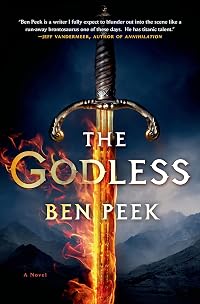
Ben Peek was born on October 12, 1976 in Australia. His short stories have been published in a variety of genre magazines, including Fantasy Magazine and Aurealis. His fiction has been reprinted in various Year's Best volumes. In 2000, he created a zine called The Urban Sprawl Project, a black and white pamphlet of photography and prose, and this show more remains the name of his online journal. In 2006 his autobiography, Twenty-Six Lies/One Truth, was published by Wheatland Press. In 2007, Black Sheep, a dystopian novel, was published by Prime Books. In 2007, Peek also began collaborating with artist Anna Brown on Nowhere Near Savannah, an online comic that in part follows on from their original collaboration on Twenty-Six Lies/One Truth. Peek holds a Bachelor of Arts from the University of Western Sydney, and a PhD in Creative Writing from the University of New South Wales, during which he wrote the novel A Year in the City. Peek's writing is best described as speculative fiction. In 2015 his title Godless was nominated for Best Novel by the Ditmar Awards. (Bowker Author Biography) show less
Classifications
Statistics
- Members
- 30
- Popularity
- 926,905
- Reviews
- 2
- Rating
- (3.67)
- Languages
- English
- Media
- Paper, Ebook
- ISBNs
- 2
- ASINs
- 3