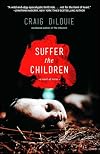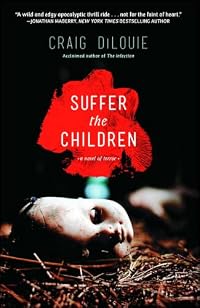
Suffer the Children
by Craig Dilouie
On This Page
Description
A terrifying tale of apocalyptic fiction, as listeners are introduced to Herod's Syndrome, a devastating illness that suddenly and swiftly kills all young children across the globe. Soon, they return from the grave, and ask for blood. And with blood, they stop being dead. They continue to remain the children they once were, but only for a short time, as they need more blood to live.Tags
Recommendations







Member Reviews
An excellent horror story in the vein of the early works of Stephen King; and a unique take on the vampire/zombie myth, yet more fearsome than adult vampires, this novel deals with children vampires. This novel also reminded me of the Midwich Cockoos but a tad more menacing and horrific.
Initially the focus of the novel is on three couples, from all walks of life and how they interact with their children and each other. One of the children was initially ill due to Coeliac disease (which I appreciated the inclusion of, as a suffer myself). After the incident we see how each of these three couples interacts with their immediate circle and others. The over-riding question of the novel is what would you, as a parent, do to see/save your show more child again? I am not a mother myself but I can empathise with what a mother would do for their children!
It is through the eyes of these couples that the reader experiences the aftermath of the incident; the breakdown of society together with the lengths people would go to to maintain their family and nourish their children. The parents don’t want to see what is right in front of their faces; they are far too focused on providing for their children by any means possible. One downside is that the children often speak in a manner that is not befitting their age.
Although told through multiple points of view the narrative does not get confusing. Rather the reader empathises with each parent and how far that parent would or wouldn’t go for a few more hours with their child(ren), even though it means endangering themselves and those around them. One would hope that humanity would not go to these lengths yet the actions appear so real that it is hard not to shudder repeatedly at their actions.
The whole book is an emotional seesaw. The parents seek food for their children but this in itself causes problems for the parents. Blood within a person is finite – how far would you go to get more? The transformations that both the parents and children go through are harrowing. The family’s experiences are harrowing and your heart will be ripped out repeatedly.
The event was nicely set up. We interact with the main characters and their families before the event thereby giving the novel a firm foundation on which to develop the plot line. The time is counting down; and then we experience the event. For once this is a story where less is more - instead of a slasher, gore fest of a novel this is more psychological and with it is more horrific. It is often said that the less people see the more they imagine, and this is definitely the case here. The reader knows what is going on in the back ground and it is this fear that eats away at the reader. This is my first novel by this intelligent author but it will definitely not be my last.
The novel is fast passed and the reader can empathise with the main characters that are set up well. Their actions are true to character and more importantly believable. The subject matter grabs the reader and shakes them until the horrific end. A fully rounded well executed book that kept this reader enthralled until the very creepy sinister ending. The whole experience will stay with you long after the novel has been finished.
Full Disclosure: ARC received from Netgalley for an honest review. show less
Initially the focus of the novel is on three couples, from all walks of life and how they interact with their children and each other. One of the children was initially ill due to Coeliac disease (which I appreciated the inclusion of, as a suffer myself). After the incident we see how each of these three couples interacts with their immediate circle and others. The over-riding question of the novel is what would you, as a parent, do to see/save your show more child again? I am not a mother myself but I can empathise with what a mother would do for their children!
It is through the eyes of these couples that the reader experiences the aftermath of the incident; the breakdown of society together with the lengths people would go to to maintain their family and nourish their children. The parents don’t want to see what is right in front of their faces; they are far too focused on providing for their children by any means possible. One downside is that the children often speak in a manner that is not befitting their age.
Although told through multiple points of view the narrative does not get confusing. Rather the reader empathises with each parent and how far that parent would or wouldn’t go for a few more hours with their child(ren), even though it means endangering themselves and those around them. One would hope that humanity would not go to these lengths yet the actions appear so real that it is hard not to shudder repeatedly at their actions.
The whole book is an emotional seesaw. The parents seek food for their children but this in itself causes problems for the parents. Blood within a person is finite – how far would you go to get more? The transformations that both the parents and children go through are harrowing. The family’s experiences are harrowing and your heart will be ripped out repeatedly.
The event was nicely set up. We interact with the main characters and their families before the event thereby giving the novel a firm foundation on which to develop the plot line. The time is counting down; and then we experience the event. For once this is a story where less is more - instead of a slasher, gore fest of a novel this is more psychological and with it is more horrific. It is often said that the less people see the more they imagine, and this is definitely the case here. The reader knows what is going on in the back ground and it is this fear that eats away at the reader. This is my first novel by this intelligent author but it will definitely not be my last.
The novel is fast passed and the reader can empathise with the main characters that are set up well. Their actions are true to character and more importantly believable. The subject matter grabs the reader and shakes them until the horrific end. A fully rounded well executed book that kept this reader enthralled until the very creepy sinister ending. The whole experience will stay with you long after the novel has been finished.
Full Disclosure: ARC received from Netgalley for an honest review. show less
Despite what you may read elsewhere, Suffer the Children is not a novel about vampires. In a strict sense, there is little in the way of monsters. Compared to Craig DiLouie's earlier work, there are significantly fewer zombies and bullets, less blood mist and cordite in the air. The action is subdued. Your ears will not ring from explosive charges. But there's a lot of heart. You can all but feel it thump as you turn the page (or press the e-reader button).
Where Suffer the Children distinguishes itself is not in attempting to recreate or contrive a monster myth, which is something many authors are trying to do these days because the prevailing thought is that doing so is the key to success. In fact, Suffer the Children succeeds in show more innovating a classic monster myth. And it surely is interesting, but what makes it truly intriguing is that Suffer the Children is about the *people* first. This is something that makes Craig DiLouie somewhat of an exception in the horror genre. His books aren't about zombies. They aren't about vampires. If there are monsters in his novels, they are the monsters *within* the people that are expertly and lovingly conceived. He makes you sympathize with and fall in love with his characters. Many of them have humanizing and redeeming qualities. And when he's finished showing you these people and what makes them as intriguing and sympathetic as a friend or even a sibling, when he's dug his author pen into your chest, piercing your still-beating heart, that's when he twists it.
Some people call it "character development." I just call it good storytelling. You can't build a house without a solid foundation. The characters are a story's foundation, and Craig DiLouie's characters are strong. Suffer the Children is a continuing display of Craig DiLouie's understanding of this principle and exceptional skill for executing.
The front cover claims Suffer the Children is a novel of terror. I not only think that's off, but also I think that's a bit of an underselling. It suggests Suffer the Children will frighten you with cheap scare tactics. It suggests the novel will make you look behind you when you're walking down the street. It suggests it will give you nightmares.
Suffer the Children will do all of those things, but it is so much more than that. This novel's horror roots go so deep that they tap into a well spring of the disturbing and the macabre that most horror novelists don't even know is there. It is powerful on a level that will haunt you not for days or weeks but years. Suffer the Children will bury into your mind as you contemplate what the characters' actions mean. It will latch onto your bones as you consider their fates and what this novel says about us, humanity. And some readers may think Craig DiLouie is taking a somewhat cheap shot by using our children as a device for understanding, but I think he's exposing a weak point in our collective psyche. To protect our children is to protect our future. It is an instinct buried deep within our will to survive.
It is love. Craig DiLouie's Suffer the Children is a love story. It is racked with misfortune and tragedy. But this is horror. This is horror at its foundations. And what's more, Craig DiLouie shows us what these things -- survival instincts, maternal and paternal instincts, love -- can lead to in the face of tragedy. He shows us what we are capable of when our most precious connections are threatened. And it is both believable and more than we could imagine on our own.
Amid that tragedy, Suffer the Children strikes an obvious chord with parents. Specifically, this novel is about the ties that are created when we bring a life into this world and what you would do to hold on. Suffer the Children obviously will hit parents with a bit more power, but you don't have to be a parent to feel it. Whether you have children or not, you're human, so those instincts are built into you, and you will feel this novel's power.
If you're a fan of the disturbing and macabre, if you enjoy staring into the darkness to find what it reveals about yourself and humanity, Suffer the Children is for you. It is full of unsettling ambiance and thrills and chills, but more than plucking the fear string in your brain, it challenges your intellect and emotions. Suffer the Children is a horror novel with the complete package, and like all the great horror novels, when you put it down, you will find it has affected (infected?) you. show less
Where Suffer the Children distinguishes itself is not in attempting to recreate or contrive a monster myth, which is something many authors are trying to do these days because the prevailing thought is that doing so is the key to success. In fact, Suffer the Children succeeds in show more innovating a classic monster myth. And it surely is interesting, but what makes it truly intriguing is that Suffer the Children is about the *people* first. This is something that makes Craig DiLouie somewhat of an exception in the horror genre. His books aren't about zombies. They aren't about vampires. If there are monsters in his novels, they are the monsters *within* the people that are expertly and lovingly conceived. He makes you sympathize with and fall in love with his characters. Many of them have humanizing and redeeming qualities. And when he's finished showing you these people and what makes them as intriguing and sympathetic as a friend or even a sibling, when he's dug his author pen into your chest, piercing your still-beating heart, that's when he twists it.
Some people call it "character development." I just call it good storytelling. You can't build a house without a solid foundation. The characters are a story's foundation, and Craig DiLouie's characters are strong. Suffer the Children is a continuing display of Craig DiLouie's understanding of this principle and exceptional skill for executing.
The front cover claims Suffer the Children is a novel of terror. I not only think that's off, but also I think that's a bit of an underselling. It suggests Suffer the Children will frighten you with cheap scare tactics. It suggests the novel will make you look behind you when you're walking down the street. It suggests it will give you nightmares.
Suffer the Children will do all of those things, but it is so much more than that. This novel's horror roots go so deep that they tap into a well spring of the disturbing and the macabre that most horror novelists don't even know is there. It is powerful on a level that will haunt you not for days or weeks but years. Suffer the Children will bury into your mind as you contemplate what the characters' actions mean. It will latch onto your bones as you consider their fates and what this novel says about us, humanity. And some readers may think Craig DiLouie is taking a somewhat cheap shot by using our children as a device for understanding, but I think he's exposing a weak point in our collective psyche. To protect our children is to protect our future. It is an instinct buried deep within our will to survive.
It is love. Craig DiLouie's Suffer the Children is a love story. It is racked with misfortune and tragedy. But this is horror. This is horror at its foundations. And what's more, Craig DiLouie shows us what these things -- survival instincts, maternal and paternal instincts, love -- can lead to in the face of tragedy. He shows us what we are capable of when our most precious connections are threatened. And it is both believable and more than we could imagine on our own.
Amid that tragedy, Suffer the Children strikes an obvious chord with parents. Specifically, this novel is about the ties that are created when we bring a life into this world and what you would do to hold on. Suffer the Children obviously will hit parents with a bit more power, but you don't have to be a parent to feel it. Whether you have children or not, you're human, so those instincts are built into you, and you will feel this novel's power.
If you're a fan of the disturbing and macabre, if you enjoy staring into the darkness to find what it reveals about yourself and humanity, Suffer the Children is for you. It is full of unsettling ambiance and thrills and chills, but more than plucking the fear string in your brain, it challenges your intellect and emotions. Suffer the Children is a horror novel with the complete package, and like all the great horror novels, when you put it down, you will find it has affected (infected?) you. show less
Craig DiLouie’s Suffer the Children is a more straight-up horror novel, with a slightly apocalyptic plague twist. Herod’s Syndrome, a new disease, has stricken the children (everybody who hasn’t hit adolescence) around the world, causing them to drop dead.
That would be an interesting enough premise—think P.D. James’ The Children of Men for some implications of the end of children—and he starts to explore this in terms of adult suicides, economic disaster, etc.
But then, the children start coming back.
And they’re different.
DiLouie has written a new take on the traditional vampire novel, combining it with a fantastic apocalyptic premise to create a horror mashup that is well-thought out in the sort of way that makes it as show more much a tragedy as a fright-fest. That’s the sort of horror one gets from the masters, and Suffer the Children is original and worthy.
Reviewed on Lit/Rant: www.litrant.tumblr.com show less
That would be an interesting enough premise—think P.D. James’ The Children of Men for some implications of the end of children—and he starts to explore this in terms of adult suicides, economic disaster, etc.
But then, the children start coming back.
And they’re different.
DiLouie has written a new take on the traditional vampire novel, combining it with a fantastic apocalyptic premise to create a horror mashup that is well-thought out in the sort of way that makes it as show more much a tragedy as a fright-fest. That’s the sort of horror one gets from the masters, and Suffer the Children is original and worthy.
Reviewed on Lit/Rant: www.litrant.tumblr.com show less
Most of us who have children would do anything, sacrifice anything, to protect them. Suffer the Children, the latest horror novel by author Craig DiLouie, asks the question, when is anything too much.
A new disease called Herod’s Syndrome is sweeping the globe. It infects only children, it hits fast, and it has a 100% mortality rate. Children die and there’s nothing to prevent it. Doctors do autopsies on some of the dead to try to identify the cause and discover the cure but, no matter how many tiny bodies they cut up, they can find nothing. The children are buried in mass graves and their parents grieve…but days later, children begin to rise again, all except those who have been autopsied. At first, they seem normal, they return show more home, they talk, they play, and then they die again.
But one woman, who lost her own child before Herod’s, discovers a possible cure, a ‘medicine’ that brings them back at least for a little while. Parents are willing to do anything to keep their children with them and there is no line they won’t cross to gain access to this medicine. Except…after each dose of medicine, after each death and rebirth, the children are changing. Soon what their parents provide isn’t enough and they will go out and get it themselves.
Suffer the Children is less gore and more chills as the actions of the doctors, the parents, and then the children escalate and clash. This story will send shivers up the spines of parents as it confronts them with every parent’s worst nightmare; for readers without children, they may wonder if maybe they should ‘unfriend’ everyone they know with kids and start building backyard bunkers with child safety locks show less
A new disease called Herod’s Syndrome is sweeping the globe. It infects only children, it hits fast, and it has a 100% mortality rate. Children die and there’s nothing to prevent it. Doctors do autopsies on some of the dead to try to identify the cause and discover the cure but, no matter how many tiny bodies they cut up, they can find nothing. The children are buried in mass graves and their parents grieve…but days later, children begin to rise again, all except those who have been autopsied. At first, they seem normal, they return show more home, they talk, they play, and then they die again.
But one woman, who lost her own child before Herod’s, discovers a possible cure, a ‘medicine’ that brings them back at least for a little while. Parents are willing to do anything to keep their children with them and there is no line they won’t cross to gain access to this medicine. Except…after each dose of medicine, after each death and rebirth, the children are changing. Soon what their parents provide isn’t enough and they will go out and get it themselves.
Suffer the Children is less gore and more chills as the actions of the doctors, the parents, and then the children escalate and clash. This story will send shivers up the spines of parents as it confronts them with every parent’s worst nightmare; for readers without children, they may wonder if maybe they should ‘unfriend’ everyone they know with kids and start building backyard bunkers with child safety locks show less
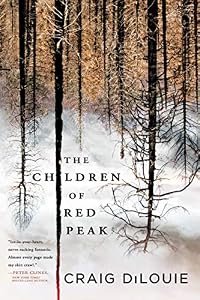
Craig DiLouie is not new to stories in which children are the victims of harrowing circumstances: from the rejected mutants in One of Us, to the child soldiers in Our War to the young members of a religious cult in The Children of Red Peak, he often places the ordeals of the younger generations at the heart of his stories. With Suffer the Children he does something different, though, because here the parents are the ones whose anguish and pain are front and center, even though their children are the ones who start as the victims.
The novel is written in the form of a chronicle of events focused on the outbreak of Herod’s Syndrome, an out-of-the-blue affliction targeting pre-pubescent children all over the world: the children are taken show more suddenly ill, first losing consciousness and then dying, with no apparent medical cause. As the story starts, it’s 24 hours before the onset of Herod, and the countdown marked as we meet the major players in the story sets the overall narrative tone, which is that of impending, unavoidable disaster.
Joan and her husband Doug are a couple who struggles a little in making ends meet: he works in the sanitation department and she keeps a small private child care, where her own two children, Nate and Megan, play with friends. Ramona is a single mother, very devoted to her son Josh, who is one of Joan’s kindergarten kids; David and Nadine, a doctor and his wife, are still battling with the aftermath of their son’s death; and then there is Shannon, one of David’s patients and a young expectant mother. All of them will be affected, each in their own way, by the onset of Herod, and the story is told through their unique points of view.
The world-wide tragedy has a devastating impact on society, not least because of the staggering amount of dead bodies that Herod left in its wake: the description of the hurried mass graves being excavated to deal with the situation and of the grief-stricken parents being unable to properly lay their children to rest is heart-rending, but it’s nothing when confronted with the shock of seeing those dead young people return to life just a few days after their demise. The parents whose children were buried or still waiting for burial see their offspring move toward home on their own power, and those whose kids were either cremated or subjected to autopsies are hit by a renewed wave of grief.
But the “miracle”, as inexplicable and frightening as it is, does not last long: after a while the children fall again into a comatose state, and it’s only a fortuitous accident that reveals how the ingestion of blood is the only way to insure a few hours of “life” in the resuscitated kids. And it’s here that civilization starts to unravel, because the children require constant amounts of blood to return to life, and parents’ and relatives’ donations can only go so far. At this point it’s not difficult to imagine how things move from bad to worse, all societal rules and mores subverted by the parents’ need to keep their children “alive” a few hours more - and that’s not all, since the kids seem to be changing, losing their sense of self together with their memories, and becoming somewhat feral. And given the way they are able to survive, it’s not difficult to imagine what ensues….
While reading, I often thought that Suffer the Children could be likened to the proverbial train wreck one observes, knowing that it’s going to be a devastating accident but unable to take one’s eyes away from it. That’s the way I felt throughout the novel: equally fascinated and appalled, sorrowful and terrified, and I have to admit that the main reason I was able to stay for the course was Craig DiLouie’s writing: distant, almost clinical, but at the same time able to convey the poor parents’ terrible dilemma of having to balance their own survival with that of their children. The descriptions of the symptoms of constant blood loss are relayed with scientific accuracy and tempered with the adults’ heart-wrenching joy in those handfuls of hours they are able to spend with their kids.
What made the impact of this story so intense for me was the realization that the progressive unraveling of our society, as described here in the aftermath of Herod’s passage, is all too believable, that civilization is, after all, only a thin layer covering our most feral instincts, our propensity to be homo homini lupus, given the right circumstances. And it’s a chillingly sobering realization.
Suffer the Children is not an easy read, and I know that some of my fellow bloggers will find it hard - if not impossible - to approach it, but if you can overcome that very understandable bias you will find a compellingly written story that is more than worth reading. show less
The novel is written in the form of a chronicle of events focused on the outbreak of Herod’s Syndrome, an out-of-the-blue affliction targeting pre-pubescent children all over the world: the children are taken show more suddenly ill, first losing consciousness and then dying, with no apparent medical cause. As the story starts, it’s 24 hours before the onset of Herod, and the countdown marked as we meet the major players in the story sets the overall narrative tone, which is that of impending, unavoidable disaster.
Joan and her husband Doug are a couple who struggles a little in making ends meet: he works in the sanitation department and she keeps a small private child care, where her own two children, Nate and Megan, play with friends. Ramona is a single mother, very devoted to her son Josh, who is one of Joan’s kindergarten kids; David and Nadine, a doctor and his wife, are still battling with the aftermath of their son’s death; and then there is Shannon, one of David’s patients and a young expectant mother. All of them will be affected, each in their own way, by the onset of Herod, and the story is told through their unique points of view.
The world-wide tragedy has a devastating impact on society, not least because of the staggering amount of dead bodies that Herod left in its wake: the description of the hurried mass graves being excavated to deal with the situation and of the grief-stricken parents being unable to properly lay their children to rest is heart-rending, but it’s nothing when confronted with the shock of seeing those dead young people return to life just a few days after their demise. The parents whose children were buried or still waiting for burial see their offspring move toward home on their own power, and those whose kids were either cremated or subjected to autopsies are hit by a renewed wave of grief.
But the “miracle”, as inexplicable and frightening as it is, does not last long: after a while the children fall again into a comatose state, and it’s only a fortuitous accident that reveals how the ingestion of blood is the only way to insure a few hours of “life” in the resuscitated kids. And it’s here that civilization starts to unravel, because the children require constant amounts of blood to return to life, and parents’ and relatives’ donations can only go so far. At this point it’s not difficult to imagine how things move from bad to worse, all societal rules and mores subverted by the parents’ need to keep their children “alive” a few hours more - and that’s not all, since the kids seem to be changing, losing their sense of self together with their memories, and becoming somewhat feral. And given the way they are able to survive, it’s not difficult to imagine what ensues….
While reading, I often thought that Suffer the Children could be likened to the proverbial train wreck one observes, knowing that it’s going to be a devastating accident but unable to take one’s eyes away from it. That’s the way I felt throughout the novel: equally fascinated and appalled, sorrowful and terrified, and I have to admit that the main reason I was able to stay for the course was Craig DiLouie’s writing: distant, almost clinical, but at the same time able to convey the poor parents’ terrible dilemma of having to balance their own survival with that of their children. The descriptions of the symptoms of constant blood loss are relayed with scientific accuracy and tempered with the adults’ heart-wrenching joy in those handfuls of hours they are able to spend with their kids.
What made the impact of this story so intense for me was the realization that the progressive unraveling of our society, as described here in the aftermath of Herod’s passage, is all too believable, that civilization is, after all, only a thin layer covering our most feral instincts, our propensity to be homo homini lupus, given the right circumstances. And it’s a chillingly sobering realization.
Suffer the Children is not an easy read, and I know that some of my fellow bloggers will find it hard - if not impossible - to approach it, but if you can overcome that very understandable bias you will find a compellingly written story that is more than worth reading. show less
This is a good old-fashioned pulp horror novel with a novel twist on the vampire/zombie story--not for the squeamish. On a single day, all of the world's prepubescent children fall down dead, plunging the world into grief. (Yes, it's a far-fetched premise, but this is a horror story, so you have to go with it.) Three days later (yes, I know), many of the dead children return, but changed. For one thing, they ask for blood to drink. Things deteriorate rapidly from there. The story combines psychological horror, as parents commit more and more horrific acts to obtain blood for their children, with monster horror, as the children start to transform, and a fair amount of squick. This is certainly not deep literature, but it is a fast-moving show more and entertaining page turner, if you like this sort of thing. Go in with suitably low expectations and you won't be disappointed. show less
4.5 rounded up
This was DARK and sad, and seriously bleak. I loved it! It brings up so many questions about parenthood, morals, and survival instinct. There were so many times, I thought I knew what I'd do, but then another perspective or incident would occur and I'd change my mind. Very good, very well written and the pace is perfect.
This was DARK and sad, and seriously bleak. I loved it! It brings up so many questions about parenthood, morals, and survival instinct. There were so many times, I thought I knew what I'd do, but then another perspective or incident would occur and I'd change my mind. Very good, very well written and the pace is perfect.
Members
- Recently Added By
Published Reviews
The premise of this chilling horror novel is a parent's worst nightmare: one day every child who has not gone through puberty simply dies.... the press calls the phenomenon Herod's Syndrome. But then, days later, the children return to life, merely climbing out of their mass graves The joy of the parents rapidly turns to confusion when they realize that the only thing that brings their kids show more fully to life is for them to ingest human blood. VERDICT: The ghoulish premise is given nuance by focusing on the reaction of ordinary parents both immediately pre-Herod's Syndrome and after the children return changed...as they ponder what lengths they might go to for their children's sake. show less
added by Lemeritus
A few honest chills breathe a bit of much-needed life into this apocalyptic horror novel, which otherwise relies on one-dimensional characters. DiLouie veers from his standard zombie fare to the most domestic question of how parent will react to children rising from the dead.... when their parents learn that the children must drink blood in order to stay alive, they enter a plodding cycle of show more needing blood, getting blood, and being horrified by their actions. Religious overtones and lots of gunplay will further limit the appeal of this disjointed nove. show less
added by Lemeritus
Lists

Dystopian and Apocalyptic Literature
350 works; 74 members

Books Read in 2017
4,249 works; 129 members

Overdue Podcast
803 works; 9 members

Most Disturbing Books
124 works; 27 members
Author Information
58 Works 2,410 Members
Craig DiLouie, principal of ZING Communications, Inc. (www.zinginc.com), is a journalist, educator and marketing consultants specializing in the lighting industry. As a journalist, he writes about lighting regularly in his blog at lightnow-blog.com and magazines such as Electrical Contractor, The Electrical Distributor (TED), Illuminate, show more Architectural SSL, LMM and others. As an educator, he supports technical education conducted by organizations such as the Department of Energy, Illuminating Engineering Society, Lighting Controls Association, National Electrical Manufacturers Association, interNational Association of Lighting Management Companies and others. And as a marketing consultant, he provides technical writing and marketing services to manufactures such as Acuity Brands, Cooper lighting, Litecontrol, Peerless and others. show less
Some Editions
Awards and Honors
Awards
Common Knowledge
- Canonical title
- Suffer the Children
- Original title
- Suffer the Children
- Original publication date
- 2014-05-20
- Epigraph
- The good mother knows what her children will eat. — Akan proverb
- First words
- The children were driving Joan Cooper bananas.
- Last words
- (Click to show. Warning: May contain spoilers.)A new world was just beginning, and it belonged to him.
- Blurbers
- Maberry, Jonathan; Clines, Peter; Ketchum, Jack; Dixon, John; Moody, David; Druga, Jackie (show all 9); Bovberg, Jason; Baker, Scott M.; Knight, Stephen
- Original language
- English US
- Canonical DDC/MDS
- 813.6
- Canonical LCC
- PS3604.I463
Classifications
Statistics
- Members
- 402
- Popularity
- 76,952
- Reviews
- 26
- Rating
- (3.81)
- Languages
- English
- Media
- Paper, Audiobook, Ebook
- ISBNs
- 6
- ASINs
- 2