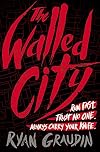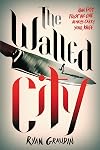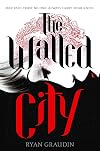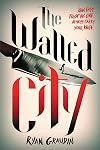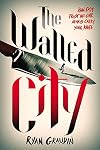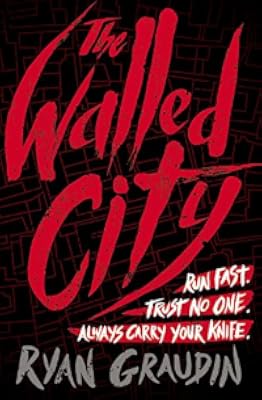
The Walled City
by Ryan Graudin
On This Page
Description
"As Jin Ling tries to save her sister, Mei Yee, from the Brotherhood of the Red Dragon in Hak Nam Walled City, one boy, Dai, can reunite them and save their lives--but only if he's willing to risk his own"--Tags
Recommendations




Member Reviews
As a rule, I’m typically drawn to the romance within the plot (hello, romance junkie here), but The Walled City was an exception to the rule. In fact, I wasn’t really all that intrigued by the romance between Mei Yee and Dai. I didn’t connect with Mei Yee until about 60% of the way in, when she really stops accepting her life as it is and begins dreaming of more that the prison. What drew most of my attention was the budding friendship between Dai and Jin – and the love between the two sisters (not a romantic love, a sisterly love) that causes Jin to make such foolish but brave decisions.
The Walled City is a pretty accurate description of Hak Nam – or the real-life name that The Walled City is inspired by, the Kowloon Walled show more City that resided within Hong Kong until it was torn down in the early nineties. It was a first a military city, but over time became known as sun-less, ungoverned enclave overrun by gangs, brothels, and drugs.
In The Walled City Hak Nam was controlled by the Brotherhood, an extremely dangerous gang (though it seems bigger than a gang, I can’t find a better word to describe it) lead by a vicious drug lord called Longwai. I realize I should be disgusted by the fellow as he’s committed atrocious crimes – child prostitution, violent murders, and more – but he makes an entertaining villain. It was fun watching Dai subtly manipulate the man, I just wish he (Longwai) had a bigger part in the story and not a faceless boogeyman for a lot of the book. I think it would have been fun to add his own POV to the mix.
Did I mention the book is written in first person and alternates between three points of view – the three main characters – every chapter? This is one of my first reasons for waiting four months to read the book, because I am just not that into alternating POVs. Thankfully, it worked in The Walled City’s favor and really brought the book to life, showing us Hak Nam through the eyes of three very different people and conflicts, and yet they all see the city the same way: a prison of horror. It also made it easier to connect with the characters, even if it took longer for me to connect with Mei Yee. Kudos for Graudin’s talent in somehow taking something I normally hate in fiction and bringing it to life. That alone deserves a five-star rating!
Let’s Chat Characters
My favorite character from the book is Jin. How can it be anyone else? She represents the good, the knight in shining armor we’d all wish to be. Jin is no more than 15 (I’m thinking 13 or 14, but I can’t be for sure) but she’s always been the defender of her household. When her abusive father would try to turn his fists on Jin’s mother or older sister, she would get in the way. She never stopped fighting and never stopped hoping. She’s brave and makes foolish mistakes – but she makes them in the rescue of the underdog.
Several time it is mentioned that the only way to stay alive in The Walled City is to keep your head down and look the other way, but I call bullshit. It might save you own skin, but it will eventually make you dead to empathy and pain, which is something Jin never becomes. I think most of us would relate well with Jin, even if she isn’t the most realistic character ever. There is something in her character that we could all relate to, plus she totally kicks ass and wicked cool. :D
Dai was my second favorite character, even though he was a selfish prick for a lot of the novel. He was worse than dead to empathy, he chose to ignore the cries of others to save his own skin. I eventually realized he is not the bad person he convinced me he was, he’s just lost in his guilt and the death of his brother and wants more than anything to be out of the city that reminds him of his sins. I liked that I could see him grow as a person the more he gets to know the girls. He’s one of those complex characters that you don’t truly get to know unless you can read between the lines.
Why is Mai Yee my least favorite character? She’s not really. I wound up feeling proud of her the closer to the end I got, but I just couldn’t connect as well with her as I could with her little sister, Jin. Or even her love interest Dai. I think she reminded me of my own weaknesses and nobody likes to be reminded of their faults. She did wind up nabbing my heart, but it almost took ‘til the end of the book for her to stand up and fight for her freedom – I’m not sure I could have done that were I in her place.
I realize that this review was too long. Sorry to keep gushing about The Walled City but I can’t help but love it to pieces. Don’t blame me, blame Ryan Gaudin. She wrote the book! I urge all whom has yet to read this – pick up a copy NOW! I hope you won’t be intimidated by the all the imagery and just read it. Let me know how it went for you and please don’t kill me for having wrote almost 1000 words for this review. show less
The Walled City is a pretty accurate description of Hak Nam – or the real-life name that The Walled City is inspired by, the Kowloon Walled show more City that resided within Hong Kong until it was torn down in the early nineties. It was a first a military city, but over time became known as sun-less, ungoverned enclave overrun by gangs, brothels, and drugs.
In The Walled City Hak Nam was controlled by the Brotherhood, an extremely dangerous gang (though it seems bigger than a gang, I can’t find a better word to describe it) lead by a vicious drug lord called Longwai. I realize I should be disgusted by the fellow as he’s committed atrocious crimes – child prostitution, violent murders, and more – but he makes an entertaining villain. It was fun watching Dai subtly manipulate the man, I just wish he (Longwai) had a bigger part in the story and not a faceless boogeyman for a lot of the book. I think it would have been fun to add his own POV to the mix.
Did I mention the book is written in first person and alternates between three points of view – the three main characters – every chapter? This is one of my first reasons for waiting four months to read the book, because I am just not that into alternating POVs. Thankfully, it worked in The Walled City’s favor and really brought the book to life, showing us Hak Nam through the eyes of three very different people and conflicts, and yet they all see the city the same way: a prison of horror. It also made it easier to connect with the characters, even if it took longer for me to connect with Mei Yee. Kudos for Graudin’s talent in somehow taking something I normally hate in fiction and bringing it to life. That alone deserves a five-star rating!
Let’s Chat Characters
My favorite character from the book is Jin. How can it be anyone else? She represents the good, the knight in shining armor we’d all wish to be. Jin is no more than 15 (I’m thinking 13 or 14, but I can’t be for sure) but she’s always been the defender of her household. When her abusive father would try to turn his fists on Jin’s mother or older sister, she would get in the way. She never stopped fighting and never stopped hoping. She’s brave and makes foolish mistakes – but she makes them in the rescue of the underdog.
Several time it is mentioned that the only way to stay alive in The Walled City is to keep your head down and look the other way, but I call bullshit. It might save you own skin, but it will eventually make you dead to empathy and pain, which is something Jin never becomes. I think most of us would relate well with Jin, even if she isn’t the most realistic character ever. There is something in her character that we could all relate to, plus she totally kicks ass and wicked cool. :D
Dai was my second favorite character, even though he was a selfish prick for a lot of the novel. He was worse than dead to empathy, he chose to ignore the cries of others to save his own skin. I eventually realized he is not the bad person he convinced me he was, he’s just lost in his guilt and the death of his brother and wants more than anything to be out of the city that reminds him of his sins. I liked that I could see him grow as a person the more he gets to know the girls. He’s one of those complex characters that you don’t truly get to know unless you can read between the lines.
Why is Mai Yee my least favorite character? She’s not really. I wound up feeling proud of her the closer to the end I got, but I just couldn’t connect as well with her as I could with her little sister, Jin. Or even her love interest Dai. I think she reminded me of my own weaknesses and nobody likes to be reminded of their faults. She did wind up nabbing my heart, but it almost took ‘til the end of the book for her to stand up and fight for her freedom – I’m not sure I could have done that were I in her place.
I realize that this review was too long. Sorry to keep gushing about The Walled City but I can’t help but love it to pieces. Don’t blame me, blame Ryan Gaudin. She wrote the book! I urge all whom has yet to read this – pick up a copy NOW! I hope you won’t be intimidated by the all the imagery and just read it. Let me know how it went for you and please don’t kill me for having wrote almost 1000 words for this review. show less
There are three rules of survival in the Walled City: Run fast. Trust no one. Always carry your knife.
Right now, my life depends completely on the first.
Run, run, run.
The Walled City is a place of despair, desperation, and violence; of junkies, prostitutes, drug lords, and abandoned and starving children. It is a place where the human refuse of society end up; it is a dystopian world where even the sun can’t shine and it’s just steps away from civilization.
This is the setting for author Ryan Graudin’s YA novel, The Walled City, inspired by Hong Kong’s Kowloon Walled City. The story concerns three of the City’s teenaged inhabitants: Dai, a young man, here to avoid arrest for a crime in the outside world who has been given a show more chance at freedom if he can steal the ledger of the Walled City’s most notorious drug lord and brothel owner; Jin Ling who has come to the City to try to rescue Mei Yee, the sister who was sold by their father into the Brothel; and Mei Yee, trapped in the Brothel and dreaming of the sea. The story alternates between their voices creating three extremely likable, sympathetic, beautifully drawn and distinct individuals. It is impossible not to care about what happens to them in this dangerous world where violence is the norm and where they must learn to trust one another in a place where trust is just another word for a sure death.
The Walled City is a fast-paced, exciting, and original tale of hope in a world built on hopelessness. It is, in a word, brilliant and I can’t recommend it highly enough with one caveat – there is a great deal of violence aimed at and by children and there is one scene of rape that is particularly shocking and although none of this is gratuitous, it may not be suitable for young children. For anyone else though, this is a definite 5 star read. show less
Right now, my life depends completely on the first.
Run, run, run.
The Walled City is a place of despair, desperation, and violence; of junkies, prostitutes, drug lords, and abandoned and starving children. It is a place where the human refuse of society end up; it is a dystopian world where even the sun can’t shine and it’s just steps away from civilization.
This is the setting for author Ryan Graudin’s YA novel, The Walled City, inspired by Hong Kong’s Kowloon Walled City. The story concerns three of the City’s teenaged inhabitants: Dai, a young man, here to avoid arrest for a crime in the outside world who has been given a show more chance at freedom if he can steal the ledger of the Walled City’s most notorious drug lord and brothel owner; Jin Ling who has come to the City to try to rescue Mei Yee, the sister who was sold by their father into the Brothel; and Mei Yee, trapped in the Brothel and dreaming of the sea. The story alternates between their voices creating three extremely likable, sympathetic, beautifully drawn and distinct individuals. It is impossible not to care about what happens to them in this dangerous world where violence is the norm and where they must learn to trust one another in a place where trust is just another word for a sure death.
The Walled City is a fast-paced, exciting, and original tale of hope in a world built on hopelessness. It is, in a word, brilliant and I can’t recommend it highly enough with one caveat – there is a great deal of violence aimed at and by children and there is one scene of rape that is particularly shocking and although none of this is gratuitous, it may not be suitable for young children. For anyone else though, this is a definite 5 star read. show less
The Walled City is tremendously exciting. The action starts immediately, as Jin races for her life through the maze of the Walled City. Compounding the tension for readers wrought from Jin’s fight for survival is Dai’s sense of urgency at his quickly approaching deadline. As the days count down to zero, and as the stakes increase to a fever pitch, a reader’s nerves are taut with apprehension. It is the best type of suspense too – one where readers do not want to stop reading for any reason.
Adding to the excitement is the otherworldliness that surrounds the Walled City. Ms. Graudin enthusiastically gives credit to the idea for her novel to the very real former Kowloon Walled City that used to exist in Hong Kong. In fact, the show more author’s notes are nearly as interesting as the story she created about this surreal place as she describes how it caught her fancy and bloomed into a full-blown novel. The pictures she includes of the former Walled City are almost unbelievable in the sheer density and scale of the city as it used to look. Readers may feel that no such location could ever occur in today’s world, but Ms. Graudin’s research and notes prove otherwise.
Jin, Mei Yee, and Dai are all wounded souls, some more obviously than others, and their stories are astounding in their horror and sadness. Their stories are also surprisingly similar in spite of their differences. For, Jin and Dai are just as enslaved to the Walled City as Mei Yee is to the brothel into which she was sold. Drug use, the slave trade, gangs, rape, the daily violence of survival – they face all of it on a daily basis in different forms. While they each yearn for peace and freedom, they are all trapped into the City’s immense web of crime and indifference.
All three characters are well-defined, but the City remains shadowy in its sheer immensity. In spite of Ms. Graudin’s careful descriptions, it remains difficult for readers to be able to imagine such a locale. Indeed, her descriptions are paltry compared to the pictures she adds to her author’s notes. Only then do readers get an adequate image of just what life was like for Jin and Dai on the streets. Mei Yee’s life is the most easily imagined of the three, as her story is one told throughout the ages despite all of the international efforts to stop the sex slave trade and hers is the most limited. A room is a room, but the Walled City is unlike anything most readers will have ever seen.
Jin’s and Mei Yee’s story is uncomfortably realistic, and the story itself becomes much more than words on a page. Ms. Graudin makes readers step into their shoes, feel their pain, terror, weariness, and determination. One of the most terrible realizations readers will have is that the Walled City is not fiction, nor is it historical fiction. It was real. It did happen, and people still live in such dregs today. For most readers, if not all, The Walled City is a sober reminder that life for many is utterly horrendous. show less
Adding to the excitement is the otherworldliness that surrounds the Walled City. Ms. Graudin enthusiastically gives credit to the idea for her novel to the very real former Kowloon Walled City that used to exist in Hong Kong. In fact, the show more author’s notes are nearly as interesting as the story she created about this surreal place as she describes how it caught her fancy and bloomed into a full-blown novel. The pictures she includes of the former Walled City are almost unbelievable in the sheer density and scale of the city as it used to look. Readers may feel that no such location could ever occur in today’s world, but Ms. Graudin’s research and notes prove otherwise.
Jin, Mei Yee, and Dai are all wounded souls, some more obviously than others, and their stories are astounding in their horror and sadness. Their stories are also surprisingly similar in spite of their differences. For, Jin and Dai are just as enslaved to the Walled City as Mei Yee is to the brothel into which she was sold. Drug use, the slave trade, gangs, rape, the daily violence of survival – they face all of it on a daily basis in different forms. While they each yearn for peace and freedom, they are all trapped into the City’s immense web of crime and indifference.
All three characters are well-defined, but the City remains shadowy in its sheer immensity. In spite of Ms. Graudin’s careful descriptions, it remains difficult for readers to be able to imagine such a locale. Indeed, her descriptions are paltry compared to the pictures she adds to her author’s notes. Only then do readers get an adequate image of just what life was like for Jin and Dai on the streets. Mei Yee’s life is the most easily imagined of the three, as her story is one told throughout the ages despite all of the international efforts to stop the sex slave trade and hers is the most limited. A room is a room, but the Walled City is unlike anything most readers will have ever seen.
Jin’s and Mei Yee’s story is uncomfortably realistic, and the story itself becomes much more than words on a page. Ms. Graudin makes readers step into their shoes, feel their pain, terror, weariness, and determination. One of the most terrible realizations readers will have is that the Walled City is not fiction, nor is it historical fiction. It was real. It did happen, and people still live in such dregs today. For most readers, if not all, The Walled City is a sober reminder that life for many is utterly horrendous. show less
“We’re stronger than they think.”
(Full disclosure: I received a free ARC for review through Goodreads’ First Reads program. Also, trigger warning for rape.)
Mei Yee was just fifteen years old when her abusive, alcoholic father sold her to the Reapers for mere pocket change. In the dark of night, the Reapers came for her: they stole her from where she slept, tossed her into a van with a group of other trafficked girls, and crossed into the Hak Nam Walled City - a place of pain, disease, and death. Here she was purchased by the Brotherhood of the Red Dragon, the brutal gang that controls the 6.5 acres of the Walled City, and put to “work” in one of their many brothels. Unlike the twenty other girls who share her prison, Mei Yee show more is “lucky” – rather than servicing four or five men in one night, many of whom get off on hitting defenseless girls, Ambassador Osamu took a shining to the beautiful girl and purchased the right to rape her exclusively.
It’s been two years since Mei Yee last saw her sister, but Master Longwai’s words echo in her head: “There is no escape.” Certainly not for Sing, who was quickly caught after a botched attempt and injected with heroin as a lesson to the others.
Jin Ling has been looking for her older sister since the night she was taken. Pedaling as fast as she could, she followed the Reapers’ van – right into the lawless Walled City and the den of the Brotherhood. For two years, Jin has eked out a miserable existence in the Walled City: scouring the streets and brothels in search of Mei Yee; running drugs to gain access to brothels and other illicit venues; posing as a vagrant boy to escape Mei Yee’s fate.
Jin has three rules - “Run fast. Trust no one. Always carry your knife.” – which have served her well. But when a mysterious older boy asks her to help him run drugs for the infamous Longwai, Jin finds herself questioning everything she thought she knew about survival in the Walled City.
Sun Dai Shing is living in exile in the Walled City – for 730 days and counting. But the Security Branch of Seng Ngoi – “the City Beyond” – has offered him a shot at redemption. All he has to do is hand them Longwai’s ass on a platter. Find and retrieve Longwai’s ledger, and Dai’s past crimes will be forgiven. And he has exactly eighteen days left to do it.
This already-impossible feat is further complicated by his growing affection for his partners in crime and justice: Jin Ling, the scrappy little vagrant boy who Dai recruited to help him run drugs for Longwai; and the melancholic girl in the window, whose assistance could be instrumental in procuring the ledger. After two years of self-imposed solitude, can Dai learn to trust himself with the hearts and lives of others again?
The Walled City is an impossibly beautiful and poetic story about loss and hope; finding family where none existed before; the unexpected connections so many of us share, even if we don’t yet know it; and the strength even the smallest and most maligned of us can find in numbers. Told from three perspectives – that of Mei Yee; her younger sister, Jin Ling; and the girls’ soon-to-be friend, Sun Dai Shing – the story moves along at a fairly steady clip, punctuated by short, snappy chapters that impart a feeling of urgency even during those moments when nothing much happens. The Walled City is a rather gritty tale, though not nearly as gritty as it could be.
I was especially drawn to the cross-dressing element of the story; I always scratch my head at the paucity of women passing as men in dystopian settings – particularly those in which the sexual exploitation of women thrives in the absence of a progressive, organized government. In the case of the zombie apocalypse, my long, feminine locks would be the first thing to go!
While Jin’s crossdressing isn’t necessarily a primary focus of the narrative, Graudin does a wonderful job of exploring Jin’s self-identity as the “uglier,” stronger, and more protective sister, in contrast to Mei Yee’s otherworldly beauty and outward physical weakness (or at least for the manual labor required on a rice farm; by story’s end, Mei Yee finds inner reserves of strength that she didn’t believe she possessed). After a lifetime of being overlooked in favor of her more attractive sister, Jin’s ability to melt into the shadows is of great use in the Walled City. And when Dai finally learns Jin’s secret and is unable to “unsee her girlness,” the author makes a rather keen observation about the social construction of gender.
I also love love love that the entirety of the cast is POC. Diversify your shelves, y’all!
The titular Walled City looms large in the story and is a character unto itself. Previously a military fort, Hak Nam was overlooked when the surrounding city was purchased (and maintained) by foreigners. The Walled City slipped through the cracks, and quickly devolved into a ghetto, marked by poverty, underdevelopment, scarcity, and lawlessness. In this place of chaos, the Brotherhood is the ultimate authority – even the gangs of street kids are afraid to harm a member of the Brotherhood, and even on the eve of the city’s destruction. The Brotherhood is untouchable, and yet it is ultimately its slaves, working together, who are responsible for its downfall.
What’s especially interesting is that Graudin modeled Hak Nam on an actual city: Hong Kong’s Kowloon Walled City:
The Walled City was real.
A very real, unreal city.
I first learned about its existence when I went to hear a woman named Jackie Pullinger speak. She spent nearly twenty years living and working in Hong Kong’s Kowloon Walled City. The place she described – a sunless, lawless shanty-town overrun by gangs – sounded like a setting straight out of a dystopian fantasy. […]
Both Hak Nam and Kowloon started their lives as military forts. Both grew so thick and fast that the sunlight could no longer reach the streets. Both housed powerful gangs and over 33,000 people in their cramped borders. Both were eventually torn down by the government and turned into a park.
In the Afterward, Graudin goes on to say that human trafficking, too, is alive and real. The experiences of Mei Yee and her compatriots – kidnapped, sold into slavery by a family member, trafficked across borders, physically and sexually assaulted by “clients,” hooked on drugs – are all too common. Hopefully The Walled City will inspire some readers to explore this issue in greater depth. The author recommends visiting the website of the International Justice Mission to learn more.
http://www.easyvegan.info/2014/11/26/the-walled-city-by-ryan-graudin/ show less
(Full disclosure: I received a free ARC for review through Goodreads’ First Reads program. Also, trigger warning for rape.)
Mei Yee was just fifteen years old when her abusive, alcoholic father sold her to the Reapers for mere pocket change. In the dark of night, the Reapers came for her: they stole her from where she slept, tossed her into a van with a group of other trafficked girls, and crossed into the Hak Nam Walled City - a place of pain, disease, and death. Here she was purchased by the Brotherhood of the Red Dragon, the brutal gang that controls the 6.5 acres of the Walled City, and put to “work” in one of their many brothels. Unlike the twenty other girls who share her prison, Mei Yee show more is “lucky” – rather than servicing four or five men in one night, many of whom get off on hitting defenseless girls, Ambassador Osamu took a shining to the beautiful girl and purchased the right to rape her exclusively.
It’s been two years since Mei Yee last saw her sister, but Master Longwai’s words echo in her head: “There is no escape.” Certainly not for Sing, who was quickly caught after a botched attempt and injected with heroin as a lesson to the others.
Jin Ling has been looking for her older sister since the night she was taken. Pedaling as fast as she could, she followed the Reapers’ van – right into the lawless Walled City and the den of the Brotherhood. For two years, Jin has eked out a miserable existence in the Walled City: scouring the streets and brothels in search of Mei Yee; running drugs to gain access to brothels and other illicit venues; posing as a vagrant boy to escape Mei Yee’s fate.
Jin has three rules - “Run fast. Trust no one. Always carry your knife.” – which have served her well. But when a mysterious older boy asks her to help him run drugs for the infamous Longwai, Jin finds herself questioning everything she thought she knew about survival in the Walled City.
Sun Dai Shing is living in exile in the Walled City – for 730 days and counting. But the Security Branch of Seng Ngoi – “the City Beyond” – has offered him a shot at redemption. All he has to do is hand them Longwai’s ass on a platter. Find and retrieve Longwai’s ledger, and Dai’s past crimes will be forgiven. And he has exactly eighteen days left to do it.
This already-impossible feat is further complicated by his growing affection for his partners in crime and justice: Jin Ling, the scrappy little vagrant boy who Dai recruited to help him run drugs for Longwai; and the melancholic girl in the window, whose assistance could be instrumental in procuring the ledger. After two years of self-imposed solitude, can Dai learn to trust himself with the hearts and lives of others again?
The Walled City is an impossibly beautiful and poetic story about loss and hope; finding family where none existed before; the unexpected connections so many of us share, even if we don’t yet know it; and the strength even the smallest and most maligned of us can find in numbers. Told from three perspectives – that of Mei Yee; her younger sister, Jin Ling; and the girls’ soon-to-be friend, Sun Dai Shing – the story moves along at a fairly steady clip, punctuated by short, snappy chapters that impart a feeling of urgency even during those moments when nothing much happens. The Walled City is a rather gritty tale, though not nearly as gritty as it could be.
I was especially drawn to the cross-dressing element of the story; I always scratch my head at the paucity of women passing as men in dystopian settings – particularly those in which the sexual exploitation of women thrives in the absence of a progressive, organized government. In the case of the zombie apocalypse, my long, feminine locks would be the first thing to go!
While Jin’s crossdressing isn’t necessarily a primary focus of the narrative, Graudin does a wonderful job of exploring Jin’s self-identity as the “uglier,” stronger, and more protective sister, in contrast to Mei Yee’s otherworldly beauty and outward physical weakness (or at least for the manual labor required on a rice farm; by story’s end, Mei Yee finds inner reserves of strength that she didn’t believe she possessed). After a lifetime of being overlooked in favor of her more attractive sister, Jin’s ability to melt into the shadows is of great use in the Walled City. And when Dai finally learns Jin’s secret and is unable to “unsee her girlness,” the author makes a rather keen observation about the social construction of gender.
I also love love love that the entirety of the cast is POC. Diversify your shelves, y’all!
The titular Walled City looms large in the story and is a character unto itself. Previously a military fort, Hak Nam was overlooked when the surrounding city was purchased (and maintained) by foreigners. The Walled City slipped through the cracks, and quickly devolved into a ghetto, marked by poverty, underdevelopment, scarcity, and lawlessness. In this place of chaos, the Brotherhood is the ultimate authority – even the gangs of street kids are afraid to harm a member of the Brotherhood, and even on the eve of the city’s destruction. The Brotherhood is untouchable, and yet it is ultimately its slaves, working together, who are responsible for its downfall.
What’s especially interesting is that Graudin modeled Hak Nam on an actual city: Hong Kong’s Kowloon Walled City:
The Walled City was real.
A very real, unreal city.
I first learned about its existence when I went to hear a woman named Jackie Pullinger speak. She spent nearly twenty years living and working in Hong Kong’s Kowloon Walled City. The place she described – a sunless, lawless shanty-town overrun by gangs – sounded like a setting straight out of a dystopian fantasy. […]
Both Hak Nam and Kowloon started their lives as military forts. Both grew so thick and fast that the sunlight could no longer reach the streets. Both housed powerful gangs and over 33,000 people in their cramped borders. Both were eventually torn down by the government and turned into a park.
In the Afterward, Graudin goes on to say that human trafficking, too, is alive and real. The experiences of Mei Yee and her compatriots – kidnapped, sold into slavery by a family member, trafficked across borders, physically and sexually assaulted by “clients,” hooked on drugs – are all too common. Hopefully The Walled City will inspire some readers to explore this issue in greater depth. The author recommends visiting the website of the International Justice Mission to learn more.
http://www.easyvegan.info/2014/11/26/the-walled-city-by-ryan-graudin/ show less
The Walled City starts off by introducing us to our three main characters, Jin, Dai, and Mei Yee. Their first person POV chapters gives the reader a full view of the Walled City of Hak Nam. Though it's a dark book with a lot of edgy content, including human trafficking, forced drug torture, and prostitution, the underlying hope each character carries within them keeps it from feeling overwhelmingly depressing. Each character is exceedingly well crafted and their personalities shine through in a myriad of ways. Each one had motivations, dreams and a history that intersected perfectly and gave them sympathetic reasons for being in such a horrible city.
Aside from the character development, the other strength of this book is the author's show more ability to build tension and suspense. Though information is withheld from the reader about certain characters, it's not done in a way that feels annoying or intrusive to the story. As well, the three alternative POVs allows the reader to be privy to information that the characters haven't realized yet-- that Mei Yee is Jin's sister, that Dai is the strange boy Mei Yee sees in the window-- these little things leaves the reader-- or at least me-- squealing and bouncing in my seat, eager to see how the reveal will come, not to me, but to the characters.
The sense of place is incredibly strong within The Walled City. The city is based off a city that once existed in Hong Kong, but had since been torn down. Ryan Graudin creates an incredible setting by detailing the places and people who dwell within. Graudin keeps true to the Chinese history and keeps the culture rich within her own Walled City. The diversity was delightful to see, especially because the level of detail made me feel like I was standing in those cramped, dark streets.
Speaking of detail, the writing in this book is absolutely gorgeous. It flows and flowers without being overbearing, which I found to be absolutely delightful. The level of symbolism and metaphor as well is heavy and very well done-- from the dying flowers in Mei Yee's hotel room to the seashell and ocean representing her freedom-- the pages are lined with the type of writing that makes me heart sing.
I adored this book from start to finish. It drew me in and made me fall in love. At no point did I find something that annoyed me or I didn't enjoy, and at the end I shed a tear, not because the ending was sad, but because it was so good and I was happy with how things resolved.
If you want a beautiful story filled with rich Chinese culture, I suggest you pick this up. If you're worried about it too dark, don't let that stop you. The heart of the story keeps it hopeful. show less
Aside from the character development, the other strength of this book is the author's show more ability to build tension and suspense. Though information is withheld from the reader about certain characters, it's not done in a way that feels annoying or intrusive to the story. As well, the three alternative POVs allows the reader to be privy to information that the characters haven't realized yet-- that Mei Yee is Jin's sister, that Dai is the strange boy Mei Yee sees in the window-- these little things leaves the reader-- or at least me-- squealing and bouncing in my seat, eager to see how the reveal will come, not to me, but to the characters.
The sense of place is incredibly strong within The Walled City. The city is based off a city that once existed in Hong Kong, but had since been torn down. Ryan Graudin creates an incredible setting by detailing the places and people who dwell within. Graudin keeps true to the Chinese history and keeps the culture rich within her own Walled City. The diversity was delightful to see, especially because the level of detail made me feel like I was standing in those cramped, dark streets.
Speaking of detail, the writing in this book is absolutely gorgeous. It flows and flowers without being overbearing, which I found to be absolutely delightful. The level of symbolism and metaphor as well is heavy and very well done-- from the dying flowers in Mei Yee's hotel room to the seashell and ocean representing her freedom-- the pages are lined with the type of writing that makes me heart sing.
I adored this book from start to finish. It drew me in and made me fall in love. At no point did I find something that annoyed me or I didn't enjoy, and at the end I shed a tear, not because the ending was sad, but because it was so good and I was happy with how things resolved.
If you want a beautiful story filled with rich Chinese culture, I suggest you pick this up. If you're worried about it too dark, don't let that stop you. The heart of the story keeps it hopeful. show less
1. Run Fast.
2. Trust no one.
3. Always carry your knife.
These are the three rules that Jin lives by, the three rules that have kept her alive in a city that breathes death.
The Walled City is a labyrinth, a barbarous maze, only the strong survive and even then surviving within the city isn't living.
Jin isn't like most, she isn't trapped within the walls, she is free to leave whenever she chooses but she refuses to leave without her sister.
Mei Yee doesn't know that just beyond the bars of her window, her sister, masquerading as a boy, is searching for her, all Mei Yee knows are the walls of the brothel.
When a face appears at her window Mei Yee is hesitant to trust the boy who promises her freedom and the sea, but in a place where show more having hope is forbidden it's the one thing that keeps Mei Yee going.
Dai's past haunts him, he knows what it's like to see death, to hear the last dying words of a loved one. He knows what it's like to feel guilt and pain. Dai has been inside the Walled City for 730 days. Dai has 18 days to find what he needs to escape the prison he is currently trapped in. 18 days to right wrongs, or, 18 days to fail.
When Dai meets Mei Yee through the window he has no idea that she is Jin's sister, at least not at first, will Dai risk the lives of the only two people within the city walls who trust him or will he risk his own to save them and set them free?
"The Walled City" was mesmerizing, from the first page far past the last. I wish I had known from the beginning that it was loosely based on Hong Kong's Kowloon Walled City. Until I finished this book I had no idea such a place existed. The entire time I was reading I kept thinking to myself 'what an amazing world builder Ryan is' and she is. Even though the Walled City did in fact exists, Ryan did such an amazing job of bringing it to life in front of your eyes and creating such a vivid picture of what it would be like to be inside such a tangled web of chaos.
I loved how the characters lives intertwined and crisscrossed over one another's. The alternate points of view kept the story fresh and fast paced and I loved the different perspectives each one offered for the city they were in.
When I first started this book I had it in my head that this was a series but after finishing the book it seems like it is a stand alone novel, which I don't mind. The Walled City stands firmly on both feet without promise of more.
I'm interested to read more from Graudin and I'm excited to research the real Walled City and learn more about it.
Until next time,
Ginger
In compliance with FTC guidelines I am disclosing that this book was given to me for free to review.
My review is my honest opinion. show less
2. Trust no one.
3. Always carry your knife.
These are the three rules that Jin lives by, the three rules that have kept her alive in a city that breathes death.
The Walled City is a labyrinth, a barbarous maze, only the strong survive and even then surviving within the city isn't living.
Jin isn't like most, she isn't trapped within the walls, she is free to leave whenever she chooses but she refuses to leave without her sister.
Mei Yee doesn't know that just beyond the bars of her window, her sister, masquerading as a boy, is searching for her, all Mei Yee knows are the walls of the brothel.
When a face appears at her window Mei Yee is hesitant to trust the boy who promises her freedom and the sea, but in a place where show more having hope is forbidden it's the one thing that keeps Mei Yee going.
Dai's past haunts him, he knows what it's like to see death, to hear the last dying words of a loved one. He knows what it's like to feel guilt and pain. Dai has been inside the Walled City for 730 days. Dai has 18 days to find what he needs to escape the prison he is currently trapped in. 18 days to right wrongs, or, 18 days to fail.
When Dai meets Mei Yee through the window he has no idea that she is Jin's sister, at least not at first, will Dai risk the lives of the only two people within the city walls who trust him or will he risk his own to save them and set them free?
"The Walled City" was mesmerizing, from the first page far past the last. I wish I had known from the beginning that it was loosely based on Hong Kong's Kowloon Walled City. Until I finished this book I had no idea such a place existed. The entire time I was reading I kept thinking to myself 'what an amazing world builder Ryan is' and she is. Even though the Walled City did in fact exists, Ryan did such an amazing job of bringing it to life in front of your eyes and creating such a vivid picture of what it would be like to be inside such a tangled web of chaos.
I loved how the characters lives intertwined and crisscrossed over one another's. The alternate points of view kept the story fresh and fast paced and I loved the different perspectives each one offered for the city they were in.
When I first started this book I had it in my head that this was a series but after finishing the book it seems like it is a stand alone novel, which I don't mind. The Walled City stands firmly on both feet without promise of more.
I'm interested to read more from Graudin and I'm excited to research the real Walled City and learn more about it.
Until next time,
Ginger
In compliance with FTC guidelines I am disclosing that this book was given to me for free to review.
My review is my honest opinion. show less
I would like to thank NetGalley & Little, Brown Book for Young Readers for granting me a copy of this e-ARC to read in exchange for an honest review. Though I received this e-book for free that in no way impacts my review.
Goodreads Teaser:
A show more compelling work of fictionalized reality, this book will enrage you, enrage you, break your heart, and make you believe that sometimes, just sometimes, dreams really can come true. Graudin has taken a terrible reality and woven it into something that most of us can just begin to grasp/stomach under the guise of fiction, yet the truth behind this fiction is so much worse than anyone who hasn't lived it can imagine. Human trafficking is alive and well, both inside the Walled City and out. Most young women end up in brothels or as prostitues, while the young men run drugs and join gangs for there is more safety in numbers than facing this world on your own.
Mei Yee was sold to the Reapers by her abusive father, not because she did anything wrong, simply because he had a thirst and could profit off his own flesh and blood. In turn the Reapers sold her into a brothel. Not just any brothel, but the brothel of the Brotherhood of the Red Dragon; the highest power within the Walled City, the Brotherhood is the most powerful gang there is. No one tangles with them and comes out unscathed, if they are lucky enough to come out at all.
Jin Ling, Mei Yee's younger sister, followed the van that stole her sister away. She knowingly followed it right into Hak Nam, the Walled City - a city where the only law is survival of the fittest. Jin is determined to find her sister and get her back. She knows that she'll have to be smart, fast, and most important of all, not a girl, if she's going to have any chance of surviving long enough to rescue her sister.
Dai lives in the Walled City now, but he didn't grow up here. Trapped and haunted by his past, he has a limited amount of time in which to save himself. But what began as a quest to return home somehow turned into something far more important. It became his chance at redemption.
These three young people eventually come together, all working toward the same goal, just from different angles. Initially their goals might not look the same, but their need to escape is a universal truth. Yet Jin won't leave without her sister, Mei Yee can't leave until she discovers if she has the courage to act, and Dai discovers he can no longer continue to look the other way on his path to freedom. Even before they all start working in concert, before they figure out their own tangled connection, somehow these three manage to give each other the only thing that will get them through the nightmare and safely out the other end - hope.
This is a haunting story, beautifully told, with enough details to feel as if you are down in the squalor and dank depression with all those who were used, sold, stolen, or just too weak to get away. While Graudin manages to clearly convey the grinding poverty and stink of desperation, as well as the hopeless horror of being forced into prostitution, he doesn't go into graphic detail to get the skin-crawling sensation of this world across. But for all those feelings, even with the nuanced emotions Graudin infused his characters with, reading about it just can't begin to convey the horror of living without hope. Survival is hard enough, but without hope it becomes well neigh impossible. This book brings a crucial issue of social justice into the light, but in a way that is palatable enough for the young adult audience to comfortably investigate. That alone makes this something that should be mandatory and available in all high schools. show less
Goodreads Teaser:
There are three rules in the Walled City: Run fast. Trust no one. Always carry your knife. Right now, my life depends completely on the first. Run, run, run.
Jin, Mei Yee, and Dai all live in the Walled City, a lawless labyrinth run by crime lords and overrun by street gangs. Teens there run drugs or work in brothels—or, like Jin, hide under the radar. But when Dai offers Jin a chance to find her lost sister, Mei Yee, she begins a breathtaking race against the clock to escape the Walled City itself.
A show more compelling work of fictionalized reality, this book will enrage you, enrage you, break your heart, and make you believe that sometimes, just sometimes, dreams really can come true. Graudin has taken a terrible reality and woven it into something that most of us can just begin to grasp/stomach under the guise of fiction, yet the truth behind this fiction is so much worse than anyone who hasn't lived it can imagine. Human trafficking is alive and well, both inside the Walled City and out. Most young women end up in brothels or as prostitues, while the young men run drugs and join gangs for there is more safety in numbers than facing this world on your own.
Mei Yee was sold to the Reapers by her abusive father, not because she did anything wrong, simply because he had a thirst and could profit off his own flesh and blood. In turn the Reapers sold her into a brothel. Not just any brothel, but the brothel of the Brotherhood of the Red Dragon; the highest power within the Walled City, the Brotherhood is the most powerful gang there is. No one tangles with them and comes out unscathed, if they are lucky enough to come out at all.
Jin Ling, Mei Yee's younger sister, followed the van that stole her sister away. She knowingly followed it right into Hak Nam, the Walled City - a city where the only law is survival of the fittest. Jin is determined to find her sister and get her back. She knows that she'll have to be smart, fast, and most important of all, not a girl, if she's going to have any chance of surviving long enough to rescue her sister.
Dai lives in the Walled City now, but he didn't grow up here. Trapped and haunted by his past, he has a limited amount of time in which to save himself. But what began as a quest to return home somehow turned into something far more important. It became his chance at redemption.
These three young people eventually come together, all working toward the same goal, just from different angles. Initially their goals might not look the same, but their need to escape is a universal truth. Yet Jin won't leave without her sister, Mei Yee can't leave until she discovers if she has the courage to act, and Dai discovers he can no longer continue to look the other way on his path to freedom. Even before they all start working in concert, before they figure out their own tangled connection, somehow these three manage to give each other the only thing that will get them through the nightmare and safely out the other end - hope.
This is a haunting story, beautifully told, with enough details to feel as if you are down in the squalor and dank depression with all those who were used, sold, stolen, or just too weak to get away. While Graudin manages to clearly convey the grinding poverty and stink of desperation, as well as the hopeless horror of being forced into prostitution, he doesn't go into graphic detail to get the skin-crawling sensation of this world across. But for all those feelings, even with the nuanced emotions Graudin infused his characters with, reading about it just can't begin to convey the horror of living without hope. Survival is hard enough, but without hope it becomes well neigh impossible. This book brings a crucial issue of social justice into the light, but in a way that is palatable enough for the young adult audience to comfortably investigate. That alone makes this something that should be mandatory and available in all high schools. show less
Members
- Recently Added By
Lists

Top Five Books of 2014
1,064 works; 397 members

Fantastical Cities
23 works; 1 member
Author Information

17 Works 2,794 Members
Awards and Honors
Awards
Notable Lists
Classifications
Statistics
- Members
- 518
- Popularity
- 58,118
- Reviews
- 26
- Rating
- (3.88)
- Languages
- English, German, Portuguese
- Media
- Paper, Audiobook, Ebook
- ISBNs
- 15
- ASINs
- 5