I am China
by Xiaolu Guo
On This Page
Description
"In her flat in north London, Iona Kirkpatrick sets to work on a new project translating a collection of letters and diaries by a Chinese musician. With each letter and journal entry, Iona becomes more and more intrigued with the unfolding story of two lovers: Jian, a punk rocker who believes there is no art without political commitment, and Mu, the young woman he loves as fiercely as his ideals"--Dust jacket flap.Tags
Recommendations




Member Reviews
I Am China is a book I would never have found my way to if it wasn’t for the Baileys Prize longlist (this year’s longlist was one of the best for me personally in finding great stories). It combines so many things I find interesting in a novel – mystery, dual narrative and the liberal use of letters and diary entries. The plot is also a very interesting concept, with a translator as the main character. As Iona translates the documents belonging to Kublai Jian and Deng Mu, the reader finds out at the same time the mystery, complicating factors and unanswered questions. Despite being the ‘main’ character, Iona is pushed into the background as the vehicle of translation – which seems to me where she prefers to be.
Iona lives a show more lonely, solitary life, complicated only by random sexual encounters and hints of some pain in the past. When she is given a random jumble of papers and asked to translate them to see what she thinks of them, she is both intrigued and perplexed. What is the aim? Why has she been asked to ‘see if there’s a story’? She begins to translate and becomes entangled in the world of Kublai Jian, a punk underground musician in China and his partner, Deng Mu, a poet. Jian has left China, seeking refugee status in England after an incident which is gradually revealed. Jian’s past also comes to light, as does his struggle to obtain a sense of person and freedom in an immigration detention centre. Mu’s sense of loneliness at the loss of Jian is exemplified in a trip to the US, which has her wondering what her fate is in China. As Iona digs deeper and gains the interest of publisher Jonathan, things become a race against time with a number of political roadblocks.
Mu and Jian’s story was fascinating to me – the rebellion, the restrictions and the sadness. I wish that Mu could have played a greater role as she was a lovely character that I related to. Jian is angry, but that anger fades into hopelessness and despair. He seems to fade too with this into little more than a shadow. It was difficult to read, this angry young man with dreams of changing his country from the inside out running out of steam. Iona was the character that I couldn’t relate to. She holds herself aloof, away from things and it’s never clear why. She seemed to have plenty of opportunities for meaningful interaction during the book – her sister, brother in law, former professor and Jonathan – but she holds back from all of them and it wasn’t clear why, just a vague sense of unease lurking in her past.
The leap of faith where Iona comes to discover Jian’s fate was a little bit over the top for me, but it did make for good reading. I felt that just before that section, things had slowed down somewhat and the race against time combined with Iona acting on a hunch brought the pace back up for me. But what I loved most about I Am China was Guo’s writing. It’s beautiful, but not sentimental. She makes a lot of critical statements about the way countries act and treat their inhabitants, which raises food for thought. But it’s combined with a love story and a sense of history which stops the novel from being a political statement. I enjoyed I Am China, and will be seeking out Xiaolu Guo’s other books.
http://samstillreading.wordpress.com show less
Iona lives a show more lonely, solitary life, complicated only by random sexual encounters and hints of some pain in the past. When she is given a random jumble of papers and asked to translate them to see what she thinks of them, she is both intrigued and perplexed. What is the aim? Why has she been asked to ‘see if there’s a story’? She begins to translate and becomes entangled in the world of Kublai Jian, a punk underground musician in China and his partner, Deng Mu, a poet. Jian has left China, seeking refugee status in England after an incident which is gradually revealed. Jian’s past also comes to light, as does his struggle to obtain a sense of person and freedom in an immigration detention centre. Mu’s sense of loneliness at the loss of Jian is exemplified in a trip to the US, which has her wondering what her fate is in China. As Iona digs deeper and gains the interest of publisher Jonathan, things become a race against time with a number of political roadblocks.
Mu and Jian’s story was fascinating to me – the rebellion, the restrictions and the sadness. I wish that Mu could have played a greater role as she was a lovely character that I related to. Jian is angry, but that anger fades into hopelessness and despair. He seems to fade too with this into little more than a shadow. It was difficult to read, this angry young man with dreams of changing his country from the inside out running out of steam. Iona was the character that I couldn’t relate to. She holds herself aloof, away from things and it’s never clear why. She seemed to have plenty of opportunities for meaningful interaction during the book – her sister, brother in law, former professor and Jonathan – but she holds back from all of them and it wasn’t clear why, just a vague sense of unease lurking in her past.
The leap of faith where Iona comes to discover Jian’s fate was a little bit over the top for me, but it did make for good reading. I felt that just before that section, things had slowed down somewhat and the race against time combined with Iona acting on a hunch brought the pace back up for me. But what I loved most about I Am China was Guo’s writing. It’s beautiful, but not sentimental. She makes a lot of critical statements about the way countries act and treat their inhabitants, which raises food for thought. But it’s combined with a love story and a sense of history which stops the novel from being a political statement. I enjoyed I Am China, and will be seeking out Xiaolu Guo’s other books.
http://samstillreading.wordpress.com show less
I Am China is an interesting puzzle of a book. The author, Xiaolu Guo, is a writer and film maker (she graduated from the Beijing Film Academy), which shows in the structuring of this novel that jumps back and forth in time, moving from perspective to perspective in a way that is genuinely cinematic. Born in China, Guo now lives and writes in Britain, and I Am China presents perspectives based in both the country of her birth and her adopted country.
The Chinese perspectives are embodied in the characters Jian and Mu. Jian is a Chinese punk rocker who was imprisoned after releasing a “manifesto” at one of his concerts, and who is now seeking asylum in Europe. Mu is Jian’s off and on (but mostly on) partner of the last twenty years. show more Both characters have strong political motivations, but Jian’s politics are confrontational, while Mu’s are more subtle and interestingly romantic. Jian finds politics essential to art; Mu doesn’t.
The British perspective comes from Iona, a professional translator living in London, who has been asked to work with a loosely organized group of letters and journal entries written by both Jian and Mu. Readers encounter this material as she does: in random order and without any suggestion of what its overall trajectory might be.
I found this novel absolutely fascinating for the view it offers into alternative communities within contemporary China. I hadn’t realized China has a punk scene; I certainly didn’t know about the different strands of dissident thought represented by the book’s Chinese characters.
I said at the opening that I Am China is a puzzle of a book. It is a narrative that readers must assemble for themselves, looking for related pieces, rearranging information to create a chronology. This structureless structure is actually one of the book’s strengths preventing it from becoming narrower or more dogmatic.
I Am China is most definitely worth a read, both for the characters it introduces and for the glimpses it gives into the lives of a huge segment of the world’s population about whom we generally hear very little. show less
The Chinese perspectives are embodied in the characters Jian and Mu. Jian is a Chinese punk rocker who was imprisoned after releasing a “manifesto” at one of his concerts, and who is now seeking asylum in Europe. Mu is Jian’s off and on (but mostly on) partner of the last twenty years. show more Both characters have strong political motivations, but Jian’s politics are confrontational, while Mu’s are more subtle and interestingly romantic. Jian finds politics essential to art; Mu doesn’t.
The British perspective comes from Iona, a professional translator living in London, who has been asked to work with a loosely organized group of letters and journal entries written by both Jian and Mu. Readers encounter this material as she does: in random order and without any suggestion of what its overall trajectory might be.
I found this novel absolutely fascinating for the view it offers into alternative communities within contemporary China. I hadn’t realized China has a punk scene; I certainly didn’t know about the different strands of dissident thought represented by the book’s Chinese characters.
I said at the opening that I Am China is a puzzle of a book. It is a narrative that readers must assemble for themselves, looking for related pieces, rearranging information to create a chronology. This structureless structure is actually one of the book’s strengths preventing it from becoming narrower or more dogmatic.
I Am China is most definitely worth a read, both for the characters it introduces and for the glimpses it gives into the lives of a huge segment of the world’s population about whom we generally hear very little. show less
I Am China is an ambitious book about an important topic. But it never really came together for me. Xiaolu Guo has so many ideas that they never really coalesce. She wants to talk about identity, and politics, and revolution, and language, and isolation, and love, and sex, and human connection. In the end, I felt she was only partly successful. I would rather read a novel that successfully tackles one or two of these ideas than one at which the author seems to have thrown every thought she’s ever had in hopes something will stick. That’s maybe a bit harsher than it should be; I do think that Guo says some interesting things about the human cost of political resistance. (And I found it particularly interesting since I’d just show more finished Age of Ambition: Chasing Fortune, Truth, and Faith in the New China, which gave me a different perspective on life in post-Tiananmen China.) I just felt that the novel could have been more powerful if Guo had brought more focus to it. show less
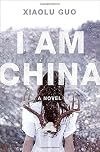
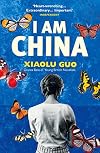
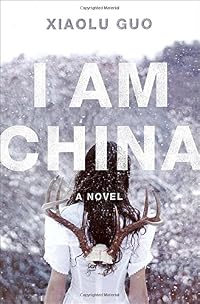
First of all, let me say that this is a beautiful cover.
Second of all, let me say that I didn't pick it up because of the cover. I picked it up because I read Guo's UFO in Her Eyes earlier this year and loved it. And if I loved that book, I adored this one even more.
The premise really intrigued me. A young Scottish translator reading a jumble of letters and diary entries between two lovers -- Mu and Jian. I love the structure of this novel, the translator (Iona) picks up a page and starts to translate and gets completely absorbed in the story. All throughout the book I had questions. I was hungry to read this book, hungry for the answers.
I love Guo's writing style. She's witty and hopeful and a little bit of a romantic and a cynic all show more at once. This book is steeped in politics but it isn't dry, for even a minute. I love that this book explores identity and immigrants and migrants and everything in between.
I loved Iona's backstory and how Xiaolu wrote her story like a dealer laying out her cards. This is an incredible feat of a novel and I feel like I was so invested in it, in the story within the story, from the very beginning. I loved that some parts and some words were untranslatable. I loved that this book had so many little pictures and photographs of Jian's writing -- that of an angry, drunken calligrapher.
I loved the massive plot points and the tiny details, all slowly unfurling like a blooming tea ball, petals uncurling and to reveal a red centre.
I read this book's acknowledgements. I didn't want it to end.
Thank you, Xiaolu Guo. This book will stay with me for a long time. show less
Second of all, let me say that I didn't pick it up because of the cover. I picked it up because I read Guo's UFO in Her Eyes earlier this year and loved it. And if I loved that book, I adored this one even more.
The premise really intrigued me. A young Scottish translator reading a jumble of letters and diary entries between two lovers -- Mu and Jian. I love the structure of this novel, the translator (Iona) picks up a page and starts to translate and gets completely absorbed in the story. All throughout the book I had questions. I was hungry to read this book, hungry for the answers.
I love Guo's writing style. She's witty and hopeful and a little bit of a romantic and a cynic all show more at once. This book is steeped in politics but it isn't dry, for even a minute. I love that this book explores identity and immigrants and migrants and everything in between.
I loved Iona's backstory and how Xiaolu wrote her story like a dealer laying out her cards. This is an incredible feat of a novel and I feel like I was so invested in it, in the story within the story, from the very beginning. I loved that some parts and some words were untranslatable. I loved that this book had so many little pictures and photographs of Jian's writing -- that of an angry, drunken calligrapher.
I loved the massive plot points and the tiny details, all slowly unfurling like a blooming tea ball, petals uncurling and to reveal a red centre.
I read this book's acknowledgements. I didn't want it to end.
Thank you, Xiaolu Guo. This book will stay with me for a long time. show less
I Am China is an ambitious book about an important topic. But it never really came together for me. Xiaolu Guo has so many ideas that they never really coalesce. She wants to talk about identity, and politics, and revolution, and language, and isolation, and love, and sex, and human connection. In the end, I felt she was only partly successful. I would rather read a novel that successfully tackles one or two of these ideas than one at which the author seems to have thrown every thought she’s ever had in hopes something will stick. That’s maybe a bit harsher than it should be; I do think that Guo says some interesting things about the human cost of political resistance. (And I found it particularly interesting since I’d just show more finished Age of Ambition: Chasing Fortune, Truth, and Faith in the New China, which gave me a different perspective on life in post-Tiananmen China.) I just felt that the novel could have been more powerful if Guo had brought more focus to it. show less
what did i think? i am not finished processing the read in my mind yet, but i wanted to get some thoughts down in this space while it's fresh.
so... i found much about this novel fascinating. i have read very little fiction that shines a light on post-tiannamen square china. so the cultural insights were very interesting. as well, i liked the format of the novel: a translator based in london receives a mess of letters and journals and it's up to her to not only translate the work from chinese to english, but to also makes sense of the papers and get them into some coherent order. the papers alternate voices between jian - a punk singer and political activist, and mu - a poet and jian's partner. the translator - iona - gets much time in show more the novel too. she becomes completely immersed in jian and mu's relationship, but while she is working, we learn a bit about her life and her past. so this format, alternating between the different writings of different characters, coupled with iona in the present, does give a bit of disjointed feel to the work. and i think that helps to reinforce the tone of the novel which is fairly melancholy through lack of physical connections. though it's clear jian and mu had a deep love at one time, life is complicated and life in china is portrayed as adding even further challenges, especially for those who are creatively inclined - poets, musicians, painters... does art only exist as a prop for political beliefs?
guo has a lovely style to her prose. some of her sentences are just beautiful. at other times though, i felt they were a bit overwritten. but the odd experience for me is that i felt kept at a distance while i read. for all the potential in the story, i was never fully immersed, the way iona was. now this may be intentional on guo's part. several times in the book characters are protecting themselves from love. or loving. they want to remain protected. they don't want to be vulnerable. so i get that about the story. but it leaves a bit of an emotional void. i also felt iona wasn't quite as fully realized as she could have been.
having said that, though, i was keen to turn each page and follow guo, wherever she was going. i am still debating the ending... it wasn't surprising, but i find it questionable. so... i think that this is quite an ambitious novel that almost succeeds. while there is much i appreciated, the things that niggled at me became too hard to overlook, to tip this into 4- or 5-star territory.
oh - should note that this book was longlisted for the 2015 bailey's women's prize for fiction. i think it is a good inclusion on the list, and i am curious to see whether it will advance to the shortlist. this it the 5th book (out of 20) which i have read from the longlist. so far... i haven't been in love with any of the five, though they have all been alright. (ringing endorsement... i know! heh! but i am still quite optimistic i will find a gem in the 15 remaining reads.) show less
so... i found much about this novel fascinating. i have read very little fiction that shines a light on post-tiannamen square china. so the cultural insights were very interesting. as well, i liked the format of the novel: a translator based in london receives a mess of letters and journals and it's up to her to not only translate the work from chinese to english, but to also makes sense of the papers and get them into some coherent order. the papers alternate voices between jian - a punk singer and political activist, and mu - a poet and jian's partner. the translator - iona - gets much time in show more the novel too. she becomes completely immersed in jian and mu's relationship, but while she is working, we learn a bit about her life and her past. so this format, alternating between the different writings of different characters, coupled with iona in the present, does give a bit of disjointed feel to the work. and i think that helps to reinforce the tone of the novel which is fairly melancholy through lack of physical connections. though it's clear jian and mu had a deep love at one time, life is complicated and life in china is portrayed as adding even further challenges, especially for those who are creatively inclined - poets, musicians, painters... does art only exist as a prop for political beliefs?
guo has a lovely style to her prose. some of her sentences are just beautiful. at other times though, i felt they were a bit overwritten. but the odd experience for me is that i felt kept at a distance while i read. for all the potential in the story, i was never fully immersed, the way iona was. now this may be intentional on guo's part. several times in the book characters are protecting themselves from love. or loving. they want to remain protected. they don't want to be vulnerable. so i get that about the story. but it leaves a bit of an emotional void. i also felt iona wasn't quite as fully realized as she could have been.
having said that, though, i was keen to turn each page and follow guo, wherever she was going. i am still debating the ending... it wasn't surprising, but i find it questionable. so... i think that this is quite an ambitious novel that almost succeeds. while there is much i appreciated, the things that niggled at me became too hard to overlook, to tip this into 4- or 5-star territory.
oh - should note that this book was longlisted for the 2015 bailey's women's prize for fiction. i think it is a good inclusion on the list, and i am curious to see whether it will advance to the shortlist. this it the 5th book (out of 20) which i have read from the longlist. so far... i haven't been in love with any of the five, though they have all been alright. (ringing endorsement... i know! heh! but i am still quite optimistic i will find a gem in the 15 remaining reads.) show less
A unique and moving novel by a Chinese woman about the lives and love of a contemporary Chinese couple alienated and exiled from their world and the Scottish woman who translates their letters and diaries.
Iona lives an empty and lonely life with no purpose other than for her work translating Chinese writings into English. When she is given a mysterious packet of letters and diary entries to translate, she becomes deeply involved in the stories of the couple who wrote them. As she assembles the couple’s stories, she becomes caught up intheir lives. Jian has been a punk rock star in China, but he has been exiled for his revolutionary views. As a refugee, he wanders through Europe. Mu is the woman whom he loves and who has shared his show more life for years. A poet herself, she remains in China trying to make a life for herself without him while nursing her dying father. The couple finds it difficult to remain in touch, much less be reunited. Much of the suspense of the novel involves figuring out who the couple are and what happens to them.
Xiaolu Guo established herself as a film producer and writer before leaving her home country and going to London in 2002. In addition to her film career, she has written ten novels, five in Chinese and five in English. Her new novel and her Concise Chinese-English Dictionary for Lovers reflect her awareness of the problems of translation and her frustration trying to get English versions of her earlier work. In I Am China, she weaves together the stories of three major characters, not always revealing events in a chronological order. Her writing flows easily giving readers a view of contemporary China which few of us in western countries seldom see. At times Iona and the Chinese couple seem very different, and I wondered why the author had included Iona. Yet the narrative is hers as much as it is the Chinese. All three of them are dislocated and troubled in a world where traditional ties have been broken and new ones difficult to establish. For each of them the future is vague and uncertain, as they love and lose, see parents die, and search for identity through writing.
READ MORE: http://wp.me/p24OK2-1dM show less
Iona lives an empty and lonely life with no purpose other than for her work translating Chinese writings into English. When she is given a mysterious packet of letters and diary entries to translate, she becomes deeply involved in the stories of the couple who wrote them. As she assembles the couple’s stories, she becomes caught up intheir lives. Jian has been a punk rock star in China, but he has been exiled for his revolutionary views. As a refugee, he wanders through Europe. Mu is the woman whom he loves and who has shared his show more life for years. A poet herself, she remains in China trying to make a life for herself without him while nursing her dying father. The couple finds it difficult to remain in touch, much less be reunited. Much of the suspense of the novel involves figuring out who the couple are and what happens to them.
Xiaolu Guo established herself as a film producer and writer before leaving her home country and going to London in 2002. In addition to her film career, she has written ten novels, five in Chinese and five in English. Her new novel and her Concise Chinese-English Dictionary for Lovers reflect her awareness of the problems of translation and her frustration trying to get English versions of her earlier work. In I Am China, she weaves together the stories of three major characters, not always revealing events in a chronological order. Her writing flows easily giving readers a view of contemporary China which few of us in western countries seldom see. At times Iona and the Chinese couple seem very different, and I wondered why the author had included Iona. Yet the narrative is hers as much as it is the Chinese. All three of them are dislocated and troubled in a world where traditional ties have been broken and new ones difficult to establish. For each of them the future is vague and uncertain, as they love and lose, see parents die, and search for identity through writing.
READ MORE: http://wp.me/p24OK2-1dM show less
Members
- Recently Added By
Lists

Your favorite books from the 2015 Baileys Women's Prize for Fiction
20 works; 13 members

Novels featuring language professionals
98 works; 12 members
Author Information

18+ Works 2,601 Members
Xiaolu Guo is the author of Village of Stone, A Concise Chinese-English Dictionary for Lovers, Twenty Fragments of a Ravenous Youth, and I Am China. Guo has also directed several award-winning films including She, A Chinese and documentaries including Late at Night, and Five Men and a Caravaggio.
Awards and Honors
Awards
Distinctions
Common Knowledge
- Canonical title
- I am China
- Original title
- I am China
- Original publication date
- 2014
- People/Characters
- Iona Kirkpatrick; Kublai Jian; Deng Mu
- Important places
- London, England, UK; Dover, Kent, England, UK; Beijing, China
- Original language
- English
Classifications
Statistics
- Members
- 150
- Popularity
- 217,359
- Reviews
- 13
- Rating
- (3.60)
- Languages
- Czech, English, German, Swedish
- Media
- Paper, Ebook
- ISBNs
- 15
- ASINs
- 3