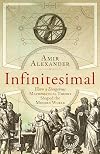
Infinitesimal: How a Dangerous Mathematical Theory Shaped the Modern World
by Amir R. Alexander
On This Page
Description
"The epic battle over a mathematical concept that shook the old order and shaped the world as we know it. On August 10, 1632, five leaders of the Society of Jesus convened in a somber Roman palazzo to pass judgment on a simple idea: that a continuous line is composed of distinct and limitlessly tiny parts. The doctrine would become the foundation of calculus, but on that fateful day the judges ruled that it was forbidden. With the stroke of a pen they set off a war for the soul of the modern show more world. Amir Alexander's Infinitesimal is the story of the struggle that pitted Europe's entrenched powers against voices for tolerance and change. It takes us from the bloody religious strife of the sixteenth century to the battlefields of the English civil war and the fierce confrontations between leading thinkers like Galileo and Hobbes. We see how a small mathematical disagreement became a contest over the nature of the heavens and the earth: Was the world entirely known and ruled by a divinely sanctioned rationality and hierarchy? Or was it a vast and mysterious place, ripe for exploration? The legitimacy of popes and kings, as well as our modern beliefs in human liberty and progressive science, hung in the balance; the answer hinged on the infinitesimal. Pulsing with drama and excitement, Infinitesimal will forever change the way you look at a simple line--and celebrates the spirit of discovery, innovation, and intellectual achievement"-- "The epic battle over a mathematical concept that shook the old order and shaped the world as we know it"-- show lessTags
Recommendations



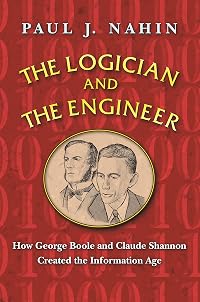
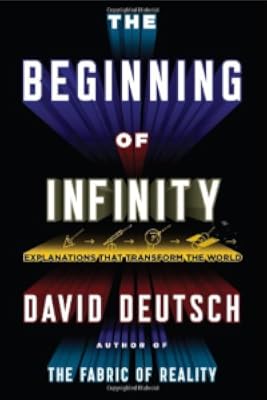
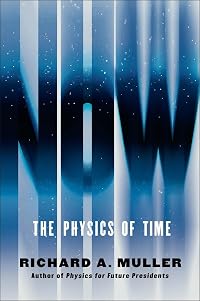
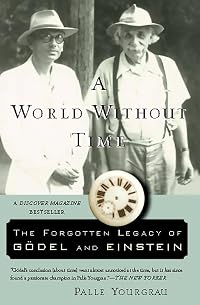
Member Recommendations
Member Reviews
Pre-Birth of The Calculus... does metaphysics matter? The outer brackets of this book might be from Luther's pinned-up Theses to the Glorious Revolution in the UK in 1688. The medieval world was stable, even stagnant. The modern world is fertile and chaotic. Alexander understands that metaphysics - the foundations of mathematics - is not the sole determiner of social transformation. But the philosophy of mathematics is right there in the fray. It has a seat at the table. Just like today, Turing's Halting Theorem went from a curiosity of mathematical logic to the seed of our ongoing transformation into some kind of cybernetic society. What kind, it's not easy to predict with any confidence!
I especially liked the descriptions of some of show more Wallis's reasoning here. I'm a math-physics-engineering geek, so this stuff is deep in my bones. But to be able to peek over Newton's shoulder to see where his ideas came from - just a delight!
There's not too much math here. Alexander works hard to help the reader stay on track. This is really a history book, with just enough math to be able to follow the action. It'd be fun to do a parallel math book, to explore much more fully why experimental mathematics is not so reliable, and e.g. how did Cauchy convergence develop out of Wallis's experiments with infinite series.
But now, in the midst of this coronovirus pandemic, that puts a spear point on the climate change cudgel - people are looking for certainties, when scientists can only offer possibilities and probabilities. We are edging closer to yet another religion versus science war, and the stakes could hardly be higher. This book is a nice refresher course on how ideas matter. show less
I especially liked the descriptions of some of show more Wallis's reasoning here. I'm a math-physics-engineering geek, so this stuff is deep in my bones. But to be able to peek over Newton's shoulder to see where his ideas came from - just a delight!
There's not too much math here. Alexander works hard to help the reader stay on track. This is really a history book, with just enough math to be able to follow the action. It'd be fun to do a parallel math book, to explore much more fully why experimental mathematics is not so reliable, and e.g. how did Cauchy convergence develop out of Wallis's experiments with infinite series.
But now, in the midst of this coronovirus pandemic, that puts a spear point on the climate change cudgel - people are looking for certainties, when scientists can only offer possibilities and probabilities. We are edging closer to yet another religion versus science war, and the stakes could hardly be higher. This book is a nice refresher course on how ideas matter. show less
I truly enjoyed this book and definitely recommend it.
Admittedly I had expected more on the evolution and rationale of the method of infinitesimals. Instead I encountered a vivid story about the power struggles, the religious fervors, and the contests of ideas and ideals during 16th and 17th century Europe that were intertwined with this “dangerous” mathematical tool. I felt Amir Alexander pulled together these diverse currents into a cohesive, rich tale. The method of infinitesimals held a latent and un-tapped power. And those who dared say they played with it to solve as yet unsolved problems invited tragedy and triumph upon themselves.
Why would the Society of Jesus and the Roman Catholic Church regard a mathematical theory as show more heresy? Moreover, why were the Jesuits driven to orchestrate smear campaigns to discredit the brightest and most creative scientific minds in Italy in the first half of the 17th century? Why did they feel like they had to ruin their lives? The Jesuits did this so completely that Italy’s brilliant candles of scientific innovation were effectively blotted out? Why would the nobles and royalist-sympathizers of post-medieval Europe fear an infinitely small quantity, believing it could unleash chaos and more civil war in England in the second half of the 17th century? Why indeed.
Amir builds the backstory of these fears and weaves them into the many skirmishes and outright public battles the method of infinitesimals had endured. Italy lost. England won. Had it not, the modern world might still be in the Dark Ages. show less
Admittedly I had expected more on the evolution and rationale of the method of infinitesimals. Instead I encountered a vivid story about the power struggles, the religious fervors, and the contests of ideas and ideals during 16th and 17th century Europe that were intertwined with this “dangerous” mathematical tool. I felt Amir Alexander pulled together these diverse currents into a cohesive, rich tale. The method of infinitesimals held a latent and un-tapped power. And those who dared say they played with it to solve as yet unsolved problems invited tragedy and triumph upon themselves.
Why would the Society of Jesus and the Roman Catholic Church regard a mathematical theory as show more heresy? Moreover, why were the Jesuits driven to orchestrate smear campaigns to discredit the brightest and most creative scientific minds in Italy in the first half of the 17th century? Why did they feel like they had to ruin their lives? The Jesuits did this so completely that Italy’s brilliant candles of scientific innovation were effectively blotted out? Why would the nobles and royalist-sympathizers of post-medieval Europe fear an infinitely small quantity, believing it could unleash chaos and more civil war in England in the second half of the 17th century? Why indeed.
Amir builds the backstory of these fears and weaves them into the many skirmishes and outright public battles the method of infinitesimals had endured. Italy lost. England won. Had it not, the modern world might still be in the Dark Ages. show less
Infinitesimal tells an interesting story about the genesis of the scientific revolution through the rather esoteric creation of the indefinitely small and indivisible. The idea of infinitesimals had been around for ages: Zeno's paradoxes are based on the idea that space can be sliced smaller and smaller. And for us, they're literally high school math. dx/dy and all that.
In the 16th and 17th century, disorder was at the top of mind for many elites. The Catholic Church had been rocked by the Protestant Reformation, and only belatedly offered theological counters. The elite intellectual shock troops of Catholicism was the new Jesuit order, which combined rigorous philosophical learning with absolute obedience to hierarchy, going up to the show more Jesuit Governor General and then the Pope. The Jesuits relied on a strict censorship regime to maintain this order, and sought an intellectual underpinning in Euclid's geometry. Geometry was both old (and therefore safe) and promised a perfectly rational and ordered system. In England, Thomas Hobbes, a tutor to aristocratic, political philosopher, and amateur mathematician, pursued a similar vision of absolute order in his Leviathan. Hobbes was also fascinated by the promise of geometry to create a perfect order.
Against absolute order, a few mathematicians postulated another way of thinking. Perhaps lines were made up of an infinite series of points. Planes were made of lines next to each other, like a sheet of paper. Solids were like a book of many sheets. The Italian branch of this school included Galileo, Torricelli, and Bonaventura Francesco Cavalieri, a mathematician of the Jesuat (note the "a") order. In England, Hobbes' main opponent was John Wallis, a member of the nascent Royal Society.
As Alexander discusses, the stability of Euclid's geometry was intellectual tied to political and theological stability. In Italy, the Jesuits had enough authority to have Galileo sentenced to house arrest. Torrecelli died before 40 of a fever. Cavalieri, who wrote the first major book on infinitesimals, was dealt with by having the entire Jesuat order dissolved.
Events in England followed a very different course. Hobbes was successfully baited by Wallis, as Hobbes erroneous claimed he'd "squared the circle", a problem which was later found to be impossible via Euclidian means. Wallis was a decent mathematician and a consummate political operator, who over decades saw Hobbes sidelined and ridiculed.
While it may be much to ascribe single causes (and Alexander is careful not to), Italy stagnated under Jesuit intellectual rigidity, becoming a poor backwater. England birthed the scientific and industrial revolutions, developments which would have been impossible without calculus. show less
In the 16th and 17th century, disorder was at the top of mind for many elites. The Catholic Church had been rocked by the Protestant Reformation, and only belatedly offered theological counters. The elite intellectual shock troops of Catholicism was the new Jesuit order, which combined rigorous philosophical learning with absolute obedience to hierarchy, going up to the show more Jesuit Governor General and then the Pope. The Jesuits relied on a strict censorship regime to maintain this order, and sought an intellectual underpinning in Euclid's geometry. Geometry was both old (and therefore safe) and promised a perfectly rational and ordered system. In England, Thomas Hobbes, a tutor to aristocratic, political philosopher, and amateur mathematician, pursued a similar vision of absolute order in his Leviathan. Hobbes was also fascinated by the promise of geometry to create a perfect order.
Against absolute order, a few mathematicians postulated another way of thinking. Perhaps lines were made up of an infinite series of points. Planes were made of lines next to each other, like a sheet of paper. Solids were like a book of many sheets. The Italian branch of this school included Galileo, Torricelli, and Bonaventura Francesco Cavalieri, a mathematician of the Jesuat (note the "a") order. In England, Hobbes' main opponent was John Wallis, a member of the nascent Royal Society.
As Alexander discusses, the stability of Euclid's geometry was intellectual tied to political and theological stability. In Italy, the Jesuits had enough authority to have Galileo sentenced to house arrest. Torrecelli died before 40 of a fever. Cavalieri, who wrote the first major book on infinitesimals, was dealt with by having the entire Jesuat order dissolved.
Events in England followed a very different course. Hobbes was successfully baited by Wallis, as Hobbes erroneous claimed he'd "squared the circle", a problem which was later found to be impossible via Euclidian means. Wallis was a decent mathematician and a consummate political operator, who over decades saw Hobbes sidelined and ridiculed.
While it may be much to ascribe single causes (and Alexander is careful not to), Italy stagnated under Jesuit intellectual rigidity, becoming a poor backwater. England birthed the scientific and industrial revolutions, developments which would have been impossible without calculus. show less
I finished Infinitesimal: How a dangerous mathematical theory shaped the modern world by Amir Alexander, with mixed, if mostly positive feelings. Despite the title, the preponderance of diagrams, and the extended trips into the nature of number theory, this is not a math book. It's a history book, with math as one of the main characters in the drama that spans nearly three hundred years. Not being a math person myself, I still had no trouble following along Alexander's explanations and summations of the various heated, do-or-die "proofs" that were flung back and forth by the various proponents of this or that theory. But this is not a history of the discovery of a new kind of math (the theory of the infinitely small having laid the show more groundwork for the development of calculus). This is a history of why the discovery of a new kind of math was such a big deal, and so...well, "dangerous."
Basically it is the story of the struggle between those who ascribed to a Euclidean description of reality, and those who did not. Or rather, those who began with theory and applied it to reality, and those who began with the real world, and tried to deduce the theory that would describe it. The former is based in the creation of abstract proofs. The latter on deductions based on observation and experimentation. The former appealed to the authoritarian and conservative elements of the Catholic Church, which in the 15th century was running a rear guard action in the struggle for souls in the face of the rise of Lutheranism. Euclidean geometry might be called "the official math" of the church -- it was the only math taught, and more to the point, the only math allowed, in all those Jesuit-run schools that spread throughout Europe and ended up the church's best defense against Protestantism.
The problem, of course, with demanding that the real world be interpreted in terms of an officially sanctioned theory is that you run into trouble when something happens that doesn't fit that theory. In the case of Euclidean Geometry, that included any number of uncomfortable paradoxes (Zeno's arrow, etc) and the inability to accurately calculate things that would be really useful -- say, the volume of a spiral.
The theory of infinitesimals, of "the infinitely small" was developed in part to overcome these challenges -- which it does, beautifully, but only at the expense of Euclid's entire notion of perfect abstract form. The argument over infinitesimals...indeed, over the primacy of observation over abstract truth...is much of what fueled the dispute between the Church and Galileo and his circle. Galileo was no mathematician, but he was able to use the theory of the infinitely small to make sense of Copernicus's heliocentric model and his own astronomical observations. Kepler, too, used the method to help calculate the elliptical orbits that improved on the Copernican model of the motion of the planets. And in the end, the church's objections to Galileo and those in his circle were as much about those methods as they were about any given theory Galileo put forth.
Alexander makes a complex subject entertaining and interesting -- certainly it will appeal to people who like Dava Sobel, or Richard Holmes' The Age of Wonder. The book is especially strong in the second half, which is dominated by an account of the creation of the Royal Society, and the rivalry between the polymath Thomas Hobbes and his bete noir, John Wallis -- which reached a fever pitch that would have delighted the tabloids, if any had existed at the time. Apparently, the ability (or not) to back one's claim to be able to square the circle -- or double the cube -- was serious stuff, with wide-ranging political repercussions.
It's only here that I felt a twinge of skepticism about Alexander's central premise. That mathematical theories could become stand-ins and justifications for political philosophies and theological truths is easily understood. But that the fall of Italy from it's intellectual primacy during the Renaissance, and England's subsequent rise as an industrial power can be put down to Rome's refusal to embrace the theory of the infinitely small seems...well...rather infinitely stretched. Political powers rise and fall for a myriad of reasons, usually acting in concert. And in the end it isn't really clear whether the efforts to suppress a troublesome mathematical method was part of the cause, or simply a symptom of Italy's faltering vitality and its descent from center of the intellectual universe to a hidebound backwater left behind by the rest of Europe. show less
Basically it is the story of the struggle between those who ascribed to a Euclidean description of reality, and those who did not. Or rather, those who began with theory and applied it to reality, and those who began with the real world, and tried to deduce the theory that would describe it. The former is based in the creation of abstract proofs. The latter on deductions based on observation and experimentation. The former appealed to the authoritarian and conservative elements of the Catholic Church, which in the 15th century was running a rear guard action in the struggle for souls in the face of the rise of Lutheranism. Euclidean geometry might be called "the official math" of the church -- it was the only math taught, and more to the point, the only math allowed, in all those Jesuit-run schools that spread throughout Europe and ended up the church's best defense against Protestantism.
The problem, of course, with demanding that the real world be interpreted in terms of an officially sanctioned theory is that you run into trouble when something happens that doesn't fit that theory. In the case of Euclidean Geometry, that included any number of uncomfortable paradoxes (Zeno's arrow, etc) and the inability to accurately calculate things that would be really useful -- say, the volume of a spiral.
The theory of infinitesimals, of "the infinitely small" was developed in part to overcome these challenges -- which it does, beautifully, but only at the expense of Euclid's entire notion of perfect abstract form. The argument over infinitesimals...indeed, over the primacy of observation over abstract truth...is much of what fueled the dispute between the Church and Galileo and his circle. Galileo was no mathematician, but he was able to use the theory of the infinitely small to make sense of Copernicus's heliocentric model and his own astronomical observations. Kepler, too, used the method to help calculate the elliptical orbits that improved on the Copernican model of the motion of the planets. And in the end, the church's objections to Galileo and those in his circle were as much about those methods as they were about any given theory Galileo put forth.
Alexander makes a complex subject entertaining and interesting -- certainly it will appeal to people who like Dava Sobel, or Richard Holmes' The Age of Wonder. The book is especially strong in the second half, which is dominated by an account of the creation of the Royal Society, and the rivalry between the polymath Thomas Hobbes and his bete noir, John Wallis -- which reached a fever pitch that would have delighted the tabloids, if any had existed at the time. Apparently, the ability (or not) to back one's claim to be able to square the circle -- or double the cube -- was serious stuff, with wide-ranging political repercussions.
It's only here that I felt a twinge of skepticism about Alexander's central premise. That mathematical theories could become stand-ins and justifications for political philosophies and theological truths is easily understood. But that the fall of Italy from it's intellectual primacy during the Renaissance, and England's subsequent rise as an industrial power can be put down to Rome's refusal to embrace the theory of the infinitely small seems...well...rather infinitely stretched. Political powers rise and fall for a myriad of reasons, usually acting in concert. And in the end it isn't really clear whether the efforts to suppress a troublesome mathematical method was part of the cause, or simply a symptom of Italy's faltering vitality and its descent from center of the intellectual universe to a hidebound backwater left behind by the rest of Europe. show less
Infinitesimal is a quirky little book. Its basic thesis is that various responses to an arcane mathematical concept, infinitesimals, or the infinite amount of parts into which a line can be divided, somehow accounts for the political struggles of 16th century Italy and of 17th century Britain. To say the least, this is a bold thesis, and I remained unconvinced at the end, despite enjoying the author’s almost heroic efforts.
On a first level, the book is a political history of (a) the Catholic Church’s response to the Protestant Reformation and (b) Britain in the 1600’s, contrasting the two historical periods by their different approaches to mathematics. In the process, the author takes us through the founding and early days of the show more Society of Jesus (the Jesuit order) in the Counter-reformation of the 16th century, particularly on the Italian peninsula (there being no “Italy” as such in those days). He then moves on to the political and religious struggles in Britain in the next century.
Alexander’s retelling of the history is interesting, if very unconventional. In particular, his relation of the debate between Thomas Hobbes (as author of Leviathan) and John Wallis is told from an angle I had never seen before. Hobbes, who fancied himself as a great geometer (he thought he had “squared the circle”—later proved to be impossible), crossed intellectual swords with Wallis, who approached mathematics as an experimental pursuit. Their respective approaches to mathematics probably influenced their political philosophies in the way Alexander describes. Nevertheless, neither actually solved the problem of the infinitesimals—and that story is not included in this book.
Alexander has presented a history through a highly unorthodox, but stimulating, prism. He is probably correct that the concept of infinitesimals, which was expanded to become calculus, really did “shape” the modern world. After all, classical physics is expressed in the language of calculus. But the “shaping “ caused by that concept was scientific, mathematical, and intellectual—not political. Alexander’s retelling of the story leaves untold the final rigorous and elegant explication and derivation of calculus by Newton, Leibnitz, and Euler. And that explication and derivation had little or no political consequences.
This book is worth reading just for the history even if its attribution of causation is farfetched.
(JAB) show less
On a first level, the book is a political history of (a) the Catholic Church’s response to the Protestant Reformation and (b) Britain in the 1600’s, contrasting the two historical periods by their different approaches to mathematics. In the process, the author takes us through the founding and early days of the show more Society of Jesus (the Jesuit order) in the Counter-reformation of the 16th century, particularly on the Italian peninsula (there being no “Italy” as such in those days). He then moves on to the political and religious struggles in Britain in the next century.
Alexander’s retelling of the history is interesting, if very unconventional. In particular, his relation of the debate between Thomas Hobbes (as author of Leviathan) and John Wallis is told from an angle I had never seen before. Hobbes, who fancied himself as a great geometer (he thought he had “squared the circle”—later proved to be impossible), crossed intellectual swords with Wallis, who approached mathematics as an experimental pursuit. Their respective approaches to mathematics probably influenced their political philosophies in the way Alexander describes. Nevertheless, neither actually solved the problem of the infinitesimals—and that story is not included in this book.
Alexander has presented a history through a highly unorthodox, but stimulating, prism. He is probably correct that the concept of infinitesimals, which was expanded to become calculus, really did “shape” the modern world. After all, classical physics is expressed in the language of calculus. But the “shaping “ caused by that concept was scientific, mathematical, and intellectual—not political. Alexander’s retelling of the story leaves untold the final rigorous and elegant explication and derivation of calculus by Newton, Leibnitz, and Euler. And that explication and derivation had little or no political consequences.
This book is worth reading just for the history even if its attribution of causation is farfetched.
(JAB) show less
Why would something mathematical and obscure be a big deal? Well, mathematics wasn't separate from reality say 500 or so years ago, and neither was religion. It's just like the problem with the scientifically calculated age of the earth not matching what's in the bible. And on top of that, religion wasn't separate from politics so what people believed had consequences for who held the power.
I had thought Newton and Leibniz invented infinitesimals but it turns out they were standing on the shoulders of giants. When those giants were young, the pope found their ideas heretical . Remember how Galileo was imprisoned for saying the earth traveled around the sun? What crazy times they were!
But then, we have a president who doesn't care for show more science all that much today. show less
I had thought Newton and Leibniz invented infinitesimals but it turns out they were standing on the shoulders of giants. When those giants were young, the pope found their ideas heretical . Remember how Galileo was imprisoned for saying the earth traveled around the sun? What crazy times they were!
But then, we have a president who doesn't care for show more science all that much today. show less
Amazing history of the interplay of nascent science, entrenched theology and flailing politics of the age culminating in the birth of the modern world. Back when mathematics was truly controversial.
Members
- Recently Added By
Lists

Books Read in 2015
3,299 works; 126 members

HS Mathematics class library
79 works; 6 members

Books Read in 2019
4,052 works; 110 members
Author Information

7 Works 633 Members
Amir Alexander teaches history at UCLA. He is the author of Geometrical Landscapes and Duel at Dawn. His writing has appeared in The New York Times and the Los Angeles Times, and his work has been covered by Nature, The Guardian, NPR, and others. He lives in Los Angeles.
Common Knowledge
- People/Characters
- Luca Valerio; Galileo Galilei; Gregory St. Vincent; Bonaventura Cavalieri; Evangelista Torricelli; John Wallis (show all 28); Stefano degli Angeli; Christopher Clavius; Paul Guldin; Mario Bettini; André Tacquet; Ignatius of Loyola; Benito Pereira; Claudio Acquaviva; Mutio Vitelleschi; Jacob Bidermann; Vincenzo Carafa; Rodrigo de Arriaga; Pietro Sforza Pallavicino; Francis Bacon; Henry Oldenburg; Robert Boyle; Thomas Sprat; Charles V, Holy Roman Emperor; Gustavus Adolphus; Oliver Cromwell; Charles I, King of England, Scotland, and Ireland; Charles II, King of England, Scotland, and Ireland
- Important places
- Rome; London, England, UK; University of Oxford, Oxford, Oxfordshire, England, UK; Collegio Romano
- Epigraph
- No continuous thing is divisible into things without parts. - Aristotle
- Dedication
- To Jordan and Ella
- First words
- On August 10, 1632, five men in flowing black robes came together in a somber Roman palazzo on the left bank of the Tiber River.
- Quotations
- But Hobbes went a step further than the Jesuits: rather than settling on treating geometry as a model and an ideal, he tried logically and systematically to derive his philosophy from his modified geometrical principles and i... (show all)n De corpore, he set out to do just that.
But the world, as it turns out, cannot be derived from mathematics. The Pythagoreans learned this more than two thousand years earlier when the existence of incommensurable magnitudes upended their belief that everything in the world could be described in terms of the ratio of whole numbers.
Any attempt to construct a perfectly known and rational mathematical world was not only politically dangerous, but also a scientific dead end. - Last words
- (Click to show. Warning: May contain spoilers.)They were right: when the dust cleared, the champions of infinitesimals had won, their enemies defeated. And the world was never the same again.
- Blurbers
- Schaffer, Simon; Harris, Michael; Livio, Mario; Jacob, Margaret C.; Ellenberg, Jordan; Frenkel, Edward
- Original language
- English
Classifications
Statistics
- Members
- 434
- Popularity
- 70,894
- Reviews
- 10
- Rating
- (3.97)
- Languages
- English, Italian, Portuguese
- Media
- Paper, Audiobook, Ebook
- ISBNs
- 10
- ASINs
- 4