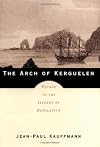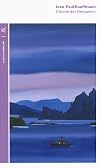
The Arch of Kerguelen: Voyage to the Islands of Desolation
by Jean-Paul Kauffmann
On This Page
Description
The Kerguelens - isolated French islands in the southern Indian Ocean - were the home of the Arch of Kerguelen, a 1,000-foot-tall stone vault that had confounded navigators for centuries. Jean-Paul Kauffmann finds poetry in the isolation and strangely serene beauty of this land far from the hustle of "civilized" life, where the vast ocean dominates, where the wind reigns and solitude is interrupted only by animals scrambling in the windswept fields by the graves of those who journeyed there show more before. show lessTags
Recommendations
































Member Recommendations
Member Reviews
I'm not sure what I expected from an account of a sojourn in one of the remotest places on the planet, but what I got was (with hindsight unsurprisingly) quite dull.
Kauffman, intrigued by the Kerguelens since childhood, wangles a trip there and tries gamely to make a book of it. But nothing happens (of course), he has no sense of humour, and his prose is sometimes pretentious:
"Could Kerguelen be nothing more than the reality of my life in its pure state? It defies every idea of the picturesque, the exotic, and the voyage. Could I have invented a whole picture of the Desolation Isles before I left France? I carry that kind of devastation within me."
Pauvre toi!
Or this, before he is even there, on the one-week journey by ship:
"Isn't having show more nothing to do the supreme test, even more than suffering? Whoever can fill the emptiness of his being, when there is nothing more to occupy it, will survive."
Pretty sure most people would take boredom over physical pain.
Kauffman is competent on the history of the archipelago, at any rate its human history. He tries to set up the story of the islands' namesake, the explorer Yves-Joseph de Kerguelen, as a counter-narrative (since nothing is happening to him). Kerguelen seems an interesting character, but Kauffman never gets past this air of intrigue, and is reluctant to speculate. Various other pioneer stories (whalers, troops, colonists) are retold, all more or less of a piece. But there is nothing at all on the geology, and little on the natural history, of the islands. Perhaps this is because of the author's self-proclaimed Luddism:
"Lines of pebbles delicately fitting together form such regularly shaped mosaics on the grey sand that you suspect a human hand has shaped them. Georges assures me, however, that it's a natural phenomenon, but I don't really understand his description. Scientific explanations bore me to death..."
The author spends quite a while surrounded by scientists, but learns nothing from them - neither their stories as people nor as scientists. Indeed, he hardly seems to talk to them at all. One would assume that an adventure like this would generate some insight into the people who live and work in very isolated places. But Kauffman spends most of his time with his nose in a good book, many of which he has brought with him all the way from France. He should have read them before he left, and been more sprightly and curious once he got there.
Happily the book is much shorter than the trip. show less
Kauffman, intrigued by the Kerguelens since childhood, wangles a trip there and tries gamely to make a book of it. But nothing happens (of course), he has no sense of humour, and his prose is sometimes pretentious:
"Could Kerguelen be nothing more than the reality of my life in its pure state? It defies every idea of the picturesque, the exotic, and the voyage. Could I have invented a whole picture of the Desolation Isles before I left France? I carry that kind of devastation within me."
Pauvre toi!
Or this, before he is even there, on the one-week journey by ship:
"Isn't having show more nothing to do the supreme test, even more than suffering? Whoever can fill the emptiness of his being, when there is nothing more to occupy it, will survive."
Pretty sure most people would take boredom over physical pain.
Kauffman is competent on the history of the archipelago, at any rate its human history. He tries to set up the story of the islands' namesake, the explorer Yves-Joseph de Kerguelen, as a counter-narrative (since nothing is happening to him). Kerguelen seems an interesting character, but Kauffman never gets past this air of intrigue, and is reluctant to speculate. Various other pioneer stories (whalers, troops, colonists) are retold, all more or less of a piece. But there is nothing at all on the geology, and little on the natural history, of the islands. Perhaps this is because of the author's self-proclaimed Luddism:
"Lines of pebbles delicately fitting together form such regularly shaped mosaics on the grey sand that you suspect a human hand has shaped them. Georges assures me, however, that it's a natural phenomenon, but I don't really understand his description. Scientific explanations bore me to death..."
The author spends quite a while surrounded by scientists, but learns nothing from them - neither their stories as people nor as scientists. Indeed, he hardly seems to talk to them at all. One would assume that an adventure like this would generate some insight into the people who live and work in very isolated places. But Kauffman spends most of his time with his nose in a good book, many of which he has brought with him all the way from France. He should have read them before he left, and been more sprightly and curious once he got there.
Happily the book is much shorter than the trip. show less
A year on one of the remotest places on earth - which is the minimum stay. No shortcuts. Determination required. I love these stories.
Een jaar op een van de meest afgelegen plaatsen ter wereld. Een jaar is de minimum termijn. Geen tussentijdse aflossing. Vastbeslotenheid een must. Fantastisch verhaal.
Een jaar op een van de meest afgelegen plaatsen ter wereld. Een jaar is de minimum termijn. Geen tussentijdse aflossing. Vastbeslotenheid een must. Fantastisch verhaal.
Kauffmann, Jean-Paul, 1944- > Journeys >/Kerguelen Islands/Kerguelen Islands > Description and travel
Situate nell'oceano Indiano meridionale, le Kerguelen formano un arcipelago abbastanza esteso di isole. Sono chiamate anche Isole della Desolazione, appellativo molto appropriato perché sono solitarie, raggiungibili solo con una nave mercantile che attracca poche volte l'anno, sferzate da vento incessante, rocciose e prive di alberi, abitate da una sparuta comunità di francesi.
Il giornalista francese Kauffmann ci racconta del suo viaggio alle Kerguelen che aveva sognato fin da ragazzo. Per anni ha raccolto notizie, ha letto avidamente i rari resoconti di geografi e navigatori. I paesaggi antartici, il vento, le rocce ci appaiono come una dimensione primordiale.
Il giornalista francese Kauffmann ci racconta del suo viaggio alle Kerguelen che aveva sognato fin da ragazzo. Per anni ha raccolto notizie, ha letto avidamente i rari resoconti di geografi e navigatori. I paesaggi antartici, il vento, le rocce ci appaiono come una dimensione primordiale.
Apr 8, 2012 (Edited)Italian
Ratings
Members
- Recently Added By
Lists

Best Travel Writing - Non-Fiction
110 works; 6 members

Non-Fiction Worth Reading
1,016 works; 262 members
Author Information

14+ Works 477 Members
Awards and Honors
Awards
Common Knowledge
- Original title
- L'arche des Kerguelen
- Original publication date
- 1991
Classifications
- Genres
- Travel, Nonfiction, General Nonfiction
- DDC/MDS
- 916.99 — History & geography Geography & travel Geography of and travel in Africa South Indian Ocean islands Cocos (Keeling) Islands & Other Isolated Islands
- LCC
- DS349.9 .K47 .K3813 — History of Europe, Asia, Africa and Oceania Asia History of Asia Southern Asia. Indian Ocean Region Islands of the Indian Ocean
- BISAC
Statistics
- Members
- 99
- Popularity
- 326,639
- Reviews
- 4
- Rating
- (3.84)
- Languages
- Dutch, English, French, Italian
- Media
- Paper
- ISBNs
- 9
- ASINs
- 3