On This Page
Description
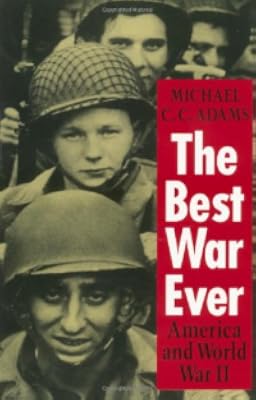
The most readable--and searingly honest--short book ever written on this pivotal conflict. Was World War II really such a "good war"? Popular memory insists that it was, in fact, "the best war ever." After all, we knew who the enemy was, and we understood what we were fighting for. The war was good for the economy. It was liberating for women. A battle of tanks and airplanes, it was a "cleaner" war than World War I. Although we did not seek the conflict--or so we believed--Americans show more nevertheless rallied in support of the war effort, and the nation's soldiers, all twelve million of them, were proud to fight. But according to historian Michael C. C. Adams, our memory of the war era as a golden age is distorted. It has left us with a misleading--even dangerous--legacy, one enhanced by the nostalgia-tinged retrospectives of Stephen E. Ambrose and Tom Brokaw. Disputing many of our common assumptions about the period, Adams argues in The Best War Ever that our celebratory experience of World War II is marred by darker and more sordid realities. In the book, originally published in 1994, Adams challenges stereotypes to present a view of World War II that avoids the simplistic extremes of both glorification and vilification. The Best War Ever charts the complex diplomatic problems of the 1930s and reveals the realities of ground combat: no moral triumph, it was in truth a brutal slog across a blasted landscape. Adams also exposes the myth that the home front was fully united behind the war effort, demonstrating how class, race, gender, and age divisions split Americans. Meanwhile, in Europe and Asia, shell-shocked soldiers grappled with emotional and physical trauma, rigorously enforced segregation, and rampant venereal disease. In preparing this must-read new edition, Adams has consulted some seventy additional sources on topics as varied as the origins of Social Security and a national health system, the Allied strategic bombing campaign, and the relationship of traumatic brain injuries to the adjustment problems of veterans. The revised book also incorporates substantial developments that have occurred in our understanding of the course and character of the war, particularly in terms of the human consequences of fighting. In a new chapter, "The Life Cycle of a Myth," Adams charts image-making about the war from its inception to the present. He contrasts it with modern-day rhetoric surrounding the War on Terror, while analyzing the real-world consequences that result from distorting the past, including the dangerous idea that only through (perpetual) military conflict can we achieve lasting peace. show lessTags
Recommendations











Member Reviews
Few aspects of American history are as subject to mythologization as its wars, and few American conflicts are as subject to mythologization as World War II. Published 30 years ago, before Tom Brokaw's The Greatest Generation and Steven Spielberg's Saving Private Ryan raised the hagiography of World War II veterans to new heights, this slim (less than 200 pages) overview of the American experience of World War II is an attempt to introduce complexity and nuance into a subject long dominated by simplicity and patriotic platitudes.
Adams is writing for undergraduate audience whose knowledge of the war comes mostly from popular culture, and he does so superbly. His chapter on the origins of the war and America's involvement (from Versailles show more to Pearl Harbor), is a brisk and lucid overview, and the following chapter (a military overview of the war from the American perspective) is even more impressive. The remaining three chapters cover Americans' experiences in combat and on the home front, and the long-term impact of the war on American society in (roughly) the decade-and-a-half following VJ Day. If I was teaching a university-level American history course that included World War II, I'd assign this book in a heartbeat.
It's not just for undergraduates, though. Adams, merely a serviceable writer, is a superb synthesizer, and the book is a masterful overview of a huge range of complex topics. It is peppered with parenthetical reference to sources, and concludes with a 22-page bibliographic essay -- one section for each chapter -- that tells readers in search of more depth and detail where to go.
You'd have to be very well-versed indeed in the American experience of World War II not to get something new out of it, and if you wanted to read the proverbial "one book" on the subject, you could do a lot worse. show less
Adams is writing for undergraduate audience whose knowledge of the war comes mostly from popular culture, and he does so superbly. His chapter on the origins of the war and America's involvement (from Versailles show more to Pearl Harbor), is a brisk and lucid overview, and the following chapter (a military overview of the war from the American perspective) is even more impressive. The remaining three chapters cover Americans' experiences in combat and on the home front, and the long-term impact of the war on American society in (roughly) the decade-and-a-half following VJ Day. If I was teaching a university-level American history course that included World War II, I'd assign this book in a heartbeat.
It's not just for undergraduates, though. Adams, merely a serviceable writer, is a superb synthesizer, and the book is a masterful overview of a huge range of complex topics. It is peppered with parenthetical reference to sources, and concludes with a 22-page bibliographic essay -- one section for each chapter -- that tells readers in search of more depth and detail where to go.
You'd have to be very well-versed indeed in the American experience of World War II not to get something new out of it, and if you wanted to read the proverbial "one book" on the subject, you could do a lot worse. show less
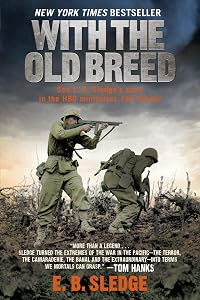
If you look for 'revisionist history' in the dictionary, you'll probably find this book. Adams goes at great length to penetrate the mystique of WW2, showing it as an ugly conflict where the average soldier lived in total terror, not knowing what he fought for, that made only half-hearted steps towards integrating American society, and helped destroy the social fabric of rural America. All of this may be true, and it serves as a nice counter-balance to the usual hagiographies, but as a whole this book exaggerates, elides, and is totally American centric. What about Germany, Russia, England, Japan, France, etc? (okay, it says that in the title, but really, those guys fought too). The home front stuff was alright for social history, but show more you might as well go to the way better primary source for the battles and read Eugene Sledge's With the Old Breed. show less
This book is a "must read" for anyone interested in American History during the WWII era. The author objectively dismisses the notion that the "Golden Generation" is any different than other generations confronted by war. He does not aim to belittle their accomplishments, but to make sure that historians accurately portray events and do not suffer degrading comparisons unto the future generations. Topics of interest include: the family environment & dispelling the myth that kids behaved, parents didn't cheat, and all were happy little Beavers; drug use and sexual abuses during war were not absent until Vietnam, but simply a tragic side-effect of many wars, including WWII, and; analyzing the reasons why future generations grab onto these show more myths with both hands. Many WWII enthusiasts will wrongly assume that this book sets out to put down that generation, when all it does is propose that we should be looking at it as it really was. Highly recommend. show less
An extremely insightful text. It truly does clear up a lot of questions about WWII. The book was very well written and easy to follow. Adams separated his chapters nicely and anyone who is interested in WWII will most likely find this book enjoyable. I really liked how he talked about what was happening on the home front AND overseas. It was also nice for an author to really dig into why people believed that WWII was the best war ever. I read this book for a U.S history class and I found it to be really helpful. It helped me understand the issues surrounding the war during and after. It gave me the truth, not the glamor.
Ratings
Members
- Recently Added By
Author Information
5 Works 347 Members
Michael C.C. Adams, Regents Professor of History Emeritus at Northern Kentucky University, is the author of The Best War Ever: America and World War II and Our Masters the Rebels: A Speculation on Union Military Failure in the East, 1861-1865, winner of the Museum of the Confederacy's Jefferson Davis Prize for the best Civil War book.
Series

Common Knowledge
- Canonical title
- The Best War Ever: America and World War II
- Original publication date
- 1993
- Important events
- World War II (1939 | 1945); Attack on Pearl Harbor (1941-12-07)
Classifications
Statistics
- Members
- 172
- Popularity
- 189,924
- Reviews
- 4
- Rating
- (3.73)
- Languages
- English
- Media
- Paper, Audiobook, Ebook
- ISBNs
- 6
- ASINs
- 2