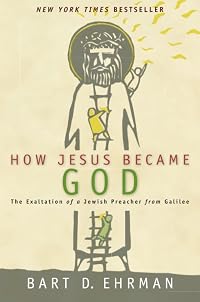
How Jesus Became God
by Bart D. Ehrman
The Great Courses: Religion and Theology (6522), The Great Courses (6522)
On This Page
Description
"In a book that took eight years to research and write, leading Bible scholar Bart D. Ehrman explores how an apocalyptic prophet from the backwaters of rural Galilee crucified for crimes against the state came to be thought of as equal with the one God Almighty Creator of all things. Ehrman sketches Jesus's transformation from a human prophet to the Son of God exalted to divine status at his resurrection. Only when some of Jesus's followers had visions of him after his death-- alive again-- show more did anyone come to think that he, the prophet from Galilee, had become God. And what they meant by that was not at all what people mean today" -- dust jacket flap. show lessTags
Recommendations




Member Recommendations
Member Reviews
As usual, Ehrman skillfully points out all the contradictions in the Bible, in this case, the changing nature of Christians' conception of Jesus after his death. At first, a man who became divine when he (supposedly) ascended into heaven. Later, a man who god adopted as his son at Jesus' baptism. Then divine at his birth to a virgin mother. Eventually, always existing and always divine, but that took almost 400 years. This loses one half star because it is a bit repetitive, but that is Ehrman's habit in his books. In any case, when he is done, you won't have any doubt what he said. As a lecturer, he is a bit too strident. He starts out every lecture in a normal voice, but just gets more and more excited as he goes along. I streamed this show more on the excellent Kanopy service. If you're not familiar with it, see if your library provides access to Kanopy, Hoopla, and Libby. You won't have to pay for audiobooks or streaming video channels again! show less
While returning to Chicago from Croatia on my 10 hour transatlantic flight, I sat next to an amiable self- described “servant of Christ,” who was engaged in translating the bible into the Kurdish language. Although he had been reading the bible seriously for forty years, he was not bothered by the very different way Jesus is described in the four canonical gospels. To him, they were just different views of the same person, with no more variation than one would expect in four different biographies of Abraham Lincoln.
Not so for Bart Ehrman, the distinguished University of North Carolina professor and agnostic biblical scholar. He looks carefully at the different descriptions of Jesus and then takes into account the timing of when the show more different descriptions were written. In the earliest gospel (Mark), Jesus is neither referred to as God, nor does Jesus claim to be anything other than a human messiah. Yet by the latest gospel (John), which was written some 30 to 40 years after Mark, Jesus has morphed into the “Word,” an eternal being that is the equal of God the creator of the universe, and in some (impossible to define) way, IS God. Ehrman queries, if Jesus claimed to be God, don’t you think that was important enough to mention in any of the first three gospels? Isn’t it more plausible that the belief that Jesus was God developed or evolved after the synoptic gospels (Mark, Matthew, and Luke) were written?
As Ehrman summarizes in a Huffington Post interview about the book:
"Jesus was a lower-class preacher from Galilee, who, in good apocalyptic fashion, proclaimed that the end of history as he knew it was going to come to a crashing end, within his own generation. God was soon to intervene in the course of worldly affairs to overthrow the forces of evil and set up a utopian kingdom on earth. And he would be the king. ... It didn't happen. Instead of being involved with the destruction of God's enemies, Jesus was unceremoniously crushed by them: arrested, tried, humiliated, tortured, and publicly executed. ... And yet, remarkably, soon afterwards his followers began to say that -- despite all evidence to the contrary -- Jesus really was the messiah sent from God. More than that, he was actually a divine being, not a mere human. And not just any divine being. He was the Creator of the universe. ... How did that happen? How did we get from a Jewish apocalyptic preacher -- who ended up on the wrong side of the law and was crucified for his efforts -- to the Creator of all things and All-powerful Lord? How did Jesus become God?"
Ehrman attributes the belief of the early disciples in the Resurrection to “visions” several of them had in the first few months after the crucifixion. Those visions are no more nor less historically reliable than the many later appearances of the Virgin Mary to various people. Nonetheless, those who had the visions could conclude that since Jesus appeared to be in some sense alive after being crucified, he was in some sense divine.
Ehrman explains that “there were lots of people like this in the ancient world,” i.e., people who were understood to be in some sense divine. For example, the Roman emperors from Augustus on all claimed to be gods. And there was a man named Apollonius whose popular cult in the first and second centuries contended for believers with Christianity. His followers thought that he too ascended into heaven and lived on after being executed by the Romans. Thus, it would not have been terribly unusual for ancient people to think of Jesus as becoming one of the many “divine” beings rather than an eternal entity, coeval and coequal with the Creator.
It is difficult to pinpoint the cause of Jesus’ promotion from a (lower case) god to God, but the time of the promotion appears to have begun in earnest between the publication of the last of the synoptic gospels and the writing of the gospel of John. Ehrman thinks the change in the perception of Christ was gradual. In fact, he demonstrates that for the first two centuries of Christianity, there were many debates about the nature of Christ. It was not until Emperor Constantine forced the Christians to convene the Council of Nicea in 325 C.E. that the gospel of John’s version of Jesus became orthodox doctrine. And indeed, various “heretical” concepts of Christ’s nature have endured and have been held by many Christians over the centuries.
Ehrman explains various techniques used by historians to vet ancient documents, techniques he described and applied in some of his previous books like Misquoting Jesus. He then applies those techniques to the gospels, and comes to some conclusions that may startle, scandalize, and appall practicing (but not critically thinking) Christians. For example, he contends that it was highly unlikely that Jesus was given a decent burial; more likely, he was not buried at all, being left on the cross like virtually all other victims of Rome’s harsh “justice.” Thus, he finds the stories of the “empty tomb” to be highly incredible.
To some extent, this book repeats theses propounded in Misquoting Jesus. Ehrman states that his basic theses are not revolutionary. In fact, they are taught in most main stream Protestant seminaries. He ascribes the fact that they are not widely known among the laity to reluctance on the part of pastors to share ideas that might weaken the faith of the faithful. These are important ideas, and Ehrman is an excellent explicator of them. Even though this book restates many ideas that Ehrman has expressed before, it is a good read and important in its own right.
(JAB) show less
Not so for Bart Ehrman, the distinguished University of North Carolina professor and agnostic biblical scholar. He looks carefully at the different descriptions of Jesus and then takes into account the timing of when the show more different descriptions were written. In the earliest gospel (Mark), Jesus is neither referred to as God, nor does Jesus claim to be anything other than a human messiah. Yet by the latest gospel (John), which was written some 30 to 40 years after Mark, Jesus has morphed into the “Word,” an eternal being that is the equal of God the creator of the universe, and in some (impossible to define) way, IS God. Ehrman queries, if Jesus claimed to be God, don’t you think that was important enough to mention in any of the first three gospels? Isn’t it more plausible that the belief that Jesus was God developed or evolved after the synoptic gospels (Mark, Matthew, and Luke) were written?
As Ehrman summarizes in a Huffington Post interview about the book:
"Jesus was a lower-class preacher from Galilee, who, in good apocalyptic fashion, proclaimed that the end of history as he knew it was going to come to a crashing end, within his own generation. God was soon to intervene in the course of worldly affairs to overthrow the forces of evil and set up a utopian kingdom on earth. And he would be the king. ... It didn't happen. Instead of being involved with the destruction of God's enemies, Jesus was unceremoniously crushed by them: arrested, tried, humiliated, tortured, and publicly executed. ... And yet, remarkably, soon afterwards his followers began to say that -- despite all evidence to the contrary -- Jesus really was the messiah sent from God. More than that, he was actually a divine being, not a mere human. And not just any divine being. He was the Creator of the universe. ... How did that happen? How did we get from a Jewish apocalyptic preacher -- who ended up on the wrong side of the law and was crucified for his efforts -- to the Creator of all things and All-powerful Lord? How did Jesus become God?"
Ehrman attributes the belief of the early disciples in the Resurrection to “visions” several of them had in the first few months after the crucifixion. Those visions are no more nor less historically reliable than the many later appearances of the Virgin Mary to various people. Nonetheless, those who had the visions could conclude that since Jesus appeared to be in some sense alive after being crucified, he was in some sense divine.
Ehrman explains that “there were lots of people like this in the ancient world,” i.e., people who were understood to be in some sense divine. For example, the Roman emperors from Augustus on all claimed to be gods. And there was a man named Apollonius whose popular cult in the first and second centuries contended for believers with Christianity. His followers thought that he too ascended into heaven and lived on after being executed by the Romans. Thus, it would not have been terribly unusual for ancient people to think of Jesus as becoming one of the many “divine” beings rather than an eternal entity, coeval and coequal with the Creator.
It is difficult to pinpoint the cause of Jesus’ promotion from a (lower case) god to God, but the time of the promotion appears to have begun in earnest between the publication of the last of the synoptic gospels and the writing of the gospel of John. Ehrman thinks the change in the perception of Christ was gradual. In fact, he demonstrates that for the first two centuries of Christianity, there were many debates about the nature of Christ. It was not until Emperor Constantine forced the Christians to convene the Council of Nicea in 325 C.E. that the gospel of John’s version of Jesus became orthodox doctrine. And indeed, various “heretical” concepts of Christ’s nature have endured and have been held by many Christians over the centuries.
Ehrman explains various techniques used by historians to vet ancient documents, techniques he described and applied in some of his previous books like Misquoting Jesus. He then applies those techniques to the gospels, and comes to some conclusions that may startle, scandalize, and appall practicing (but not critically thinking) Christians. For example, he contends that it was highly unlikely that Jesus was given a decent burial; more likely, he was not buried at all, being left on the cross like virtually all other victims of Rome’s harsh “justice.” Thus, he finds the stories of the “empty tomb” to be highly incredible.
To some extent, this book repeats theses propounded in Misquoting Jesus. Ehrman states that his basic theses are not revolutionary. In fact, they are taught in most main stream Protestant seminaries. He ascribes the fact that they are not widely known among the laity to reluctance on the part of pastors to share ideas that might weaken the faith of the faithful. These are important ideas, and Ehrman is an excellent explicator of them. Even though this book restates many ideas that Ehrman has expressed before, it is a good read and important in its own right.
(JAB) show less
Ehrman is widely recognized for his reputation for biblical scholarship and this book does not disappoint. However, while there is some interesting anecdotal information and some good historical work, as one might expect, there is nothing really new for serious students of the historical Jesus. The book is very readable, and might challenge some readers who are unfamiliar with historical scholarship on the subject. And while I don't agree with all of his assertions, I, too, have wondered how Jesus saw himself, how he saw his own identity during his life. Ehrman's writing is intriguing and the questions are worth exploring, and even for the student of biblical history, this and the book's anecdotal stories and illustrations as well as show more the extensive bibliography make it definitely worth the time. show less
Bart Ehrman delivers a well researched and examination of the evolution of Christianity. Of course with most religious topics one is preaching to the choir so to speak in what particular stance they take. Ehrman is a bit unique as his background, training, and beliefs are rooted in Christianity. At some point in his life in focused examination he changed his beliefs in the story to doubt and eventually disbelief.
Firm believers will not probably be persuaded here as they dig into their deep bag of counter arguments and attacks. The disbelievers will be given much to reinforce their position. The one thing I am always amazed by with religions is how stories and doctrines set millennium ago by in many cases total unknowns can hold sway.
I show more found the book fascinating in the early examination of the life of Jesus and his followers. I was going to give it a 4 star rating but the coverage of the debates and councils after the crucifixion I found a bit tedious. show less
Firm believers will not probably be persuaded here as they dig into their deep bag of counter arguments and attacks. The disbelievers will be given much to reinforce their position. The one thing I am always amazed by with religions is how stories and doctrines set millennium ago by in many cases total unknowns can hold sway.
I show more found the book fascinating in the early examination of the life of Jesus and his followers. I was going to give it a 4 star rating but the coverage of the debates and councils after the crucifixion I found a bit tedious. show less
How Jesus Became God
Whenever I have been in churches that recite the Nicene Creed, I have always been struck by the almost legalistic way that the Creed piles declarations about Christ on top of one another, making finely tuned statements that channel belief about Christ into certain tracks while denying other possible ideas about who he might be in relation to God the Father. Perhaps many Christians who recite the Creed don 19t even know why they are reciting it, but they would have a better idea if they read Bart Ehrman 19s 1CHow Jesus Became God, 1D which more or less follows after his earlier book, 1CDid Jesus Exist? 1D Ehrman 19s answer to that question was a solid 1Cyes, 1D at least in so far as he affirms that Jesus was a real show more historical person. Here he explores how the historical Jesus came to be recognized as God.
As soon as his followers decided that Jesus had been resurrected, they decided that he had been 1Cexalted 1D to heaven to be with God the Father. Clues to how this early conceptualization worked are found tucked into the texts of the New Testament where authors like Paul and Luke sometimes use language that expresses ideas about Jesus that they elsewhere either contradict or do not develop, as if they are quoting older formulas of Christian worship that view Jesus in different ways than Paul and Luke do. In these old formulas, Jesus was seen as the Son of God by virtue of his exaltation from crucified man to Son of God, but the older formulas don 19t seem to acknowledge Christ as a preexisting being.
Even the word 1Cexaltation 1D implies that Jesus was born completely and utterly human and only through obedience to God, even to death, was he raised up to a higher level of spiritual existence. This 1Cexaltation Christology 1D gradually saw Jesus in greater and greater glory, though Ehrman admits that he cannot say how early the higher versions of exaltation Christology emerged, and he cannot be sure when the transition to 1Cincarnation Christology 1D took place, but incarnation was very different from exaltation: Jesus was no longer seen as having been elevated to divine or quasi-divine status at birth, baptism or crucifixion, he came to be seen as divine before his birth. He became the incarnation of divinity. Already by the time of Paul, Christ seems to have been identified with the angel who is described in some Hebrew texts as the voice of God. (Think of Alan Rickman 19s role in the movie 1CDogma. 1D) The voice of God, sometimes personified as the Word or even Wisdom, was an aspect of God, a part of Him and yet a separate person. Even some of the earliest Christians began to think of Jesus in this way, and so, by the time the prologue to the Gospel of John was written, Christ had become 1Cthe Word, and the Word was with God, and the Word was God 1D (John 1:1).
After Jesus was declared to be God and even after he became identified as the incarnation of God, everything wasn 19t settled; the debate about HOW he could be God continued for centuries. A large part of the problem was that with so many different ideas about the sense in which Jesus was God scattered throughout the books that were eventually gathered together to form the New Testament, theologians had their work cut out for them, feeling as they did that they had to reconcile all contradictions and make them fit together. The question of how God the Father and God the Son could be two separate persons and yet Christianity still could be a monotheistic religion was only chief among many tricky questions about the nature of Christ, and these arcane questions did matter to the average worshipper. For example, whether Christ is subordinate or equal to the Father affects how the Father and Son are to be worshipped in church services.
The controversy over the nature of Christ was the reason for the Council of Nicea in 325. The original version of the Nicene Creed that came out of that council only said a few words about God, spent most of its words on Christ and dealt with the Holy Spirit in one short sentence. Though they have been lengthened since then, the Creed 19s statements about the Father and the Holy Spirit are, to this day, shorter than the ones about Christ. When he quotes the current version of the Creed, Ehrman observes that the only part of the Nicene Creed that he still agrees with is the part that declares that Jesus was crucified under Pontius Pilate. Interestingly, the original Nicene Creed, quoted by Ehrman two dozen pages later, doesn 19t mention Pilate at all and does not mention the crucifixion. Indeed, all of the statements about Christ in the Creed are meant to contradict views that were considered heretical. For example, some Christians thought that Jesus was not fully human and therefore did not suffer on the cross. By merely stating that Jesus 1Csuffered, 1D the bishops at the Council of Nicea signaled that the fact that Jesus suffered was more significant than the manner of his suffering.
In a way, the title of the Nicene Creed is misleading. As Ehrman points out, its declaration that Christ 19s kingdom 1Cwill never end 1D was added because of a view that arose after the Council of Nicea; so, when the Council of Constantinople met in 381, a new declaration was added to the Creed. Another, even later council added the first declaration about the Virgin Mary, 1Cthe mother of God. 1D
Reading Bart Ehrman 19s books over the past decade has been like following a friend 19s personal journey as he combines his background as a young born-again Christian with his later rigorous training as a New Testament scholar and a historian of the period during which Christianity developed into a world religion. show less
Whenever I have been in churches that recite the Nicene Creed, I have always been struck by the almost legalistic way that the Creed piles declarations about Christ on top of one another, making finely tuned statements that channel belief about Christ into certain tracks while denying other possible ideas about who he might be in relation to God the Father. Perhaps many Christians who recite the Creed don 19t even know why they are reciting it, but they would have a better idea if they read Bart Ehrman 19s 1CHow Jesus Became God, 1D which more or less follows after his earlier book, 1CDid Jesus Exist? 1D Ehrman 19s answer to that question was a solid 1Cyes, 1D at least in so far as he affirms that Jesus was a real show more historical person. Here he explores how the historical Jesus came to be recognized as God.
As soon as his followers decided that Jesus had been resurrected, they decided that he had been 1Cexalted 1D to heaven to be with God the Father. Clues to how this early conceptualization worked are found tucked into the texts of the New Testament where authors like Paul and Luke sometimes use language that expresses ideas about Jesus that they elsewhere either contradict or do not develop, as if they are quoting older formulas of Christian worship that view Jesus in different ways than Paul and Luke do. In these old formulas, Jesus was seen as the Son of God by virtue of his exaltation from crucified man to Son of God, but the older formulas don 19t seem to acknowledge Christ as a preexisting being.
Even the word 1Cexaltation 1D implies that Jesus was born completely and utterly human and only through obedience to God, even to death, was he raised up to a higher level of spiritual existence. This 1Cexaltation Christology 1D gradually saw Jesus in greater and greater glory, though Ehrman admits that he cannot say how early the higher versions of exaltation Christology emerged, and he cannot be sure when the transition to 1Cincarnation Christology 1D took place, but incarnation was very different from exaltation: Jesus was no longer seen as having been elevated to divine or quasi-divine status at birth, baptism or crucifixion, he came to be seen as divine before his birth. He became the incarnation of divinity. Already by the time of Paul, Christ seems to have been identified with the angel who is described in some Hebrew texts as the voice of God. (Think of Alan Rickman 19s role in the movie 1CDogma. 1D) The voice of God, sometimes personified as the Word or even Wisdom, was an aspect of God, a part of Him and yet a separate person. Even some of the earliest Christians began to think of Jesus in this way, and so, by the time the prologue to the Gospel of John was written, Christ had become 1Cthe Word, and the Word was with God, and the Word was God 1D (John 1:1).
After Jesus was declared to be God and even after he became identified as the incarnation of God, everything wasn 19t settled; the debate about HOW he could be God continued for centuries. A large part of the problem was that with so many different ideas about the sense in which Jesus was God scattered throughout the books that were eventually gathered together to form the New Testament, theologians had their work cut out for them, feeling as they did that they had to reconcile all contradictions and make them fit together. The question of how God the Father and God the Son could be two separate persons and yet Christianity still could be a monotheistic religion was only chief among many tricky questions about the nature of Christ, and these arcane questions did matter to the average worshipper. For example, whether Christ is subordinate or equal to the Father affects how the Father and Son are to be worshipped in church services.
The controversy over the nature of Christ was the reason for the Council of Nicea in 325. The original version of the Nicene Creed that came out of that council only said a few words about God, spent most of its words on Christ and dealt with the Holy Spirit in one short sentence. Though they have been lengthened since then, the Creed 19s statements about the Father and the Holy Spirit are, to this day, shorter than the ones about Christ. When he quotes the current version of the Creed, Ehrman observes that the only part of the Nicene Creed that he still agrees with is the part that declares that Jesus was crucified under Pontius Pilate. Interestingly, the original Nicene Creed, quoted by Ehrman two dozen pages later, doesn 19t mention Pilate at all and does not mention the crucifixion. Indeed, all of the statements about Christ in the Creed are meant to contradict views that were considered heretical. For example, some Christians thought that Jesus was not fully human and therefore did not suffer on the cross. By merely stating that Jesus 1Csuffered, 1D the bishops at the Council of Nicea signaled that the fact that Jesus suffered was more significant than the manner of his suffering.
In a way, the title of the Nicene Creed is misleading. As Ehrman points out, its declaration that Christ 19s kingdom 1Cwill never end 1D was added because of a view that arose after the Council of Nicea; so, when the Council of Constantinople met in 381, a new declaration was added to the Creed. Another, even later council added the first declaration about the Virgin Mary, 1Cthe mother of God. 1D
Reading Bart Ehrman 19s books over the past decade has been like following a friend 19s personal journey as he combines his background as a young born-again Christian with his later rigorous training as a New Testament scholar and a historian of the period during which Christianity developed into a world religion. show less
An outstanding, objective and well researched analysis of how the understanding of Jesus evolved from earliest Christianity to the Counsel of Nicea (and actually a bit beyond). Mr. Ehrman is an excellent speaker and writer, and sets forth in clear terms the fascinating account of how views of Jesus changed from a poor, fully human apocalyptic preacher to God.
Not a book I can imagine having broad appeal. I'm an Ehrman fan, I think he does an amazing job of explaining the science of the history of the bible. And I also enjoy reading about ecclesiastical history. This book follows the progression of the idea of Jesus over time, from the earliest believers who called him teacher and knew him as a fairly normal apocalyptic preacher through the early years of Christianity and into orthodoxies and heresies, ending with the creed that Jesus is both fully human (and thus, mortal) and also fully God (and thus, immortal) at the SAME TIME. If you aren't especially interested in the minutia of religious debate and/or the politics involved in choosing which beliefs to incorporate and which to denounce, show more then this isn't for you. All of Ehrman's books are excellent, mind, I'm just saying some have greater mass appeal (heh).
This is another one of the spring break books that Veronica and I ended up sharing, because not enough strength to carry all the books one wants to read over a few days.
Library copy show less
This is another one of the spring break books that Veronica and I ended up sharing, because not enough strength to carry all the books one wants to read over a few days.
Library copy show less
Members
- Recently Added By
Lists

Books Read in 2021
5,361 works; 113 members
Author Information

139+ Works 22,232 Members
New Testament scholar Bart D. Ehrman grew up in Lawrence, Kansas and graduated from Wheaton College in 1978. He earned his Masters of Divinity and PhD from Princeton Theological Seminary and has taught at Rutgers University and the University of North Carolina at Chapel Hill, where he is the James A. Gray Distinguished Professor. He has published show more more than 20 scholarly and popular books, including three New York Times bestsellers, plus numerous articles and book reviews. (Bowker Author Biography) show less
Series


Work Relationships
Common Knowledge
- Canonical title
- How Jesus Became God
- Original publication date
- 2014
- People/Characters
- Jesus Christ
- Important places
- Jerusalem
- Dedication
- To Sarah
- First words
- Jesus was a lower-class Jewish preacher from the backwaters of rural Galilee who was condemned for illegal activities and crucified for crimes against the state.
- Last words
- (Click to show. Warning: May contain spoilers.)And he is still the God revered and worshiped by Christians throughout our world today.
Classifications
Statistics
- Members
- 1,037
- Popularity
- 25,072
- Reviews
- 28
- Rating
- (3.95)
- Languages
- English, Italian, Portuguese
- Media
- Paper, Audiobook, Ebook
- ISBNs
- 19
- ASINs
- 12