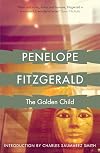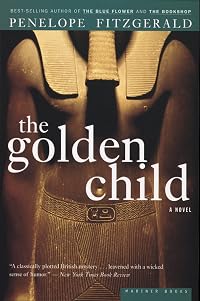
The Golden Child
by Penelope Fitzgerald
On This Page
Description
Penelope Fitzgerald's first novel, THE GOLDEN CHILD, combines a deft comedy of manners with a classic mystery set in London's most refined institution -- the museum. When the glittering treasure of ancient Garamantia, the golden child, is delivered to the museum, a web of intrigue tightens around its personnel, especially the hapless museum officer Waring Smith. While prowling the halls one night, Waring is nearly strangled. Two suspicious deaths ensue, and only the cryptic hieroglyphics of show more the Garamantes can bring an end to the mayhem. Fitzgerald has an unerring eye for human nature, and this satirical look at the art world delivers a terrifically witty read. show lessTags
Recommendations




















Member Recommendations

Member Reviews
The "mystery" isn't much — the murders don't occur until halfway through the book and it's fairly obvious who the perp is, though the method of murder is a bit odd — but that's not the point. What's really amusing about this novel novella, Fitzgerald's first and published when she was sixty years old, is its send-up of museum exhibits, museum staff, the Cold War, and just about everything else.
This was a wild ride that brought me lots of joy. The golden child was Fitzgerald’s first novel, and while it is more ebullient than her later work in terms of plot and the sheer delight of throwing stuff at the reader to see what sticks, it also shows her characteristic restraint in not over-explaining character motivations or the genre tropes she expects readers to be familiar with.
The initial setting is the British Museum, a vast and labyrinthine structure whose institutional organization is incomprehensibly byzantine even to the people who work there. It is home to punch-clock civil servants, a pipe-smoking octogenarian archaeologist of the classical persuasion, bottom-level workers who do the cataloguing and drawing, the unsung show more heroes of the admin staff, and a multitude of department heads who vie for what little public money is available. When the Museum organizes a much-hyped temporary exhibition on Garamantian funeral practices, everyone needs to work together to manage the endless visitor queues, and the scene is set for a cozy art theft mystery. And that is when the plot really starts.
Also, class issues are not-so-subtly at play, shots are fired at Britain’s post-decolonisation position as a world power, and at one point Fitzgerald includes a puzzle like the one Sherlock-Holmes solved in The adventure of the dancing men. Shameless fun is what it is.
I am so glad I found out about Fitzgerald. Her books are both cozy and cutting, eccentric as well as understated, and she knew exactly what she was doing and how to get away with it. Full marks! show less
The initial setting is the British Museum, a vast and labyrinthine structure whose institutional organization is incomprehensibly byzantine even to the people who work there. It is home to punch-clock civil servants, a pipe-smoking octogenarian archaeologist of the classical persuasion, bottom-level workers who do the cataloguing and drawing, the unsung show more heroes of the admin staff, and a multitude of department heads who vie for what little public money is available. When the Museum organizes a much-hyped temporary exhibition on Garamantian funeral practices, everyone needs to work together to manage the endless visitor queues, and the scene is set for a cozy art theft mystery. And that is when the plot really starts.
Also, class issues are not-so-subtly at play, shots are fired at Britain’s post-decolonisation position as a world power, and at one point Fitzgerald includes a puzzle like the one Sherlock-Holmes solved in The adventure of the dancing men. Shameless fun is what it is.
I am so glad I found out about Fitzgerald. Her books are both cozy and cutting, eccentric as well as understated, and she knew exactly what she was doing and how to get away with it. Full marks! show less
Fitzgerald had already produced a couple of biographies when she wrote this first novel: apparently she undertook it chiefly as a way to to amuse her dying husband. Uncharacteristically, in view of the sort of novels she later became known for, it's a satirical crime thriller, set in an unnamed large museum of antiquities in Bloomsbury, which is staging a hugely popular but completely fraudulent Tutankhamen-style exhibition of borrowed treasures. Complex rivalries between the different factions of museum administrators boil over, in the best Civil Service tradition, into violent crime and international espionage.
It's a perfectly respectable crime thriller, with a good mix of jokes, clues, and cliffhangers, but with hindsight we would show more expect a bit more than that from a Fitzgerald novel, and this one doesn't quite deliver. It seems to have been a bit of a false start for her. The very black comedy and the cynical view of human nature seem to be borrowed from Evelyn Waugh and (more directly) Simon Raven, but Fitzgerald doesn't have the shameless arrogance that allows those writers to get away with their utter contempt for everything and everyone. What is entirely characteristic for her is the extreme compression of the plot, which leaves some threads and some characters rather undeveloped. It would have been nice to see something of Waring Smith's permanently offstage wife, for instance. But everything is over, the mystery solved and the clay tablet decrypted, before we really have time to draw breath. show less
It's a perfectly respectable crime thriller, with a good mix of jokes, clues, and cliffhangers, but with hindsight we would show more expect a bit more than that from a Fitzgerald novel, and this one doesn't quite deliver. It seems to have been a bit of a false start for her. The very black comedy and the cynical view of human nature seem to be borrowed from Evelyn Waugh and (more directly) Simon Raven, but Fitzgerald doesn't have the shameless arrogance that allows those writers to get away with their utter contempt for everything and everyone. What is entirely characteristic for her is the extreme compression of the plot, which leaves some threads and some characters rather undeveloped. It would have been nice to see something of Waring Smith's permanently offstage wife, for instance. But everything is over, the mystery solved and the clay tablet decrypted, before we really have time to draw breath. show less
Penelope Fitzgerald was already 60 years old when her first novel, The Golden Child, was published in 1977. I think ‘zany’ is the only term that fully applies. It is a novel that spills over with enthusiasms and peculiarities. It has a plot that moves from London to Moscow and back to London, with a brief stop at the Moscow Circus. There are secret service agents and high intrigue and murders and fraud and double-dealing. But the overriding concern might be whether the reluctant protagonist, Waring Smith, will be able to sustain his mortgage with the Whitstable and Protective Society.
The setting is primarily the British Museum (or a reasonable facsimile thereof), whose administration, as portrayed here, is positively byzantine. (But show more fully believable for anyone who interacted with British institutions in the 1970s.) Sir William Simpkin, the playful benefactor of the museum and original discoverer of the golden treasure of the Garamantes, an exhibition of which is about to go on display at the museum, knows something isn’t entirely right about the exhibition. But there are multiple competing interests at stake, not least the hundreds of members of the public queuing in the rain to see the centrepiece artefact, the golden child. Fortunately Sir William inspires the loyalty of key members of staff such as Waring Smith, Jones Jones, and Len Coker. They attempt to thwart the forces of avarice and careerism. And thanks to the contribution of the sometime clown, Splitov—who does double duty as the Garamantian expert Professor Untermensch—they mostly succeed. Much frantic activity ensues, at least some of it sensible.
It is a helter-skelter ride. At moments you’ll see the brilliantly incisive wit and honest compassion that mark Fitzgerald’s later novels. At other moments you’ll see her struggling to keep all her plates in the air as the plot starts to run away from her. But overall, I think you’ll find an author you can come to trust. Gently recommended for zany good humour and moments of almost heart wrenching pathos. show less
The setting is primarily the British Museum (or a reasonable facsimile thereof), whose administration, as portrayed here, is positively byzantine. (But show more fully believable for anyone who interacted with British institutions in the 1970s.) Sir William Simpkin, the playful benefactor of the museum and original discoverer of the golden treasure of the Garamantes, an exhibition of which is about to go on display at the museum, knows something isn’t entirely right about the exhibition. But there are multiple competing interests at stake, not least the hundreds of members of the public queuing in the rain to see the centrepiece artefact, the golden child. Fortunately Sir William inspires the loyalty of key members of staff such as Waring Smith, Jones Jones, and Len Coker. They attempt to thwart the forces of avarice and careerism. And thanks to the contribution of the sometime clown, Splitov—who does double duty as the Garamantian expert Professor Untermensch—they mostly succeed. Much frantic activity ensues, at least some of it sensible.
It is a helter-skelter ride. At moments you’ll see the brilliantly incisive wit and honest compassion that mark Fitzgerald’s later novels. At other moments you’ll see her struggling to keep all her plates in the air as the plot starts to run away from her. But overall, I think you’ll find an author you can come to trust. Gently recommended for zany good humour and moments of almost heart wrenching pathos. show less
I just finished The Golden Child by Penelope Fitzgerald. What a fun book and quite extraordinarily different from the last one of hers which I read..
The Golden Child is part comedy, part murder mystery and a sly parody of the hierarchy of an Art/Historical Museum. Ms. Fitzgerald also gets a few pokes in at the various secret services of the world. The book was published in 1977, still the Cold War era.
An unnamed London museum has become the beneficiary of a Tutankhamun type exhibit, curses attached and all. Quite early on it becomes clear that everything in the exhibit is a fake. A junior museum officer is sent off to Russia on a hare-brained chase; the elderly discoverer of the exhibit is found murdered; the police are called in, but show more it is two junior members of the staff, along with a German professor, who solve the mystery. Along the way Fitzgerald paints cleverly cynical portraits of many of the upper echelon of the museum, not to mention MI5 and the KGB.
I believe I have all of Fitzgerald's novels and cannot wait for an excuse to pick up the next one. show less
The Golden Child is part comedy, part murder mystery and a sly parody of the hierarchy of an Art/Historical Museum. Ms. Fitzgerald also gets a few pokes in at the various secret services of the world. The book was published in 1977, still the Cold War era.
An unnamed London museum has become the beneficiary of a Tutankhamun type exhibit, curses attached and all. Quite early on it becomes clear that everything in the exhibit is a fake. A junior museum officer is sent off to Russia on a hare-brained chase; the elderly discoverer of the exhibit is found murdered; the police are called in, but show more it is two junior members of the staff, along with a German professor, who solve the mystery. Along the way Fitzgerald paints cleverly cynical portraits of many of the upper echelon of the museum, not to mention MI5 and the KGB.
I believe I have all of Fitzgerald's novels and cannot wait for an excuse to pick up the next one. show less
Penelope Fitzgerald is one of my favorite authors, so I was initially surprised at the unevenness of this book. It swings between satire and murder mystery, with a bit of hapless espionage thrown in. When I realized that this was her first novel, it made much more sense.
It may not be as good as her later novels, but this was an amusing read and an enjoyable send-up of the personalities to be found in museums and cultural heritage institutions.
It may not be as good as her later novels, but this was an amusing read and an enjoyable send-up of the personalities to be found in museums and cultural heritage institutions.
A London museum has installed a priceless exhibit, including a gold-covered mummy of a child, that is drawing thousands of visitors daily. This is a murder mystery laced with satirical humour mocking the eccentric or self-important staff of the museum. Written in 1977, this spoof of the Tutankhamen exhibition at the British Museum was Fitzgerald's first work of fiction, and very entertaining.
I enjoyed the bit that said they sold 15,000 get-well cards featuring the Golden Tomb! Yes, a picture of a tomb should make the ill get well soon!
I enjoyed the bit that said they sold 15,000 get-well cards featuring the Golden Tomb! Yes, a picture of a tomb should make the ill get well soon!
Members
- Recently Added By
Lists

Books Read in 2016
4,666 works; 199 members

Spirit of Place
46 works; 1 member
Author Information

24+ Works 12,100 Members
In 1997 Penelope Fitzgerald's novel The Blue Flower was named one of the New York Times Book Review's eleven Best Books of the Year. Winner of the 1979 Booker Prize for Offshore, Fitzgerald was also short-listed for the Booker for The Bookshop. The Beginning of Spring, and The Gate of Angels. Penelope Fitzgerald lives in England. (Bowker Author show more Biography) Penelope Fitzgerald, one of England's most-celebrated contemporary writers, is the author of "The Blue Flower," which won the National Book Critics Circle Award. Winner of the 1979 Booker Prize for "Offshore," she was also shortlisted for the Booker for "The Bookshop," "The Beginning of Spring," & "The Gate of Angels." She lives in London. (Bowker Author Biography) Admired by many as one of the leading English novelists of her day, Penelope Fitzgerald (1916-2000) wrote some twelve books of fiction and nonfiction over the course of her writing career; which began at the age of sixty. She won the National Book Critics Circle Award for "The Blue Flower" and the Booker Prize for "Offshore". She died on April 28, 2000, at the age of eighty-three. (Bowker Author Biography) show less
Some Editions
Awards and Honors
Notable Lists
Common Knowledge
- Canonical title
- The Golden Child
- Original publication date
- 1977
- People/Characters
- Waring Smith; Sir John Allison; Len Coker; Deputy Security; Peter Gratsos; Daniel Gunn (show all 21); Marcus Hawthorne-Mannering; Jones Jones; Sergeant Liddell; Inspector Mace; Veronica Rank; Tite-Live Richegrosse-Bergson; Rivett; Sir William Simpkin; Louis Sintram; Haggie Smith; Splitov; Heinrich Untermensch; Dousha Vartarian; The Keeper of Unglazed Ceramics; The Keeper of Woven Textiles
- Important places
- London, England, UK; Moscow, Russia
- Dedication
- For Desmond
- First words
- The enormous building waited as though braced to defend itself, standing back resolutely from its great courtyard under a frozen January sky, colourless, cloudless, leafless and pigeonless.
- Last words
- (Click to show. Warning: May contain spoilers.)'It might have been done yesterday.'
- Original language
- English
Classifications
Statistics
- Members
- 411
- Popularity
- 75,316
- Reviews
- 16
- Rating
- (3.71)
- Languages
- English, Italian, Spanish
- Media
- Paper, Ebook
- ISBNs
- 12
- UPCs
- 1
- ASINs
- 7