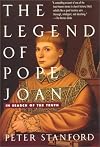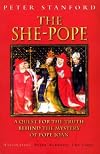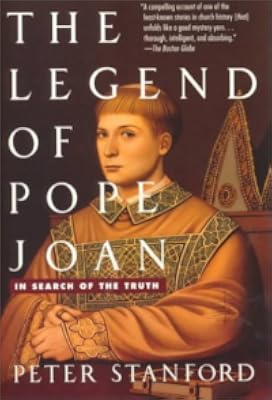
The Legend of Pope Joan: In Search of the Truth
by Peter Stanford
On This Page
Description
Peter Stanford speculates whether Pope Joan, an early 9th century pope was real and reveals what can, and cannot, be known about the extraordinary person behind the story.Tags
Recommendations
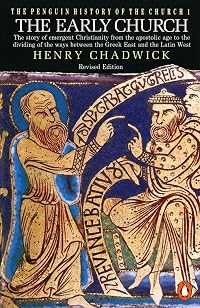
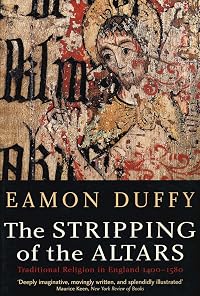
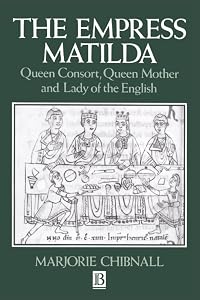
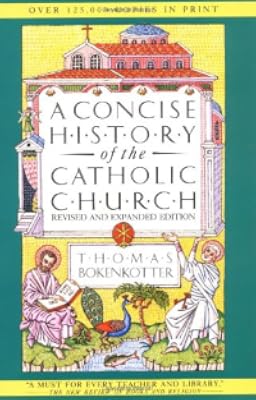


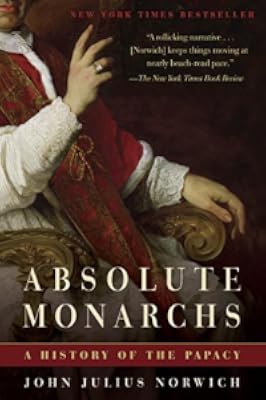
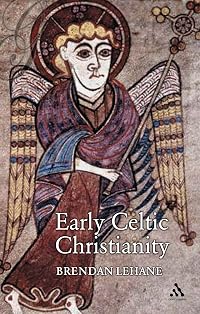
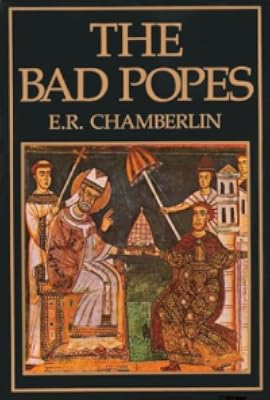


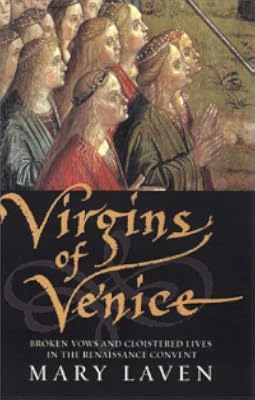




Member Recommendations
Member Reviews
A prime example of journalists writing poor works of history. From the get go Stanford is the central character, not the history, not Pope Joan. I did this, I think that, I visited such-and-such, I believe that, I felt that.
As history, the accounts of Pope Joan presented here are incomplete and scattered in such a fashion that this book is useless as a historical reference. Nowhere does he put all the quotations from authorities in order and with full quotations and proper citations. (Chapter two comes close, but, again it is scattershot and full of journalistic/personal interpretations and asides.) There is a "Bibliography" that is really just a "Suggestions for Further Reading," and there are endnotes, but they are a mess. Some things show more aren't cited in the text, some are poorly cited. Many citations are incomplete. Many others refer to a previous citation instead of giving a shortened form of citation! Annoying! (E.g.: "See chapter 3, note 7.")
And, it's hard to take a "researcher" seriously when he makes this ignorant statement (p. 7): "The Catholic church's objection to female ordination is based not on scripture but on tradition."
What?
Stanford, who says he is a practicing Catholic, has not consulted his own Catechism of the Catholic Church, #1577: "'Only a baptized man (vir) validly receives sacred ordination.' The Lord Jesus chose men (viri) to form the college of the twelve apostles, and the apostles did the same when they chose collaborators to succeed them in their ministry. The college of bishops, with whom the priests are united in the priesthood, makes the college of the twelve an ever-present and ever-active reality until Christ's return. The Church recognizes herself to be bound by this choice made by the Lord himself. For this reason the ordination of women is not possible."
And Stanford, practicing Catholic, has probably never consulted the Bible on the subject, being bound more to Catholic Church tradition than Scripture. Thus, I Corinthians 14:34 (ESV): "The women should keep silent in the churches. For they are not permitted to speak, but should be in submission, as the Law also says." Or, I Timothy 2:11-12 (ESV): "Let a woman learn quietly with all submissiveness. I do not permit a woman to teach or to exercise authority over a man; rather, she is to remain quiet." There are others.
Now, you can disagree with these teachings, you can interpret the Scripture differently, you can dispute these ideas. But, you can't say that the Catholic ban on female priests is not based on any Scripture.
It's hard to take Stanford seriously as a researcher after this.
That said, Stanford does give a reasonable feeling of an argument that just maybe a woman could have been elected Pope in the middle of the ninth century. (I am aware other historians have evidence that suggest Stanford's placement between Leo IV and Benedict III is impossible.) Definitely people in the Middle Ages thought Pope Joan was real, including people in the Catholic Church hierarchy. And, indeed, it seems that there was, at least sometimes, a ceremony and chair where the Pope was proved to be a male upon his election. (The latter need not be proof of a Pope Joan, but proof people believed in a Pope Joan.) show less
As history, the accounts of Pope Joan presented here are incomplete and scattered in such a fashion that this book is useless as a historical reference. Nowhere does he put all the quotations from authorities in order and with full quotations and proper citations. (Chapter two comes close, but, again it is scattershot and full of journalistic/personal interpretations and asides.) There is a "Bibliography" that is really just a "Suggestions for Further Reading," and there are endnotes, but they are a mess. Some things show more aren't cited in the text, some are poorly cited. Many citations are incomplete. Many others refer to a previous citation instead of giving a shortened form of citation! Annoying! (E.g.: "See chapter 3, note 7.")
And, it's hard to take a "researcher" seriously when he makes this ignorant statement (p. 7): "The Catholic church's objection to female ordination is based not on scripture but on tradition."
What?
Stanford, who says he is a practicing Catholic, has not consulted his own Catechism of the Catholic Church, #1577: "'Only a baptized man (vir) validly receives sacred ordination.' The Lord Jesus chose men (viri) to form the college of the twelve apostles, and the apostles did the same when they chose collaborators to succeed them in their ministry. The college of bishops, with whom the priests are united in the priesthood, makes the college of the twelve an ever-present and ever-active reality until Christ's return. The Church recognizes herself to be bound by this choice made by the Lord himself. For this reason the ordination of women is not possible."
And Stanford, practicing Catholic, has probably never consulted the Bible on the subject, being bound more to Catholic Church tradition than Scripture. Thus, I Corinthians 14:34 (ESV): "The women should keep silent in the churches. For they are not permitted to speak, but should be in submission, as the Law also says." Or, I Timothy 2:11-12 (ESV): "Let a woman learn quietly with all submissiveness. I do not permit a woman to teach or to exercise authority over a man; rather, she is to remain quiet." There are others.
Now, you can disagree with these teachings, you can interpret the Scripture differently, you can dispute these ideas. But, you can't say that the Catholic ban on female priests is not based on any Scripture.
It's hard to take Stanford seriously as a researcher after this.
That said, Stanford does give a reasonable feeling of an argument that just maybe a woman could have been elected Pope in the middle of the ninth century. (I am aware other historians have evidence that suggest Stanford's placement between Leo IV and Benedict III is impossible.) Definitely people in the Middle Ages thought Pope Joan was real, including people in the Catholic Church hierarchy. And, indeed, it seems that there was, at least sometimes, a ceremony and chair where the Pope was proved to be a male upon his election. (The latter need not be proof of a Pope Joan, but proof people believed in a Pope Joan.) show less
Although I am not yet entirely convinced that Pope Joan existed, as Mr. Stanford argues, having read this book I now believe it's by no means impossible for her to have been real. I also learned a great deal about women in the church, then and now, and much of it was interesting. I applaud Mr. Stanford's research and his writing was superb also. Both the general reader and students of religious history would enjoy this book.
Stanford's journey around Europe investigating the potential existence of a female pope is a bit of a thrill. The book is written as a journalistic account, the author describing his introduction to the subject and his travels to uncover evidence at monasteries and libraries. While there is an amazing amount of mention of Joan in medieval manuscripts, there is very little historical/contemporaneous evidence to verify her elevation to the papacy. All in all, an interesting read.
http://lifelongdewey.wordpress.com/2012/07/20/262-the-legend-of-pope-joan-by-pet...
http://lifelongdewey.wordpress.com/2012/07/20/262-the-legend-of-pope-joan-by-pet...
This book takes the "legend" of Pope Joan and investigates the truth or fiction of her existence. Despite much evidence to the contrary, the author believes that she truly did exist and was perhaps pope for a period of time in the middle of the 9th century. This is an interesting complement to the novel, Pope Joan.
I still don't believe in the legend, but I would really like to!
Zum einen ist das Buch hoch interessant und sehr gut recherchiert. Der Autor lässt sich nicht zu Mutmaßungen darüber hinreißen, ob Päpstin Johanna erfunden ist, oder tatsächlich gelebt hat. Stattdessen überprüft er alle möglichen Quellen und versucht diverse, im Laufe der Zeit aufgestellte Thesen über die Päpstin und den Wirklichkeitsgehalt ihrer Legende zu beweisen oder zu widerlegen. Trotzdem ist das Buch sehr persönlich gehalten. Der Autor schildert persönliche Eindrücke, Reisen, Interviews und erzählt auch von der Konsultation einer Kartenlegerin, um mehr über die Tarotfigur der Päpstin zu erfahren. Letztendlich muss er zugeben, die Existenz der Päpstin nicht beweisen zu können, aber doch davon überzeugt zu sein. show more Ausschlaggebend hierfür sind nicht nur die Quellen, die er gefunden hat, sondern auch, dass ein psychologisches Profil, dass ein bekannter Psychologe über Johanna erstellt hat, die Motivationen Päpstin schlüssig erklärt. Was leider offen bleibt, ist, welcher Teil von Johannas Geschichte wahr sind und welche dazu erfunden. show less
Jun 25, 2010German
Der Journalist hat so ziemlich alles recherchiert, was es auf nicht-wissenschaftlicher Ebene zu recherchieren gibt.
Mehrfach war er in Rom und im Vatikan, um dem Thema auf den Grund zu gehen. Es ist sicherlich für den interessierten Laien informativ, Unterhaltung sucht man hier natürlich vergebens.
Mich hat es gut aufgeklärt und bereue die Lektüre nicht.
Interessant, dass einige Bücher - teilweise mit entscheidendem Inhalt - verschwunden sind. Vielleicht liegen sie doch noch irgendwo?! Zudem gibt es da Ungereimtheiten in einigen Büchern... - aber lest selbst...!
Mehrfach war er in Rom und im Vatikan, um dem Thema auf den Grund zu gehen. Es ist sicherlich für den interessierten Laien informativ, Unterhaltung sucht man hier natürlich vergebens.
Mich hat es gut aufgeklärt und bereue die Lektüre nicht.
Interessant, dass einige Bücher - teilweise mit entscheidendem Inhalt - verschwunden sind. Vielleicht liegen sie doch noch irgendwo?! Zudem gibt es da Ungereimtheiten in einigen Büchern... - aber lest selbst...!
Mar 31, 2009German
Members
- Recently Added By
Author Information

22 Works 995 Members
Peter Stanford is a senior features writer at the Daily Telegraph and Sunday Telegraph, and contributes to the Independent, the Observer, the Daily Mail, and the Catholic weekly The Tablet, where he is a columnist. He is the author of The Legend of Pope Joan and Teach Yourself Catholicism and he is a regular host on the BBC World Service.
Common Knowledge
- Original title
- The She-Pope
- Alternate titles
- The Legend of Pope Joan
- People/Characters
- Joan, Pope (legendary, Ioannes Anglicus, 855–857)
- Important places
- Rome, Italy; Vatican City
Classifications
- Genres
- Nonfiction, Religion & Spirituality, History, General Nonfiction, Biography & Memoir, Sexuality and Gender Studies
- DDC/MDS
- 262.13 — Religion Christian organization, social work & worship Ecclesiology Ministry Papacy; Primacy
- LCC
- BX958 .F2 .S73 — Philosophy, Psychology and Religion Christian Denominations Christian Denominations Catholic Church History
- BISAC
Statistics
- Members
- 251
- Popularity
- 129,004
- Reviews
- 8
- Rating
- (3.43)
- Languages
- Czech, English, German, Portuguese
- Media
- Paper, Ebook
- ISBNs
- 9
- ASINs
- 3